Ingredients
- Prep Time: 10 minutes
- Cook Time: 35–40 minutes
- Total Time: About 50 minutes
- Servings: 8 slices
Ingredients You’ll Need 🛒
- 2 cups (200 g) oat flour
- 1 cup (225 g) plain Greek yogurt
- 2 tsp baking powder
A Closer Look at the Ingredients
Oat flour. Oat flour is simply oats ground into a fine powder. It’s naturally slightly sweet and nutty, and it gives baked goods a soft, tender, slightly moist texture. Because oat flour doesn’t contain gluten, the loaf is denser and more cake-like than traditional wheat bread, which is exactly why it works so well with a thick batter. For the best texture, use finely ground oat flour. The measurement of 200 grams is important: oat flour is lighter than all-purpose flour, so a scooped cup can vary widely in weight. Weighing is the most reliable method.
Plain Greek yogurt. Greek yogurt provides the moisture, structure, and richness in this recipe. It’s thick because much of the liquid whey has been strained out, so it hydrates the oat flour without making the batter too runny. Its natural acidity also activates the baking powder and tenderizes the crumb. Choose plain, unsweetened yogurt. Full-fat (around 5 percent) gives the richest, moistest loaf, while 2 percent also works well. Fat-free tends to be thicker and tangier and can give a slightly drier result.
Baking powder. Baking powder is the leavening agent that gives the loaf its lift without yeast. When mixed with moisture and heated, it releases carbon dioxide gas that puffs up the batter. Use fresh baking powder, since it loses strength over time. To test it, stir a half teaspoon into a little hot water. It should fizz vigorously right away.
How to Make Oat Flour at Home
You can make oat flour in minutes with a blender or food processor. Add old-fashioned rolled oats or quick oats to the blender and blend on high for 30 to 60 seconds, stopping to scrape down the sides, until the oats become a fine, powdery flour. About 2 cups (roughly 200 g) of oat flour requires about 2½ cups of rolled oats, though it’s best to weigh the flour after blending. For a gluten-free loaf, start with oats that are labeled certified gluten-free. Sift the flour if you have any large, coarse bits remaining, or blend them again.
Instructions
Heat your oven to 350°F (175°C). Line a small loaf pan with parchment paper, leaving an overhang on the long sides so you can lift the loaf out easily. A pan around 8½ × 4½ inches works well. If you only have a standard 9 × 5-inch pan, the loaf will be flatter and may bake slightly faster, so check for doneness a few minutes early.
In a large bowl, combine the oat flour and baking powder. Whisk them together until evenly mixed, so there are no pockets of baking powder, which can leave a bitter taste in the finished loaf.
Add the Greek yogurt and stir with a sturdy spatula or wooden spoon until a thick, sticky dough forms and no dry flour remains. The mixture should be thick and scoopable, closer to a very thick batter or soft dough than a pourable batter. If the mixture seems unusually dry or crumbly, which can happen with very thick yogurt or tightly packed flour, add a teaspoon of yogurt at a time until it comes together. Don’t overmix. Stir just until combined.
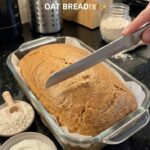
Transfer the mixture to the prepared pan and smooth the top with a damp spatula or wet hands. Wetting the spatula prevents the sticky mixture from pulling. For a bakery-style look, you can score a shallow line down the center with a knife, or sprinkle the top with oats or seeds.
Bake for 35 to 40 minutes, or until the loaf is firm and a toothpick inserted into the center comes out clean. The top should be lightly golden and spring back gently when pressed. If the top is browning too quickly, loosely cover the loaf with foil for the last 10 minutes.
Remove the bread from the pan by lifting it out with the parchment, and place it on a wire rack. Let it cool completely before slicing. This is an important step for oat-based breads. The crumb continues to set as it cools, and slicing too early leads to a gummy texture.
Slice and toast the pieces, then serve with avocado, cheese, nut butter, or your favorite spread. Toasting gives the slices a crisp edge and a warm, nutty aroma.
Baking powder replaces yeast. The acid and base in baking powder react in the presence of moisture and heat, releasing carbon dioxide and giving the batter a quick rise. Because this reaction begins as soon as the wet and dry ingredients meet, it’s best to bake soon after mixing.
Yogurt tenderizes and activates. The natural acidity in yogurt boosts the baking powder reaction and softens the crumb. The proteins and fat in yogurt also contribute richness and structure.
Oat flour has no gluten. Wheat bread relies on gluten for its chewy, elastic structure. Oat flour doesn’t contain gluten, so the structure comes from the yogurt proteins and the way oat starch absorbs moisture and sets in the oven. That’s why the loaf is more tender and cake-like, and why it needs to cool before slicing.
Starch sets as it cools. As the loaf cools, the starches firm up and the moisture redistributes, giving a sliceable crumb.
Oats are hydrophilic. Oat flour absorbs a lot of liquid, so a seemingly dry mixture will soften as it rests. That’s why a short rest of a few minutes can help if the mixture appears dry at first.
Use finely ground oat flour. For a smoother texture, choose a fine flour or blend your own until powdery.
Choose thick Greek yogurt. It gives a sturdier loaf. Thin yogurt makes a gummy, dense bread.
Don’t skip cooling. Oat-based bread needs time to set before slicing.
Make it gluten-free. Use certified gluten-free oat flour and baking powder.
Weigh your flour. Oat flour is lighter and more variable than wheat flour, so weighing guarantees consistent results.
Use fresh baking powder. Old baking powder leaves the loaf flat and dense.
Mix just until combined. Overmixing isn’t as big a concern as it is with wheat bread, but a gentle mix still gives the best texture.
Wet your spatula. It prevents sticking when smoothing the top.
Line the pan. Parchment makes removal easy and prevents the loaf from sticking.
Bake until fully set. Oat bread can look done before the center is cooked. Test with a toothpick and make sure the loaf feels firm.
Toast the slices. Toasting improves flavor and texture, especially the next day.
Storage. Keep in an airtight container in the refrigerator for up to 4 days, or freeze individual slices for easy breakfasts.
My loaf is gummy in the center. It may need a few more minutes in the oven, or it was sliced before it cooled fully. Test with a toothpick, and always cool completely.
My loaf is dense and heavy. Too much oat flour, thin yogurt, or old baking powder can cause density. Weigh the flour, use thick Greek yogurt, and check your baking powder.
My loaf is dry and crumbly. Too much flour or too little yogurt may be the cause, or it may have baked too long. Add a teaspoon of yogurt if the mix looks dry, and check for doneness at the early end of the baking window.
My loaf didn’t rise. Check the freshness of your baking powder, and bake right after mixing.
My loaf sank in the middle. It may have been underbaked or the oven door was opened too early. Bake until firm and avoid opening the door in the first 25 minutes.
The loaf is too pale. Bake a few minutes longer, or brush the top with a little milk or yogurt before baking for more color.
The loaf is too dark on top. Tent loosely with foil and reduce the oven temperature slightly.
The loaf tastes bland. Add a pinch of salt, which this minimal recipe does not include, or a teaspoon of honey or maple syrup.
The loaf tastes too tangy. Use a milder yogurt, or add a teaspoon of honey.
The loaf has a bitter or soapy aftertaste. Baking powder wasn’t evenly mixed. Whisk thoroughly in the dry ingredients next time.
The loaf sticks to the pan. Use parchment paper and grease lightly if needed.
Savory herb loaf. Add 1 teaspoon of dried Italian herbs, ½ teaspoon of garlic powder, and a pinch of salt.
Cheesy oat bread. Fold in ½ cup of shredded cheddar or Parmesan.
Everything seasoning loaf. Sprinkle everything bagel seasoning on top before baking.
Seeded oat bread. Stir in 2 tablespoons of sunflower, pumpkin, or sesame seeds and sprinkle more on top.
Cinnamon oat bread. Add 1 teaspoon of cinnamon and 1 tablespoon of honey or maple syrup for a lightly sweet breakfast loaf.
Banana oat bread. Mash a ripe banana and mix it in, reducing the yogurt slightly.
Blueberry or raisin version. Fold in ½ cup of blueberries or raisins.
Herb and olive version. Add chopped olives and fresh rosemary for a Mediterranean flavor.
Honey oat loaf. Add a tablespoon of honey and top with rolled oats.
Mini rolls or muffins. Divide the mixture into a muffin tin and bake for roughly 18 to 22 minutes.
Dairy-free version. Try a thick, plain, unsweetened dairy-free yogurt, though results can vary.
Salt it. A pinch of salt, about ¼ teaspoon, enhances the flavor significantly if you prefer a more traditional taste.