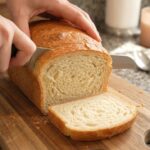
Ingredients
- 3 cups (375 g) all-purpose flour or bread flour
- 1¼ cups (300 ml) lukewarm water
- 2 teaspoons instant yeast (7 g)
- 1 tablespoon granulated sugar (12 g)
- 1 teaspoon salt (6 g)
- 1 tablespoon olive oil or melted butter (optional)
🧐 A Closer Look at the Ingredients
Flour. All-purpose flour makes a soft, tender sandwich loaf, while bread flour has more protein and creates a taller, chewier loaf with a slightly stronger structure. Both work beautifully in this recipe. Because there is no kneading, the dough relies on time and hydration to build gluten, so measuring accurately matters. Weighing your flour (375 g) is the most reliable method. If you use cups, spoon the flour into the cup and level it off instead of scooping it directly from the bag.
Lukewarm water. Water should feel comfortably warm to the touch, about 100 to 110°F (38 to 43°C). If it is too hot, it can kill the yeast. If it is too cold, the dough will rise slowly. A kitchen thermometer takes the guesswork out.
Instant yeast. Instant yeast can be stirred directly into the dry ingredients, with no need to dissolve it first. If you only have active dry yeast, you can use the same amount, but dissolve it in the warm water with the sugar for about 5 to 10 minutes until foamy before adding it to the flour.
Granulated sugar. A small amount of sugar feeds the yeast, adds a hint of flavor, and helps the crust brown to a beautiful golden color.
Salt. Salt controls yeast activity, strengthens the dough, and brings out the flavor of the bread. Do not skip it, or the loaf will taste flat and may rise too quickly.
Olive oil or melted butter. Optional but recommended. A tablespoon of fat makes the crumb softer and the loaf stay fresh longer. Olive oil adds a subtle flavor, while butter gives a richer, more traditional sandwich bread taste.
Instructions
In a large mixing bowl, combine the flour, instant yeast, sugar, and salt. Whisk or stir them together so the yeast and salt are evenly distributed. Pour in the lukewarm water and olive oil or melted butter, if using. Stir with a wooden spoon until a sticky, shaggy dough forms and no dry flour remains. No kneading is necessary!
Tip: The dough will look rough and sticky at this stage. This is exactly what you want. The high moisture level is what allows the dough to develop gluten naturally as it rests.
Cover the bowl with plastic wrap, a plate, or a clean kitchen towel and leave it in a warm place for 60 to 90 minutes, or until the dough has roughly doubled in size. You should see bubbles on the surface and the dough should look puffy and airy.
Warm spot ideas: An oven that is turned off with the light on, the top of the refrigerator, or a spot near a sunny window all work well. In a cool kitchen, the rise may take longer, so be patient and watch the dough instead of the clock.
Lightly flour your work surface and gently transfer the dough onto it. The dough will be sticky, so dust your hands with a little flour. Fold the edges toward the center to form a loaf shape, pressing gently to seal. Place it seam-side down in a greased 9 × 5-inch (23 × 13 cm) loaf pan. Use your fingertips to gently nudge the dough into the corners so it fills the pan evenly.
Tip: Grease the pan generously with butter or oil, or line it with parchment paper with an overhang to lift the loaf out easily after baking.
Cover loosely and let the dough rise for another 30 to 45 minutes, until puffy and approaching the rim of the pan. A good sign is when the dough has risen about 1 inch (2.5 cm) above the edge of the pan or is just about to crest it. Do not let it overproof, or the loaf may collapse in the oven.
Preheat the oven to 375°F (190°C) while the dough completes its second rise. Bake for 30 to 40 minutes, until the crust is golden brown and the loaf sounds hollow when tapped. For a reliable check, the center should reach approximately 190 to 200°F (88 to 93°C) on an instant-read thermometer. If the top is browning too quickly before the center is done, tent the loaf loosely with foil for the final 10 to 15 minutes.
Let the bread rest in the pan for 5 minutes, then transfer it to a wire rack. Allow it to cool completely before slicing for a soft, tender crumb that holds together beautifully. This is the hardest step, because warm bread smells wonderful, but slicing too early can make the crumb gummy and compress the slices.