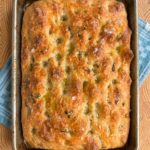
Ingredients
For the Dough
- 4 cups (500 g) all-purpose or bread flour
- 1¾ cups (420 ml) lukewarm water
- 2¼ tsp (7 g) instant yeast
- 1 tsp sugar
- 2 tsp salt
- 2 tbsp olive oil
For the Topping
- ¼ cup (60 ml) extra-virgin olive oil
- 2 tbsp fresh rosemary leaves, roughly chopped
- 1 tsp flaky sea salt
- 2 garlic cloves, thinly sliced (optional)
A Closer Look at the Ingredients
Flour. All-purpose flour gives a soft, tender focaccia with a delicate crumb, while bread flour has more protein and yields a chewier, slightly taller bread. Both work beautifully. For the most accurate results, weigh your flour at 500 grams. A scooped cup of flour can vary widely in weight, and too much flour would make the dough stiff rather than loose and airy.
Lukewarm water. The water should feel just slightly warm to the touch, roughly 100°F to 110°F (38°C to 43°C). Hot water can harm the yeast, so when in doubt, go cooler. This recipe uses a relatively large amount of water, giving a high-hydration dough, which is the secret to focaccia’s open, airy crumb.
Instant yeast. Instant yeast can be stirred directly into the flour. If you only have active dry yeast, dissolve it in the lukewarm water with the sugar for 5 to 10 minutes, until foamy, before adding to the flour. The rise may take a little longer.
Sugar. Just a teaspoon feeds the yeast and encourages even browning. It won’t make the bread sweet.
Salt. Salt flavors the dough, controls yeast activity, and strengthens the gluten structure. Two teaspoons may seem like a lot, but focaccia is a bread that benefits from assertive seasoning.
Olive oil in the dough. Two tablespoons add tenderness and flavor throughout the crumb.
Extra-virgin olive oil for the pan and topping. This is where quality matters most. Because olive oil is a main flavor in focaccia, use a good extra-virgin variety with a fruity or peppery character. It’s what gives the bottom its crisp, golden, almost fried crust and the top its rich flavor.
Fresh rosemary. Fresh rosemary delivers the signature piney, aromatic flavor of classic focaccia. Strip the leaves from the woody stems and chop them roughly. Dried rosemary can be used in a pinch, but use about one-third the amount, as the flavor is more concentrated.
Flaky sea salt. The crunchy, delicate flakes add pops of salty flavor and a satisfying crackle. Kosher salt can substitute if needed.
Garlic (optional). Thinly sliced garlic adds a sweet, mellow savory flavor when baked. Spread the slices out and press them into the dough so they don’t burn.
Instructions
In a large bowl, combine the flour, instant yeast, sugar, and salt. Whisk briefly to distribute everything evenly. Pour in the lukewarm water and 2 tablespoons of olive oil. Stir with a wooden spoon or sturdy spatula until a sticky, shaggy dough forms and no dry flour remains. This takes about a minute. The dough will look wet and rough, and that’s exactly what you want. Resist the urge to add more flour.
Cover the bowl with plastic wrap, a tight lid, or a damp kitchen towel and place it in a warm spot for 1½ to 2 hours. The dough is ready when it has doubled in size, looks puffy and jiggly, and is covered with bubbles on the surface and along the sides of the bowl. A turned-off oven with the light on makes a perfect proofing spot.
Generously coat a 9×13-inch baking pan with olive oil, covering the bottom and sides. Use a few tablespoons, since this oil is what crisps and flavors the bottom crust. A metal pan gives the crispiest bottom, while glass works but may brown a bit differently.
Scrape the sticky dough into the prepared pan with a spatula, trying not to deflate it more than necessary. Lightly oil your hands and gently stretch the dough toward the edges and corners. If it springs back and resists, cover it and let it rest for 10 minutes, then try again. The gluten relaxes during the rest, making stretching much easier.
Cover the pan loosely with a towel or oiled plastic wrap and let the dough rise for another 20 to 30 minutes, until puffy and filling the pan. Use this time to prepare your toppings.
Heat the oven to 425°F (220°C). A hot oven is essential for a crisp bottom and a golden top.
Drizzle the ¼ cup of extra-virgin olive oil evenly over the dough. With oiled fingertips, press straight down into the surface to create deep dimples that go nearly all the way to the bottom of the pan, taking care not to deflate the whole dough. The dimples create pockets where the olive oil pools and the signature look of focaccia.
Scatter the chopped rosemary and flaky sea salt evenly over the top. If you’re using garlic, press the thin slices gently into the dimples and spread them out so they don’t clump or burn.
Bake for 25 to 30 minutes, until the focaccia is deep golden brown, crisp around the edges, and cooked through. Lift a corner with a spatula to check the bottom. It should be golden brown and crisp. If the top browns too quickly, loosely tent it with foil for the last few minutes.
Let the focaccia rest in the pan for 5 to 10 minutes. Use a spatula to loosen the edges, then transfer it to a cutting board or wire rack so the bottom stays crisp. Cut into squares and finish with a small drizzle of olive oil if you like. Serve warm.
High hydration creates an airy crumb. The large amount of water in this dough turns to steam in the hot oven, puffing up the interior and creating the large, irregular holes that characterize focaccia.
Time replaces kneading. As the dough rests and ferments, gluten proteins gradually align and bond on their own. A long, slow rise builds strength and flavor without any kneading.
Olive oil fries the bottom. The generous layer of oil in the pan acts almost like shallow frying, producing a deeply golden, crisp, flavorful crust.
Dimples control the rise. Pressing the dough releases large gas bubbles that would otherwise form a puffy dome, keeping the bread flat, even, and ready to catch oil and toppings.
High heat gives a crisp finish. At 425°F (220°C), the exterior sets and browns quickly while the interior stays soft and moist.
Keep the dough sticky. A wetter dough helps create the classic airy interior. Use oiled hands and a spatula instead of adding flour.
Use generous olive oil. It gives the bottom a deliciously crisp, golden crust. Don’t skimp on either the pan or the topping.
Fresh rosemary works best. Add it just before baking for a fragrant finish. Pressing it slightly into the dough keeps the leaves from burning.
For extra flavor. Sprinkle with Parmesan or add a few olives or cherry tomatoes.
Judge the rise by the dough. Kitchen temperatures vary. Look for a doubled, bubbly, jiggly dough rather than relying only on the clock.
Don’t rush the stretch. If the dough fights you, let it rest and try again in 10 minutes.
Dimple confidently. Press deeply with oiled fingers so the dimples remain after baking.
Place the pan on the center or lower rack. This helps the bottom crisp up without burning the top.
Cool on a rack. Moving the focaccia out of the pan prevents the bottom from steaming and softening.
Taste your olive oil. If you wouldn’t enjoy it on its own, it won’t improve in the bread.
My dough didn’t rise. The yeast may be old, the water too hot or cold, or the room too cool. Use fresh yeast, check the water temperature, and give the dough more time in a warm place.
The focaccia is dense and bready. Too much flour, an under-risen dough, or too little water can cause density. Weigh the ingredients and make sure the dough doubles during the first rise.
The dough keeps springing back. The gluten is tight. Cover the dough and let it rest for 10 minutes before stretching again.
The bottom is pale and soft. Use more olive oil in the pan, use a metal pan, and place it on a lower rack.
The rosemary or garlic burned. Press them into the dough, add a little extra oil on top, and tent with foil if they’re browning too quickly.
The top is too pale. Make sure the oven is fully preheated, and bake a few minutes longer if needed.
The focaccia sticks to the pan. Use enough oil and loosen the edges with a thin spatula while it’s still warm.
The center is gummy. Bake a few more minutes, and let the focaccia cool slightly before cutting.
The dimples disappeared. Press deeper next time, and avoid letting the dough overproof before baking.
The dough is too sticky to handle. That’s normal. Use oiled hands and a spatula rather than flour.
Garlic Parmesan focaccia. Sprinkle grated Parmesan over the top in the last 10 minutes of baking.
Olive and rosemary. Press sliced Kalamata or green olives into the dimples before baking.
Cherry tomato focaccia. Press halved cherry tomatoes cut-side up into the dough and finish with fresh basil after baking.
Caramelized onion. Top with sweet, jammy caramelized onions and a few thyme leaves.
Lemon and thyme. Add lemon zest and fresh thyme for a bright, fragrant variation.
Cheesy focaccia. Add shredded mozzarella or provolone during the last 5 minutes of baking.
Everything focaccia. Top with everything bagel seasoning for a savory crunch.
Roasted garlic. Press cloves of roasted garlic into the dimples for a mellow, sweet flavor.
Hot honey drizzle. Finish with a little hot honey for a sweet and spicy twist.
Focaccia art. Press thinly sliced vegetables and fresh herbs into the dough to create garden-style designs, a popular and beautiful presentation.
Pesto focaccia. Swirl pesto over the baked focaccia and add sun-dried tomatoes.