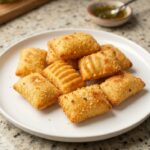
Ingredients
For the potato mixture
- 2 pounds (900 g) potatoes, peeled and cubed
- 3 tablespoons cornstarch
- 2 tablespoons all-purpose flour, plus more if needed
- 2 tablespoons grated Parmesan cheese
- ½ teaspoon garlic powder
- ½ teaspoon onion powder
- ½ teaspoon salt, or to taste
- ¼ teaspoon black pepper
- 1 tablespoon chopped fresh parsley (optional)
For the crispy coating
- ½ cup all-purpose flour
- 2 large eggs, beaten
- 1 cup breadcrumbs or panko breadcrumbs
For frying
- Vegetable oil, for frying
🧂 Ingredient Notes and Smart Substitutions
Potatoes
The potato variety matters because it affects how fluffy and how wet the mixture will be.
- Russet potatoes are starchy and dry, which makes them the best choice for a fluffy, light mash that holds its shape. They are my first recommendation.
- Yukon Gold potatoes are creamy and buttery, with a bit more moisture. They make a rich, smooth center, but you may need slightly more flour.
- Waxy potatoes (red or new potatoes) hold more moisture and become gluey when mashed. They are not ideal for this recipe.
Peel the potatoes and cut them into even cubes, about 1½ inches (4 cm), so they cook at the same rate.
Cornstarch
Cornstarch binds the mixture without making it heavy. It also helps the inside stay tender and creates a lighter crust. It is an important ingredient, so do not skip it.
All-purpose flour
Flour absorbs moisture and helps the dough hold together. Add more only if the mixture is too sticky, one tablespoon at a time, because too much flour can make the centers dense.
Parmesan cheese
Parmesan adds a salty, nutty, savory flavor and helps with browning. Use finely grated Parmesan so it blends smoothly into the mashed potatoes.
Garlic powder and onion powder
These dried seasonings spread flavor evenly through the potato mixture without adding extra moisture.
Parsley
Fresh parsley adds a touch of freshness and color. If you do not have it, use dried parsley (about 1 teaspoon) or chives.
Breadcrumbs vs. panko
Panko breadcrumbs are larger and lighter than regular breadcrumbs, and they create an extra-crunchy, airy coating. Regular breadcrumbs work too and give a finer, more even crust. For the crunchiest results, choose panko.
Gluten-free option: Use gluten-free panko, gluten-free flour, and a gluten-free all-purpose blend for the potato mixture.
Eggs
Beaten eggs act like glue, helping the breadcrumbs stick to the potato pillows. Beat them well until the yolks and whites are fully combined.
Oil for frying
Choose a neutral oil with a high smoke point, such as vegetable, canola, sunflower, or peanut oil. Olive oil is not recommended for deep frying at this temperature.
Instructions
Place the peeled, cubed potatoes in a large pot of salted water. Bring to a boil and cook for 15 to 18 minutes, or until fork-tender. A fork should slide into a cube with no resistance. Drain thoroughly in a colander.
Tip: Starting the potatoes in cold, salted water and bringing them to a boil helps them cook evenly from the outside in.
Return the drained potatoes to the warm pot for about a minute over low heat to release excess moisture. Stir gently so they do not stick. Then mash until completely smooth, with no large lumps. A potato ricer gives the smoothest result, but a regular masher works too.
Tip: Avoid using a blender or food processor. Overworking cooked potatoes releases starch and makes them gluey.
Add the cornstarch, flour, Parmesan, garlic powder, onion powder, salt, black pepper, and parsley to the mashed potatoes. Mix until a soft, workable dough forms. If the mixture feels too sticky, add a little more flour, one tablespoon at a time.
How to know it is right: The mixture should hold together when pressed and feel soft but not wet. If it clings heavily to your hands, add a bit more flour.
Let the mixture cool until comfortable to handle. Divide it into small portions and shape each one into a little square, rectangle, or pillow-shaped bite. Aim for pieces about 1½ to 2 inches (4 to 5 cm) wide and about ¾ inch (2 cm) thick. Keep them similar in size so they fry evenly.
Tip: Lightly flour or dampen your hands to prevent sticking.
Arrange the potato pillows on a parchment-lined tray and refrigerate for 20 minutes. This step helps them firm up and hold their shape while frying. Do not skip it, because it is the best insurance against pillows that fall apart in the oil.
Set up a simple breading station with three shallow bowls: one with the flour, one with the beaten eggs, and one with the breadcrumbs.
Roll each potato pillow in flour, shaking off the excess. Dip it into the beaten eggs, letting the extra drip off. Then coat it generously with breadcrumbs, gently pressing the crumbs onto all sides so they stick.
Tip: Use one hand for the dry ingredients and the other for the wet egg to keep your fingers from getting clumpy with breading.
Pour vegetable oil into a deep skillet or saucepan to a depth of about 2 inches (5 cm). Heat to 350°F (175°C). Use a thermometer for the most accurate results. If you do not have one, drop a breadcrumb into the oil. It should bubble steadily and float.
Carefully add the potato pillows in small batches. Fry for 2 to 3 minutes, turning gently, until golden brown and crispy on all sides. Avoid overcrowding the pan, because too many pillows at once drops the oil temperature and leads to a greasy, soft coating.
Safety tip: Use a slotted spoon or spider to lower and lift the pillows, and keep the pot away from the edge of the stove. Never leave hot oil unattended.
Transfer the pillows to a wire rack or paper towel-lined plate. Let them cool slightly, then serve warm while the outside is wonderfully crunchy and the inside is soft and fluffy! 🥔
Tip: A wire rack keeps the bottoms crisp better than paper towels, which can trap steam.