Crispy Potato Pillows
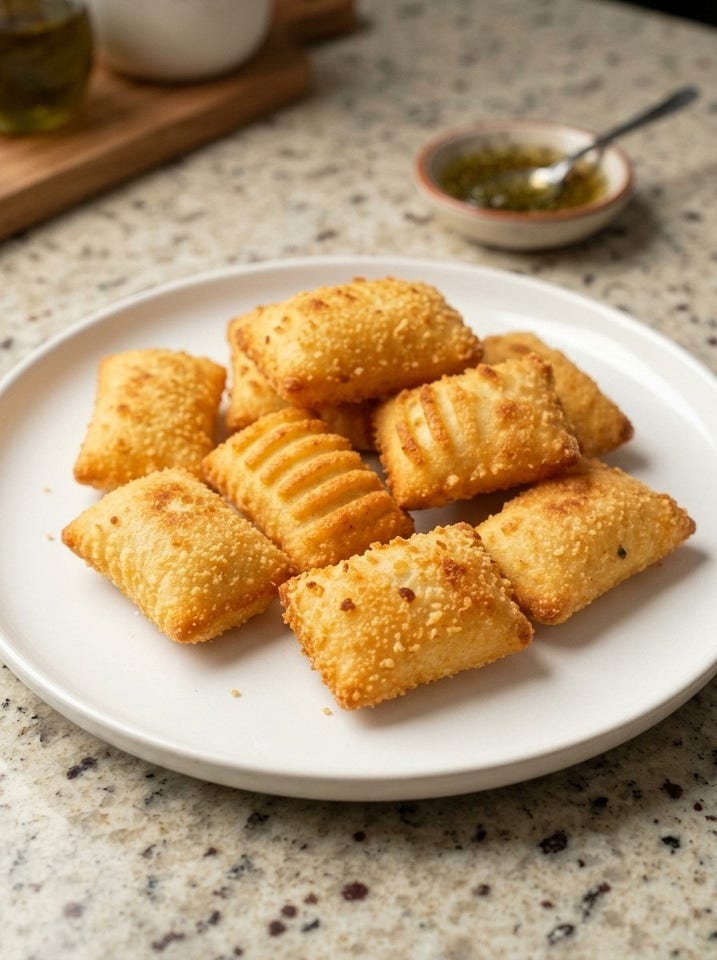
Crispy Potato Pillows: Golden, Crunchy & Fluffy Inside 🥔✨
Crispy Potato Pillows Recipe (Golden, Crunchy & Fluffy Inside) Meta description: Make crispy potato pillows with a golden panko crust and a soft, fluffy mashed potato center. Simple ingredients, perfect as a snack, appetizer, or side dish with your favorite dip. Focus keyword: potato pillows Secondary keywords: crispy potato pillows, fried potato bites, mashed potato bites, crispy mashed potato recipe, potato appetizer, panko potato bites, potato snack recipe, homemade potato croquettes
These Crispy Potato Pillows are little bites of pure comfort. 🤤🥔 Each one has a beautifully golden, crunchy exterior that shatters when you bite into it, giving way to a soft, fluffy, creamy potato center. They are made with simple ingredients, shaped into cute little squares, coated in crunchy breadcrumbs, and fried until irresistible.
They work as a snack, an appetizer, a party platter, or a side dish for just about any meal. Serve them hot with your favorite dipping sauce, and watch them disappear within minutes.
If you love mashed potatoes, crispy fries, and croquettes, this recipe brings all three together. It is also a clever way to turn leftover mashed potatoes into something new.
In this complete guide, you will find the full recipe, step-by-step instructions, ingredient notes, the secrets to a crunchy coating that stays on, troubleshooting help, flavor variations, dipping sauce ideas, make-ahead and freezing tips, and answers to common questions. Let’s get cooking! 👩🍳
❤️ Why You Will Love This Recipe
- ✅ Made with simple ingredients. Potatoes, pantry spices, and a classic breading station.
- ✅ Crunchy outside, fluffy inside. The ultimate texture contrast.
- ✅ Great for parties. Easy to serve and share on a platter.
- ✅ Kid friendly. Children love these crispy potato bites.
- ✅ Versatile. Serve as a snack, appetizer, or side dish.
- ✅ Make-ahead friendly. Shape and freeze them for later.
- ✅ Customizable. Add cheese, herbs, or spices to suit your taste.
- ✅ Perfect for leftovers. A fantastic way to use up leftover mashed potatoes.
- ✅ Budget friendly. Potatoes are inexpensive and go a long way.
🛒 Ingredients
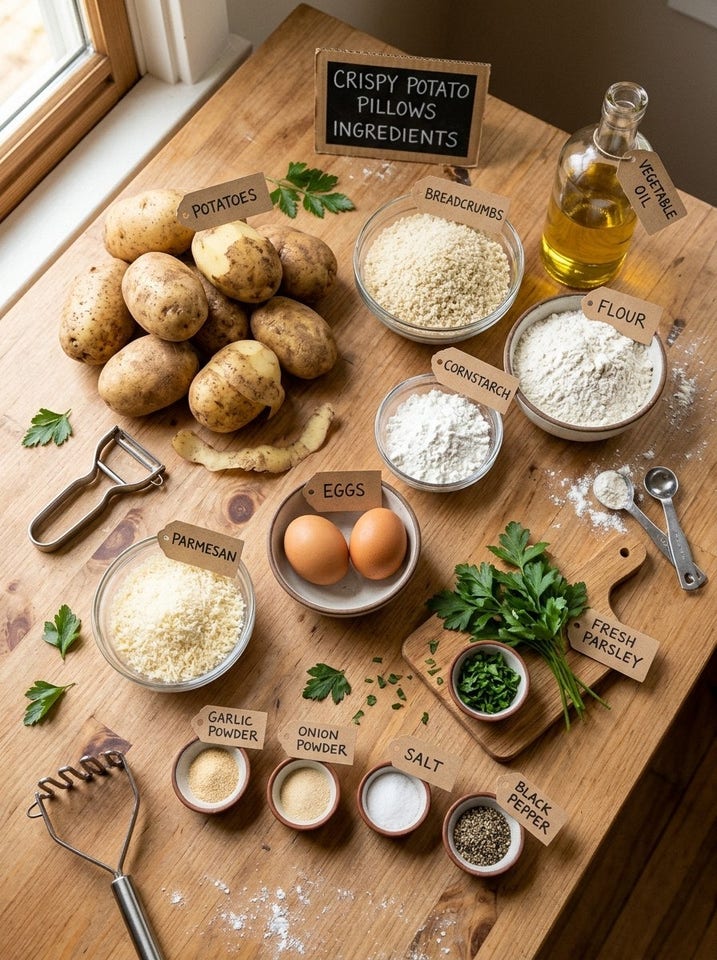
For the potato mixture
- 2 pounds (900 g) potatoes, peeled and cubed
- 3 tablespoons cornstarch
- 2 tablespoons all-purpose flour, plus more if needed
- 2 tablespoons grated Parmesan cheese
- ½ teaspoon garlic powder
- ½ teaspoon onion powder
- ½ teaspoon salt, or to taste
- ¼ teaspoon black pepper
- 1 tablespoon chopped fresh parsley (optional)
For the crispy coating
- ½ cup all-purpose flour
- 2 large eggs, beaten
- 1 cup breadcrumbs or panko breadcrumbs
For frying
- Vegetable oil, for frying
🧂 Ingredient Notes and Smart Substitutions
Potatoes
The potato variety matters because it affects how fluffy and how wet the mixture will be.
- Russet potatoes are starchy and dry, which makes them the best choice for a fluffy, light mash that holds its shape. They are my first recommendation.
- Yukon Gold potatoes are creamy and buttery, with a bit more moisture. They make a rich, smooth center, but you may need slightly more flour.
- Waxy potatoes (red or new potatoes) hold more moisture and become gluey when mashed. They are not ideal for this recipe.
Peel the potatoes and cut them into even cubes, about 1½ inches (4 cm), so they cook at the same rate.
Cornstarch
Cornstarch binds the mixture without making it heavy. It also helps the inside stay tender and creates a lighter crust. It is an important ingredient, so do not skip it.
All-purpose flour
Flour absorbs moisture and helps the dough hold together. Add more only if the mixture is too sticky, one tablespoon at a time, because too much flour can make the centers dense.
Parmesan cheese
Parmesan adds a salty, nutty, savory flavor and helps with browning. Use finely grated Parmesan so it blends smoothly into the mashed potatoes.
Garlic powder and onion powder
These dried seasonings spread flavor evenly through the potato mixture without adding extra moisture.
Parsley
Fresh parsley adds a touch of freshness and color. If you do not have it, use dried parsley (about 1 teaspoon) or chives.
Breadcrumbs vs. panko
Panko breadcrumbs are larger and lighter than regular breadcrumbs, and they create an extra-crunchy, airy coating. Regular breadcrumbs work too and give a finer, more even crust. For the crunchiest results, choose panko.
Gluten-free option: Use gluten-free panko, gluten-free flour, and a gluten-free all-purpose blend for the potato mixture.
Eggs
Beaten eggs act like glue, helping the breadcrumbs stick to the potato pillows. Beat them well until the yolks and whites are fully combined.
Oil for frying
Choose a neutral oil with a high smoke point, such as vegetable, canola, sunflower, or peanut oil. Olive oil is not recommended for deep frying at this temperature.
👩🍳 How to Make Crispy Potato Pillows: Step-by-Step
Step 1: Cook the potatoes
Place the peeled, cubed potatoes in a large pot of salted water. Bring to a boil and cook for 15 to 18 minutes, or until fork-tender. A fork should slide into a cube with no resistance. Drain thoroughly in a colander.
Tip: Starting the potatoes in cold, salted water and bringing them to a boil helps them cook evenly from the outside in.
Step 2: Mash until smooth
Return the drained potatoes to the warm pot for about a minute over low heat to release excess moisture. Stir gently so they do not stick. Then mash until completely smooth, with no large lumps. A potato ricer gives the smoothest result, but a regular masher works too.
Tip: Avoid using a blender or food processor. Overworking cooked potatoes releases starch and makes them gluey.
Step 3: Season the mixture
Add the cornstarch, flour, Parmesan, garlic powder, onion powder, salt, black pepper, and parsley to the mashed potatoes. Mix until a soft, workable dough forms. If the mixture feels too sticky, add a little more flour, one tablespoon at a time.
How to know it is right: The mixture should hold together when pressed and feel soft but not wet. If it clings heavily to your hands, add a bit more flour.
Step 4: Shape the pillows
Let the mixture cool until comfortable to handle. Divide it into small portions and shape each one into a little square, rectangle, or pillow-shaped bite. Aim for pieces about 1½ to 2 inches (4 to 5 cm) wide and about ¾ inch (2 cm) thick. Keep them similar in size so they fry evenly.
Tip: Lightly flour or dampen your hands to prevent sticking.
Step 5: Chill
Arrange the potato pillows on a parchment-lined tray and refrigerate for 20 minutes. This step helps them firm up and hold their shape while frying. Do not skip it, because it is the best insurance against pillows that fall apart in the oil.
Step 6: Prepare the coating
Set up a simple breading station with three shallow bowls: one with the flour, one with the beaten eggs, and one with the breadcrumbs.
Step 7: Coat each pillow
Roll each potato pillow in flour, shaking off the excess. Dip it into the beaten eggs, letting the extra drip off. Then coat it generously with breadcrumbs, gently pressing the crumbs onto all sides so they stick.
Tip: Use one hand for the dry ingredients and the other for the wet egg to keep your fingers from getting clumpy with breading.
Step 8: Heat the oil
Pour vegetable oil into a deep skillet or saucepan to a depth of about 2 inches (5 cm). Heat to 350°F (175°C). Use a thermometer for the most accurate results. If you do not have one, drop a breadcrumb into the oil. It should bubble steadily and float.
Step 9: Fry until golden
Carefully add the potato pillows in small batches. Fry for 2 to 3 minutes, turning gently, until golden brown and crispy on all sides. Avoid overcrowding the pan, because too many pillows at once drops the oil temperature and leads to a greasy, soft coating.
Safety tip: Use a slotted spoon or spider to lower and lift the pillows, and keep the pot away from the edge of the stove. Never leave hot oil unattended.
Step 10: Drain and serve
Transfer the pillows to a wire rack or paper towel-lined plate. Let them cool slightly, then serve warm while the outside is wonderfully crunchy and the inside is soft and fluffy! 🥔
Tip: A wire rack keeps the bottoms crisp better than paper towels, which can trap steam.
🔬 The Secrets to a Crunchy Coating That Stays On
A great potato pillow has a crisp crust that hugs the soft center. Here is how to get it.
1. Dry, well-drained potatoes
Excess water makes the mixture sticky and the pillows fragile. Drain well, and let the potatoes steam dry in the warm pot for a minute.
2. Smooth mash
Lumps create weak spots that can crack or burst in the oil. Mash until completely smooth.
3. Cornstarch and flour
These absorb moisture and bind the mixture into a shapeable dough. Add flour gradually until the mixture is workable.
4. Chilling
Cold potato pillows are firmer, and the cold helps the coating set. This is the key to avoiding blowouts.
5. The three-step breading
Flour helps the egg stick, egg helps the breadcrumbs stick, and breadcrumbs create the crunch. Do each step in order, and press the crumbs on gently.
6. Panko for extra crunch
Panko’s larger, flakier crumbs create a lighter, crunchier crust than fine breadcrumbs.
7. Steady oil temperature
At 350°F (175°C), the coating crisps quickly without absorbing too much oil. Too cool, and the pillows turn greasy. Too hot, and the outside burns before the inside warms through.
8. Frying in batches
Overcrowding drops the oil temperature and causes the pillows to stick together. Fry only a few at a time, and let the oil come back to temperature between batches.
💡 Helpful Tips
- Remove excess moisture. Drain the potatoes very well after boiling. Too much moisture can make the mixture difficult to shape.
- Use panko breadcrumbs. They create an extra-crunchy coating.
- Chill before frying. Refrigerating the shaped pillows helps prevent them from falling apart.
- Keep the oil temperature steady. Aim for 350°F (175°C). Oil that is too cool can make the coating greasy.
- Fry in batches. Give each pillow enough room to brown evenly.
- Make them cheesy. Add a little shredded cheddar or mozzarella to the potato mixture for extra flavor.
- Test one first. Fry a single pillow to check that it holds together and that the seasoning is right, then adjust before frying the rest.
- Season the potatoes well. Mashed potatoes need enough salt to taste good once coated, so taste the cooled potato mixture before shaping and adjust.
- Press the crumbs on firmly. A well-pressed coating is much less likely to fall off in the oil.
- Work in stages. Keep coated pillows on a tray while you fry, so everything is ready to go.
🔧 Troubleshooting: Common Potato Pillow Problems
My potato pillows fell apart in the oil. The mixture may have been too wet, too warm, or not chilled long enough. Drain and dry the potatoes well, add a bit more flour if needed, and chill the pillows for the full 20 minutes. Make sure the coating covers every side.
The mixture is too sticky to shape. Add more flour, one tablespoon at a time, until it is soft but workable. Lightly flour your hands too. Letting the mixture cool for a few minutes also makes it easier to handle.
The mixture is too dry or crumbly. Too much flour may have been added. Mix in a teaspoon or two of milk or a little melted butter to bring it back together.
The coating is falling off. Make sure you pat the potato pillows lightly in flour first, then coat with egg and press the breadcrumbs on firmly. Chilling also helps the coating stay put.
The pillows are greasy. The oil may not have been hot enough, or the pan was overcrowded. Keep the oil at 350°F (175°C), fry in small batches, and drain the pillows on a wire rack.
The outside is dark but the inside is cold. The oil was too hot. Lower the heat and make sure the pillows are not still frozen or very cold in the center. If cooking from a chilled state, 2 to 3 minutes is usually enough.
The pillows burst open. Air or moisture trapped inside, or a coating with gaps, can cause bursting. Seal the coating all the way around and make sure the mixture is smooth.
The pillows are gummy inside. The potatoes may have been overworked or were too wet. Mash by hand and avoid blending. Use starchy potatoes such as russets.
The flavor is bland. Add more salt and seasoning to the potato mixture, and season the pillows lightly with salt right after frying. Potatoes need generous seasoning.
The breadcrumbs burned. Check the oil temperature, and do not let it climb above 350°F (175°C). Adjust the heat as needed between batches.
🥣 Serving Ideas
Serve these golden potato pillows with:
Dipping sauces
- Creamy garlic aioli: Rich, smooth, and garlicky.
- Sour cream and chives: Cool, tangy, and classic.
- Spicy mayonnaise: Mayonnaise mixed with sriracha or hot sauce.
- Homemade ranch dressing: Creamy and herby.
- Ketchup or barbecue sauce: Simple, familiar, and kid approved.
- Cheese sauce: Warm and gooey for the ultimate comfort snack.
- Honey mustard: Sweet and tangy.
- Chipotle mayo: Smoky with a gentle kick.
- Marinara sauce: Like mozzarella sticks, but potato.
- Tzatziki: A fresh, cool contrast.
How to serve them
- As an appetizer: Pile them onto a platter with several dips.
- As a side dish: Serve alongside burgers, grilled chicken, steak, or fish.
- With soup or salad: Add a crunchy, comforting element.
- For game day: Pair them with wings, nachos, and sliders.
- For parties: Serve on toothpicks for easy snacking.
- In kids’ lunches: Pack them with a small container of ketchup.
- As a brunch side: Serve with eggs and bacon.
- Holiday spreads: A fun addition to holiday appetizer tables.
🌿 Delicious Flavor Variations
Once you have mastered the basic recipe, try these tasty twists:
- Cheesy potato pillows: Mix ½ cup of shredded cheddar or mozzarella into the potato mixture.
- Bacon and cheddar: Add crumbled bacon and shredded cheddar to the mixture.
- Jalapeño popper: Add finely diced jalapeños and a bit of cream cheese.
- Garlic herb: Add extra garlic powder and chopped chives, dill, or thyme.
- Smoky paprika: Add ½ teaspoon of smoked paprika to the potato mixture.
- Ranch seasoned: Mix 1 tablespoon of ranch seasoning into the mashed potatoes.
- Everything seasoning: Add everything bagel seasoning to the breadcrumbs.
- Cajun spiced: Add Cajun seasoning to the breadcrumbs.
- Stuffed pillows: Press a small cube of mozzarella or cheddar into the center of each pillow before coating.
- Sweet potato pillows: Replace half of the potatoes with sweet potatoes for a sweeter, colorful twist (you may need a little extra flour).
- Parmesan crusted: Mix grated Parmesan into the breadcrumbs for an extra-savory crust.
- Pesto potato pillows: Stir a spoonful of basil pesto into the mashed potatoes.
🍳 Lighter Cooking Options
Frying gives the crunchiest and most traditional results, but you can adapt the recipe if you prefer to use less oil.
Air fryer
Spray the coated pillows lightly with oil on all sides. Cook at 375°F (190°C) for about 10 to 12 minutes, turning once halfway, until golden and crisp. Work in a single layer without crowding. The crust will be slightly drier than fried pillows but still crunchy.
Oven baked
Place the coated pillows on a parchment-lined baking sheet, spray generously with oil, and bake at 425°F (220°C) for about 20 to 25 minutes, flipping halfway, until golden. A wire rack placed on the sheet helps the bottoms crisp.
Cooking times vary with the size of the pillows and your appliance, so keep an eye on the color and adjust as needed.
🧊 Storage, Freezing & Reheating
Refrigerator
Store leftover cooked potato pillows in an airtight container for up to 3 days.
Freezer
Freeze the shaped, uncoated pillows on a tray until firm, then transfer them to a freezer-safe bag. Thaw in the refrigerator before coating and frying.
Tip: Freezing the shaped pillows before coating prevents the breading from getting soggy or cracking in the freezer, and you get fresh, crunchy pillows when you fry them.
Reheating
Reheat cooked pillows in an air fryer at 350°F (175°C) for 4 to 6 minutes or in a preheated oven until hot and crispy. Avoid the microwave if you want to keep the coating crunchy.
Make-ahead plan
- Up to 1 day ahead: Prepare and shape the pillows, then refrigerate them covered on a tray. Coat and fry just before serving.
- Mashed potato shortcut: Use leftover mashed potatoes, as long as they are plain and not too creamy. If they contain a lot of butter or milk, you may need extra flour and cornstarch to firm them up.
🥗 Nutrition Notes
Potatoes provide potassium, vitamin C, and satisfying carbohydrates. These pillows are a treat food, best enjoyed as a snack or side. Frying adds calories, so baked and air-fried versions can be lighter options.
Exact nutrition varies depending on ingredients and portion size. For accurate numbers, use a nutrition calculator with your specific ingredients.
❓ Frequently Asked Questions
Can I use leftover mashed potatoes?
Yes. Plain, well-seasoned leftover mashed potatoes work well. Because they often contain butter and milk, you may need more flour and cornstarch to firm them up. Chilling the shaped pillows is even more important in this case.
Do I have to chill the potato pillows?
Chilling for 20 minutes is strongly recommended. It firms up the mixture and helps the pillows hold their shape and keep their coating in the hot oil.
Why did my potato pillows fall apart?
Usually the mixture was too wet, too warm, or not chilled long enough. Drain the potatoes well, add a bit more flour if the mixture is sticky, and chill before frying.
Can I make them in the air fryer?
Yes. Spray the coated pillows with oil and cook at 375°F (190°C) for about 10 to 12 minutes, turning once, until golden. They will be a little less crisp than fried pillows but still delicious.
Can I bake them in the oven?
Yes. Bake on a parchment-lined sheet at 425°F (220°C) for about 20 to 25 minutes, flipping halfway, after spraying with oil.
What kind of potatoes are best?
Russet potatoes make the fluffiest, driest mash and are the best choice. Yukon Gold potatoes are creamier and also work, though you may need a little more flour.
Can I use instant mashed potatoes?
You can, prepared according to the package directions but a bit thicker than usual. The flavor and texture will be a bit different from fresh potatoes, but it works in a pinch.
Can I make them gluten-free?
Yes. Use gluten-free flour for the mixture and coating, and gluten-free panko or breadcrumbs.
Can I make them without eggs?
The egg helps the coating stick. For an egg-free version, you can use a thin mixture of flour and water, or plant-based milk, as a binder, though the coating may not be quite as sturdy.
Can I make them without Parmesan?
Yes. The Parmesan adds flavor but is not essential. Replace it with a little extra salt and garlic powder, or use another hard cheese.
What is the best oil for frying?
Use a neutral oil with a high smoke point, such as vegetable, canola, sunflower, or peanut oil.
Can I freeze potato pillows?
Yes. Freeze the shaped, uncoated pillows on a tray until firm, then transfer them to a freezer bag. Thaw in the refrigerator before coating and frying.
How do I reheat leftover potato pillows?
Use an air fryer at 350°F (175°C) for 4 to 6 minutes or a preheated oven until hot and crispy. Avoid the microwave.
How big should the pillows be?
Small bite-sized pieces, about 1½ to 2 inches (4 to 5 cm) wide and about ¾ inch (2 cm) thick, cook quickly and evenly. Larger pillows need a bit more frying time.
Can I add cheese inside?
Absolutely. Press a small cube of mozzarella or cheddar into the center of each pillow before coating for a gooey surprise.
Why are my pillows greasy?
The oil may have been too cool, or the pan was overcrowded. Keep the oil at 350°F (175°C), fry in small batches, and drain on a wire rack.
Can I double the recipe?
Yes. Just fry in more batches and keep the finished pillows warm on a rack in a low oven (about 200°F or 95°C) while you finish.
🏁 Final Thoughts
These Crispy Potato Pillows prove that a few simple ingredients can turn into something truly special. With a smooth, seasoned potato center, a crunchy golden crust, and a quick fry, you get irresistible little bites that are perfect for sharing. 🥔✨
Serve them hot with your favorite dipping sauce, and watch them disappear. Make a batch for your next party, game day, or family snack night, and enjoy every delicious crunch. 💛
If you try this recipe, leave a comment and a star rating below, and let us know which dipping sauce you chose. Happy cooking!
📌 Quick Recipe Card
Crispy Potato Pillows ⏱ Prep: 25 min | 🔥 Cook: 20 min | ❄️ Chill: 20 min | ⏰ Total: 1 hr 5 min | 🍽 Servings: 4
Ingredients: 2 lb (900 g) potatoes (peeled and cubed), 3 tbsp cornstarch, 2 tbsp all-purpose flour (plus more if needed), 2 tbsp grated Parmesan, ½ tsp garlic powder, ½ tsp onion powder, ½ tsp salt, ¼ tsp black pepper, 1 tbsp chopped fresh parsley (optional). Coating: ½ cup all-purpose flour, 2 large eggs (beaten), 1 cup breadcrumbs or panko. Vegetable oil for frying.
Method: Boil the potatoes in salted water for 15 to 18 minutes until fork-tender, then drain well. Return to the warm pot for a minute to release moisture and mash until smooth. Mix in the cornstarch, flour, Parmesan, garlic powder, onion powder, salt, pepper, and parsley until a soft dough forms, adding flour a tablespoon at a time if too sticky. Cool slightly, then shape into small squares or pillows. Chill on a parchment-lined tray for 20 minutes. Roll each pillow in flour, dip in beaten egg, and coat with breadcrumbs. Heat about 2 inches of oil to 350°F (175°C) and fry in small batches for 2 to 3 minutes, turning gently, until golden. Drain on a wire rack or paper towels and serve warm with your favorite dip.
Print
Crispy Potato Pillows
Ingredients
For the potato mixture
- 2 pounds (900 g) potatoes, peeled and cubed
- 3 tablespoons cornstarch
- 2 tablespoons all-purpose flour, plus more if needed
- 2 tablespoons grated Parmesan cheese
- ½ teaspoon garlic powder
- ½ teaspoon onion powder
- ½ teaspoon salt, or to taste
- ¼ teaspoon black pepper
- 1 tablespoon chopped fresh parsley (optional)
For the crispy coating
- ½ cup all-purpose flour
- 2 large eggs, beaten
- 1 cup breadcrumbs or panko breadcrumbs
For frying
- Vegetable oil, for frying
🧂 Ingredient Notes and Smart Substitutions
Potatoes
The potato variety matters because it affects how fluffy and how wet the mixture will be.
- Russet potatoes are starchy and dry, which makes them the best choice for a fluffy, light mash that holds its shape. They are my first recommendation.
- Yukon Gold potatoes are creamy and buttery, with a bit more moisture. They make a rich, smooth center, but you may need slightly more flour.
- Waxy potatoes (red or new potatoes) hold more moisture and become gluey when mashed. They are not ideal for this recipe.
Peel the potatoes and cut them into even cubes, about 1½ inches (4 cm), so they cook at the same rate.
Cornstarch
Cornstarch binds the mixture without making it heavy. It also helps the inside stay tender and creates a lighter crust. It is an important ingredient, so do not skip it.
All-purpose flour
Flour absorbs moisture and helps the dough hold together. Add more only if the mixture is too sticky, one tablespoon at a time, because too much flour can make the centers dense.
Parmesan cheese
Parmesan adds a salty, nutty, savory flavor and helps with browning. Use finely grated Parmesan so it blends smoothly into the mashed potatoes.
Garlic powder and onion powder
These dried seasonings spread flavor evenly through the potato mixture without adding extra moisture.
Parsley
Fresh parsley adds a touch of freshness and color. If you do not have it, use dried parsley (about 1 teaspoon) or chives.
Breadcrumbs vs. panko
Panko breadcrumbs are larger and lighter than regular breadcrumbs, and they create an extra-crunchy, airy coating. Regular breadcrumbs work too and give a finer, more even crust. For the crunchiest results, choose panko.
Gluten-free option: Use gluten-free panko, gluten-free flour, and a gluten-free all-purpose blend for the potato mixture.
Eggs
Beaten eggs act like glue, helping the breadcrumbs stick to the potato pillows. Beat them well until the yolks and whites are fully combined.
Oil for frying
Choose a neutral oil with a high smoke point, such as vegetable, canola, sunflower, or peanut oil. Olive oil is not recommended for deep frying at this temperature.
Instructions
Place the peeled, cubed potatoes in a large pot of salted water. Bring to a boil and cook for 15 to 18 minutes, or until fork-tender. A fork should slide into a cube with no resistance. Drain thoroughly in a colander.
Tip: Starting the potatoes in cold, salted water and bringing them to a boil helps them cook evenly from the outside in.
Return the drained potatoes to the warm pot for about a minute over low heat to release excess moisture. Stir gently so they do not stick. Then mash until completely smooth, with no large lumps. A potato ricer gives the smoothest result, but a regular masher works too.
Tip: Avoid using a blender or food processor. Overworking cooked potatoes releases starch and makes them gluey.
Add the cornstarch, flour, Parmesan, garlic powder, onion powder, salt, black pepper, and parsley to the mashed potatoes. Mix until a soft, workable dough forms. If the mixture feels too sticky, add a little more flour, one tablespoon at a time.
How to know it is right: The mixture should hold together when pressed and feel soft but not wet. If it clings heavily to your hands, add a bit more flour.
Let the mixture cool until comfortable to handle. Divide it into small portions and shape each one into a little square, rectangle, or pillow-shaped bite. Aim for pieces about 1½ to 2 inches (4 to 5 cm) wide and about ¾ inch (2 cm) thick. Keep them similar in size so they fry evenly.
Tip: Lightly flour or dampen your hands to prevent sticking.
Arrange the potato pillows on a parchment-lined tray and refrigerate for 20 minutes. This step helps them firm up and hold their shape while frying. Do not skip it, because it is the best insurance against pillows that fall apart in the oil.
Set up a simple breading station with three shallow bowls: one with the flour, one with the beaten eggs, and one with the breadcrumbs.
Roll each potato pillow in flour, shaking off the excess. Dip it into the beaten eggs, letting the extra drip off. Then coat it generously with breadcrumbs, gently pressing the crumbs onto all sides so they stick.
Tip: Use one hand for the dry ingredients and the other for the wet egg to keep your fingers from getting clumpy with breading.
Pour vegetable oil into a deep skillet or saucepan to a depth of about 2 inches (5 cm). Heat to 350°F (175°C). Use a thermometer for the most accurate results. If you do not have one, drop a breadcrumb into the oil. It should bubble steadily and float.
Carefully add the potato pillows in small batches. Fry for 2 to 3 minutes, turning gently, until golden brown and crispy on all sides. Avoid overcrowding the pan, because too many pillows at once drops the oil temperature and leads to a greasy, soft coating.
Safety tip: Use a slotted spoon or spider to lower and lift the pillows, and keep the pot away from the edge of the stove. Never leave hot oil unattended.
Transfer the pillows to a wire rack or paper towel-lined plate. Let them cool slightly, then serve warm while the outside is wonderfully crunchy and the inside is soft and fluffy! 🥔
Tip: A wire rack keeps the bottoms crisp better than paper towels, which can trap steam.