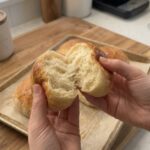
Ingredients
- 1 cup (240 g) plain Greek yogurt
- 1 cup (125–130 g) self-rising flour, plus a little extra if needed
- 1 tablespoon olive oil or melted butter (optional, for a softer finish)
Optional Topping
- 1 beaten egg or a little milk, for brushing
- Sesame seeds or garlic powder
A Closer Look at the Ingredients
Plain Greek yogurt. Greek yogurt is thick, strained yogurt with a higher protein content and less liquid than regular yogurt. That thickness matters, because it gives the dough structure and keeps it from becoming too wet. Use plain, unflavored yogurt. Full-fat (around 5 percent) or 2 percent both work well, and full-fat gives the richest, softest rolls. Fat-free versions can work too, though the rolls may be slightly less tender. Avoid thin, regular yogurt, which can make a sticky, batter-like dough.
Self-rising flour. Self-rising flour is all-purpose flour that already includes baking powder and salt, usually about 1½ teaspoons of baking powder and ¼ teaspoon of salt per cup. It’s what makes these rolls rise without yeast. For the best results, use a fresh bag, since baking powder loses strength over time. Weigh the flour if you can. A cup of self-rising flour is roughly 125 to 130 grams, but a scooped cup can vary a lot, and too much flour makes the rolls dense and dry.
Olive oil or melted butter (optional). A tablespoon mixed into the dough or brushed on the finished rolls adds richness, softness, and a nice sheen. Olive oil brings a light, fruity flavor, while butter gives a classic, bakery-style taste.
Egg or milk wash (optional). Brushing the tops with beaten egg gives the deepest golden color and a glossy, bakery-style finish. Milk creates a softer, more matte golden color, and is a good option if you don’t want to use egg.
Sesame seeds or garlic powder (optional). These add visual appeal and flavor. Sesame seeds give a nutty crunch, while garlic powder adds savory warmth.
How to Make Self-Rising Flour at Home
If you don’t have self-rising flour, you can make a substitute easily. For each cup of all-purpose flour, whisk in 1½ teaspoons of baking powder and ¼ teaspoon of salt. Measure the flour by spooning it into the cup and leveling it off, or use about 125 grams. Whisk thoroughly so the baking powder is evenly distributed. For this recipe, that means 1 cup of all-purpose flour, 1½ teaspoons of baking powder, and ¼ teaspoon of salt.
Instructions
Heat your oven to 375°F (190°C). Line a baking sheet with parchment paper so the rolls release easily and cleanup is simple.
Add the Greek yogurt and self-rising flour to a mixing bowl. If you’re using the optional tablespoon of olive oil or melted butter in the dough, add it now. Mix with a spoon or spatula until a shaggy dough forms and no dry flour remains. The dough will be slightly sticky. If it’s very sticky and impossible to handle, add a little extra flour, one tablespoon at a time, mixing after each addition. Stop as soon as the dough can be shaped. Don’t overmix or overwork it, since that can make the rolls tough.
Lightly flour your hands and your work surface. Turn the dough out and divide it into 6 equal portions, using a kitchen scale for precision if you have one, since equal portions bake evenly. Gently shape each portion into a smooth ball by tucking the edges underneath and rolling it lightly between your palms. Place the rolls on the prepared baking sheet with a little space between them. They’ll expand slightly as they bake. For soft rolls with touching sides, place them close together.
Brush the tops lightly with beaten egg or milk if desired. This gives the rolls a golden, glossy finish. Sprinkle with sesame seeds or garlic powder for extra flavor.
Bake for 20 to 25 minutes, until the rolls are lightly golden and cooked through. A toothpick inserted into the center should come out clean, and the bottoms should sound hollow when tapped. Baking times can vary with the size of the rolls and your oven.
Brush the warm rolls with a little melted butter or olive oil if you like, for extra softness and shine. Let them cool for a few minutes on the pan or a rack, then serve warm.
Baking powder provides the lift. Baking powder contains an acid and a base. When it’s mixed with moisture and heated, the two react to produce carbon dioxide gas, which forms bubbles in the dough and makes it rise. Because this reaction begins when the flour meets the yogurt, it’s best to bake soon after mixing.
Yogurt adds acid and moisture. The natural acidity of yogurt gives the baking powder an extra boost, helping the dough rise, and it also tenderizes the gluten, producing a softer crumb.
Thick yogurt gives structure. Greek yogurt has had much of its liquid strained out, so it hydrates the flour without making the dough runny. That’s why regular yogurt can make this dough too wet.
Less handling means more tenderness. With no kneading, the gluten stays relaxed, and the rolls come out soft and biscuit-like rather than chewy like traditional yeast bread.
Egg wash makes color. Proteins and sugars in the egg brown quickly in the oven’s heat, giving a deep golden, shiny crust.