
Easy 3-Ingredient Greek Yogurt Dinner Rolls
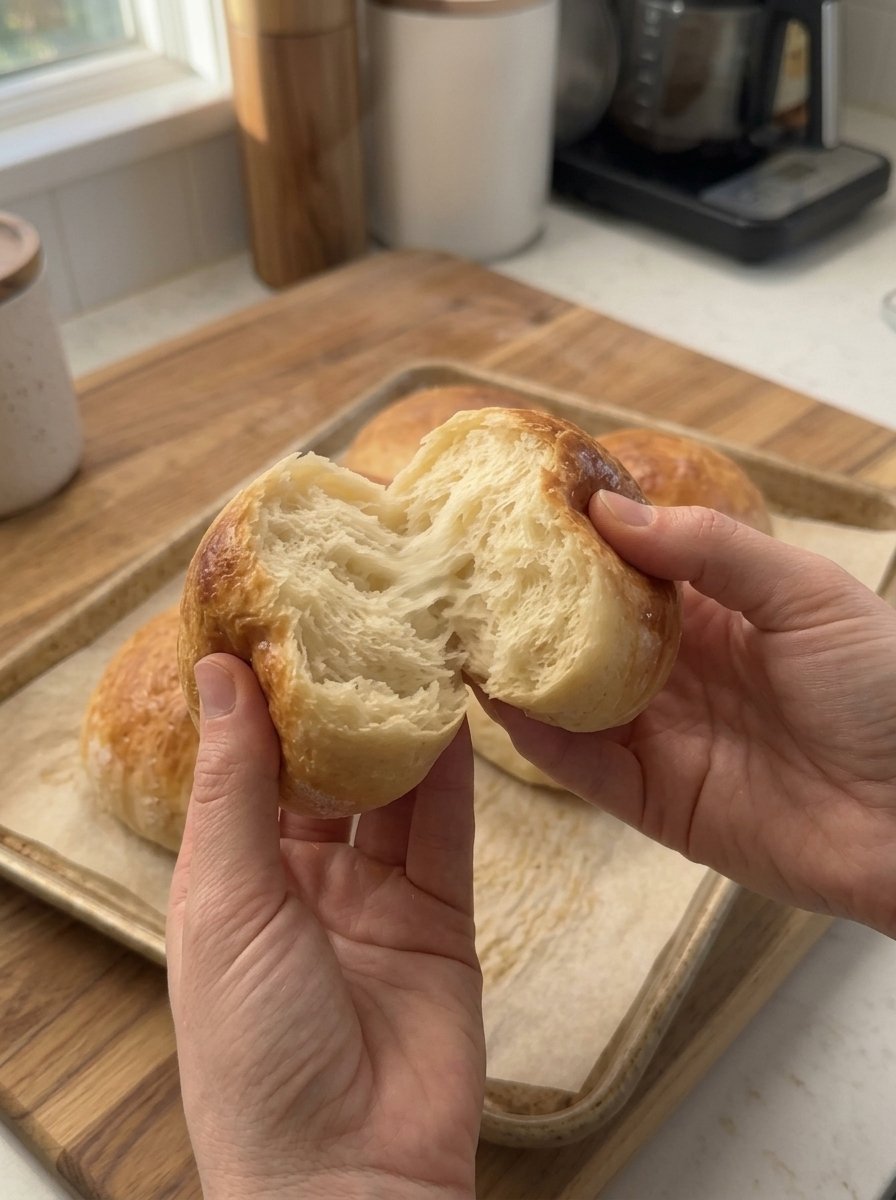
Easy 3-Ingredient Greek Yogurt Dinner Rolls: Soft, Fluffy & Ready in 35 Minutes 🍞🤍
Fresh, warm dinner rolls usually mean yeast, kneading, and hours of waiting. These Easy 3-Ingredient Greek Yogurt Dinner Rolls skip all of that. With just Greek yogurt, self-rising flour, and a little egg wash for a golden finish, you can have soft, fluffy, tender rolls on the table in about 35 minutes, with no yeast, no rising, and no complicated technique. You stir, shape, brush, and bake.
They’re perfect alongside soups, salads, pasta, roasts, or any family dinner, and they’re just as good split open for a mini sandwich or torn apart and dipped in olive oil. Because the ingredient list is so short, this recipe is also a great one to teach kids, a lifesaver for last-minute meals, and an easy way to turn a simple dinner into something special.
In this complete guide, you’ll find the full recipe, a closer look at each ingredient, step-by-step instructions with visual cues, the science of why yogurt and self-rising flour make bread without yeast, how to make your own self-rising flour, tips for the softest rolls, troubleshooting help, savory and sweet variations, serving ideas, storage and freezing instructions, and answers to the most common questions.
Why You’ll Love These Greek Yogurt Dinner Rolls ❤️
They really take just three ingredients. Greek yogurt and self-rising flour make the dough. A little oil or butter and an egg or milk wash are optional extras for a softer, more golden finish.
There’s no yeast and no rising time. The leavening is already in the flour, so you can skip proofing completely. From bowl to table takes about 35 minutes.
They’re soft and fluffy. Greek yogurt adds moisture, tenderness, and a subtle tang, giving the rolls a tender crumb reminiscent of a soft biscuit or a bakery roll.
They’re easy enough for beginners. The dough is mixed with a spoon and shaped with your hands. There’s nothing to knead and nothing to proof.
They’re a good protein boost. Greek yogurt adds protein, so the rolls are a little more filling than a typical bread roll.
They’re budget-friendly. Two pantry staples are all you need to make a batch.
They’re endlessly customizable. Add garlic, herbs, cheese, or seeds for savory rolls, or a bit of honey and cinnamon for a sweet twist.
They work for last-minute meals. When you realize dinner needs a bread side and you have 35 minutes, this is the recipe.
Recipe Overview
- Prep Time: 10 minutes
- Cook Time: 20–25 minutes
- Total Time: 35 minutes
- Servings: 6 rolls
Ingredients You’ll Need 🛒
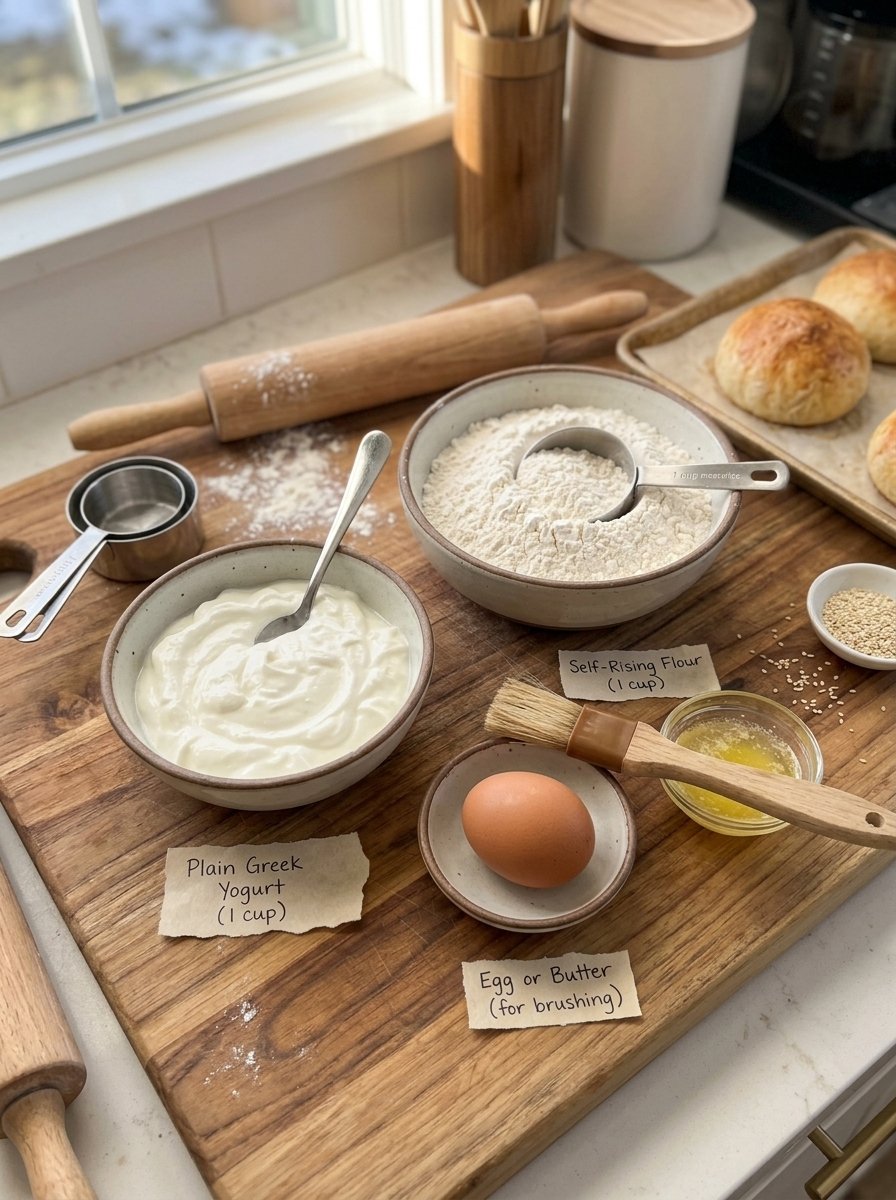
- 1 cup (240 g) plain Greek yogurt
- 1 cup (125–130 g) self-rising flour, plus a little extra if needed
- 1 tablespoon olive oil or melted butter (optional, for a softer finish)
Optional Topping
- 1 beaten egg or a little milk, for brushing
- Sesame seeds or garlic powder
A Closer Look at the Ingredients
Plain Greek yogurt. Greek yogurt is thick, strained yogurt with a higher protein content and less liquid than regular yogurt. That thickness matters, because it gives the dough structure and keeps it from becoming too wet. Use plain, unflavored yogurt. Full-fat (around 5 percent) or 2 percent both work well, and full-fat gives the richest, softest rolls. Fat-free versions can work too, though the rolls may be slightly less tender. Avoid thin, regular yogurt, which can make a sticky, batter-like dough.
Self-rising flour. Self-rising flour is all-purpose flour that already includes baking powder and salt, usually about 1½ teaspoons of baking powder and ¼ teaspoon of salt per cup. It’s what makes these rolls rise without yeast. For the best results, use a fresh bag, since baking powder loses strength over time. Weigh the flour if you can. A cup of self-rising flour is roughly 125 to 130 grams, but a scooped cup can vary a lot, and too much flour makes the rolls dense and dry.
Olive oil or melted butter (optional). A tablespoon mixed into the dough or brushed on the finished rolls adds richness, softness, and a nice sheen. Olive oil brings a light, fruity flavor, while butter gives a classic, bakery-style taste.
Egg or milk wash (optional). Brushing the tops with beaten egg gives the deepest golden color and a glossy, bakery-style finish. Milk creates a softer, more matte golden color, and is a good option if you don’t want to use egg.
Sesame seeds or garlic powder (optional). These add visual appeal and flavor. Sesame seeds give a nutty crunch, while garlic powder adds savory warmth.
How to Make Self-Rising Flour at Home
If you don’t have self-rising flour, you can make a substitute easily. For each cup of all-purpose flour, whisk in 1½ teaspoons of baking powder and ¼ teaspoon of salt. Measure the flour by spooning it into the cup and leveling it off, or use about 125 grams. Whisk thoroughly so the baking powder is evenly distributed. For this recipe, that means 1 cup of all-purpose flour, 1½ teaspoons of baking powder, and ¼ teaspoon of salt.
Step-by-Step Instructions 👩🍳
Step 1: Preheat the Oven
Heat your oven to 375°F (190°C). Line a baking sheet with parchment paper so the rolls release easily and cleanup is simple.
Step 2: Make the Dough
Add the Greek yogurt and self-rising flour to a mixing bowl. If you’re using the optional tablespoon of olive oil or melted butter in the dough, add it now. Mix with a spoon or spatula until a shaggy dough forms and no dry flour remains. The dough will be slightly sticky. If it’s very sticky and impossible to handle, add a little extra flour, one tablespoon at a time, mixing after each addition. Stop as soon as the dough can be shaped. Don’t overmix or overwork it, since that can make the rolls tough.
Step 3: Shape the Rolls
Lightly flour your hands and your work surface. Turn the dough out and divide it into 6 equal portions, using a kitchen scale for precision if you have one, since equal portions bake evenly. Gently shape each portion into a smooth ball by tucking the edges underneath and rolling it lightly between your palms. Place the rolls on the prepared baking sheet with a little space between them. They’ll expand slightly as they bake. For soft rolls with touching sides, place them close together.
Step 4: Add the Topping
Brush the tops lightly with beaten egg or milk if desired. This gives the rolls a golden, glossy finish. Sprinkle with sesame seeds or garlic powder for extra flavor.
Step 5: Bake
Bake for 20 to 25 minutes, until the rolls are lightly golden and cooked through. A toothpick inserted into the center should come out clean, and the bottoms should sound hollow when tapped. Baking times can vary with the size of the rolls and your oven.
Step 6: Finish and Serve
Brush the warm rolls with a little melted butter or olive oil if you like, for extra softness and shine. Let them cool for a few minutes on the pan or a rack, then serve warm.
The Science: How Yogurt and Self-Rising Flour Make Bread Without Yeast 🔬
Baking powder provides the lift. Baking powder contains an acid and a base. When it’s mixed with moisture and heated, the two react to produce carbon dioxide gas, which forms bubbles in the dough and makes it rise. Because this reaction begins when the flour meets the yogurt, it’s best to bake soon after mixing.
Yogurt adds acid and moisture. The natural acidity of yogurt gives the baking powder an extra boost, helping the dough rise, and it also tenderizes the gluten, producing a softer crumb.
Thick yogurt gives structure. Greek yogurt has had much of its liquid strained out, so it hydrates the flour without making the dough runny. That’s why regular yogurt can make this dough too wet.
Less handling means more tenderness. With no kneading, the gluten stays relaxed, and the rolls come out soft and biscuit-like rather than chewy like traditional yeast bread.
Egg wash makes color. Proteins and sugars in the egg brown quickly in the oven’s heat, giving a deep golden, shiny crust.
Expert Tips for Perfect Greek Yogurt Rolls 💡
Use thick Greek yogurt. It gives the dough better structure. If your yogurt looks thin or watery, drain it in a fine-mesh strainer lined with a paper towel for 15 to 30 minutes first.
Avoid adding too much flour. A slightly tacky dough helps keep the rolls tender. Dust your hands rather than the dough.
Check the center. If the rolls brown too quickly, lower the oven temperature slightly and bake until cooked through. You can also tent them with foil.
Make them savory. Add dried herbs, garlic powder, or a little grated Parmesan.
Measure flour carefully. Spoon the flour into the measuring cup and level it off, or weigh it.
Don’t overwork the dough. Mix just until the dough comes together, then shape quickly.
Use fresh self-rising flour. Old flour can result in flat, dense rolls.
Shape quickly and bake immediately. The leavening starts as soon as the flour meets the yogurt, so don’t let the dough sit.
Make the rolls the same size. This ensures even baking.
Preheat the oven fully. Putting rolls into a cold or lukewarm oven makes them spread rather than rise.
Troubleshooting Common Problems
My dough is too sticky. The yogurt may have been too thin, or the flour measurement was low. Add a tablespoon of flour at a time until the dough can be shaped, and use floured hands.
My dough is too dry or crumbly. Too much flour was likely added. Mix in a teaspoon of yogurt or milk at a time until it comes together.
The rolls are dense. Too much flour, overworking the dough, or old self-rising flour can cause density. Measure carefully and mix gently.
The rolls are gummy inside. They may need a few more minutes in the oven. Check with a toothpick or an instant-read thermometer reading around 200°F (93°C).
The rolls are pale. Brush with egg wash or milk and bake a few minutes longer.
The rolls are too brown outside but raw inside. The oven may run hot, or the rolls were too large. Lower the temperature by 25°F and tent with foil.
The rolls spread flat. The dough may have been too wet, or the oven wasn’t hot enough. Use thicker yogurt, a little extra flour, and preheat fully.
The rolls taste bland. Add a pinch of salt to the dough, or use garlic powder and herbs. Brushing with garlic butter after baking also helps.
The rolls taste too tangy. Use a milder yogurt, or add a teaspoon of honey or sugar.
The rolls didn’t rise. Check the freshness of your self-rising flour or baking powder.
Delicious Variations to Try 🧄
Garlic Parmesan rolls. Mix ¼ cup of grated Parmesan and ½ teaspoon of garlic powder into the dough, then brush the baked rolls with garlic butter.
Herb rolls. Add 1 to 2 teaspoons of dried Italian herbs, rosemary, or thyme.
Cheddar and chive rolls. Fold in ½ cup of shredded cheddar and a tablespoon of chopped chives.
Everything bagel rolls. Brush with egg wash and top with everything bagel seasoning.
Sesame seed rolls. Sprinkle generously with sesame seeds, like a classic burger bun.
Jalapeño cheese rolls. Add diced pickled jalapeños and shredded pepper jack.
Sweet cinnamon rolls. Add 1 tablespoon of honey or sugar and a pinch of cinnamon to the dough, then brush with melted butter and sprinkle with cinnamon sugar.
Mini rolls. Divide the dough into 10 to 12 pieces and bake for 15 to 18 minutes.
Burger buns. Divide into 4 pieces, flatten slightly, and bake for around 22 to 25 minutes.
Pull-apart rolls. Place the rolls close together in a greased baking dish so they bake into a tender, pull-apart bunch.
Dairy-free option. Use a thick, plain dairy-free yogurt, though results can vary.
What to Serve with Greek Yogurt Dinner Rolls
- Soups and stews: Perfect for dunking into tomato soup, chicken noodle soup, or beef stew.
- Pasta dishes: Serve with lasagna, spaghetti, or baked ziti to soak up the sauce.
- Salads: A warm roll turns a simple salad into a satisfying meal.
- Roasts and chicken dinners: Add them to the table with roast chicken, pot roast, or meatloaf.
- Breakfast: Split and fill with scrambled eggs and cheese, or serve with butter and jam.
- Sandwiches and sliders: Use them for ham and cheese, turkey, or chicken salad.
- Dips: Serve with olive oil and balsamic vinegar, hummus, or spinach dip.
- Holiday dinners: Add a warm basket of homemade rolls to your holiday spread.
Storage and Freezing Instructions
Room temperature: Cool the rolls completely, then store in an airtight container or bag for up to 2 days. They’re best fresh, as the soft texture firms up with time.
Refrigerator: Store in an airtight container for up to 4 days. Because these rolls contain dairy, refrigeration is a good option for longer storage. Warm before serving.
Freezer: Cool completely, wrap well or place in a freezer bag, and freeze for up to 3 months. Thaw at room temperature or in the refrigerator.
Reheating: Warm rolls in a 350°F (175°C) oven for 5 to 8 minutes, wrapped loosely in foil, or in the microwave for 10 to 20 seconds. Brush with butter for extra softness.
Make-ahead: Because the dough begins to rise as soon as the ingredients are combined, it’s best to bake it right away. Instead, make the dough fresh and bake, then reheat baked rolls when needed.
Frequently Asked Questions
Can I make these rolls without self-rising flour? Yes. Make your own by whisking 1½ teaspoons of baking powder and ¼ teaspoon of salt into 1 cup of all-purpose flour.
What kind of yogurt works best? Thick, plain Greek yogurt works best. Full-fat gives the softest rolls, but 2 percent also works well.
Can I use regular yogurt instead of Greek yogurt? Regular yogurt is thinner, so the dough will be sticky. You’d need to strain it or add more flour, which can change the texture.
Why are there no eggs in the dough? Greek yogurt and self-rising flour make a dough that holds together without egg. The egg is used only as an optional wash for color.
Can I make the dough ahead of time? It’s best to bake right after mixing because the baking powder starts working when it meets the moisture. Baked rolls store and reheat well.
Why are my rolls dense? The most common causes are too much flour, overmixing, or old self-rising flour.
Can I double the recipe? Yes. Double the ingredients, and either bake on a larger sheet or use two pans. Divide the dough into 12 portions.
Can I make these gluten-free? You can try a gluten-free self-rising flour blend, but results will vary and the texture may be different.
Can I use whole wheat flour? You can replace part of the flour with whole wheat, though the rolls will be denser. Add a baking powder boost if you’re making your own self-rising flour.
Can I make them sweet? Absolutely. Add a tablespoon of honey or sugar and a pinch of cinnamon, and brush with butter after baking.
Can I make them in an air fryer? Yes. Air fry at around 350°F (175°C) for about 12 to 15 minutes, checking for doneness, as air fryers run hot.
Do I have to use the egg wash? No. It only adds color and shine. Milk or melted butter works as a substitute, or you can skip it.
Why do the rolls taste tangy? Greek yogurt has a natural tang. It’s usually mild, and baking mellows it, but you can balance it with a little honey or sugar.
Final Thoughts 🍞✨
These Easy 3-Ingredient Greek Yogurt Dinner Rolls show that homemade bread doesn’t have to be complicated. With only Greek yogurt and self-rising flour at the core, a quick stir, and about 35 minutes from start to finish, you can pull soft, fluffy, golden rolls out of the oven without yeast, kneading, or waiting. They’re ideal for busy weeknights, last-minute dinners, and anyone who wants a warm homemade roll on the table with minimal effort.
Mix, shape, brush, and bake, then serve them warm alongside your favorite soup, salad, or pasta. Save this recipe for the next time you need fresh dinner rolls fast!
Print
Easy 3-Ingredient Greek Yogurt Dinner Rolls
Ingredients
- 1 cup (240 g) plain Greek yogurt
- 1 cup (125–130 g) self-rising flour, plus a little extra if needed
- 1 tablespoon olive oil or melted butter (optional, for a softer finish)
Optional Topping
- 1 beaten egg or a little milk, for brushing
- Sesame seeds or garlic powder
A Closer Look at the Ingredients
Plain Greek yogurt. Greek yogurt is thick, strained yogurt with a higher protein content and less liquid than regular yogurt. That thickness matters, because it gives the dough structure and keeps it from becoming too wet. Use plain, unflavored yogurt. Full-fat (around 5 percent) or 2 percent both work well, and full-fat gives the richest, softest rolls. Fat-free versions can work too, though the rolls may be slightly less tender. Avoid thin, regular yogurt, which can make a sticky, batter-like dough.
Self-rising flour. Self-rising flour is all-purpose flour that already includes baking powder and salt, usually about 1½ teaspoons of baking powder and ¼ teaspoon of salt per cup. It’s what makes these rolls rise without yeast. For the best results, use a fresh bag, since baking powder loses strength over time. Weigh the flour if you can. A cup of self-rising flour is roughly 125 to 130 grams, but a scooped cup can vary a lot, and too much flour makes the rolls dense and dry.
Olive oil or melted butter (optional). A tablespoon mixed into the dough or brushed on the finished rolls adds richness, softness, and a nice sheen. Olive oil brings a light, fruity flavor, while butter gives a classic, bakery-style taste.
Egg or milk wash (optional). Brushing the tops with beaten egg gives the deepest golden color and a glossy, bakery-style finish. Milk creates a softer, more matte golden color, and is a good option if you don’t want to use egg.
Sesame seeds or garlic powder (optional). These add visual appeal and flavor. Sesame seeds give a nutty crunch, while garlic powder adds savory warmth.
How to Make Self-Rising Flour at Home
If you don’t have self-rising flour, you can make a substitute easily. For each cup of all-purpose flour, whisk in 1½ teaspoons of baking powder and ¼ teaspoon of salt. Measure the flour by spooning it into the cup and leveling it off, or use about 125 grams. Whisk thoroughly so the baking powder is evenly distributed. For this recipe, that means 1 cup of all-purpose flour, 1½ teaspoons of baking powder, and ¼ teaspoon of salt.
Instructions
Heat your oven to 375°F (190°C). Line a baking sheet with parchment paper so the rolls release easily and cleanup is simple.
Add the Greek yogurt and self-rising flour to a mixing bowl. If you’re using the optional tablespoon of olive oil or melted butter in the dough, add it now. Mix with a spoon or spatula until a shaggy dough forms and no dry flour remains. The dough will be slightly sticky. If it’s very sticky and impossible to handle, add a little extra flour, one tablespoon at a time, mixing after each addition. Stop as soon as the dough can be shaped. Don’t overmix or overwork it, since that can make the rolls tough.
Lightly flour your hands and your work surface. Turn the dough out and divide it into 6 equal portions, using a kitchen scale for precision if you have one, since equal portions bake evenly. Gently shape each portion into a smooth ball by tucking the edges underneath and rolling it lightly between your palms. Place the rolls on the prepared baking sheet with a little space between them. They’ll expand slightly as they bake. For soft rolls with touching sides, place them close together.
Brush the tops lightly with beaten egg or milk if desired. This gives the rolls a golden, glossy finish. Sprinkle with sesame seeds or garlic powder for extra flavor.
Bake for 20 to 25 minutes, until the rolls are lightly golden and cooked through. A toothpick inserted into the center should come out clean, and the bottoms should sound hollow when tapped. Baking times can vary with the size of the rolls and your oven.
Brush the warm rolls with a little melted butter or olive oil if you like, for extra softness and shine. Let them cool for a few minutes on the pan or a rack, then serve warm.
Baking powder provides the lift. Baking powder contains an acid and a base. When it’s mixed with moisture and heated, the two react to produce carbon dioxide gas, which forms bubbles in the dough and makes it rise. Because this reaction begins when the flour meets the yogurt, it’s best to bake soon after mixing.
Yogurt adds acid and moisture. The natural acidity of yogurt gives the baking powder an extra boost, helping the dough rise, and it also tenderizes the gluten, producing a softer crumb.
Thick yogurt gives structure. Greek yogurt has had much of its liquid strained out, so it hydrates the flour without making the dough runny. That’s why regular yogurt can make this dough too wet.
Less handling means more tenderness. With no kneading, the gluten stays relaxed, and the rolls come out soft and biscuit-like rather than chewy like traditional yeast bread.
Egg wash makes color. Proteins and sugars in the egg brown quickly in the oven’s heat, giving a deep golden, shiny crust.