
High-Protein Cottage Cheese Dill Bagel Bread
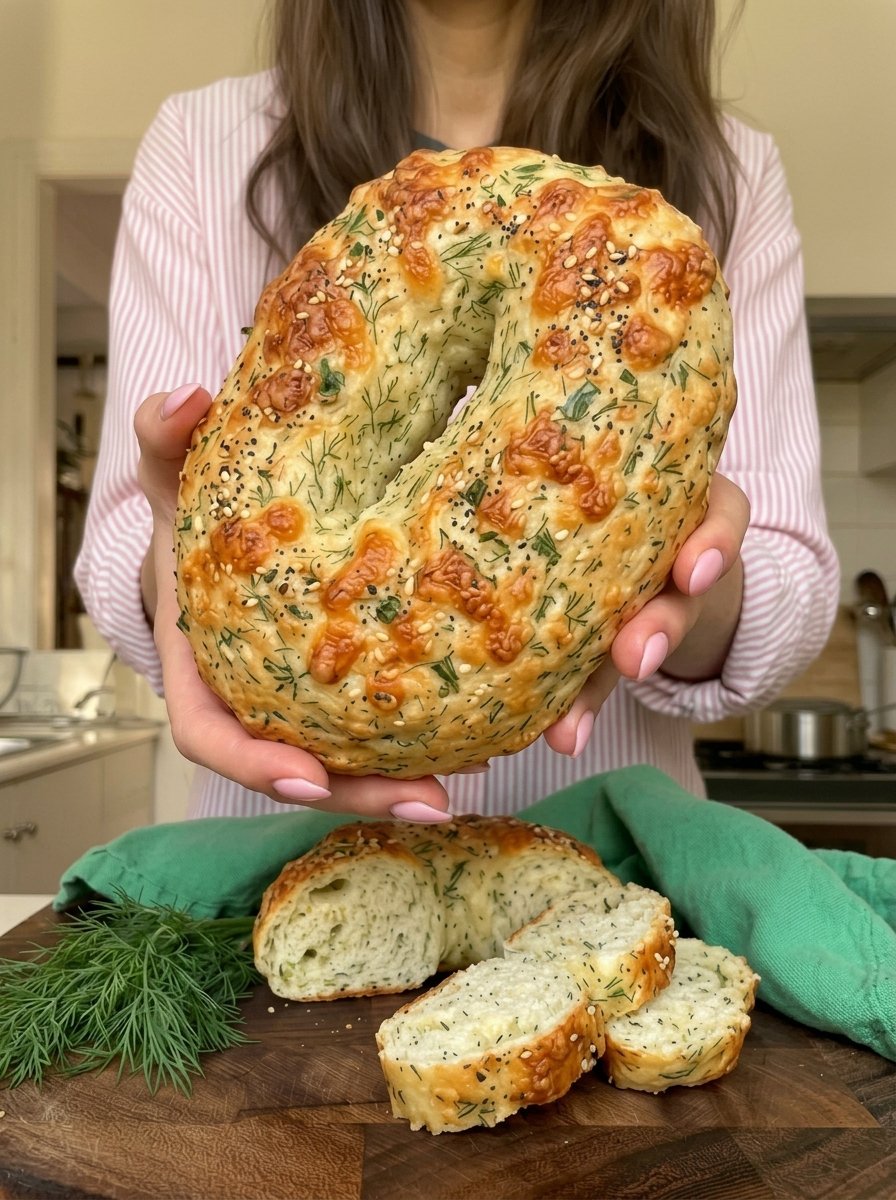
High-Protein Cottage Cheese Dill Bagel Bread: A Soft, Savory No-Yeast Loaf
Some recipes earn a permanent spot in your weekly rotation because they are simple, flexible, and genuinely delicious. This cottage cheese dill bagel bread is one of them. It is soft, savory, and fragrant with fresh dill, with the kind of bagel-inspired flavor you would normally expect from a bakery. The best part is that it needs no yeast, no kneading, and no proofing time.
The base of the loaf is cottage cheese and eggs, which make it richer in protein than a typical bread. Blended until smooth, the cottage cheese disappears into a creamy batter that bakes into a tender, sliceable loaf. Fresh dill, garlic powder, and black pepper add herby, savory notes, and an optional sprinkle of sesame seeds or everything bagel seasoning gives it that classic bagel shop finish.
Toast a slice and top it with cream cheese, smoked salmon, cucumber, or avocado, and you have a satisfying breakfast or snack. This guide covers the full recipe, step-by-step instructions, ingredient notes, why cottage cheese works so well in baking, troubleshooting, variations, serving ideas, storage, and answers to common questions.
Recipe at a Glance
- Prep time: 10 minutes
- Cook time: 40 to 45 minutes
- Total time: 50 to 55 minutes
- Servings: 8 slices
- Difficulty: Very easy
- Method: Blender and one bowl, no yeast, no kneading
Why You’ll Love This Cottage Cheese Dill Bread
It is high in protein. Cottage cheese and eggs make up most of the loaf, so slices tend to be more filling than regular bread. Exact numbers depend on your brands and ingredients, so check labels if you track macros.
It is quick and easy. Blend, stir, pour, and bake. There is no yeast to activate, no dough to knead, and no rising time.
It has real bagel-style flavor. Fresh dill, garlic, black pepper, and everything bagel seasoning recreate the savory profile of a loaded bagel.
It uses simple ingredients. You need cottage cheese, eggs, flour, baking powder, and a few seasonings.
The texture is soft and tender. The cottage cheese keeps the crumb moist, and the eggs give the loaf structure.
It is great for meal prep. The loaf slices cleanly, keeps for several days in the refrigerator, and freezes well in individual slices.
It is endlessly adaptable. Swap herbs, add cheese, or change the toppings to suit your taste.
Why Cottage Cheese Works So Well in Bread
Cottage cheese has become a favorite ingredient in high-protein baking, and for good reason.
Moisture and tenderness. The liquid and milk fat in cottage cheese keep the crumb soft and prevent the loaf from drying out.
Protein structure. The proteins in cottage cheese and eggs set as they bake, giving the loaf enough structure to hold together and slice neatly, even without much flour.
A mild, creamy tang. Cottage cheese adds gentle richness and a slight tang that pairs naturally with dill, garlic, and cream cheese. Baked into the loaf, it tastes savory and balanced rather than distinctly like cottage cheese.
A smooth batter when blended. Blending breaks up the curds into a creamy base, so the finished loaf has an even, tender crumb. If you prefer a more rustic loaf, you can skip blending and leave small pockets of curd.
Versatility. The same base works for sweet or savory loaves, muffins, and even flatbreads.
Ingredients for Cottage Cheese Dill Bagel Bread
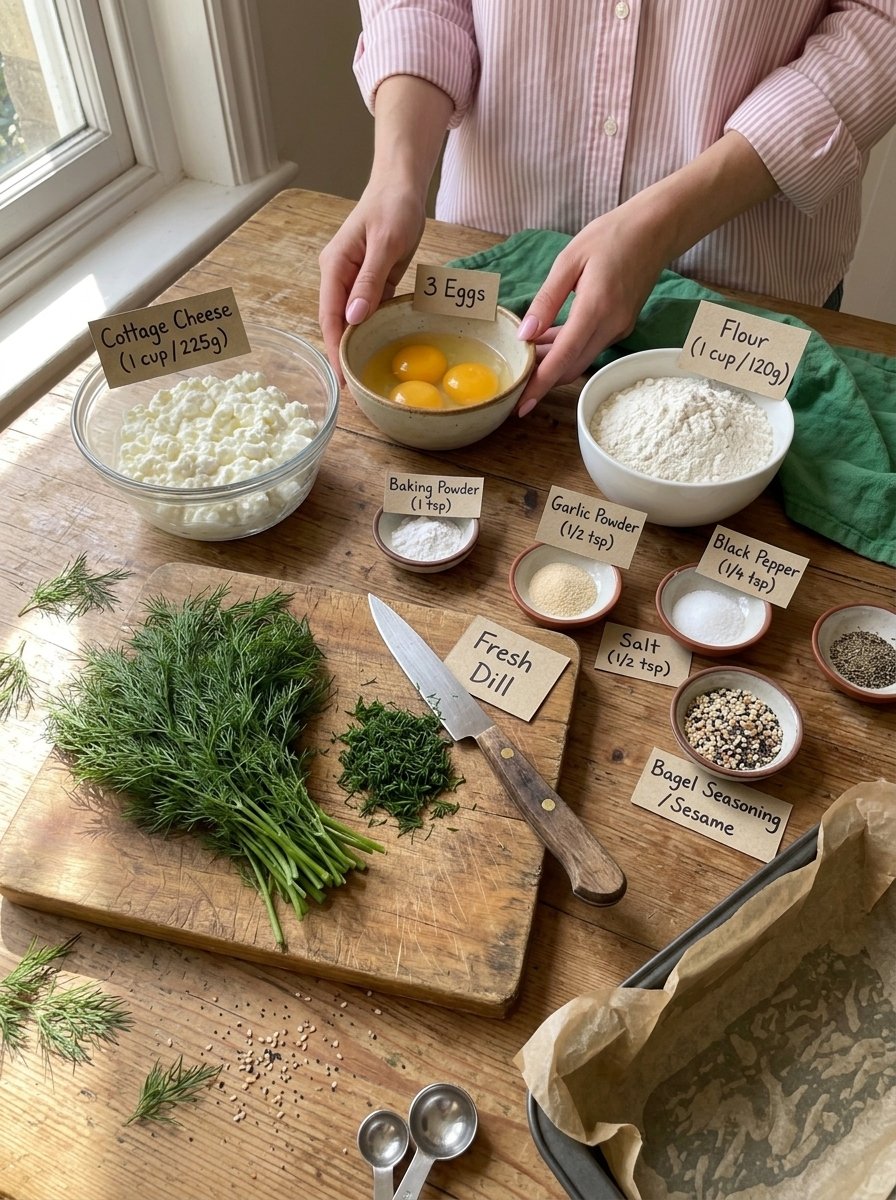
- 1 cup (225 g) cottage cheese
- 3 large eggs
- 1 cup (120 g) all-purpose flour or oat flour
- 1 teaspoon baking powder
- 2 tablespoons fresh dill, finely chopped
- ½ teaspoon garlic powder
- ½ teaspoon salt
- ¼ teaspoon black pepper
- 1 tablespoon sesame seeds or everything bagel seasoning (optional)
Ingredient Notes and Smart Swaps
Cottage cheese. Full-fat or 2% cottage cheese gives the best flavor and moisture. Low-fat versions work, but the loaf may be a little less rich. If your cottage cheese looks watery, drain off the excess liquid before blending, so the batter does not turn out too wet. Small-curd and large-curd both work once blended.
Eggs. Eggs provide structure, protein, and lift. Use large eggs, and bring them to room temperature if possible so they blend smoothly with the cottage cheese.
All-purpose flour or oat flour. All-purpose flour gives a lighter, more traditional crumb. Oat flour makes a softer, slightly denser, and more wholesome loaf, and you can make your own by blending rolled oats into a fine powder. Measure carefully: spoon the flour into the cup and level it off, or weigh it for the best accuracy. Too much flour makes the loaf dry and dense.
Baking powder. This provides the lift in a no-yeast loaf. Check that it is fresh. Old baking powder loses its power and produces a flat, dense result. To test it, stir a half teaspoon into a little hot water; it should fizz right away.
Fresh dill. Dill is the star herb here, with a bright, grassy, slightly anise-like flavor. Pat it dry before chopping, so you do not add excess moisture to the batter. If you only have dried dill, use about 2 teaspoons, though the flavor will be more subdued.
Garlic powder. It adds savory depth without the moisture or harshness of fresh garlic.
Salt and black pepper. Salt sharpens every other flavor. Black pepper adds a gentle bite.
Sesame seeds or everything bagel seasoning. The topping creates a crunchy, flavorful crust and the signature bagel look. Everything bagel seasoning typically includes sesame seeds, poppy seeds, dried garlic, dried onion, and salt, so you can adjust the salt in the batter slightly if your blend is very salty.
Equipment You’ll Need
- A blender or food processor
- A mixing bowl and spatula
- A small loaf pan (about 8½ x 4½ inches), lined with parchment or greased
- A toothpick or skewer for testing doneness
- A wire cooling rack
- A serrated knife for slicing
- Measuring cups, spoons, or a kitchen scale
How to Make Cottage Cheese Dill Bagel Bread (Step by Step)
Step 1: Preheat the Oven and Prepare the Pan
Heat your oven to 350°F (175°C). Line a small loaf pan with parchment paper, leaving some overhang so you can lift the loaf out easily, or lightly grease it.
Step 2: Blend the Wet Ingredients
Add the cottage cheese and eggs to a blender or food processor. Blend until smooth and creamy, usually about 30 to 60 seconds. Scrape down the sides once if needed. A smooth base is the secret to an even, tender crumb.
Step 3: Mix the Batter
Transfer the blended mixture to a bowl. Add the flour, baking powder, chopped dill, garlic powder, salt, and black pepper. Stir gently until just combined. Do not overmix, which can make the loaf tough. The batter should be thick but pourable, similar to a loose muffin batter.
Step 4: Prepare the Loaf
Pour the batter into the prepared pan and smooth the top with a spatula. Sprinkle with sesame seeds or everything bagel seasoning if you like. Gently tap the pan on the counter to release any large air bubbles.
Step 5: Bake
Bake for 40 to 45 minutes, until the loaf is golden and a toothpick inserted into the center comes out clean. If the top browns too quickly, loosely cover it with foil during the final minutes of baking. Because this loaf is moist and dense, the center takes a while to set, so do not pull it out early.
Step 6: Cool Completely
Let the bread rest in the pan for 10 minutes, then transfer it to a wire rack. Allow it to cool before slicing for the best texture. A warm loaf can seem soft and custardy, and it slices much more cleanly once cooled.
Step 7: Serve and Enjoy
Toast the slices and top them with cream cheese, avocado, or smoked salmon for a delicious savory breakfast. Toasting crisps the edges and deepens the flavor.
Tips for Success
- Blend the cottage cheese thoroughly. A smooth batter gives a smoother crumb and hides the curds.
- Pat the dill dry. Wet herbs add excess moisture and can make the loaf gummy.
- Measure the flour carefully. Too much flour leads to dry, dense bread.
- Do not overmix. Stir until just combined.
- Check for doneness in the center. Test with a toothpick in the middle, not near the edges.
- Tent with foil if needed. If the top is browning before the inside is done, cover loosely.
- Cool before slicing. Patience gives neater slices and a better texture.
- Use a serrated knife. It cuts through the crust and soft crumb without squashing the slice.
- Toast the slices. Toasting improves both texture and flavor.
- Line the pan with parchment. It prevents sticking and makes lifting out easy.
Troubleshooting Common Problems
The loaf is dense or heavy. Overmixing, too much flour, or old baking powder is the usual cause. Measure accurately, stir gently, and use fresh baking powder.
The center is wet or gummy. The loaf may need more time, or the cottage cheese may have been watery. Bake a few more minutes until a toothpick comes out clean, and cool fully before slicing.
The loaf is dry. Too much flour or too long in the oven can dry it out. Check doneness near the early end of the window, and choose full-fat or 2% cottage cheese.
The top browns too fast. Tent loosely with foil or move the rack down a level.
The bread sticks to the pan. Use parchment paper, or grease the pan well and dust it lightly with flour.
The loaf did not rise much. This is a dense, high-protein loaf, so it will not rise like a yeast bread. If it is completely flat, check your baking powder’s freshness.
The loaf sank in the middle. The oven may have been opened too early, the batter may have been too wet, or the loaf may have been underbaked. Make sure it is fully set before removing it.
The flavor is bland. Add a little more salt, boost the dill, or top generously with everything bagel seasoning. Toasting also intensifies flavor.
The loaf tastes too much like cottage cheese. Blend the mixture until completely smooth, and serve toasted with a savory topping to balance the flavor.
The texture is too eggy. Use room temperature eggs and blend thoroughly. A little extra dill and garlic powder also helps.
Variations to Try
- Everything bagel version: Top generously with everything bagel seasoning and add a pinch of onion powder to the batter.
- Cheddar dill: Fold in ½ cup of shredded sharp cheddar or Parmesan.
- Scallion dill: Add 2 tablespoons of chopped scallions or chives.
- Lemon dill: Add a teaspoon of lemon zest for a brighter flavor that pairs beautifully with smoked salmon.
- Jalapeño dill: Add diced jalapeño for a spicy kick.
- Everything muffins: Divide the batter into a greased muffin tin and bake for about 22 to 28 minutes.
- Garlic herb: Add dried parsley, thyme, or Italian seasoning.
- Oat flour version: Use oat flour for a softer, more wholesome crumb.
- Seeded top: Sprinkle with poppy seeds, sesame seeds, or sunflower seeds.
- Everything cream cheese swirl: Dollop a little cream cheese on the batter and swirl it in before baking.
How to Serve Cottage Cheese Dill Bagel Bread
Toasted with cream cheese. The classic bagel pairing, and a perfect match for the dill.
With smoked salmon. Layer cream cheese, smoked salmon, thinly sliced red onion, capers, cucumber, and extra dill.
As avocado toast. Top toasted slices with mashed avocado, lemon juice, chili flakes, and a soft egg.
As a breakfast sandwich. Fill with a fried egg, cheese, and spinach.
With soup. It pairs well with tomato soup, cucumber soup, and hearty vegetable soups.
For sandwiches. Try turkey and Swiss, egg salad, tuna salad, or chicken salad.
With eggs. Serve alongside scrambled eggs, an omelet, or poached eggs.
As a snack. Spread with hummus, tzatziki, or cottage cheese and tomato.
On a brunch board. Slice and arrange with cheeses, cucumbers, radishes, smoked fish, and fruit.
As croutons. Cube and toast stale slices for savory salad croutons.
How to Store Cottage Cheese Dill Bagel Bread
Because this loaf contains cottage cheese and eggs, treat it as a perishable item.
- Refrigerator: Once fully cooled, store in an airtight container for up to 4 days.
- Freezer: Slice the loaf, separate slices with parchment paper, and freeze in a freezer bag for up to 2 to 3 months. Toast slices straight from frozen.
- Room temperature: Avoid leaving the loaf out for long periods, especially in warm kitchens.
- Reheating: Warm slices in a toaster, toaster oven, or a 350°F (175°C) oven for a few minutes, or microwave for 15 to 20 seconds for a softer texture.
Discard the bread if you notice mold, an off smell, or a sour taste.
Frequently Asked Questions
Do I have to blend the cottage cheese?
Blending is recommended for a smooth crumb, but you can skip it for a more rustic texture with small pockets of cheese.
Does this bread taste like cottage cheese?
Not strongly. Baked and seasoned with dill and garlic, the cottage cheese gives the loaf a creamy, mildly tangy richness rather than a distinct cottage cheese flavor.
Is this bread really high in protein?
Cottage cheese and eggs are the main ingredients, so the loaf generally has more protein than standard bread. Exact amounts vary by brand and ingredients, so check labels or use a nutrition calculator.
Is this bread low-carb or keto?
Not as written, since it contains flour. It has fewer carbohydrates than many breads, but it is not a keto recipe.
Can I use oat flour instead of all-purpose flour?
Yes. Oat flour gives a softer, slightly denser loaf with a wholesome flavor. Make sure the oats are certified gluten-free if you need to avoid gluten.
Is it gluten-free?
Only if you use oat flour that is certified gluten-free. All-purpose flour contains gluten.
Can I use dried dill?
Yes. Use about 2 teaspoons of dried dill in place of 2 tablespoons of fresh, though the flavor will be milder.
Can I use low-fat cottage cheese?
Yes, but the loaf may be a little less moist and rich. Full-fat or 2% usually gives the best result.
Can I make muffins instead?
Yes. Divide the batter among a greased muffin tin and bake for roughly 22 to 28 minutes, until golden and set.
Why is my bread wet in the center?
It may need more baking time, or the cottage cheese may have been watery. Bake a few more minutes and test with a toothpick.
Can I double the recipe?
Yes. Double the ingredients, use a standard 9×5-inch loaf pan, and bake longer, checking the center with a toothpick.
Can I add cheese?
Absolutely. Shredded cheddar, Parmesan, or Gruyère are all excellent additions.
How do I keep it from falling apart when slicing?
Cool it completely, then use a serrated knife with a gentle sawing motion.
Can I freeze it?
Yes. Slice it first, then freeze the slices in a bag with parchment between them. Toast straight from the freezer.
Can I make it dairy-free?
This recipe is built around dairy cottage cheese, so a dairy-free version would need a dedicated recipe, and results vary.
Final Thoughts
This high-protein cottage cheese dill bagel bread shows how a few simple ingredients can deliver big flavor. With no yeast, no kneading, and only about 10 minutes of prep, you get a soft, savory loaf that works for breakfast, sandwiches, snacks, and brunch boards.
The creamy cottage cheese base keeps the crumb moist, the eggs add structure and protein, and the fresh dill brings a bright, herby bagel-shop flavor. Make it as written, then try cheddar, lemon zest, scallions, or jalapeños to make it your own.
Quick Recipe Recap:
- Preheat the oven to 350°F (175°C) and prepare a small loaf pan.
- Blend the cottage cheese and eggs until smooth.
- Stir in the flour, baking powder, dill, garlic powder, salt, and pepper until just combined.
- Pour into the pan and top with sesame seeds or everything bagel seasoning.
- Bake 40 to 45 minutes until golden and a toothpick comes out clean.
- Cool 10 minutes in the pan, then fully on a wire rack before slicing.
- Toast and top with cream cheese, avocado, or smoked salmon.

High-Protein Cottage Cheese Dill Bagel Bread
Ingredients
- 1 cup (225 g) cottage cheese
- 3 large eggs
- 1 cup (120 g) all-purpose flour or oat flour
- 1 teaspoon baking powder
- 2 tablespoons fresh dill, finely chopped
- ½ teaspoon garlic powder
- ½ teaspoon salt
- ¼ teaspoon black pepper
- 1 tablespoon sesame seeds or everything bagel seasoning (optional)
Ingredient Notes and Smart Swaps
Cottage cheese. Full-fat or 2% cottage cheese gives the best flavor and moisture. Low-fat versions work, but the loaf may be a little less rich. If your cottage cheese looks watery, drain off the excess liquid before blending, so the batter does not turn out too wet. Small-curd and large-curd both work once blended.
Eggs. Eggs provide structure, protein, and lift. Use large eggs, and bring them to room temperature if possible so they blend smoothly with the cottage cheese.
All-purpose flour or oat flour. All-purpose flour gives a lighter, more traditional crumb. Oat flour makes a softer, slightly denser, and more wholesome loaf, and you can make your own by blending rolled oats into a fine powder. Measure carefully: spoon the flour into the cup and level it off, or weigh it for the best accuracy. Too much flour makes the loaf dry and dense.
Baking powder. This provides the lift in a no-yeast loaf. Check that it is fresh. Old baking powder loses its power and produces a flat, dense result. To test it, stir a half teaspoon into a little hot water; it should fizz right away.
Fresh dill. Dill is the star herb here, with a bright, grassy, slightly anise-like flavor. Pat it dry before chopping, so you do not add excess moisture to the batter. If you only have dried dill, use about 2 teaspoons, though the flavor will be more subdued.
Garlic powder. It adds savory depth without the moisture or harshness of fresh garlic.
Salt and black pepper. Salt sharpens every other flavor. Black pepper adds a gentle bite.
Sesame seeds or everything bagel seasoning. The topping creates a crunchy, flavorful crust and the signature bagel look. Everything bagel seasoning typically includes sesame seeds, poppy seeds, dried garlic, dried onion, and salt, so you can adjust the salt in the batter slightly if your blend is very salty.
Instructions
- A blender or food processor
- A mixing bowl and spatula
- A small loaf pan (about 8½ x 4½ inches), lined with parchment or greased
- A toothpick or skewer for testing doneness
- A wire cooling rack
- A serrated knife for slicing
- Measuring cups, spoons, or a kitchen scale
How to Make Cottage Cheese Dill Bagel Bread (Step by Step)
Step 1: Preheat the Oven and Prepare the Pan
Heat your oven to 350°F (175°C). Line a small loaf pan with parchment paper, leaving some overhang so you can lift the loaf out easily, or lightly grease it.
Step 2: Blend the Wet Ingredients
Add the cottage cheese and eggs to a blender or food processor. Blend until smooth and creamy, usually about 30 to 60 seconds. Scrape down the sides once if needed. A smooth base is the secret to an even, tender crumb.
Step 3: Mix the Batter
Transfer the blended mixture to a bowl. Add the flour, baking powder, chopped dill, garlic powder, salt, and black pepper. Stir gently until just combined. Do not overmix, which can make the loaf tough. The batter should be thick but pourable, similar to a loose muffin batter.
Step 4: Prepare the Loaf
Pour the batter into the prepared pan and smooth the top with a spatula. Sprinkle with sesame seeds or everything bagel seasoning if you like. Gently tap the pan on the counter to release any large air bubbles.
Step 5: Bake
Bake for 40 to 45 minutes, until the loaf is golden and a toothpick inserted into the center comes out clean. If the top browns too quickly, loosely cover it with foil during the final minutes of baking. Because this loaf is moist and dense, the center takes a while to set, so do not pull it out early.
Step 6: Cool Completely
Let the bread rest in the pan for 10 minutes, then transfer it to a wire rack. Allow it to cool before slicing for the best texture. A warm loaf can seem soft and custardy, and it slices much more cleanly once cooled.
Step 7: Serve and Enjoy
Toast the slices and top them with cream cheese, avocado, or smoked salmon for a delicious savory breakfast. Toasting crisps the edges and deepens the flavor.