Ingredients
- 3 cups (375 g) all-purpose flour or bread flour
- 1 cup (240 g) mashed potatoes, cooled and smooth
- ¾ cup (180 ml) lukewarm water or milk, plus extra if needed
- 2¼ teaspoons (7 g) instant yeast
- 2 tablespoons (25 g) sugar or honey
- 1½ teaspoons (8 g) salt
- 2 tablespoons (28 g) melted butter or olive oil
For the topping (optional)
- 1 tablespoon melted butter, for brushing
- 1 teaspoon sesame seeds or rolled oats
🧂 Ingredient Notes and Smart Substitutions
Mashed potatoes
Plain, smooth, cooled mashed potatoes are the key ingredient. Use plain mashed potatoes with no milk, butter, or seasoning added, as the recipe advises, so that the moisture level stays predictable. Roughly 2 medium potatoes will give you about 1 cup (240 g) of mashed potatoes, though this varies with the size and variety.
Best potatoes: Russet potatoes are starchy and fluffy when mashed, which makes them an excellent choice. Yukon Gold potatoes are creamier and also work well. Avoid waxy potatoes, which mash up gluey.
Shortcut: Leftover plain mashed potatoes work if they contain no added milk or butter. Plain instant mashed potato flakes, prepared with water and cooled, can work too in a pinch, though results may vary.
Flour
All-purpose flour makes a soft, tender loaf. Bread flour gives a slightly chewier, taller loaf. Either is great. Measure carefully by weight (375 g) if you can, because the potato adds moisture, and too much flour makes a dry, dense loaf.
Lukewarm water or milk
Water gives a lighter loaf with a crisper crust. Milk gives a richer, softer, slightly sweeter crumb and a golden crust. Both should be lukewarm, about 100 to 110°F (38 to 43°C), so they wake the yeast without harming it. If the liquid is too hot, it can kill the yeast.
Instant yeast
Instant yeast mixes directly with the dry ingredients. If you use active dry yeast, use the same amount, and dissolve it in the lukewarm liquid for 5 to 10 minutes first, until foamy.
Sugar or honey
A couple of tablespoons feed the yeast, add a gentle sweetness, and help the crust brown. Honey adds a subtle floral flavor and extra softness.
Salt
Salt flavors the dough and controls the yeast. Do not leave it out, or the bread will taste flat and may over-rise.
Melted butter or olive oil
Fat makes the crumb tender and rich. Butter gives a classic flavor, and olive oil gives a lighter, fruitier note.
Topping
Brushing with melted butter keeps the crust soft and flavorful. Sesame seeds or rolled oats add a rustic look and a bit of texture. Both are optional.
Instructions
Peel and boil the potatoes until fork-tender. Drain thoroughly, mash until smooth, and let them cool completely before using. Avoid adding milk or butter to the mashed potatoes.
Tip: Mash the potatoes with a ricer or a masher until no lumps remain. Lumps will show up as small chunks in the finished bread. Make sure the potatoes are fully cooled, because hot potatoes can damage the yeast.
In a large mixing bowl, combine the flour, instant yeast, sugar, and salt. Stir until evenly distributed.
Add the cooled mashed potatoes, lukewarm water or milk, and melted butter or olive oil. Mix with a sturdy spoon until a sticky, rough dough forms. The dough should be soft and slightly tacky. If it feels too dry, add a little extra water, a tablespoon at a time.
How to tell it is right: The dough should look shaggy and sticky, with no dry flour left. It will not be smooth like a kneaded dough, and that is perfectly fine.
Cover the bowl with plastic wrap or a clean kitchen towel. Leave it in a warm place for approximately 1 to 1½ hours, or until the dough has noticeably risen and looks puffy.
Warm spot ideas: Place the bowl in an oven that is turned off with the light on, near a sunny window, or on top of the refrigerator. If your kitchen is cool, the rise may take longer. Look for visible expansion rather than relying only on the clock.
Lightly grease a 9 × 5-inch (23 × 13 cm) loaf pan with butter or oil, or line it with parchment paper. A parchment sling makes it easy to lift the loaf out after baking.
Lightly flour your hands and work surface. Gently turn out the dough and shape it into a loaf without kneading. Press it into a rough rectangle, fold it into thirds like a letter, and roll or tuck it into a log. Place it seam-side down in the prepared pan.
Tip: The dough will be sticky, so use enough flour on your hands to handle it without working extra flour into the dough.
Cover the pan loosely and let the dough rise for 30 to 45 minutes, or until it looks puffy and has risen close to the rim of the pan.
The poke test: Gently press a fingertip into the dough. If the dent springs back slowly and only partly, it is ready. If it springs back immediately, wait a few more minutes. If it does not spring back at all, bake right away.
During the final part of the rise, preheat your oven to 375°F (190°C).
Bake for approximately 35 to 45 minutes, until the loaf is golden brown and cooked through. If the top browns too quickly, loosely cover it with foil. The center should reach approximately 190 to 200°F (88 to 93°C) when checked with a food thermometer.
Remove the bread from the oven and brush the top with melted butter for a soft, flavorful crust. Let it rest in the pan for 10 minutes, then transfer it to a wire rack to cool completely.
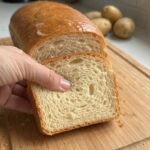
Cut into even slices and enjoy the soft, fluffy texture with butter, jam, cheese, eggs, or your favorite sandwich fillings! 🥪🍞
Tip: Use a serrated bread knife and a gentle sawing motion for neat slices.