
Easy No-Knead Potato Sandwich Bread
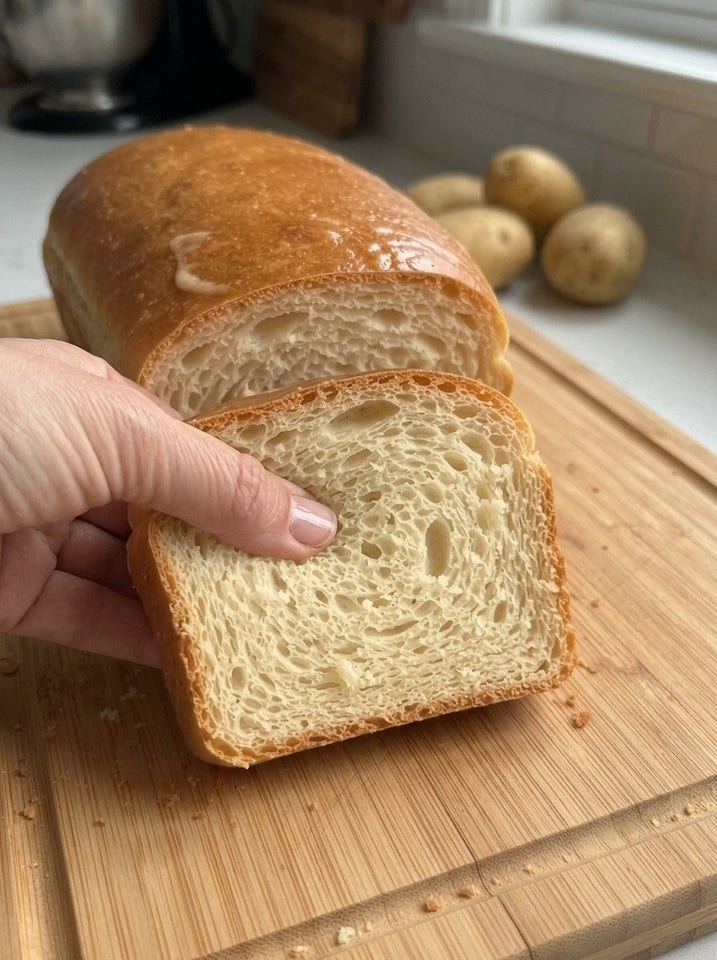
Easy No-Knead Potato Sandwich Bread: Soft, Fluffy & Homemade 🍞🥔
Easy No-Knead Potato Sandwich Bread Recipe (Soft, Fluffy & Moist) Meta description: Bake soft, fluffy no-knead potato sandwich bread with mashed potatoes and simple pantry ingredients. A moist, tender crumb and golden crust, perfect for sandwiches, toast, and grilled cheese. Focus keyword: potato sandwich bread Secondary keywords: no-knead potato bread, mashed potato bread, soft sandwich bread recipe, easy homemade bread, no knead sandwich loaf, potato bread recipe, homemade sandwich bread, moist bread with potatoes
This Easy No-Knead Potato Sandwich Bread is wonderfully soft, fluffy, and perfect for everyday sandwiches! 🥔✨ It is made with tender mashed potatoes, simple pantry ingredients, and no kneading at all. The result is a homemade loaf with a moist, tender crumb and a beautifully golden crust.
The potatoes are the secret. They hold moisture in the dough and keep the bread soft for days, which makes this loaf ideal for breakfast toast, hearty sandwiches, grilled cheese, or enjoying warm with a little butter. It is an easy, comforting bread recipe that brings homemade goodness to your kitchen without the hard work. ❤️
In this complete guide, you will find the full recipe, step-by-step instructions, an explanation of why potatoes make bread so soft, ingredient notes, troubleshooting, serving ideas, variations, storage and freezing tips, and answers to common questions. Let’s bake! 👩🍳
🤔 What Is Potato Bread?
Potato bread is a soft, tender loaf made with potatoes, either mashed, boiled, or in the form of potato flour. The potato adds moisture, softness, and a subtle richness to the crumb. Because the starch in potatoes holds on to water, the bread stays moist and fresh longer than many plain white breads.
This recipe makes it easy. There is no kneading, only a quick mix with a sturdy spoon, two rises, and a bake in a standard loaf pan. The dough is sticky and soft, and it turns into a golden, tender sandwich loaf.
🥔 Why Potatoes Make Bread So Soft
Adding mashed potato to bread dough does several helpful things.
- Moisture retention. Potato starch absorbs and holds water, which keeps the crumb moist and slows staling.
- A tender, plush crumb. The starch interferes slightly with gluten formation, making the bread softer rather than chewy.
- Natural yeast food. The starch gives the yeast something to feed on, which supports a good rise.
- A subtle richness. Potatoes lend a gentle, earthy flavor and a creamy texture.
- Longer shelf life. Potato bread stays fresh and soft for several days.
This is why potato bread is a favorite for sandwiches, burgers, and toast. It is soft enough to bite through easily, yet sturdy enough to hold fillings.
❤️ Why You Will Love This Recipe
- ✅ No kneading. Just mix with a spoon.
- ✅ Wonderfully soft and fluffy. A moist, tender crumb.
- ✅ A golden crust. Brushed with butter for a soft, flavorful finish.
- ✅ Simple pantry ingredients. Flour, potatoes, yeast, sugar, salt, and butter.
- ✅ Great for sandwiches. Holds fillings and slices neatly.
- ✅ Stays soft for days. The potatoes help keep it moist.
- ✅ A smart use for leftover potatoes. Great way to use plain mashed potatoes.
- ✅ Freezer friendly. Slice and freeze for quick toast.
- ✅ Comforting and homemade. The smell alone is worth it.
🛒 Ingredients
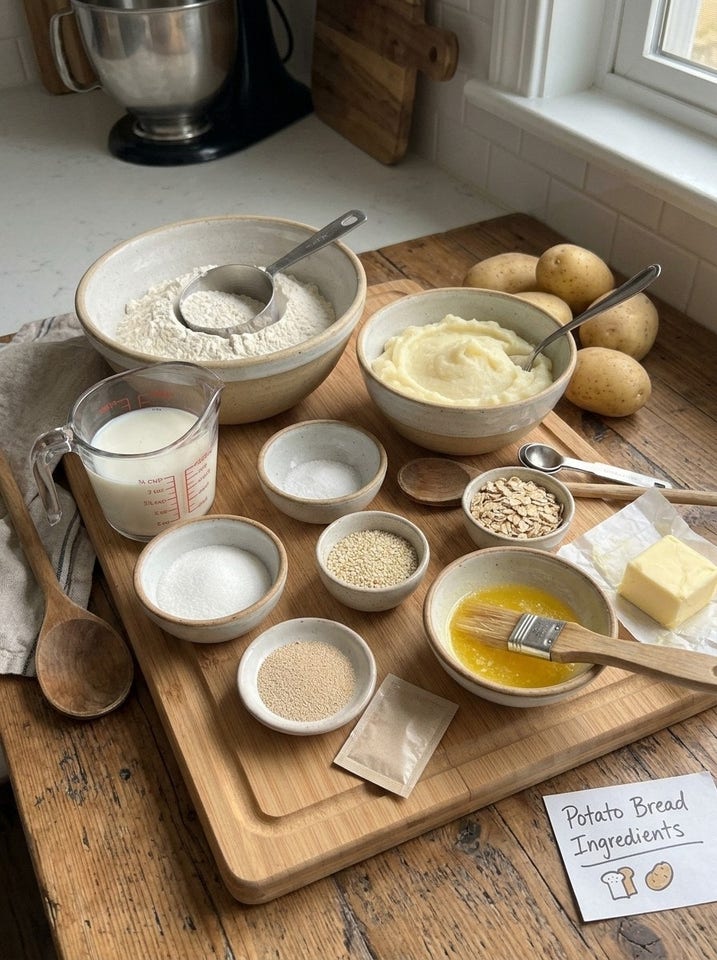
For the dough
- 3 cups (375 g) all-purpose flour or bread flour
- 1 cup (240 g) mashed potatoes, cooled and smooth
- ¾ cup (180 ml) lukewarm water or milk, plus extra if needed
- 2¼ teaspoons (7 g) instant yeast
- 2 tablespoons (25 g) sugar or honey
- 1½ teaspoons (8 g) salt
- 2 tablespoons (28 g) melted butter or olive oil
For the topping (optional)
- 1 tablespoon melted butter, for brushing
- 1 teaspoon sesame seeds or rolled oats
🧂 Ingredient Notes and Smart Substitutions
Mashed potatoes
Plain, smooth, cooled mashed potatoes are the key ingredient. Use plain mashed potatoes with no milk, butter, or seasoning added, as the recipe advises, so that the moisture level stays predictable. Roughly 2 medium potatoes will give you about 1 cup (240 g) of mashed potatoes, though this varies with the size and variety.
Best potatoes: Russet potatoes are starchy and fluffy when mashed, which makes them an excellent choice. Yukon Gold potatoes are creamier and also work well. Avoid waxy potatoes, which mash up gluey.
Shortcut: Leftover plain mashed potatoes work if they contain no added milk or butter. Plain instant mashed potato flakes, prepared with water and cooled, can work too in a pinch, though results may vary.
Flour
All-purpose flour makes a soft, tender loaf. Bread flour gives a slightly chewier, taller loaf. Either is great. Measure carefully by weight (375 g) if you can, because the potato adds moisture, and too much flour makes a dry, dense loaf.
Lukewarm water or milk
Water gives a lighter loaf with a crisper crust. Milk gives a richer, softer, slightly sweeter crumb and a golden crust. Both should be lukewarm, about 100 to 110°F (38 to 43°C), so they wake the yeast without harming it. If the liquid is too hot, it can kill the yeast.
Instant yeast
Instant yeast mixes directly with the dry ingredients. If you use active dry yeast, use the same amount, and dissolve it in the lukewarm liquid for 5 to 10 minutes first, until foamy.
Sugar or honey
A couple of tablespoons feed the yeast, add a gentle sweetness, and help the crust brown. Honey adds a subtle floral flavor and extra softness.
Salt
Salt flavors the dough and controls the yeast. Do not leave it out, or the bread will taste flat and may over-rise.
Melted butter or olive oil
Fat makes the crumb tender and rich. Butter gives a classic flavor, and olive oil gives a lighter, fruitier note.
Topping
Brushing with melted butter keeps the crust soft and flavorful. Sesame seeds or rolled oats add a rustic look and a bit of texture. Both are optional.
👩🍳 How to Make No-Knead Potato Sandwich Bread: Step-by-Step
Step 1: Prepare the potatoes
Peel and boil the potatoes until fork-tender. Drain thoroughly, mash until smooth, and let them cool completely before using. Avoid adding milk or butter to the mashed potatoes.
Tip: Mash the potatoes with a ricer or a masher until no lumps remain. Lumps will show up as small chunks in the finished bread. Make sure the potatoes are fully cooled, because hot potatoes can damage the yeast.
Step 2: Mix the dry ingredients
In a large mixing bowl, combine the flour, instant yeast, sugar, and salt. Stir until evenly distributed.
Step 3: Add the wet ingredients
Add the cooled mashed potatoes, lukewarm water or milk, and melted butter or olive oil. Mix with a sturdy spoon until a sticky, rough dough forms. The dough should be soft and slightly tacky. If it feels too dry, add a little extra water, a tablespoon at a time.
How to tell it is right: The dough should look shaggy and sticky, with no dry flour left. It will not be smooth like a kneaded dough, and that is perfectly fine.
Step 4: Let the dough rise
Cover the bowl with plastic wrap or a clean kitchen towel. Leave it in a warm place for approximately 1 to 1½ hours, or until the dough has noticeably risen and looks puffy.
Warm spot ideas: Place the bowl in an oven that is turned off with the light on, near a sunny window, or on top of the refrigerator. If your kitchen is cool, the rise may take longer. Look for visible expansion rather than relying only on the clock.
Step 5: Prepare the loaf pan
Lightly grease a 9 × 5-inch (23 × 13 cm) loaf pan with butter or oil, or line it with parchment paper. A parchment sling makes it easy to lift the loaf out after baking.
Step 6: Shape the dough
Lightly flour your hands and work surface. Gently turn out the dough and shape it into a loaf without kneading. Press it into a rough rectangle, fold it into thirds like a letter, and roll or tuck it into a log. Place it seam-side down in the prepared pan.
Tip: The dough will be sticky, so use enough flour on your hands to handle it without working extra flour into the dough.
Step 7: Allow the second rise
Cover the pan loosely and let the dough rise for 30 to 45 minutes, or until it looks puffy and has risen close to the rim of the pan.
The poke test: Gently press a fingertip into the dough. If the dent springs back slowly and only partly, it is ready. If it springs back immediately, wait a few more minutes. If it does not spring back at all, bake right away.
Step 8: Preheat the oven
During the final part of the rise, preheat your oven to 375°F (190°C).
Step 9: Bake until golden
Bake for approximately 35 to 45 minutes, until the loaf is golden brown and cooked through. If the top browns too quickly, loosely cover it with foil. The center should reach approximately 190 to 200°F (88 to 93°C) when checked with a food thermometer.
Step 10: Brush and cool
Remove the bread from the oven and brush the top with melted butter for a soft, flavorful crust. Let it rest in the pan for 10 minutes, then transfer it to a wire rack to cool completely.
Step 11: Slice and serve
Cut into even slices and enjoy the soft, fluffy texture with butter, jam, cheese, eggs, or your favorite sandwich fillings! 🥪🍞
Tip: Use a serrated bread knife and a gentle sawing motion for neat slices.
🔬 Why No-Knead Bread Works
Kneading helps develop gluten, which gives bread its structure. In no-knead recipes, time does the job instead.
- A wet, sticky dough. More moisture lets the gluten network form on its own as the dough rests.
- Time. During the rise, flour hydrates fully and gluten strands link together without effort.
- Gentle handling. Minimal shaping keeps the air bubbles that make the crumb soft and open.
- Potatoes. The extra moisture and softness from mashed potatoes suit a no-knead method, giving a tender result even without extensive gluten development.
The result is a loaf that is a little more rustic than a heavily kneaded loaf, but wonderfully soft, moist, and flavorful.
💡 Tips for Perfect No-Knead Potato Bread
- Use cooled mashed potatoes. Hot potatoes can damage the yeast and interfere with rising.
- Measure the potatoes accurately. Too much potato can make the dough overly wet and the loaf heavy.
- Adjust the liquid gradually. Potatoes and flour vary in moisture absorption, so add the water or milk little by little until the dough is soft and sticky.
- Do not add too much flour. A slightly tacky dough helps produce a tender, moist crumb.
- Give the dough enough time to rise. Rising times depend on your kitchen temperature. Look for visible expansion rather than relying only on the clock.
- Avoid overproofing. The dough should look puffy and hold its shape. If it rises too far, the loaf may collapse during baking.
- Brush with butter. Brushing the warm loaf with melted butter helps keep the crust soft and flavorful.
- Wait before slicing. Let the bread cool completely so the crumb can set and the slices hold together neatly.
- Use a thermometer. The center should reach approximately 190 to 200°F (88 to 93°C).
- Tent with foil if needed. If the top browns too fast, cover it loosely.
🔧 Troubleshooting: Common Potato Bread Problems
My dough is too sticky to handle. This dough is meant to be sticky. Use floured hands and a floured surface rather than kneading in extra flour. A bench scraper helps with shaping.
My dough is too dry. Add a tablespoon of lukewarm water or milk at a time until the dough is soft and tacky. Differences in flour and potato moisture mean the amount of liquid can vary.
My dough did not rise. The yeast may be old, or the potatoes or liquid may have been too hot. Make sure the potatoes are fully cooled and the liquid is only lukewarm. A cool kitchen also slows rising, so allow more time.
My loaf is dense and heavy. Too much potato, too much flour, under-rising, or old yeast can all cause a dense loaf. Measure carefully, let the dough puff up fully, and check the yeast.
My loaf collapsed in the oven. It may have over-proofed. Bake once the dough has risen close to the rim of the pan, and use the poke test.
The top is browning too fast. Loosely cover the loaf with foil for the last part of baking.
The bottom is too dark. Move the pan to a higher rack, or place a baking sheet beneath it. Dark pans brown more quickly.
The inside is gummy. It may have been cut too soon, or underbaked. Let the loaf cool completely and make sure the center reaches 190 to 200°F (88 to 93°C).
There are lumps of potato in the bread. The potatoes were not mashed smoothly. Use a ricer or mash thoroughly before mixing.
The crust is too hard. Brush with melted butter right after baking, and cover the loaf with a towel while it cools.
The bread is bland. Make sure you used the full amount of salt. Brushing with butter and using milk instead of water also adds flavor.
🥪 Serving Ideas
This soft potato bread is delicious in so many ways.
For breakfast
- Toast with butter and jam: Simple and satisfying.
- Egg sandwiches: Fry or scramble eggs and tuck them between slices.
- Avocado toast: The soft crumb toasts beautifully.
- French toast: Potato bread soaks up custard and turns golden.
- Peanut butter and banana toast: A quick, filling start.
For lunch and dinner
- Grilled cheese: Toast two slices, add melted cheddar, and enjoy a soft, homemade potato bread sandwich for lunch! 🥔🧀🥪
- Deli sandwiches: Turkey, ham, roast beef, or chicken salad.
- BLTs: A soft, sturdy base for bacon, lettuce, and tomato.
- Egg salad and tuna sandwiches: Moist bread complements creamy fillings.
- Patty melts: A cozy, buttery option.
- With soup: Dunk a toasted slice in tomato or vegetable soup.
For snacks and sides
- Garlic toast: Brush with garlic butter and toast.
- Cinnamon toast: Butter, cinnamon, and sugar for a sweet treat.
- Warm with butter: Fresh slices straight from the oven.
- Croutons: Cube stale slices and bake until crisp.
- Bread pudding: A comforting dessert from leftover bread.
🌿 Delicious Flavor Variations
Once you have mastered the basic loaf, try these simple variations:
- Herb potato bread: Mix in 1 to 2 teaspoons of dried herbs, such as rosemary, thyme, or Italian seasoning.
- Cheesy potato bread: Fold in ½ cup of shredded cheddar.
- Garlic and chive: Add 1 tablespoon of chopped chives and 1 teaspoon of garlic powder.
- Whole wheat potato bread: Replace up to 1 cup of the flour with whole wheat flour, adding a splash more liquid if needed.
- Seeded top: Brush with butter and sprinkle with sesame seeds, poppy seeds, or oats.
- Honey potato bread: Use honey instead of sugar for a softer, slightly sweet crumb.
- Milk and butter version: Use milk and melted butter for a richer loaf.
- Cinnamon raisin potato bread: Add 1 teaspoon of cinnamon and ½ cup of raisins.
- Rolls: Divide the dough into 8 to 10 portions, place in a greased pan, and bake for about 20 to 25 minutes, checking early.
- Sweet potato version: Replace the mashed potatoes with plain mashed sweet potatoes for a golden, slightly sweeter loaf.
🧊 Storage Instructions
Room temperature
Store the cooled loaf in an airtight bag or container at room temperature for up to 2 to 3 days. The potatoes keep this bread moist and soft.
Refrigerator
Refrigeration is not recommended, as it can make bread stale faster.
Freezer
For longer storage, slice and freeze for up to 3 months. Separate the slices with parchment paper if you like, and place them in a freezer bag. Thaw or toast as needed, straight from the freezer.
Reheating
Warm slices in a toaster, or wrap the loaf in foil and warm it in a 350°F (175°C) oven for 8 to 10 minutes to refresh it.
Using leftovers
Turn stale bread into French toast, croutons, breadcrumbs, or bread pudding.
🥗 Nutrition Notes
Potato bread is a classic soft sandwich loaf made with simple ingredients. The potatoes add moisture and a little extra substance to each slice. It is best enjoyed as part of a balanced meal, such as in a sandwich with lean protein and vegetables.
Exact nutrition varies depending on ingredients and slice size. For accurate numbers, use a nutrition calculator with your specific ingredients.
❓ Frequently Asked Questions
Do I really not need to knead this bread?
Correct. A wet, sticky dough and two rises develop the structure for you. Just mix with a sturdy spoon until no dry flour remains.
Can I use leftover mashed potatoes?
Yes, as long as they are plain, with no milk, butter, or seasoning added, and fully cooled. If they contain added fat or liquid, the dough may need slightly more flour.
Can I use instant mashed potato flakes?
You can, prepared with water according to the package directions and cooled, but the flavor and texture may differ slightly from fresh potatoes.
What kind of potatoes are best?
Russet potatoes are starchy and mash up fluffy, making them a great choice. Yukon Gold potatoes are creamier and also work well.
Can I use milk instead of water?
Yes. Milk gives a richer, softer crumb and a more golden crust.
Can I use bread flour?
Yes. It makes a slightly chewier, taller loaf. All-purpose flour gives a softer loaf. Both work well.
Can I use active dry yeast?
Yes. Use the same amount, and dissolve it in the lukewarm liquid for 5 to 10 minutes before adding it to the other ingredients.
Why is my dough so sticky?
No-knead dough is meant to be soft and sticky. Use floured hands when shaping, and avoid adding too much flour, which makes the loaf dense.
Why did my bread turn out dense?
Possible causes include too much flour, too much potato, old yeast, or not enough rising time. Measure carefully, and give the dough time to become puffy.
Can I make the dough ahead of time?
Yes. After mixing, cover and refrigerate the dough for up to 24 hours. Let it warm up for 30 to 45 minutes, then shape, let it rise until puffy, and bake. Because this recipe has not been tested for this method, watch the dough rather than the clock.
How do I know when the bread is done?
It should be golden brown and sound hollow when tapped on the bottom. The center should reach approximately 190 to 200°F (88 to 93°C).
Can I bake it in a different pan?
A 9 × 5-inch (23 × 13 cm) pan is recommended. A smaller 8½ × 4½-inch pan will produce a taller loaf with a longer bake time. A larger pan will give a flatter loaf.
Can I freeze the dough?
It is easier to freeze the baked and sliced loaf. If you want to freeze the dough, do so after shaping, wrap it well, and thaw in the refrigerator before the second rise.
Can I make this vegan?
Yes. Use water or plant milk, olive oil instead of butter, and sugar instead of honey. Brush the top with olive oil or plant-based butter.
Can I use sweet potatoes?
Yes. Plain mashed sweet potatoes make a golden, slightly sweeter loaf. They can be a little wetter, so add the liquid gradually.
How long will it stay fresh?
Up to 2 to 3 days at room temperature in an airtight bag, and up to 3 months in the freezer when sliced.
Why do I brush it with butter?
Butter keeps the crust soft and adds flavor. It is optional, but it gives the loaf that classic sandwich-bread finish.
🏁 Final Thoughts
This Easy No-Knead Potato Sandwich Bread is proof that wonderful homemade bread does not need hard work. A handful of simple ingredients, a spoonful of patience, and a cup of mashed potatoes give you a soft, fluffy, golden loaf that is perfect for sandwiches, toast, and everyday meals. 🥔
Bake a loaf this week, and let the smell of fresh bread fill your kitchen. Toast two slices, add melted cheddar and your favorite filling, and enjoy a soft, homemade potato bread sandwich for lunch. ❤️
If you try this recipe, leave a comment and a star rating below, and tell us how you served your loaf. Happy baking! 💛
📌 Quick Recipe Card
Easy No-Knead Potato Sandwich Bread ⏳ Rise: 1 to 1½ hrs + 30 to 45 min | 🔥 Bake: 35 to 45 min | 🍽 Yield: 1 loaf (about 12 slices)
Ingredients: 3 cups (375 g) all-purpose or bread flour, 1 cup (240 g) mashed potatoes (cooled and smooth), ¾ cup (180 ml) lukewarm water or milk (plus extra if needed), 2¼ tsp (7 g) instant yeast, 2 tbsp (25 g) sugar or honey, 1½ tsp (8 g) salt, 2 tbsp (28 g) melted butter or olive oil. Optional topping: 1 tbsp melted butter and 1 tsp sesame seeds or rolled oats.
Method: Boil, mash, and fully cool the potatoes, without adding milk or butter. Combine the flour, yeast, sugar, and salt, then add the potatoes, lukewarm liquid, and melted butter. Mix with a sturdy spoon into a sticky, rough dough, adding a little more liquid if dry. Cover and let rise 1 to 1½ hours until puffy. Grease a 9 × 5-inch loaf pan. Shape the dough without kneading, place seam-side down in the pan, and let rise 30 to 45 minutes until near the rim. Preheat the oven to 375°F (190°C). Bake 35 to 45 minutes until golden, tenting with foil if the top browns too fast, until the center reaches 190 to 200°F (88 to 93°C). Brush with melted butter, rest 10 minutes in the pan, then cool completely on a wire rack before slicing.
Storage: Store in an airtight bag at room temperature up to 2 to 3 days, or slice and freeze up to 3 months.
Print
Easy No-Knead Potato Sandwich Bread
Ingredients
- 3 cups (375 g) all-purpose flour or bread flour
- 1 cup (240 g) mashed potatoes, cooled and smooth
- ¾ cup (180 ml) lukewarm water or milk, plus extra if needed
- 2¼ teaspoons (7 g) instant yeast
- 2 tablespoons (25 g) sugar or honey
- 1½ teaspoons (8 g) salt
- 2 tablespoons (28 g) melted butter or olive oil
For the topping (optional)
- 1 tablespoon melted butter, for brushing
- 1 teaspoon sesame seeds or rolled oats
🧂 Ingredient Notes and Smart Substitutions
Mashed potatoes
Plain, smooth, cooled mashed potatoes are the key ingredient. Use plain mashed potatoes with no milk, butter, or seasoning added, as the recipe advises, so that the moisture level stays predictable. Roughly 2 medium potatoes will give you about 1 cup (240 g) of mashed potatoes, though this varies with the size and variety.
Best potatoes: Russet potatoes are starchy and fluffy when mashed, which makes them an excellent choice. Yukon Gold potatoes are creamier and also work well. Avoid waxy potatoes, which mash up gluey.
Shortcut: Leftover plain mashed potatoes work if they contain no added milk or butter. Plain instant mashed potato flakes, prepared with water and cooled, can work too in a pinch, though results may vary.
Flour
All-purpose flour makes a soft, tender loaf. Bread flour gives a slightly chewier, taller loaf. Either is great. Measure carefully by weight (375 g) if you can, because the potato adds moisture, and too much flour makes a dry, dense loaf.
Lukewarm water or milk
Water gives a lighter loaf with a crisper crust. Milk gives a richer, softer, slightly sweeter crumb and a golden crust. Both should be lukewarm, about 100 to 110°F (38 to 43°C), so they wake the yeast without harming it. If the liquid is too hot, it can kill the yeast.
Instant yeast
Instant yeast mixes directly with the dry ingredients. If you use active dry yeast, use the same amount, and dissolve it in the lukewarm liquid for 5 to 10 minutes first, until foamy.
Sugar or honey
A couple of tablespoons feed the yeast, add a gentle sweetness, and help the crust brown. Honey adds a subtle floral flavor and extra softness.
Salt
Salt flavors the dough and controls the yeast. Do not leave it out, or the bread will taste flat and may over-rise.
Melted butter or olive oil
Fat makes the crumb tender and rich. Butter gives a classic flavor, and olive oil gives a lighter, fruitier note.
Topping
Brushing with melted butter keeps the crust soft and flavorful. Sesame seeds or rolled oats add a rustic look and a bit of texture. Both are optional.
Instructions
Peel and boil the potatoes until fork-tender. Drain thoroughly, mash until smooth, and let them cool completely before using. Avoid adding milk or butter to the mashed potatoes.
Tip: Mash the potatoes with a ricer or a masher until no lumps remain. Lumps will show up as small chunks in the finished bread. Make sure the potatoes are fully cooled, because hot potatoes can damage the yeast.
In a large mixing bowl, combine the flour, instant yeast, sugar, and salt. Stir until evenly distributed.
Add the cooled mashed potatoes, lukewarm water or milk, and melted butter or olive oil. Mix with a sturdy spoon until a sticky, rough dough forms. The dough should be soft and slightly tacky. If it feels too dry, add a little extra water, a tablespoon at a time.
How to tell it is right: The dough should look shaggy and sticky, with no dry flour left. It will not be smooth like a kneaded dough, and that is perfectly fine.
Cover the bowl with plastic wrap or a clean kitchen towel. Leave it in a warm place for approximately 1 to 1½ hours, or until the dough has noticeably risen and looks puffy.
Warm spot ideas: Place the bowl in an oven that is turned off with the light on, near a sunny window, or on top of the refrigerator. If your kitchen is cool, the rise may take longer. Look for visible expansion rather than relying only on the clock.
Lightly grease a 9 × 5-inch (23 × 13 cm) loaf pan with butter or oil, or line it with parchment paper. A parchment sling makes it easy to lift the loaf out after baking.
Lightly flour your hands and work surface. Gently turn out the dough and shape it into a loaf without kneading. Press it into a rough rectangle, fold it into thirds like a letter, and roll or tuck it into a log. Place it seam-side down in the prepared pan.
Tip: The dough will be sticky, so use enough flour on your hands to handle it without working extra flour into the dough.
Cover the pan loosely and let the dough rise for 30 to 45 minutes, or until it looks puffy and has risen close to the rim of the pan.
The poke test: Gently press a fingertip into the dough. If the dent springs back slowly and only partly, it is ready. If it springs back immediately, wait a few more minutes. If it does not spring back at all, bake right away.
During the final part of the rise, preheat your oven to 375°F (190°C).
Bake for approximately 35 to 45 minutes, until the loaf is golden brown and cooked through. If the top browns too quickly, loosely cover it with foil. The center should reach approximately 190 to 200°F (88 to 93°C) when checked with a food thermometer.
Remove the bread from the oven and brush the top with melted butter for a soft, flavorful crust. Let it rest in the pan for 10 minutes, then transfer it to a wire rack to cool completely.
Cut into even slices and enjoy the soft, fluffy texture with butter, jam, cheese, eggs, or your favorite sandwich fillings! 🥪🍞
Tip: Use a serrated bread knife and a gentle sawing motion for neat slices.