
3-Ingredient High-Protein Lentil Bread
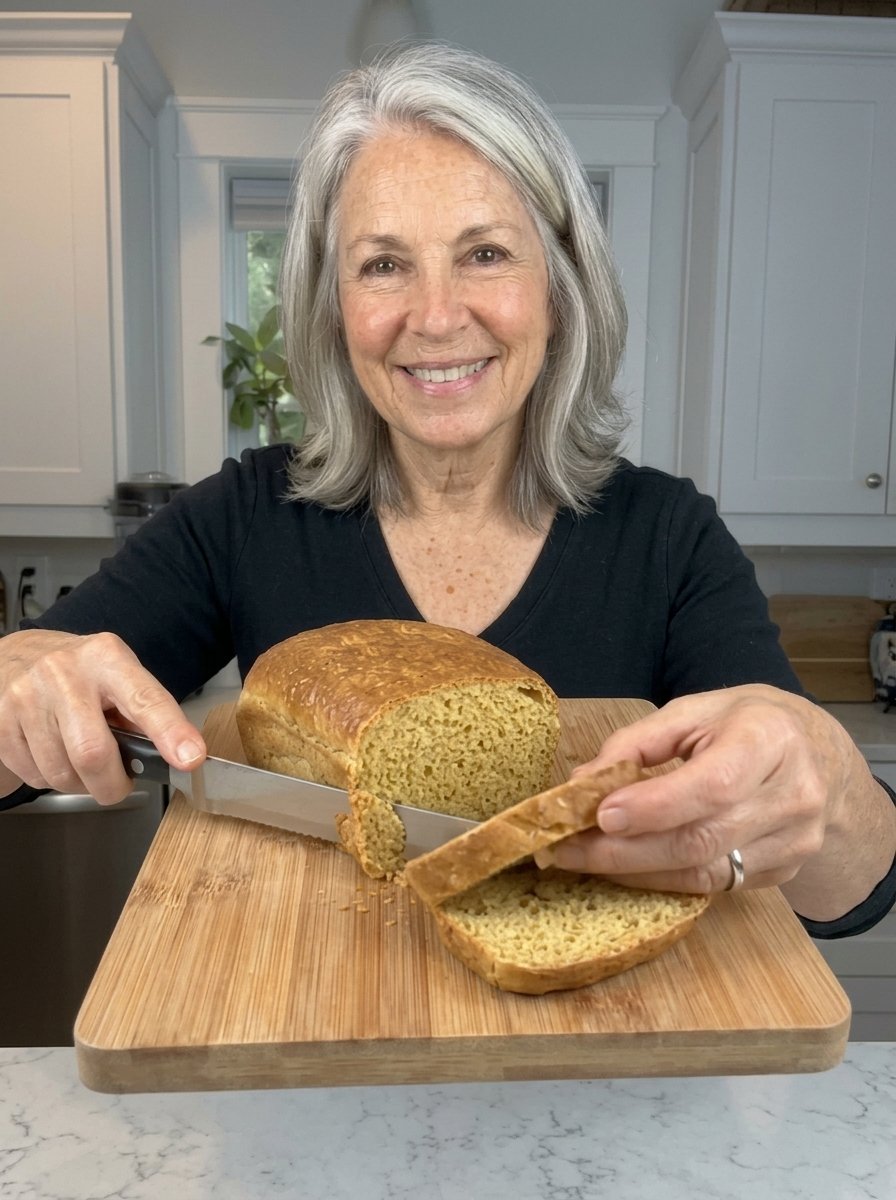
3-Ingredient High-Protein Lentil Bread: Simple, Hearty & Homemade ❤️🌱
3-Ingredient High-Protein Lentil Bread Recipe (No Flour, No Yeast) Meta description: Make easy 3-ingredient lentil bread with red lentils, water, and baking powder. No flour, no yeast, no kneading. A hearty, high-protein loaf for toast, sandwiches, and snacks. Focus keyword: lentil bread Secondary keywords: 3-ingredient lentil bread, high protein bread, red lentil bread, no flour bread, no yeast bread, easy lentil loaf, healthy bread alternative, blender bread recipe
Looking for an easy homemade bread made with just a few simple ingredients? This 3-Ingredient High-Protein Lentil Bread is soft, hearty, and wonderfully satisfying! ❤️🌱 It is made with red lentils, water, and baking powder, and it makes a simple alternative to traditional bread that works for breakfast, sandwiches, or a quick snack.
There is no flour, no yeast, and no complicated kneading. You simply soak, blend, bake, and enjoy. Because lentils are naturally rich in plant protein and fiber, each slice is filling and satisfying, and it makes a nice change from the usual bread routine.
In this complete guide, you will find the full recipe, step-by-step instructions, an explanation of how lentils turn into bread, ingredient notes, tips for the best texture, troubleshooting help, serving ideas, flavor variations, storage and freezing advice, and answers to common questions. Let’s bake! 👩🍳
🤔 What Is Lentil Bread?
Lentil bread is a dense, hearty, savory loaf made from blended lentils instead of wheat flour. Soaked lentils are blended with water into a thick, smooth batter, mixed with a little baking powder, and baked in a loaf pan until firm. The lentils provide the structure, the moisture, and the flavor, so you do not need flour or yeast.
The result is a soft, moist, sliceable loaf that toasts beautifully. Its taste is mild, earthy, and slightly nutty, and it works with both savory and lightly sweet toppings.
It is not a fluffy, airy bread like a traditional white loaf, and it does not try to be. Think of it as a hearty, protein-rich bread-style loaf, closer to a dense, moist seed bread or a savory quick bread. That is exactly why so many people love it.
🌱 Why Lentils Make a Great Bread Base
Red lentils are especially well suited to this recipe for several reasons.
- They soften quickly. Red (split) lentils soak and blend faster than green or brown lentils.
- They blend smoothly. A thick, creamy batter forms easily in a standard blender.
- They are mild in flavor. Red lentils taste gentler than other varieties, so the bread does not taste overpowering.
- They are naturally rich in protein and fiber. Lentils are a well-known plant source of both, which helps make the bread filling.
- They are inexpensive. A bag of red lentils costs very little and makes many loaves.
- They are flour-free. The recipe uses no wheat flour, so it is a good option for people who avoid flour. If you need strict gluten-free food, check that your lentils and baking powder are labeled gluten-free, since cross-contamination can occur during processing.
❤️ Why You Will Love This Recipe
- ✅ Only 3 ingredients. Red lentils, water, and baking powder.
- ✅ No flour and no yeast. A simple alternative to traditional bread.
- ✅ No kneading. Blend, pour, and bake.
- ✅ High in plant protein. A hearty, satisfying slice.
- ✅ Mostly hands-off. The soaking time does most of the work.
- ✅ Great for toast and sandwiches. It slices well and toasts nicely.
- ✅ Budget friendly. Lentils are one of the most affordable ingredients.
- ✅ Easy to customize. Add herbs, spices, or seeds for extra flavor.
- ✅ Vegan friendly. No eggs, dairy, or animal products.
- ✅ Freezer friendly. Slice and freeze for quick toast.
🛒 Ingredients
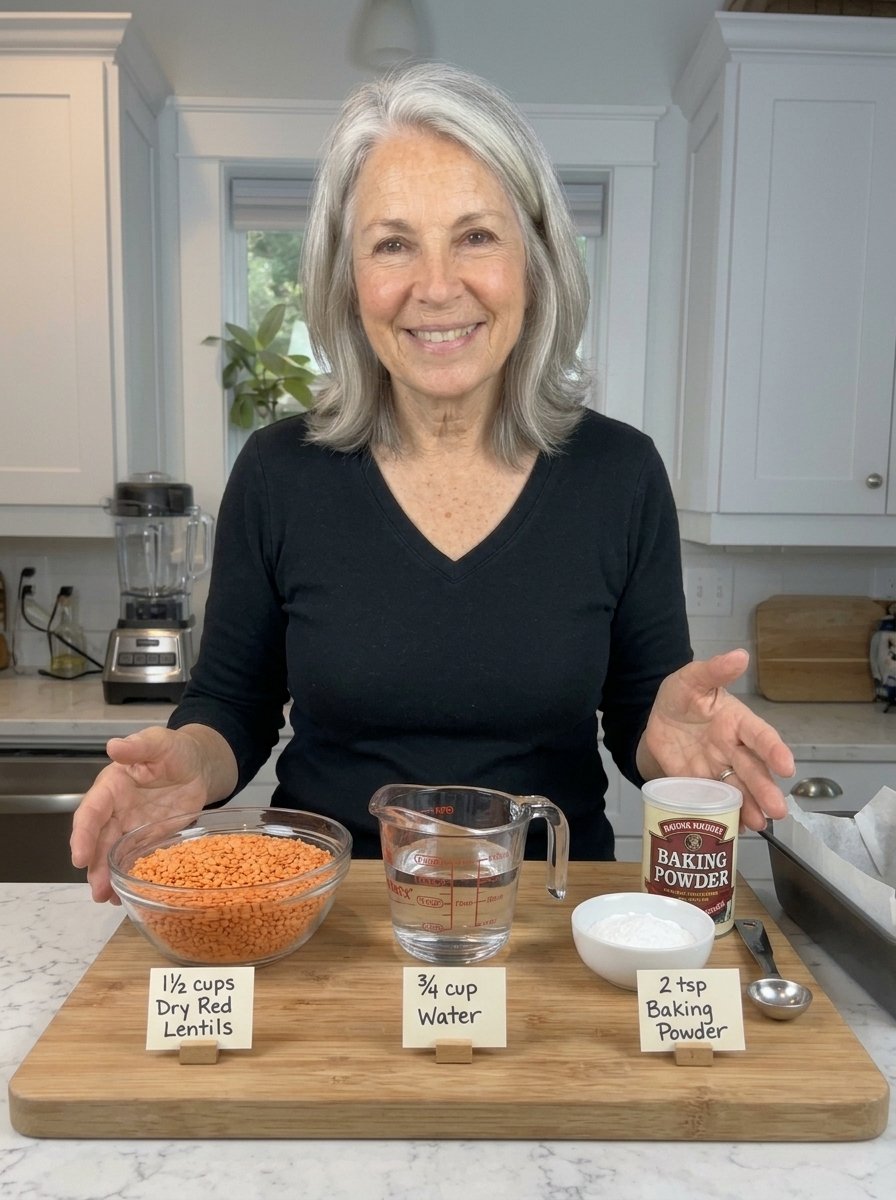
- 1½ cups (300 g) dry red lentils
- ¾ cup (180 ml) fresh water, plus water for soaking
- 2 teaspoons baking powder
You will also need:
- A large bowl, for soaking
- A blender
- An 8 × 4-inch (20 × 10 cm) loaf pan
- Parchment paper
- A wire cooling rack
🧂 Ingredient Notes and Smart Substitutions
Dry red lentils
Red lentils, sometimes sold as split red lentils, are the best choice for this bread. They are the quickest to soften, they blend into a smooth batter, and they give a soft, even crumb. Look for lentils that are bright orange-red, dry, and free of debris. Rinse them before soaking to remove any dust.
Substitutions: Yellow split lentils also work well and give a similarly mild flavor. Green or brown lentils are firmer, take longer to soften, and give a darker, earthier loaf with a coarser texture, so this recipe is not tested with them. If you try them, soak longer and blend until very smooth.
Water for soaking
Soaking softens the lentils so they blend smoothly and bake evenly. Use plenty of water, so the lentils stay submerged as they swell. Lentils absorb water and grow in volume, so a big bowl is helpful.
Fresh water for blending
The ¾ cup of fresh water brings the batter to a thick, pourable consistency. Do not use the soaking water, which can have a stronger flavor. Always use fresh water for the best taste and an accurate texture.
Baking powder
Baking powder is the only leavening in this recipe. It gives the loaf a little lift and helps keep the crumb from being too dense. Check that your baking powder is fresh. If it is more than 6 months old or has been exposed to moisture, it may have lost its strength. A quick test is to stir ½ teaspoon into hot water. It should fizz right away.
Optional flavor additions
The basic recipe uses only three ingredients, so it tastes mild and earthy. If you want more flavor, you can add garlic powder, herbs, cumin, or sesame seeds, as your recipe notes. A small pinch of salt also helps, though it adds a fourth ingredient. See the variations below.
👩🍳 How to Make 3-Ingredient Lentil Bread: Step-by-Step
Step 1: Soak the lentils
Place the dry red lentils in a large bowl and cover with plenty of water. Soak for 3 hours, or until softened. Drain thoroughly and rinse well.
Tip: Lentils expand as they soak, so use a bowl large enough to hold them and at least two to three times their volume in water. Draining well is important, because excess water can make the batter too thin.
Step 2: Blend until smooth
Add the drained lentils and ¾ cup (180 ml) fresh water to a blender. Blend for 1 to 2 minutes, scraping down the sides as needed, until you have a thick, smooth batter.
How to tell it is ready: The batter should look like a thick pancake or cake batter, with no visible whole lentils or chunks. Rub a little between your fingers. If it still feels gritty, blend another 30 seconds.
If your blender struggles: Stop and stir, scrape the sides, and blend in short bursts. You can add a tablespoon of water if the blades will not catch, but try to keep the batter thick.
Step 3: Add the baking powder
Transfer the batter to a bowl. Gently fold in the baking powder until evenly combined. Avoid overmixing, so the batter keeps a little of its air.
Step 4: Prepare the loaf pan
Preheat your oven to 350°F (175°C). Line an 8 × 4-inch (20 × 10 cm) loaf pan with parchment paper, leaving a little overhang on the long sides for easy removal. The parchment is important, because lentil bread can stick to the pan.
Step 5: Pour the batter
Pour the lentil batter into the prepared pan. Smooth the top with a spatula. Tap the pan gently on the counter to settle the batter and release large air bubbles.
Step 6: Bake
Bake for 45 to 55 minutes, or until the loaf is firm, lightly golden, and a toothpick inserted into the center comes out mostly clean. If the top browns too quickly, loosely cover it with foil.
Doneness tip: The loaf should feel set when you press the top gently, and the edges will start to pull slightly from the sides of the pan. Because lentil bread must bake fully, if the toothpick comes out wet, give it another 5 to 10 minutes.
Step 7: Cool before slicing
Remove the loaf from the oven and let it rest in the pan for 10 minutes. Lift it out using the parchment paper and transfer it to a wire rack. Allow it to cool completely before slicing for the best texture. Cutting too early may make the inside seem gummy.
Slicing tip: Use a serrated knife and a gentle sawing motion. Slice the loaf into 8 to 10 slices. For even easier slicing, chill the cooled loaf in the refrigerator for an hour first.
🔬 How Lentil Bread Works (Without Flour or Yeast)
This simple recipe works because of what lentils bring to the batter.
Starch and protein
Lentils contain starch and protein. When blended with water and then heated, the starch swells and sets, while the proteins firm up. Together, they give the loaf a sliceable structure, much as flour does in a regular quick bread.
Moisture
Soaked lentils hold a lot of water. During baking, that moisture turns to steam, which helps the loaf rise slightly and stay moist inside.
Baking powder lift
The baking powder reacts with the heat and moisture to release gas, which creates small air pockets. This keeps the loaf from being a solid brick. The lift is modest, so the loaf will be denser than yeast bread.
Cooling and setting
As the loaf cools, the starches finish setting, and the crumb firms up. That is why cooling completely before slicing matters so much.
💡 Helpful Tips
- Drain well. Excess soaking water can make the batter too thin.
- Blend thoroughly. A smooth batter gives the bread a more even texture.
- Check the center. Lentil bread needs to bake fully before slicing.
- Let it cool completely. Cutting too early may make the inside seem gummy.
- Optional flavor additions. Although they add ingredients beyond the basic three, garlic powder, herbs, cumin, or sesame seeds can make the loaf extra flavorful.
- Use parchment paper. It prevents sticking and makes lifting the loaf out easy.
- Toast the slices. Toasting gives lentil bread a crisp edge and brings out a nuttier flavor.
- Use fresh baking powder. Old baking powder will give a flat, dense loaf.
- Weigh the lentils. A kitchen scale (300 g) is the most accurate way to get consistent results.
- Do not skip the rinse. Rinsing the soaked lentils removes any bitterness and dust.
🔧 Troubleshooting: Common Lentil Bread Problems
My batter is too thin and runny. The lentils were probably not drained well enough, or too much water was added. Drain thoroughly, measure the water, and blend until thick. If the batter is already blended and too thin, let it sit for a few minutes, as it thickens slightly, or blend in a few extra drained lentils.
My batter is too thick to blend. The blender may need a little more water. Add one tablespoon at a time, but try to keep the batter thick, like pancake batter.
My loaf is gummy inside. It was probably underbaked or cut too soon. Bake until a toothpick comes out mostly clean, and cool the loaf completely before slicing.
My loaf is very dense. Lentil bread is naturally denser than yeast bread. If it seems excessively heavy, check that your baking powder is fresh and that you did not overmix the batter after adding it.
My bread stuck to the pan. Always line the pan with parchment paper, leaving an overhang. Avoid relying on grease alone.
The top browned too fast. Loosely cover the loaf with foil for the rest of the baking time.
The bread tastes bland. The basic three-ingredient version has a mild, earthy flavor. Add a pinch of salt, garlic powder, cumin, or herbs. Toasting the slices also boosts the flavor.
The bread tastes bitter. Make sure you rinsed the lentils well after soaking and used fresh water for blending. Old baking powder can also leave a metallic taste. Check the freshness of your baking powder.
The bread is dry. It may have baked too long. Check for doneness at 45 minutes, and store the cooled loaf in an airtight container.
The loaf crumbles when sliced. It may not have cooled fully, or the batter may have been too thin. Let the loaf cool completely, chill it for an hour, and use a serrated knife.
My blender will not blend the batter smoothly. Soak the lentils a bit longer (up to 4 hours), and blend in short bursts, scraping down the sides.
🍽 Serving Ideas
This hearty loaf pairs with so many toppings.
Toast and spreads
- Toast slices and spread with avocado. Add lemon juice, salt, and pepper flakes.
- Serve with hummus, cream cheese, or nut butter. A creamy topping balances the earthy flavor.
- Toast and drizzle with olive oil and herbs. Simple and delicious.
- Spread with butter and honey. A comforting, lightly sweet option.
- Top with tomato and basil. A fresh bruschetta-style slice.
Sandwiches
- Make a simple sandwich with tomato, cucumber, and cheese. Light and fresh.
- Turkey, avocado, and lettuce. A protein-packed lunch.
- Egg salad or tuna salad. Creamy fillings work well with the hearty bread.
- Grilled cheese. Toast it in a skillet with a little butter for a crisp edge.
- Veggie and hummus sandwiches. A satisfying plant-based lunch.
With meals
- Enjoy alongside soup or a fresh salad. Great for dipping or as a side.
- Serve with eggs. A fried or poached egg on a toasted slice makes a hearty breakfast.
- With stews and curries. A good side for scooping up sauces.
- With cheese and olives. Make a simple snack plate.
As a snack
- Toasted with nut butter. Quick and filling.
- Cut into fingers. Serve with dips for a snack.
- Mini open-faced toasts. Cut slices in half and top with different spreads for a party platter.
- Croutons. Cube and bake slices until crisp for salads and soups.
🌿 Delicious Flavor Variations
The basic three-ingredient loaf is mild, which makes it easy to customize. Here are some ideas, although they go beyond the basic three ingredients.
- Garlic and herb: Add 1 teaspoon of garlic powder and 1 teaspoon of dried Italian herbs to the batter.
- Cumin and paprika: Add ½ teaspoon of cumin and ½ teaspoon of paprika for a warm, savory loaf.
- Seeded lentil bread: Fold in 2 tablespoons of sesame, sunflower, or pumpkin seeds, and sprinkle more on top.
- Salted loaf: Add ½ teaspoon of salt to bring out the flavor.
- Herb and onion: Add a teaspoon of onion powder and fresh chopped chives.
- Turmeric lentil bread: Add ½ teaspoon of turmeric for a golden color and a mild earthy flavor.
- Cheesy lentil bread: Fold in a few tablespoons of grated cheese for a savory, cheesy slice.
- Everything seasoning: Sprinkle the top with everything bagel seasoning before baking.
- Rosemary and olive oil: Add a teaspoon of chopped rosemary and brush the top with olive oil.
- Spicy: Add a pinch of chili flakes or cayenne pepper.
- Sweet and spiced: Add cinnamon and a little vanilla for a lightly sweet breakfast loaf, and serve with fruit and nut butter.
Tip: When adding dry seasonings, mix them into the batter along with the baking powder.
📦 Storage
Refrigerator
Store the cooled loaf in an airtight container in the refrigerator for up to 4 days.
Freezer
Slice the cooled loaf and freeze with parchment paper between the slices for up to 2 months. Place the slices in a freezer bag and press out as much air as possible.
Reheating
Toast slices directly from the refrigerator or freezer until warmed through. You can also warm them in a 350°F (175°C) oven for 5 to 8 minutes or briefly in a skillet.
Make-ahead tips
- Soak the lentils the night before. Drain and refrigerate them, so you can blend and bake the next day.
- Bake and slice in advance. Prepare a loaf at the beginning of the week for easy toast throughout.
🥗 Nutrition Notes
Lentils are a well-known plant-based source of protein, fiber, iron, and folate, and this loaf contains no flour, yeast, or added sugar. A slice makes a filling base for toast or sandwiches. Because it is hearty and dense, one or two slices go a long way.
Exact nutrition varies depending on ingredients and slice size. For accurate numbers, use a nutrition calculator with your specific ingredients.
❓ Frequently Asked Questions
Do I really need to soak the lentils for 3 hours?
Yes. Soaking softens the lentils so that they blend smoothly and bake evenly. Skipping the soak can leave a gritty texture and a raw taste.
Can I use green or brown lentils?
This recipe is designed for red lentils. Green and brown lentils are firmer and take longer to soften, and they give a darker, earthier flavor. If you try them, soak longer and blend until very smooth, though results may differ.
Can I use yellow split lentils?
Yes. They are similar to red lentils and should work well.
Can I use canned lentils?
Canned lentils are already cooked and hold a different amount of water, so this recipe is not designed for them. Use dry red lentils for the best results.
Why does my bread taste bland?
The three-ingredient version is mild and earthy. Add a pinch of salt, garlic powder, or herbs for more flavor, and toast the slices.
Is lentil bread gluten free?
The ingredients (lentils, water, and baking powder) do not contain wheat. However, cross-contamination can occur during processing, so if you need to avoid gluten strictly, choose products labeled gluten free.
Is this bread vegan?
Yes. It contains no eggs, dairy, or animal products.
Can I make it without baking powder?
Baking powder gives the loaf a bit of lift. Without it, the bread will be much denser and flatter.
Does lentil bread taste like lentils?
It has a mild, earthy, slightly nutty flavor, which is much gentler than cooked lentil soup. Toasting and toppings help balance it out.
How do I know when the loaf is done?
It should be firm, lightly golden, and a toothpick inserted in the center should come out mostly clean. Because it needs to bake fully, give it a few extra minutes if the center looks wet.
Why is my lentil bread gummy?
It was probably underbaked or cut before it cooled. Bake until set, and cool it completely.
Can I double the recipe?
Yes. You may need two loaf pans or a larger pan, and the bake time may increase slightly. Blend in batches if your blender is small.
Can I bake it in a different pan?
An 8 × 4-inch loaf pan gives a good height. A larger pan will make a flatter loaf that bakes faster, so check early.
Can I make it without a blender?
A blender gives the smoothest result. A food processor can work, though the batter may be coarser. Blend until as smooth as possible.
Can I add seeds or nuts?
Yes. Seeds such as sesame, sunflower, and pumpkin add crunch and flavor. They add ingredients beyond the basic three, but they work well.
Does it need to be refrigerated?
Yes. Because it is moist and contains no preservatives, store it in the refrigerator and use it within 4 days, or freeze slices for up to 2 months.
Can I eat it without toasting?
Yes, but toasting improves the flavor and texture. A lightly toasted slice has a crisp edge and a nuttier taste.
Is lentil bread good for meal prep?
Definitely. Bake a loaf, slice it, and freeze the slices, so you can toast one whenever you need a quick breakfast or snack.
🏁 Final Thoughts
This 3-Ingredient High-Protein Lentil Bread shows how far a few simple ingredients can go. With just red lentils, water, and baking powder, you get a soft, hearty, satisfying loaf that is ready to toast, top, and enjoy, with no flour, no yeast, and no kneading. ❤️🌱
Simple ingredients, an easy method, and a hearty homemade loaf: this lentil bread is a delicious way to add variety to your everyday bread routine. Bake a loaf, slice it, and see how many ways you can enjoy it. 🍞
If you try this recipe, leave a comment and a star rating below, and let us know how you served your lentil bread. Happy baking! 💛
📌 Quick Recipe Card
3-Ingredient High-Protein Lentil Bread ⏱ Prep: 10 min | 💧 Soak: 3 hrs | 🔥 Bake: 45 to 55 min | 🕒 Total: About 4 hrs | 🍽 Yield: 1 small loaf (8 to 10 slices)
Ingredients: 1½ cups (300 g) dry red lentils, ¾ cup (180 ml) fresh water (plus water for soaking), 2 teaspoons baking powder.
Method: Soak the lentils in plenty of water for 3 hours, then drain thoroughly and rinse well. Blend the lentils with ¾ cup fresh water for 1 to 2 minutes, scraping the sides, until thick and smooth. Transfer to a bowl and gently fold in the baking powder, without overmixing. Preheat the oven to 350°F (175°C) and line an 8 × 4-inch loaf pan with parchment paper, leaving an overhang. Pour in the batter and smooth the top. Bake 45 to 55 minutes, until firm, lightly golden, and a toothpick comes out mostly clean, covering loosely with foil if the top browns too quickly. Rest in the pan for 10 minutes, lift out with the parchment, and cool completely on a wire rack before slicing.
Storage: Refrigerate in an airtight container up to 4 days, or slice and freeze with parchment between slices up to 2 months. Toast slices directly from the refrigerator or freezer.
Print
3-Ingredient High-Protein Lentil Bread
Ingredients
- 1½ cups (300 g) dry red lentils
- ¾ cup (180 ml) fresh water, plus water for soaking
- 2 teaspoons baking powder
You will also need:
- A large bowl, for soaking
- A blender
- An 8 × 4-inch (20 × 10 cm) loaf pan
- Parchment paper
- A wire cooling rack
🧂 Ingredient Notes and Smart Substitutions
Dry red lentils
Red lentils, sometimes sold as split red lentils, are the best choice for this bread. They are the quickest to soften, they blend into a smooth batter, and they give a soft, even crumb. Look for lentils that are bright orange-red, dry, and free of debris. Rinse them before soaking to remove any dust.
Substitutions: Yellow split lentils also work well and give a similarly mild flavor. Green or brown lentils are firmer, take longer to soften, and give a darker, earthier loaf with a coarser texture, so this recipe is not tested with them. If you try them, soak longer and blend until very smooth.
Water for soaking
Soaking softens the lentils so they blend smoothly and bake evenly. Use plenty of water, so the lentils stay submerged as they swell. Lentils absorb water and grow in volume, so a big bowl is helpful.
Fresh water for blending
The ¾ cup of fresh water brings the batter to a thick, pourable consistency. Do not use the soaking water, which can have a stronger flavor. Always use fresh water for the best taste and an accurate texture.
Baking powder
Baking powder is the only leavening in this recipe. It gives the loaf a little lift and helps keep the crumb from being too dense. Check that your baking powder is fresh. If it is more than 6 months old or has been exposed to moisture, it may have lost its strength. A quick test is to stir ½ teaspoon into hot water. It should fizz right away.
Optional flavor additions
The basic recipe uses only three ingredients, so it tastes mild and earthy. If you want more flavor, you can add garlic powder, herbs, cumin, or sesame seeds, as your recipe notes. A small pinch of salt also helps, though it adds a fourth ingredient. See the variations below.
Instructions
Place the dry red lentils in a large bowl and cover with plenty of water. Soak for 3 hours, or until softened. Drain thoroughly and rinse well.
Tip: Lentils expand as they soak, so use a bowl large enough to hold them and at least two to three times their volume in water. Draining well is important, because excess water can make the batter too thin.
Add the drained lentils and ¾ cup (180 ml) fresh water to a blender. Blend for 1 to 2 minutes, scraping down the sides as needed, until you have a thick, smooth batter.
How to tell it is ready: The batter should look like a thick pancake or cake batter, with no visible whole lentils or chunks. Rub a little between your fingers. If it still feels gritty, blend another 30 seconds.
If your blender struggles: Stop and stir, scrape the sides, and blend in short bursts. You can add a tablespoon of water if the blades will not catch, but try to keep the batter thick.
Transfer the batter to a bowl. Gently fold in the baking powder until evenly combined. Avoid overmixing, so the batter keeps a little of its air.
Preheat your oven to 350°F (175°C). Line an 8 × 4-inch (20 × 10 cm) loaf pan with parchment paper, leaving a little overhang on the long sides for easy removal. The parchment is important, because lentil bread can stick to the pan.
Pour the lentil batter into the prepared pan. Smooth the top with a spatula. Tap the pan gently on the counter to settle the batter and release large air bubbles.
Bake for 45 to 55 minutes, or until the loaf is firm, lightly golden, and a toothpick inserted into the center comes out mostly clean. If the top browns too quickly, loosely cover it with foil.
Doneness tip: The loaf should feel set when you press the top gently, and the edges will start to pull slightly from the sides of the pan. Because lentil bread must bake fully, if the toothpick comes out wet, give it another 5 to 10 minutes.
Remove the loaf from the oven and let it rest in the pan for 10 minutes. Lift it out using the parchment paper and transfer it to a wire rack. Allow it to cool completely before slicing for the best texture. Cutting too early may make the inside seem gummy.
Slicing tip: Use a serrated knife and a gentle sawing motion. Slice the loaf into 8 to 10 slices. For even easier slicing, chill the cooled loaf in the refrigerator for an hour first.