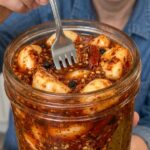
Ingredients
Here is everything you need to make about one large jar (roughly a quart):
- 2 cups peeled garlic cloves 🧄
- 1 cup white vinegar (5% acidity)
- ½ cup water
- 1 tablespoon pickling salt
- 1 tablespoon granulated sugar
- 1–2 teaspoons cayenne pepper 🌶️
- 1 teaspoon crushed red pepper flakes
- 1 teaspoon black peppercorns
- ½ teaspoon mustard seeds
- 2–3 dried cayenne peppers (optional)
- 1 bay leaf
- ½ teaspoon smoked paprika (optional)
Ingredient Notes and Smart Substitutions
Garlic: Choose firm, plump heads with tight, papery skins. Avoid cloves that are soft, sprouting heavily, or bruised. Pre-peeled garlic from the store saves a lot of time, but fresh garlic usually has a better flavor.
Vinegar: White vinegar with 5% acidity gives a clean, sharp tang that lets the spices shine. Apple cider vinegar (also 5%) works for a fruitier, slightly mellow result. Always check the label to confirm the acidity level.
Salt: Pickling salt dissolves cleanly and keeps the brine clear. Kosher salt can work if it has no additives, though it is less dense, so measure carefully. Avoid iodized table salt, which can cloud the brine and affect color.
Cayenne pepper: This is the main source of heat. Start with 1 teaspoon if you are heat-cautious. Go to 2 teaspoons if you like your pickles to bite back.
Dried cayenne peppers: These are optional, but they add visual appeal and an extra heat boost as they steep in the jar.
Instructions
- A medium saucepan
- A clean, heat-safe glass jar (a 1-quart jar works well) with a lid
- A cutting board and small paring knife
- A measuring spoon set
- A ladle or small pitcher for pouring the brine
How to Make Fiery Cayenne Pickled Garlic (Step by Step)
Step 1: Prepare the Garlic
Peel your garlic cloves and trim the root ends. Discard any cloves that are damaged, soft, or discolored. Keep the cloves whole for the boldest garlic flavor and the most attractive presentation in the jar.
Quick peeling tip: Break the heads into individual cloves, then place them in a lidded container and shake vigorously for 30 seconds. Many of the skins will loosen and fall away. Alternatively, trim the root ends and use the flat side of a knife to gently press each clove so the skin slips off.
Step 2: Make the Fiery Brine
In a saucepan, combine the vinegar, water, salt, sugar, cayenne pepper, red pepper flakes, black peppercorns, mustard seeds, bay leaf, and the optional smoked paprika. Heat gently over medium heat, stirring until the salt and sugar have completely dissolved.
Step 3: Add Extra Heat
Let the brine simmer gently for 1 to 2 minutes so the spices release their aroma. For maximum heat, add the dried cayenne peppers at this stage. Keep the heat at a gentle simmer rather than a hard boil, which can drive off some of the vinegar’s sharpness.
Step 4: Fill the Jar
Place the garlic cloves in a clean, heat-safe glass jar. Carefully pour the warm brine and spices over the garlic until every clove is completely submerged. Tap the jar gently on the counter to release trapped air bubbles, and top off with a little more brine if needed.
Step 5: Cool and Refrigerate
Let the jar cool at the counter, then cover and refrigerate promptly. Do not leave it sitting out for long periods. Let the flavors develop for 3 to 5 days before tasting. The longer it rests, the more intense the spicy, tangy flavor becomes.
Why Does Pickled Garlic Sometimes Turn Blue or Green?
This surprises many first-time pickle makers, but it is harmless. Garlic contains sulfur compounds and amino acids that can react with the acid in the brine, sometimes producing a blue or green tint. This is more common with very fresh garlic or garlic grown in certain soils, and it can also be influenced by trace minerals in water or by cooking in some metal pans.
The color change does not affect flavor or safety on its own. To minimize it, use a non-reactive saucepan (stainless steel or enamel), use fresh but not freshly harvested garlic if possible, and use filtered water if your tap water is very hard.
If the garlic smells spoiled, looks slimy, or the brine becomes cloudy with an off odor, discard the entire jar. When in doubt, throw it out.