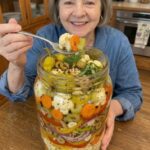
Ingredients
For the Vegetables
- 2 cups cauliflower florets
- 2 medium carrots, thinly sliced
- 1 red bell pepper, sliced
- 1 yellow bell pepper, sliced
- 2 celery stalks, sliced
- 2–4 fresh jalapeños or serrano peppers, sliced
- 4–6 garlic cloves, peeled
- ½ cup pitted green olives
- ¼ small red onion, thinly sliced
For the Pickling Brine
- 1 cup white vinegar (5% acidity)
- 1 cup water
- 1 tbsp pickling salt
- 1 tbsp granulated sugar
- 1 tsp dried oregano
- 1 tsp black peppercorns
- 1 tsp mustard seeds
- ½–1 tsp crushed red pepper flakes
- 1 bay leaf
- 2 tbsp extra virgin olive oil, added when serving
A Closer Look at the Ingredients
Cauliflower. Cauliflower is a classic giardiniera vegetable because it soaks up brine while staying crisp. Cut it into small, bite-size florets, about 1 inch across, so they pickle evenly and fit easily on a sandwich or fork.
Carrots. Thin slices, about ⅛ inch thick, soften just enough in the brine while keeping a pleasant snap. Their natural sweetness balances the heat.
Bell peppers. Red and yellow bell peppers add sweetness, color, and juicy crunch. Remove the stems, seeds, and white ribs before slicing.
Celery. Celery adds a fresh, slightly savory crunch and a classic antipasto flavor. Slice it on a slight diagonal for a pretty look.
Jalapeños or serranos. These bring the heat. Jalapeños are milder and fruitier, while serranos are hotter and sharper. For less heat, remove the seeds and ribs. For more heat, leave them in. Wear gloves when slicing hot peppers, and avoid touching your eyes.
Garlic. Whole peeled cloves turn mellow, sweet, and tender in the brine and are a treat to eat straight from the jar. For a stronger garlic flavor, lightly smash the cloves before adding.
Green olives. Pitted green olives add a briny, savory depth that is the hallmark of Italian-style pickled salads. Use plain, pimiento-stuffed, or Castelvetrano olives, depending on your taste.
Red onion. A little thinly sliced red onion adds sharpness, color, and sweetness as it pickles.
White vinegar (5% acidity). The vinegar is the preservative and the backbone of the brine. Make sure it’s labeled 5% acidity, which is standard. Don’t dilute it further than the recipe states, since the acidity matters for flavor and safety.
Water. Water softens the vinegar’s sharpness. This brine uses a 1-to-1 ratio, which gives a bold, tangy pickle.
Pickling salt. Pickling salt (also called canning salt) is pure sodium chloride with no additives, so it keeps the brine clear. Kosher salt works if you use the same volume, but avoid iodized table salt, which can cloud the brine.
Sugar. A tablespoon balances the acid and heat, rounding out the flavor without making the vegetables sweet.
Dried oregano. Oregano gives the brine its distinctive Italian character.
Black peppercorns and mustard seeds. These whole spices add warmth and a classic pickle aroma.
Crushed red pepper flakes. They add visible flecks and lingering heat. Adjust to taste.
Bay leaf. A single bay leaf adds subtle earthy, herbal depth.
Extra virgin olive oil. A drizzle just before serving gives the salad its classic Italian antipasto finish. It’s added when serving rather than to the jar.
Instructions
Wash all the vegetables thoroughly. Cut the cauliflower into small florets, slice the carrots and celery, and cut the bell peppers and chili peppers into strips or rings. Try to keep the pieces a similar size so they pickle evenly and look attractive in the jar. Peel the garlic cloves, and thinly slice the red onion.
Combine the vinegar, water, salt, sugar, oregano, peppercorns, mustard seeds, red pepper flakes, and bay leaf in a medium saucepan. Bring to a gentle boil over medium-high heat, stirring until the salt and sugar dissolve completely. Use a non-reactive pan, such as stainless steel or enamel, since aluminum and cast iron can react with the vinegar and affect the flavor.
Reduce the heat so the brine simmers gently. Add the cauliflower and carrots and simmer for 2 minutes. Add the bell peppers and celery and simmer for another minute. Keep a close eye on the clock. The goal is to take the raw edge off the vegetables and help them absorb the brine while keeping them crisp. Overcooking leads to soft pickles.
Place the garlic, sliced chili peppers, red onion, and olives in a clean, heat-safe glass jar or two smaller jars. Use a slotted spoon to add the warm vegetables on top, then carefully pour in enough hot brine to cover everything completely, including the spices and bay leaf. Press the vegetables down gently so they’re submerged and tap the jar on the counter to release air bubbles. Leave about ½ inch of headspace at the top.
Allow the jar to cool at room temperature for a short time, then cover and refrigerate promptly. Don’t leave the jar out for hours. Keep the vegetables submerged in the brine at all times.
Refrigerate for at least 48 hours before serving. The flavor becomes bolder, more aromatic, and more balanced after 3 to 5 days. Give the jar a gentle shake or tilt once a day to redistribute the spices.
Just before serving, drain off as much brine as you like, transfer the vegetables to a bowl, and drizzle with extra virgin olive oil. Toss gently for a classic Italian antipasto-style finish. Serve chilled or at room temperature.
After 24 hours: The vegetables are tangy but still a little raw in flavor. The garlic and chili haven’t fully infused yet. It’s edible, but wait if you can.
After 48 hours: The brine begins to penetrate, the flavors mingle, and the heat spreads through the jar. This is the minimum recommended time.
After 3 to 5 days: The sweet spot. The vegetables are crisp-tender, the garlic is mellow, and the spices are fully developed.
After 1 to 2 weeks: The pickles are softer and more intensely flavored, and the heat is more pronounced. They’re still enjoyable, though best enjoyed within this window for quality.
Cut the vegetables uniformly. Pieces of similar size pickle at the same rate and look appealing.
Don’t overcook. Following the short simmer times keeps the vegetables crisp. When in doubt, cook less.
Use fresh, firm vegetables. Limp or old vegetables make soft pickles. Choose crisp, bright produce.
Add the tender items raw. The garlic, chilies, olives, and onion go into the jar raw. They soften enough from the hot brine alone.
Keep everything submerged. Vegetables above the brine can discolor and spoil faster. Press them down, or use a small clean weight.
Wear gloves for hot peppers. Capsaicin lingers on skin and can burn your eyes.
Adjust the heat to your taste. Remove pepper seeds for a milder jar, or leave them in and add extra red pepper flakes for more fire.
Use a clean jar. Wash jars and lids with hot, soapy water or run them through the dishwasher.
Use a non-reactive pot. Stainless steel or enamel keeps the brine tasting clean.
Add olive oil only when serving. Oil in the jar can solidify in the refrigerator and cloud the brine, and it’s best used fresh.
Use clean utensils every time. This prevents contamination and extends the life of the jar.
Label the jar. Write the date on the lid so you know when it was made.
This is a refrigerator pickle. It isn’t processed in a water bath and isn’t shelf-stable. Keep it refrigerated at 40°F (4°C) or below at all times, and don’t store it at room temperature.
How long it lasts: For best quality, enjoy within 1 to 2 weeks. The vegetables will gradually soften and lose their crunch over time.
Don’t can this recipe as written. Home canning requires tested recipes with specific ingredient ratios, acidity levels, and processing times to be safe. If you want shelf-stable pickles, follow a recipe tested for canning from a trusted source, such as the National Center for Home Food Preservation.
Keep vegetables submerged. Vegetables exposed to air can discolor and spoil faster.
Use clean utensils. Never eat from the jar with a used fork, and never put used utensils back into the brine.
Signs of spoilage: Discard the jar if you see mold, a slimy texture, a foul or off smell, bubbling or fizzing, or a cloudy, stringy brine.
Freezing: Freezing is not recommended. It destroys the crisp texture of the vegetables.
Garlic color changes: Garlic can turn blue or green in acidic brine. This is a harmless chemical reaction and doesn’t affect safety.
Serving outdoors: Don’t leave the jar or serving bowl out for more than 2 hours, or 1 hour in hot weather.
My vegetables are soft. They were probably simmered too long, or they weren’t fresh. Reduce the simmer time, and use firm produce.
My pickles are too sour. Add a little more sugar next time, or use a 1-to-1.25 ratio of vinegar to water for a milder brine.
My pickles aren’t spicy enough. Add more chili peppers, leave the seeds in, or increase the red pepper flakes. Let the jar rest a few more days.
My pickles are too spicy. Remove some of the chili slices, or serve the vegetables with a little olive oil and mild cheese to balance the heat. Next time, remove the seeds.
The brine is cloudy. Iodized salt, spices, or garlic can cause haziness. If it smells and tastes fine and shows no signs of spoilage, it’s cosmetic. Use pickling salt next time.
The garlic turned blue or green. It’s a harmless reaction between the garlic and the acid.
The vegetables are floating. Pack the jar more tightly, or press them down with a clean weight.
The cauliflower turned yellow. Overcooking or long storage can discolor it. Reduce the simmer time and use within 2 weeks.
The olives taste too salty. Rinse them before adding, or use a lower-sodium variety.
The jar leaked. Make sure the lid is on tightly and store it upright.