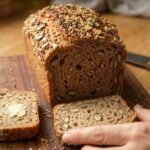
Ingredients
For the Bread Dough
- 3 cups (360 g) whole wheat flour
- 1½ cups (360 ml) warm water
- 2¼ teaspoons (7 g) instant yeast
- 1½ teaspoons salt
- 1 tablespoon honey or maple syrup
- 1 tablespoon olive oil
For the Seed Mixture
- 2 tablespoons sunflower seeds
- 2 tablespoons pumpkin seeds
- 1 tablespoon sesame seeds
- 1 tablespoon flaxseeds
- 1 tablespoon chia seeds
Optional Topping
- 1 to 2 tablespoons mixed seeds
- A little water for brushing the top
Ingredient Notes and Substitutions
Whole wheat flour. Choose a regular whole wheat flour, ideally fresh. Whole wheat flour contains natural oils that can turn stale over time, so buy it from a store with good turnover and store it in a cool, dry place or the freezer. For a lighter loaf, you can replace up to half of the whole wheat flour with bread flour or all-purpose flour, though you may need slightly less water.
Water. Warm water, about 105°F to 110°F (40°C to 43°C), wakes up the yeast without harming it. It should feel comfortably warm on your wrist, never hot.
Instant yeast. Instant yeast can be mixed directly into the dry ingredients. If you only have active dry yeast, dissolve it in the warm water for about 5 minutes first, until foamy, and allow a little extra rising time.
Salt. Salt adds flavor and controls the yeast. Do not skip it, because bread without salt tastes flat.
Honey or maple syrup. A small amount of sweetener feeds the yeast, balances the slight bitterness of whole wheat, and helps the crust brown. Maple syrup keeps the recipe vegan.
Olive oil. A single tablespoon softens the crumb and adds richness. You can substitute any neutral oil, or melted butter.
Seeds. The five-seed blend gives the loaf a pleasing mix of flavors and textures. Sunflower and pumpkin seeds provide crunch, sesame seeds add a toasty note, and flaxseeds and chia seeds contribute fiber and a subtle softness. If you do not have all of them, use any combination totaling about 7 tablespoons. Poppy seeds, hemp seeds, or rolled oats also work well.
Instructions
Step 1: Prepare the Seeds
Combine the sunflower seeds, pumpkin seeds, sesame seeds, flaxseeds, and chia seeds in a small bowl. If you would like a seed topping, set aside 1 to 2 tablespoons of the mixture.
For a softer texture, you can soak the seeds in a little water for 10 to 15 minutes, then drain them well before adding them to the dough. Soaking prevents the seeds from drawing too much moisture from the dough and can make the crumb a little more tender.
Step 2: Mix the Dough
In a large mixing bowl, combine the whole wheat flour, instant yeast, and salt. Add the warm water, honey, and olive oil. Stir with a wooden spoon or spatula until a thick, sticky dough forms. Fold in the seed mixture until it is evenly distributed.
Whole wheat dough is naturally denser and stickier than white bread dough. Resist the urge to add extra flour. The dough should be moist and rough, not firm and smooth. A wet dough bakes into a tender loaf, while a dry dough bakes into a brick.
Step 3: Let the Dough Rise
Cover the bowl with plastic wrap or a clean kitchen towel. Leave the dough in a warm, draft-free place for 2 to 3 hours, or until it has expanded noticeably and looks bubbly on the surface.
Whole wheat flour can rise more slowly than white flour, so allow extra time if your kitchen is cool. Judge by the dough rather than the clock: it should look puffy, with visible bubbles, and have grown by roughly half to double its original size.
Warm spot ideas: Place the bowl in the oven with only the light turned on, near a sunny window, or on top of the refrigerator.
Step 4: Shape the Loaf
Lightly flour your work surface and gently transfer the dough onto it. With lightly floured or damp hands, fold the edges toward the center to form a rough round loaf. Avoid kneading or pressing out all the air, since those bubbles give the loaf its lift.
Place the dough seam-side down on a piece of parchment paper. Cover it loosely and let it rest for another 20 to 30 minutes while the oven heats.
Step 5: Preheat the Oven
Preheat your oven to 425°F (220°C). For a crusty loaf, place a heavy oven-safe Dutch oven with its lid inside the oven while it preheats. Allow about 25 to 30 minutes for the pot to become thoroughly hot.
If you do not have a Dutch oven, you can bake the loaf on a preheated baking tray and create steam by placing a separate sturdy metal tray on a lower rack.
Step 6: Add the Seed Topping
Lightly brush or sprinkle the loaf with water and scatter the reserved seeds over the top. The water helps the seeds stick. Use a sharp knife to make one or two shallow cuts across the surface. Scoring lets the bread expand evenly in the oven and creates an attractive, rustic finish.
Step 7: Bake Until Golden
Using a Dutch oven:
- Carefully lift the dough by the parchment paper and lower it into the hot pot.
- Cover and bake for 25 minutes.
- Remove the lid and bake for another 15 to 20 minutes, until the crust is deep golden brown.