
No-Knead Whole Wheat Seeded Bread
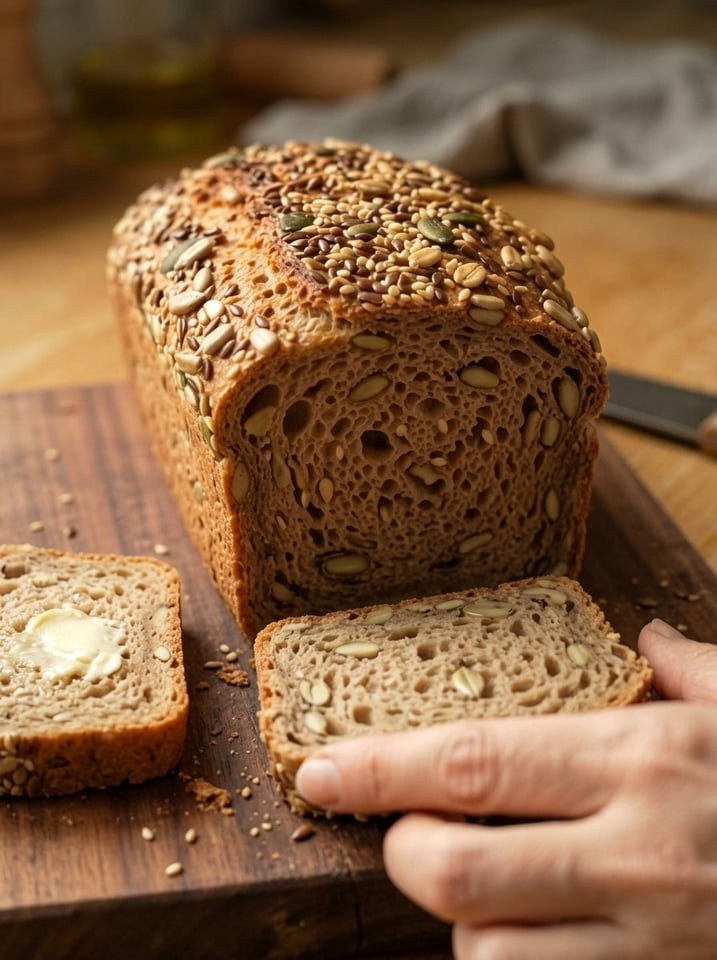
No-Knead Whole Wheat Seeded Bread: A Rustic, Hearty Loaf Anyone Can Make
There are few things more satisfying than slicing int a loaf of bread you baked yourself. The crust crackles under the knife, the aroma of toasted grain and seeds fills the kitchen, and every slice is packed with texture and nutty flavor. Now imagine getting that result without kneading, without a stand mixer, and without any complicated baking techniques. That is exactly what this No-Knead Whole Wheat Seeded Bread offers.
This rustic loaf is made with simple whole wheat flour and a crunchy blend of sunflower seeds, pumpkin seeds, sesame seeds, flaxseeds, and chia seeds. You stir everything together in one bowl, let the dough rise, shape it gently, and bake it until deeply golden. The crust turns crisp and crackly, the inside stays tender and moist, and the seeds add a wholesome crunch to every bite.
It is perfect for breakfast toast, hearty sandwiches, dunking in soup, or enjoying warm with a spread of butter and a drizzle of honey. In this complete guide, you will find the full recipe, step-by-step instructions, tips for success, troubleshooting help, variations, storage and freezing advice, serving ideas, and answers to the most common questions about baking whole wheat bread at home.
Why You’ll Love This No-Knead Seeded Bread
- No kneading required. The dough develops structure on its own as it rests, so there is no need for muscle power or machines.
- Only 10 minutes of hands-on time. Most of the time is spent letting the dough rise while you do something else.
- Wholesome and hearty. Whole wheat flour provides fiber and a nutty, slightly sweet flavor, and the seed blend adds healthy fats, protein, and crunch.
- Bakery-style crust. Baking in a preheated Dutch oven traps steam and creates a crisp, golden crust without any special equipment.
- Simple ingredients. Whole wheat flour, water, yeast, salt, honey, olive oil, and a handful of seeds are all you need.
- Versatile. This bread works for toast, sandwiches, soups, snack plates, and more.
- Beginner-friendly. If you have never baked bread before, this is an excellent first loaf. The method is forgiving and the results are impressive.
What Is No-Knead Bread?
No-knead bread is a style of baking that replaces active kneading with time. Instead of working the dough by hand to develop gluten, you mix a wet, sticky dough and let it rest for several hours. During that long rest, the flour fully absorbs the water, the gluten network forms naturally, and the yeast ferments slowly, building flavor and structure.
The technique became hugely popular because it produces artisan-quality bread with almost no effort. The high water content creates an open, tender crumb, and baking in a covered pot creates a steamy environment that mimics a professional bread oven. This recipe applies the same principles to whole wheat flour, with seeds added for flavor, nutrition, and texture.
Why Whole Wheat Flour Works Differently
Whole wheat flour contains the entire wheat kernel, including the bran and the germ. These parts add fiber, nutrients, and a deeper, nuttier flavor, but they also change how dough behaves.
It absorbs more water. Bran and germ soak up liquid, so whole wheat dough needs more water than white dough to stay moist. That is why this dough should feel sticky and rough rather than smooth and firm.
It rises a little more slowly. The bran particles can interfere with gluten development, so whole wheat dough often takes longer to rise. Give it extra time if your kitchen is cool.
It makes a denser, heartier crumb. Whole wheat bread is naturally more substantial than white bread. With enough hydration and a full rise, it still turns out tender and satisfying.
It has a richer flavor. Whole wheat adds earthy, nutty, slightly sweet notes that pair beautifully with toasted seeds and a drizzle of honey.
Ingredients for No-Knead Whole Wheat Seeded Bread
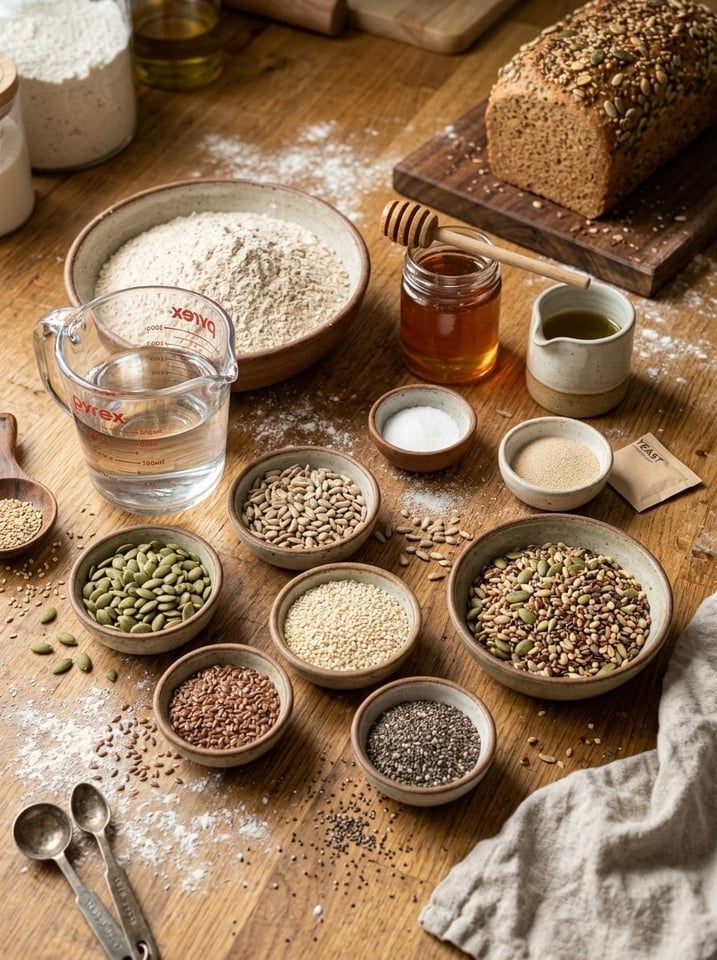
This recipe makes 1 medium loaf, about 10 to 12 slices.
For the Bread Dough
- 3 cups (360 g) whole wheat flour
- 1½ cups (360 ml) warm water
- 2¼ teaspoons (7 g) instant yeast
- 1½ teaspoons salt
- 1 tablespoon honey or maple syrup
- 1 tablespoon olive oil
For the Seed Mixture
- 2 tablespoons sunflower seeds
- 2 tablespoons pumpkin seeds
- 1 tablespoon sesame seeds
- 1 tablespoon flaxseeds
- 1 tablespoon chia seeds
Optional Topping
- 1 to 2 tablespoons mixed seeds
- A little water for brushing the top
Ingredient Notes and Substitutions
Whole wheat flour. Choose a regular whole wheat flour, ideally fresh. Whole wheat flour contains natural oils that can turn stale over time, so buy it from a store with good turnover and store it in a cool, dry place or the freezer. For a lighter loaf, you can replace up to half of the whole wheat flour with bread flour or all-purpose flour, though you may need slightly less water.
Water. Warm water, about 105°F to 110°F (40°C to 43°C), wakes up the yeast without harming it. It should feel comfortably warm on your wrist, never hot.
Instant yeast. Instant yeast can be mixed directly into the dry ingredients. If you only have active dry yeast, dissolve it in the warm water for about 5 minutes first, until foamy, and allow a little extra rising time.
Salt. Salt adds flavor and controls the yeast. Do not skip it, because bread without salt tastes flat.
Honey or maple syrup. A small amount of sweetener feeds the yeast, balances the slight bitterness of whole wheat, and helps the crust brown. Maple syrup keeps the recipe vegan.
Olive oil. A single tablespoon softens the crumb and adds richness. You can substitute any neutral oil, or melted butter.
Seeds. The five-seed blend gives the loaf a pleasing mix of flavors and textures. Sunflower and pumpkin seeds provide crunch, sesame seeds add a toasty note, and flaxseeds and chia seeds contribute fiber and a subtle softness. If you do not have all of them, use any combination totaling about 7 tablespoons. Poppy seeds, hemp seeds, or rolled oats also work well.
Equipment You’ll Need
- A large mixing bowl
- A wooden spoon or silicone spatula
- Parchment paper
- A heavy, oven-safe Dutch oven with a lid (or a baking tray and a second metal tray for steam)
- A sharp knife or razor blade for scoring
- A wire cooling rack
- A kitchen scale (optional but helpful)
- An instant-read thermometer (optional)
How to Make No-Knead Whole Wheat Seeded Bread: Step-by-Step
Prep time: 10 minutes | Rising time: 2–3 hours | Cook time: 40–45 minutes | Total time: about 3 hours | Yield: 1 medium loaf
Step 1: Prepare the Seeds
Combine the sunflower seeds, pumpkin seeds, sesame seeds, flaxseeds, and chia seeds in a small bowl. If you would like a seed topping, set aside 1 to 2 tablespoons of the mixture.
For a softer texture, you can soak the seeds in a little water for 10 to 15 minutes, then drain them well before adding them to the dough. Soaking prevents the seeds from drawing too much moisture from the dough and can make the crumb a little more tender.
Step 2: Mix the Dough
In a large mixing bowl, combine the whole wheat flour, instant yeast, and salt. Add the warm water, honey, and olive oil. Stir with a wooden spoon or spatula until a thick, sticky dough forms. Fold in the seed mixture until it is evenly distributed.
Whole wheat dough is naturally denser and stickier than white bread dough. Resist the urge to add extra flour. The dough should be moist and rough, not firm and smooth. A wet dough bakes into a tender loaf, while a dry dough bakes into a brick.
Step 3: Let the Dough Rise
Cover the bowl with plastic wrap or a clean kitchen towel. Leave the dough in a warm, draft-free place for 2 to 3 hours, or until it has expanded noticeably and looks bubbly on the surface.
Whole wheat flour can rise more slowly than white flour, so allow extra time if your kitchen is cool. Judge by the dough rather than the clock: it should look puffy, with visible bubbles, and have grown by roughly half to double its original size.
Warm spot ideas: Place the bowl in the oven with only the light turned on, near a sunny window, or on top of the refrigerator.
Step 4: Shape the Loaf
Lightly flour your work surface and gently transfer the dough onto it. With lightly floured or damp hands, fold the edges toward the center to form a rough round loaf. Avoid kneading or pressing out all the air, since those bubbles give the loaf its lift.
Place the dough seam-side down on a piece of parchment paper. Cover it loosely and let it rest for another 20 to 30 minutes while the oven heats.
Step 5: Preheat the Oven
Preheat your oven to 425°F (220°C). For a crusty loaf, place a heavy oven-safe Dutch oven with its lid inside the oven while it preheats. Allow about 25 to 30 minutes for the pot to become thoroughly hot.
If you do not have a Dutch oven, you can bake the loaf on a preheated baking tray and create steam by placing a separate sturdy metal tray on a lower rack.
Step 6: Add the Seed Topping
Lightly brush or sprinkle the loaf with water and scatter the reserved seeds over the top. The water helps the seeds stick. Use a sharp knife to make one or two shallow cuts across the surface. Scoring lets the bread expand evenly in the oven and creates an attractive, rustic finish.
Step 7: Bake Until Golden
Using a Dutch oven:
- Carefully lift the dough by the parchment paper and lower it into the hot pot.
- Cover and bake for 25 minutes.
- Remove the lid and bake for another 15 to 20 minutes, until the crust is deep golden brown.
Using a baking tray:
- Place the loaf on the preheated tray.
- Carefully add hot water to a separate sturdy metal tray on a lower rack to create steam.
- Bake for about 35 to 45 minutes, until the loaf is browned and cooked through.
The bread should sound hollow when tapped on the bottom. If you use a thermometer, the center should reach about 200°F to 205°F (93°C to 96°C).
Safety note: A Dutch oven heated to 425°F is extremely hot. Always use thick oven mitts and handle the lid and pot carefully, and be cautious of steam when you add water to the steam tray.
Step 8: Cool Before Slicing
Transfer the loaf to a wire rack and let it cool for at least 1 hour before slicing. This allows the crumb to finish setting and prevents the inside from becoming gummy. It is tempting to cut into warm bread, but patience gives you cleaner slices and better texture.
Step 9: Slice and Enjoy
Cut into thick slices and enjoy the combination of nutty whole wheat bread, crunchy seeds, and a crisp homemade crust. Serve with butter, avocado, cheese, honey, or your favorite sandwich fillings.
Tips for Perfect No-Knead Seeded Bread
1. Measure the flour carefully. Weighing your flour gives the most consistent results. If you use measuring cups, spoon the flour into the cup and level it off rather than scooping, which can pack in too much.
2. Keep the dough moist. Whole wheat flour absorbs plenty of water, so a sticky dough is completely normal. Wet your hands or use a damp spatula instead of adding extra flour.
3. Use fresh yeast. Expired yeast is a common reason for dense loaves. Check the date, and store opened yeast in the refrigerator or freezer.
4. Soak hard seeds if desired. Soaking softens their texture and reduces how much moisture they take from the dough.
5. Do not rush the rise. Let the dough expand naturally rather than relying only on the clock. A properly risen dough yields a lighter loaf.
6. Bake with steam. Steam keeps the surface of the dough flexible early in baking so the loaf can expand fully, then helps form a thin, crackly crust.
7. Cool completely. Cutting too early can leave the crumb sticky and compress the slices. Wait at least an hour.
8. Use parchment paper. Parchment makes it easy to lift the loaf into a hot Dutch oven without burning yourself or deflating the dough.
Troubleshooting Common Problems
My bread is too dense. Common causes include too much flour, under-proofing, or expired yeast. Make sure the dough is sticky, give it a full rise, and check your yeast.
The dough did not rise. The water may have been too hot or too cold, or the yeast may be old. Move the bowl to a warmer location and wait longer. If there is still no sign of activity after 3 hours, start over with fresh yeast.
The crust is too hard. Reduce the baking time slightly, or brush the warm loaf lightly with butter or oil after baking to soften the crust.
The crust is pale. Make sure your oven is fully preheated and bake the loaf uncovered long enough to develop deep golden color. A pinch more honey in the dough can also help browning.
The inside is gummy. The loaf may be underbaked or may have been cut too soon. Check that it reaches 200°F to 205°F internally, and always let it cool for a full hour.
The seeds fall off the top. Brush the surface with a little more water before adding the seeds, and press them in lightly so they stick.
The loaf spread out flat. The dough may have over-proofed or been too wet. Next time, shorten the rise slightly, or shape it more tightly and bake it in a Dutch oven to help it hold its shape.
Delicious Variations
- Honey oat seeded loaf. Replace 2 tablespoons of flour with rolled oats and sprinkle extra oats on top.
- Cranberry walnut loaf. Replace the seeds with ½ cup chopped walnuts and ¼ cup dried cranberries.
- Cheesy herb loaf. Fold in ½ cup shredded sharp cheddar and a teaspoon of dried herbs.
- Rye and caraway loaf. Replace ¼ cup of whole wheat flour with rye flour and add a teaspoon of caraway seeds.
- Sweeter breakfast loaf. Increase the honey to 2 tablespoons and add ½ cup raisins and a teaspoon of cinnamon.
- Half-and-half loaf. Use half whole wheat flour and half bread flour for a lighter, softer crumb.
- Loaf pan version. Transfer the shaped dough to a greased 9×5-inch loaf pan, let it rise until just above the rim, and bake at 400°F (200°C) for 40 to 45 minutes for a sandwich-style loaf.
Storage and Freezing
Room temperature: Store the loaf in a bread box or paper bag for up to 2 days for the best crust.
For a softer loaf: Keep it in an airtight bag, although the crust will soften.
Refrigerator: Refrigeration is generally unnecessary and can cause bread to go stale faster.
Freezer: Slice the completely cooled loaf, wrap it well, and freeze for up to 3 months. Slicing before freezing lets you pull out only what you need.
Reheating: Toast slices directly from frozen, or warm the whole loaf in a 350°F (175°C) oven for 8 to 10 minutes to refresh the crust.
Delicious Ways to Serve It
- Avocado toast. Top toasted slices with mashed avocado, lemon juice, black pepper, and chili flakes.
- Honey and butter. Spread butter on a warm slice and drizzle with honey.
- Hearty sandwiches. Fill with cheese, fresh vegetables, eggs, or your favorite sandwich ingredients.
- Soup companion. Serve alongside lentil soup, tomato soup, or a hearty vegetable stew.
- Nut butter toast. Spread with peanut or almond butter for a satisfying breakfast.
- Cheese board. Slice thinly and serve with cheeses, fruit, and nuts.
- Open-faced snacks. Top with cream cheese, smoked salmon, and cucumber, or hummus and roasted vegetables.
The Nutritional Benefits of Seeded Whole Wheat Bread
Whole grain breads are a popular choice for people who want more fiber and nutrients in their diet. Whole wheat flour retains the bran and germ, which supply fiber, B vitamins, and minerals. Seeds add plant-based protein, healthy fats, and additional fiber, along with a satisfying crunch. Because of the fiber and protein, many people find that a slice of seeded whole wheat bread keeps them full longer than a slice of white bread. Exact nutrition varies by ingredients and slice size, so use a nutrition calculator if you need precise numbers for dietary planning.
Frequently Asked Questions
Do I really not need to knead this bread?
Correct. The long rest allows the flour to hydrate and the gluten to develop on its own. You only need to stir the ingredients together and gently fold the dough into a loaf shape.
Can I make this bread without a Dutch oven?
Yes. Bake the loaf on a preheated baking tray and place a sturdy metal tray of hot water on a lower rack to create steam. The crust may be slightly less crisp, but the bread will still be delicious.
Can I use all-purpose flour instead of whole wheat?
Yes, but the recipe will behave differently. White flour needs less water, so reduce the water by 2 to 3 tablespoons and add more only as needed. The loaf will be lighter and softer.
Can I use active dry yeast?
Yes. Use the same amount, but dissolve it in the warm water for about 5 minutes until foamy before mixing it into the flour. Expect a slightly longer rise.
Why is my whole wheat dough so sticky?
Whole wheat flour absorbs water slowly, so the dough seems wetter at first and firms up as it rests. Stickiness is normal and desirable. Use damp or lightly floured hands and avoid adding extra flour.
Do I have to soak the seeds?
No, soaking is optional. Soaked seeds produce a softer texture, while unsoaked seeds give a crunchier crumb and may draw slightly more moisture from the dough.
Can I make the dough ahead of time?
Yes. After mixing, cover the dough and refrigerate it for up to 24 hours for a slow rise with deeper flavor. Let it come to room temperature for 30 to 45 minutes, shape, rest, and bake as directed.
How do I know when the bread is done?
The crust should be deep golden brown and the loaf should sound hollow when tapped on the bottom. An internal temperature of 200°F to 205°F (93°C to 96°C) confirms it is fully baked.
Is this bread vegan?
Yes, if you use maple syrup instead of honey. All other ingredients are plant-based.
How long does homemade bread stay fresh?
This loaf is best within 2 days at room temperature. For longer storage, slice and freeze it for up to 3 months.
Final Thoughts
This No-Knead Whole Wheat Seeded Bread shows that homemade bread does not need to be complicated to be impressive. With a handful of pantry ingredients, a sticky dough, and a little patience, you can bake a rustic loaf with a crackly crust, a tender crumb, and a crunchy, nutty seed finish. It is wholesome, satisfying, and just as good with a drizzle of honey as it is alongside a bowl of soup.
Bake a loaf this weekend and stock your kitchen with fresh toast for the week ahead. If you try the recipe, leave a rating and a comment below and share your favorite variations.
Quick Recipe Card: No-Knead Whole Wheat Seeded Bread
Prep Time: 10 minutes Rising Time: 2–3 hours Cook Time: 40–45 minutes Total Time: about 3 hours Yield: 1 medium loaf (10–12 slices)
For the Bread Dough:
- 3 cups (360 g) whole wheat flour
- 1½ cups (360 ml) warm water
- 2¼ teaspoons (7 g) instant yeast
- 1½ teaspoons salt
- 1 tablespoon honey or maple syrup
- 1 tablespoon olive oil
For the Seed Mixture:
- 2 tablespoons sunflower seeds
- 2 tablespoons pumpkin seeds
- 1 tablespoon sesame seeds
- 1 tablespoon flaxseeds
- 1 tablespoon chia seeds
Optional Topping: 1–2 tablespoons mixed seeds, a little water for brushing
Instructions:
- Combine the seeds and reserve 1–2 tablespoons for the topping. Soak the rest for 10–15 minutes and drain, if desired.
- Mix the flour, yeast, and salt. Add the warm water, honey, and olive oil and stir into a sticky dough. Fold in the seeds.
- Cover and let rise in a warm place for 2–3 hours, until expanded and bubbly.
- Gently fold the dough into a round on a lightly floured surface and place it seam-side down on parchment. Rest 20–30 minutes.
- Preheat the oven to 425°F (220°C) with a Dutch oven inside for 25–30 minutes.
- Brush the loaf with water, sprinkle with seeds, and score the top.
- Bake covered for 25 minutes, then uncovered for 15–20 minutes, until deep golden. (On a tray, bake 35–45 minutes with a steam tray.)
- Cool on a wire rack for at least 1 hour before slicing.
- Slice and serve with butter, honey, avocado, or your favorite fillings.

No-Knead Whole Wheat Seeded Bread
Ingredients
For the Bread Dough
- 3 cups (360 g) whole wheat flour
- 1½ cups (360 ml) warm water
- 2¼ teaspoons (7 g) instant yeast
- 1½ teaspoons salt
- 1 tablespoon honey or maple syrup
- 1 tablespoon olive oil
For the Seed Mixture
- 2 tablespoons sunflower seeds
- 2 tablespoons pumpkin seeds
- 1 tablespoon sesame seeds
- 1 tablespoon flaxseeds
- 1 tablespoon chia seeds
Optional Topping
- 1 to 2 tablespoons mixed seeds
- A little water for brushing the top
Ingredient Notes and Substitutions
Whole wheat flour. Choose a regular whole wheat flour, ideally fresh. Whole wheat flour contains natural oils that can turn stale over time, so buy it from a store with good turnover and store it in a cool, dry place or the freezer. For a lighter loaf, you can replace up to half of the whole wheat flour with bread flour or all-purpose flour, though you may need slightly less water.
Water. Warm water, about 105°F to 110°F (40°C to 43°C), wakes up the yeast without harming it. It should feel comfortably warm on your wrist, never hot.
Instant yeast. Instant yeast can be mixed directly into the dry ingredients. If you only have active dry yeast, dissolve it in the warm water for about 5 minutes first, until foamy, and allow a little extra rising time.
Salt. Salt adds flavor and controls the yeast. Do not skip it, because bread without salt tastes flat.
Honey or maple syrup. A small amount of sweetener feeds the yeast, balances the slight bitterness of whole wheat, and helps the crust brown. Maple syrup keeps the recipe vegan.
Olive oil. A single tablespoon softens the crumb and adds richness. You can substitute any neutral oil, or melted butter.
Seeds. The five-seed blend gives the loaf a pleasing mix of flavors and textures. Sunflower and pumpkin seeds provide crunch, sesame seeds add a toasty note, and flaxseeds and chia seeds contribute fiber and a subtle softness. If you do not have all of them, use any combination totaling about 7 tablespoons. Poppy seeds, hemp seeds, or rolled oats also work well.
Instructions
Step 1: Prepare the Seeds
Combine the sunflower seeds, pumpkin seeds, sesame seeds, flaxseeds, and chia seeds in a small bowl. If you would like a seed topping, set aside 1 to 2 tablespoons of the mixture.
For a softer texture, you can soak the seeds in a little water for 10 to 15 minutes, then drain them well before adding them to the dough. Soaking prevents the seeds from drawing too much moisture from the dough and can make the crumb a little more tender.
Step 2: Mix the Dough
In a large mixing bowl, combine the whole wheat flour, instant yeast, and salt. Add the warm water, honey, and olive oil. Stir with a wooden spoon or spatula until a thick, sticky dough forms. Fold in the seed mixture until it is evenly distributed.
Whole wheat dough is naturally denser and stickier than white bread dough. Resist the urge to add extra flour. The dough should be moist and rough, not firm and smooth. A wet dough bakes into a tender loaf, while a dry dough bakes into a brick.
Step 3: Let the Dough Rise
Cover the bowl with plastic wrap or a clean kitchen towel. Leave the dough in a warm, draft-free place for 2 to 3 hours, or until it has expanded noticeably and looks bubbly on the surface.
Whole wheat flour can rise more slowly than white flour, so allow extra time if your kitchen is cool. Judge by the dough rather than the clock: it should look puffy, with visible bubbles, and have grown by roughly half to double its original size.
Warm spot ideas: Place the bowl in the oven with only the light turned on, near a sunny window, or on top of the refrigerator.
Step 4: Shape the Loaf
Lightly flour your work surface and gently transfer the dough onto it. With lightly floured or damp hands, fold the edges toward the center to form a rough round loaf. Avoid kneading or pressing out all the air, since those bubbles give the loaf its lift.
Place the dough seam-side down on a piece of parchment paper. Cover it loosely and let it rest for another 20 to 30 minutes while the oven heats.
Step 5: Preheat the Oven
Preheat your oven to 425°F (220°C). For a crusty loaf, place a heavy oven-safe Dutch oven with its lid inside the oven while it preheats. Allow about 25 to 30 minutes for the pot to become thoroughly hot.
If you do not have a Dutch oven, you can bake the loaf on a preheated baking tray and create steam by placing a separate sturdy metal tray on a lower rack.
Step 6: Add the Seed Topping
Lightly brush or sprinkle the loaf with water and scatter the reserved seeds over the top. The water helps the seeds stick. Use a sharp knife to make one or two shallow cuts across the surface. Scoring lets the bread expand evenly in the oven and creates an attractive, rustic finish.
Step 7: Bake Until Golden
Using a Dutch oven:
- Carefully lift the dough by the parchment paper and lower it into the hot pot.
- Cover and bake for 25 minutes.
- Remove the lid and bake for another 15 to 20 minutes, until the crust is deep golden brown.