
Flour-Free Oat & Chia Bread
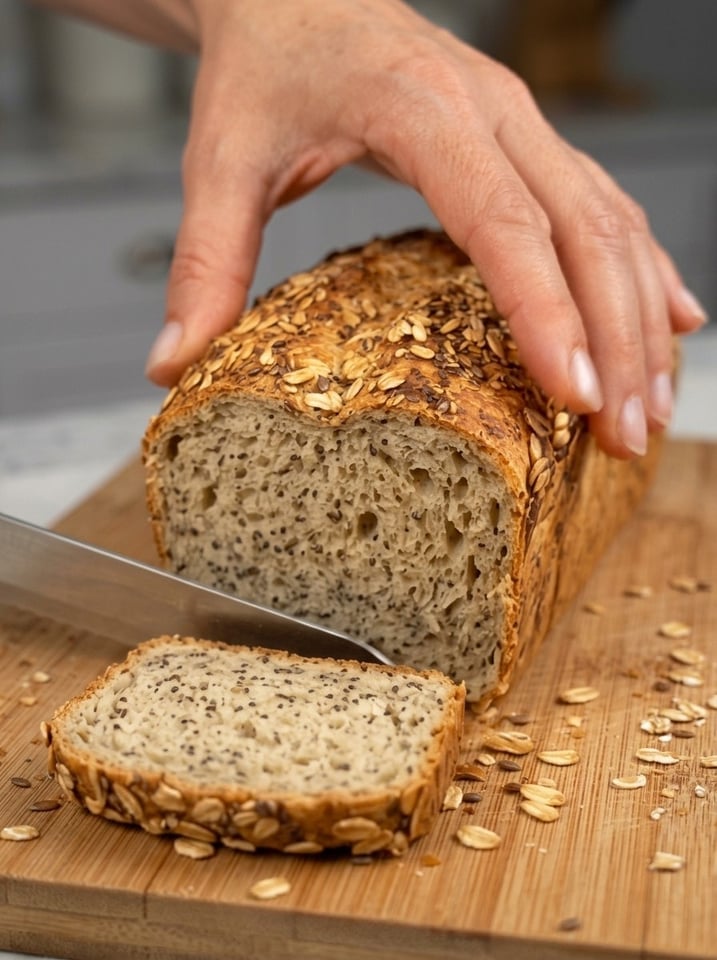
Flour-Free Oat & Chia Bread: A Hearty, Healthy, No-Knead Loaf You Can Make Today
Flour-Free Oat & Chia Bread Recipe (No Yeast, No Kneading)
Meta description: Make easy flour-free oat and chia bread with just a blender and a bowl. No yeast, no kneading, soft inside, golden outside. Perfect for toast and sandwiches.
Focus keyword: flour-free oat and chia bread
Secondary keywords: oat bread without flour, chia seed bread recipe, healthy homemade bread, no yeast bread, no knead oat bread, rolled oats bread, easy breakfast bread
There is something deeply satisfying about pulling a golden, fragrant loaf of bread out of your own oven. Now imagine doing it without flour, without yeast, and without a single minute of kneading. That is exactly what you get with this flour-free oat and chia bread: a hearty, wholesome loaf with a lightly golden crust, a soft and moist center, and a delicious nutty flavor.
Instead of traditional wheat flour, this recipe relies on two humble pantry staples: rolled oats and chia seeds. The oats are blended into a coarse flour, while the chia seeds form a gel that binds everything together and keeps the crumb tender. The result is a simple, nourishing bread that works just as well toasted with avocado as it does topped with peanut butter and banana.
In this complete guide, you will find the full recipe, ingredient notes and substitutions, step-by-step instructions, troubleshooting help, storage and freezing advice, flavor variations, serving ideas, and answers to the most common questions. Whether you are new to baking or simply want a healthier loaf for your weekly routine, this is the one to bookmark.
Why You’ll Love This Oat & Chia Bread
- No flour required. Everything starts with rolled oats blended into a rustic oat flour right in your blender or food processor.
- No yeast, no kneading, no waiting for dough to rise. You blend, mix, and bake. That is it.
- Wholesome ingredients. Oats, chia seeds, eggs, olive oil, and a touch of honey or maple syrup, with nothing complicated or hard to find.
- Soft and moist inside, golden outside. The chia gel keeps the center tender while the oven creates a lightly crisp crust.
- Naturally hearty and filling. Oats and chia seeds make each slice satisfying enough for breakfast or a snack.
- Versatile. Eat it sweet or savory, fresh or toasted, plain or loaded with toppings.
- Great for meal prep. Slice and freeze the loaf for easy grab-and-toast breakfasts all month.
- Easy to adapt. Use certified gluten-free oats if you need a gluten-free loaf.
Recipe Details at a Glance
- Prep time: 10 minutes
- Resting time: 15 minutes
- Cook time: 45–55 minutes
- Total time: About 1 hour 20 minutes
- Yield: 1 small loaf (8–10 slices)
- Difficulty: Easy
Ingredients for Flour-Free Oat & Chia Bread
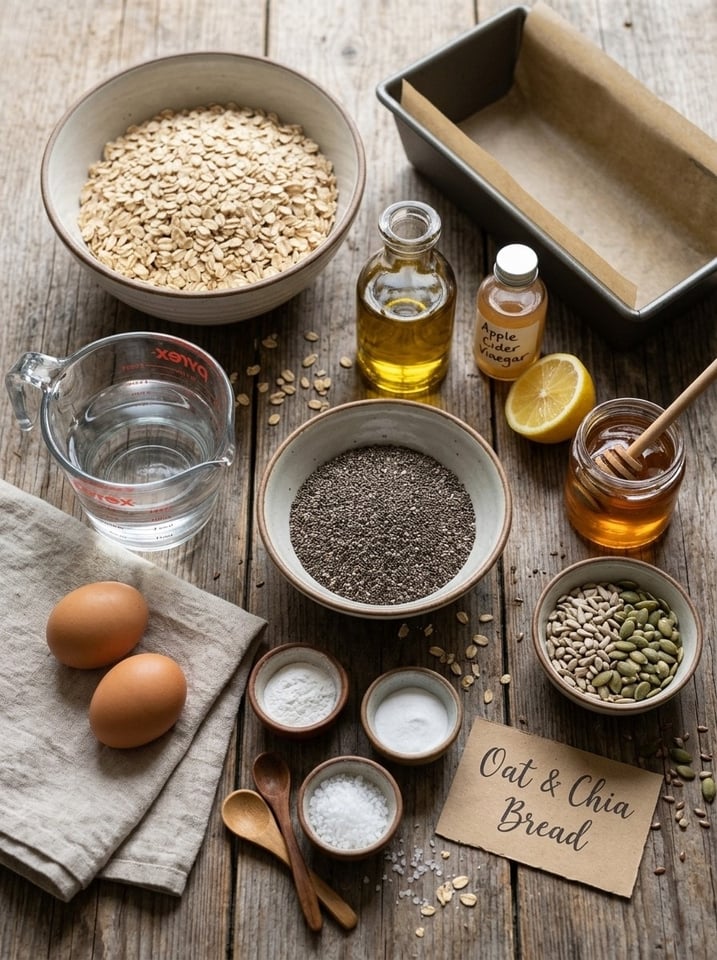
- 2 cups (180 g) rolled oats
- ¼ cup (40 g) chia seeds
- 1 cup (240 ml) warm water
- 2 large eggs
- 2 tablespoons olive oil
- 1 teaspoon baking powder
- ½ teaspoon baking soda
- 1 tablespoon apple cider vinegar or lemon juice
- ½ teaspoon salt
- 1 tablespoon honey or maple syrup (optional)
- 2 tablespoons sunflower seeds or pumpkin seeds (optional, for topping)
Ingredient Notes and Substitutions
Rolled oats. Old-fashioned rolled oats give the best texture and flavor. Blend them until they resemble coarse flour for a rustic crumb, or keep blending for a finer, smoother loaf. Quick oats can work, but they tend to produce a slightly denser, softer bread. Steel-cut oats are not a good substitute because they do not blend or absorb moisture in the same way.
Chia seeds. Chia seeds are the secret to this bread. When soaked in water, they swell and form a thick gel that acts as a natural binder and helps keep the loaf moist. Both black and white chia seeds work equally well.
Warm water. Warm water helps the chia seeds form their gel more quickly. It should be comfortably warm, not hot.
Eggs. The eggs add structure, richness, and lift. Because this recipe contains no gluten-rich wheat flour, the eggs help hold the loaf together. Use large eggs at room temperature if possible so they blend smoothly into the batter.
Olive oil. Olive oil adds moisture and a subtle savory richness. A mild or light olive oil works well if you prefer a more neutral flavor. Melted butter or avocado oil can also be used.
Baking powder and baking soda. Together, these leaveners give the bread lift without yeast. The baking soda reacts with the acidic vinegar or lemon juice to create bubbles that help the loaf rise.
Apple cider vinegar or lemon juice. The acid activates the baking soda and helps create a lighter crumb. Either option works, so use whichever you have on hand.
Honey or maple syrup. This is optional. A small amount adds gentle sweetness and helps the crust brown. Leave it out for a fully savory loaf, or use a little more for a sweeter bread.
Seeds for topping. Sunflower seeds, pumpkin seeds, sesame seeds, or extra oats add crunch and a rustic bakery-style finish.
Equipment You’ll Need
- A blender or food processor
- A mixing bowl and whisk
- An 8 × 4-inch (20 × 10 cm) loaf pan
- Parchment paper
- A spatula
- A wire cooling rack
- A sharp serrated knife for slicing
How to Make Flour-Free Oat & Chia Bread: Step-by-Step
Step 1: Prepare the Oats
Preheat your oven to 350°F (175°C). Grease an 8 × 4-inch (20 × 10 cm) loaf pan and line it with parchment paper, leaving a little overhang on the sides so you can lift the loaf out easily later.
Place the rolled oats in a blender or food processor. Blend until they resemble coarse flour. For a smoother loaf, continue blending until the oats are finely ground.
Step 2: Prepare the Chia Seeds
Combine the chia seeds and warm water in a mixing bowl. Stir thoroughly and let the mixture rest for 10–15 minutes, until it thickens into a gel.
This gel helps bind the ingredients together and contributes to the bread’s moist texture. Give the mixture a stir after the first couple of minutes to prevent clumps from forming.
Step 3: Mix the Wet Ingredients
Add the eggs, olive oil, and optional honey or maple syrup to the chia gel. Whisk until everything is evenly combined.
Step 4: Combine the Ingredients
Add the ground oats, baking powder, baking soda, and salt. Pour in the apple cider vinegar or lemon juice.
Mix until a thick, sticky batter forms. Let it rest for another 5 minutes so the oats can absorb the moisture.
If the batter seems too dry, add 1–2 tablespoons of water. It should be thick and moist rather than runny.
Step 5: Fill the Loaf Pan
Transfer the batter to the prepared loaf pan. Spread it evenly with a spatula and smooth the surface.
Sprinkle sunflower seeds, pumpkin seeds, or extra oats over the top for a rustic finish.
Step 6: Bake Until Golden
Bake for 45–55 minutes, until the top is golden brown and the center is firm.
Insert a toothpick into the middle. It should come out without wet batter. If the top browns too quickly, cover it loosely with foil during the final 10–15 minutes.
Step 7: Cool Completely
Remove the loaf from the oven and let it rest in the pan for 10–15 minutes.
Transfer it to a wire rack and allow it to cool completely before slicing. This step helps the chia seeds and oats set, giving the bread a better texture.
Step 8: Slice and Enjoy
Use a sharp serrated knife to cut the loaf into even slices. Enjoy it fresh, toasted, or topped with avocado, nut butter, hummus, or your favorite spread.
Tips for Perfect Oat & Chia Bread
Use certified gluten-free oats if needed. Oats are naturally gluten-free, but they are often processed alongside wheat. If you need the bread to be gluten-free, look for oats labeled certified gluten-free.
Let the chia seeds gel properly. Do not skip the resting time. A fully developed gel is what holds the loaf together and keeps it moist.
Blend the oats finely for a uniform texture. A coarser grind gives a rustic, hearty loaf, while a finer grind creates a softer, more even crumb.
Don’t slice the bread while hot. Cooling completely helps prevent a gummy or crumbly center. This is the hardest step, but it makes a real difference.
Add extra flavor. Garlic powder, dried rosemary, oregano, or black pepper turn this into a savory herb loaf.
Make it sweeter. Cinnamon, raisins, or a little extra honey are easy ways to lean toward breakfast.
Add a crunchy topping. Sesame, sunflower, or pumpkin seeds look beautiful and add texture.
Check your oven temperature. Ovens vary. If your loaf browns too quickly or too slowly, an inexpensive oven thermometer can help you bake more consistently.
Measure carefully. For the most reliable results, weigh the oats and chia seeds with a kitchen scale instead of using cups.
Troubleshooting Common Problems
My bread is gummy in the middle. The loaf was likely sliced too soon, or it needed a few more minutes in the oven. Make sure a toothpick comes out clean and let the bread cool completely before cutting.
My bread is crumbly. The oats may have been ground too coarsely, or the batter may have been too dry. Blend the oats more finely, make sure the chia gel is fully thickened, and add a spoonful of water if the batter looks dry.
My loaf didn’t rise much. This bread is dense and hearty by nature, but it should still rise slightly. Check that your baking powder and baking soda are fresh, and mix in the vinegar or lemon juice right before baking.
The top browned too quickly. Cover the loaf loosely with foil during the last 10–15 minutes of baking.
The bread tastes bland. Make sure you included the salt, which brings out the nutty flavor of the oats. Add herbs, spices, or a touch of honey to suit your taste.
The batter is too runny. Let it rest a few extra minutes so the oats can absorb more liquid. The batter should be thick and sticky, not pourable.
Flavor Variations to Try
- Savory herb bread: Add 1 teaspoon dried rosemary or oregano and ½ teaspoon garlic powder. Omit the honey.
- Cinnamon raisin bread: Add 1 teaspoon cinnamon and ¼ cup raisins, and use the optional honey or maple syrup.
- Seeded power loaf: Fold sunflower seeds, pumpkin seeds, and sesame seeds into the batter as well as on top.
- Cheesy bread: Fold in a handful of shredded cheese and a pinch of black pepper.
- Everything-style loaf: Sprinkle the top with sesame seeds, poppy seeds, and dried garlic.
- Nutty crunch: Add chopped walnuts or almonds for extra texture.
- Warm spice loaf: Add a pinch of nutmeg and cardamom for a cozy breakfast bread.
Storage and Freezing
- Room temperature: Store in an airtight container for up to 1 day.
- Refrigerator: Keep in an airtight container for up to 5 days.
- Freezer: Slice the completely cooled loaf and freeze with parchment paper between slices for up to 2 months for best quality.
- Reheating: Toast refrigerated or frozen slices until warm and lightly crisp.
Because this bread contains eggs and moisture-rich chia seeds, refrigerate leftovers after the first day. Always let the loaf cool completely before storing it, since wrapping warm bread traps steam and makes it soggy.
Delicious Serving Ideas
- Avocado toast: Spread mashed avocado over a toasted slice and add lemon juice, black pepper, and chili flakes.
- Peanut butter and banana: Top with creamy peanut butter and sliced banana for a satisfying breakfast.
- Savory herb toast: Add hummus, cucumber, fresh herbs, and a drizzle of olive oil.
- Cheesy toast: Top with cheese and herbs, then toast until warm and melted.
- Sweet breakfast: Serve with a little honey, cinnamon, and your favorite nut butter.
- Sandwiches: Use two slices for a turkey, egg salad, or veggie sandwich. Toasting the slices first helps them hold up.
- With soup or salad: Serve alongside a bowl of soup or a fresh salad for a light lunch.
- Eggs on toast: Top with a fried or poached egg and a sprinkle of salt and pepper.
Why Oats and Chia Seeds Make a Great Pair
Oats and chia seeds are both popular in healthy home cooking, and they work beautifully together in this loaf.
Rolled oats provide the bulk and structure of the bread. They bring a mild, nutty, slightly sweet flavor and a soft, hearty texture. Oats are also known for their fiber content, which is part of why oat-based foods feel so filling.
Chia seeds are tiny, but they absorb many times their weight in liquid and turn into a gel. In this recipe, that gel replaces some of the binding power you would normally get from gluten, helping the loaf hold its shape and stay moist. Chia seeds also add a little extra fiber and a pleasant, subtle crunch.
Together with eggs and a simple leavening system of baking powder, baking soda, and acid, they create a loaf that is sturdy enough to slice and toast, yet soft enough to enjoy on its own.
A Note on Dietary Needs
This recipe is made without wheat flour, but that does not automatically make it gluten-free, since oats can be cross-contaminated during processing. If you need to avoid gluten, choose certified gluten-free oats. The bread contains eggs, so it is not vegan as written. If you have food allergies or dietary restrictions, always check your ingredient labels. This article is for general cooking inspiration and is not medical or nutritional advice.
Frequently Asked Questions
Can I make oat and chia bread without eggs?
Eggs provide structure in this recipe, so removing them will change the texture. If you want to experiment with an egg-free version, try a flax or additional chia gel, but expect a denser, more fragile loaf.
Is this bread really flour-free?
There is no wheat flour in this recipe. The rolled oats are blended into a coarse oat flour, so the bread is made entirely from oats rather than traditional flour.
Do I need yeast or kneading?
No. This is a quick bread that rises with baking powder and baking soda, so there is no yeast, no kneading, and no proofing time.
Can I use quick oats instead of rolled oats?
Yes, though the texture may be slightly softer and denser. Old-fashioned rolled oats give the best results.
Can I use ground chia or ground flax instead of whole chia seeds?
Whole chia seeds are recommended for the gel that binds this loaf. Ground chia will also thicken, but the texture may be different. Test a small change first rather than swapping everything at once.
How do I know when the bread is done?
The top should be golden brown, the center should feel firm, and a toothpick inserted into the middle should come out without wet batter.
Can I double the recipe?
Yes, but bake it in two loaf pans rather than one larger pan so the center cooks through evenly.
How should I store leftover bread?
Keep it in an airtight container for up to 1 day at room temperature, or up to 5 days in the refrigerator. Freeze slices for up to 2 months.
Can I freeze this bread?
Yes. Slice the completely cooled loaf, place parchment paper between the slices, and freeze them in an airtight container or freezer bag. Toast slices straight from the freezer.
Why does the bread need to cool completely?
The oats and chia seeds continue to set as the loaf cools. Cutting too early can leave the center gummy or cause the slices to crumble.
Can I make it sweeter?
Yes. Add a little extra honey or maple syrup and mix in cinnamon, raisins, or chopped dried fruit.
Can I make it dairy-free?
Yes. The recipe as written uses olive oil rather than butter and contains no milk, so it is naturally dairy-free as long as your toppings are too.
Final Thoughts
Flour-free oat and chia bread proves that homemade bread does not have to be complicated. With a blender, a bowl, and a handful of simple ingredients, you can bake a hearty, nutty loaf that is soft inside, golden outside, and ready for just about any topping.
There is no yeast to proof, no dough to knead, and no special technique to master. Just blend, mix, and bake. Whether you enjoy it toasted with avocado, spread with peanut butter, or layered into a sandwich, this loaf is an easy way to bring wholesome homemade bread into your week.
Print
Flour-Free Oat & Chia Bread
Ingredients
- 2 cups (180 g) rolled oats
- ¼ cup (40 g) chia seeds
- 1 cup (240 ml) warm water
- 2 large eggs
- 2 tablespoons olive oil
- 1 teaspoon baking powder
- ½ teaspoon baking soda
- 1 tablespoon apple cider vinegar or lemon juice
- ½ teaspoon salt
- 1 tablespoon honey or maple syrup (optional)
- 2 tablespoons sunflower seeds or pumpkin seeds (optional, for topping)
Ingredient Notes and Substitutions
Rolled oats. Old-fashioned rolled oats give the best texture and flavor. Blend them until they resemble coarse flour for a rustic crumb, or keep blending for a finer, smoother loaf. Quick oats can work, but they tend to produce a slightly denser, softer bread. Steel-cut oats are not a good substitute because they do not blend or absorb moisture in the same way.
Chia seeds. Chia seeds are the secret to this bread. When soaked in water, they swell and form a thick gel that acts as a natural binder and helps keep the loaf moist. Both black and white chia seeds work equally well.
Warm water. Warm water helps the chia seeds form their gel more quickly. It should be comfortably warm, not hot.
Eggs. The eggs add structure, richness, and lift. Because this recipe contains no gluten-rich wheat flour, the eggs help hold the loaf together. Use large eggs at room temperature if possible so they blend smoothly into the batter.
Olive oil. Olive oil adds moisture and a subtle savory richness. A mild or light olive oil works well if you prefer a more neutral flavor. Melted butter or avocado oil can also be used.
Baking powder and baking soda. Together, these leaveners give the bread lift without yeast. The baking soda reacts with the acidic vinegar or lemon juice to create bubbles that help the loaf rise.
Apple cider vinegar or lemon juice. The acid activates the baking soda and helps create a lighter crumb. Either option works, so use whichever you have on hand.
Honey or maple syrup. This is optional. A small amount adds gentle sweetness and helps the crust brown. Leave it out for a fully savory loaf, or use a little more for a sweeter bread.
Seeds for topping. Sunflower seeds, pumpkin seeds, sesame seeds, or extra oats add crunch and a rustic bakery-style finish.
Equipment You’ll Need
- A blender or food processor
- A mixing bowl and whisk
- An 8 × 4-inch (20 × 10 cm) loaf pan
- Parchment paper
- A spatula
- A wire cooling rack
- A sharp serrated knife for slicing
Instructions
Preheat your oven to 350°F (175°C). Grease an 8 × 4-inch (20 × 10 cm) loaf pan and line it with parchment paper, leaving a little overhang on the sides so you can lift the loaf out easily later.
Place the rolled oats in a blender or food processor. Blend until they resemble coarse flour. For a smoother loaf, continue blending until the oats are finely ground.
Combine the chia seeds and warm water in a mixing bowl. Stir thoroughly and let the mixture rest for 10–15 minutes, until it thickens into a gel.
This gel helps bind the ingredients together and contributes to the bread’s moist texture. Give the mixture a stir after the first couple of minutes to prevent clumps from forming.
Add the eggs, olive oil, and optional honey or maple syrup to the chia gel. Whisk until everything is evenly combined.
Add the ground oats, baking powder, baking soda, and salt. Pour in the apple cider vinegar or lemon juice.
Mix until a thick, sticky batter forms. Let it rest for another 5 minutes so the oats can absorb the moisture.
If the batter seems too dry, add 1–2 tablespoons of water. It should be thick and moist rather than runny.
Transfer the batter to the prepared loaf pan. Spread it evenly with a spatula and smooth the surface.
Sprinkle sunflower seeds, pumpkin seeds, or extra oats over the top for a rustic finish.
Bake for 45–55 minutes, until the top is golden brown and the center is firm.
Insert a toothpick into the middle. It should come out without wet batter. If the top browns too quickly, cover it loosely with foil during the final 10–15 minutes.
Remove the loaf from the oven and let it rest in the pan for 10–15 minutes.
Transfer it to a wire rack and allow it to cool completely before slicing. This step helps the chia seeds and oats set, giving the bread a better texture.
Use a sharp serrated knife to cut the loaf into even slices. Enjoy it fresh, toasted, or topped with avocado, nut butter, hummus, or your favorite spread.