Sweet & Spicy Buffalo Mustard Pickled Garlic
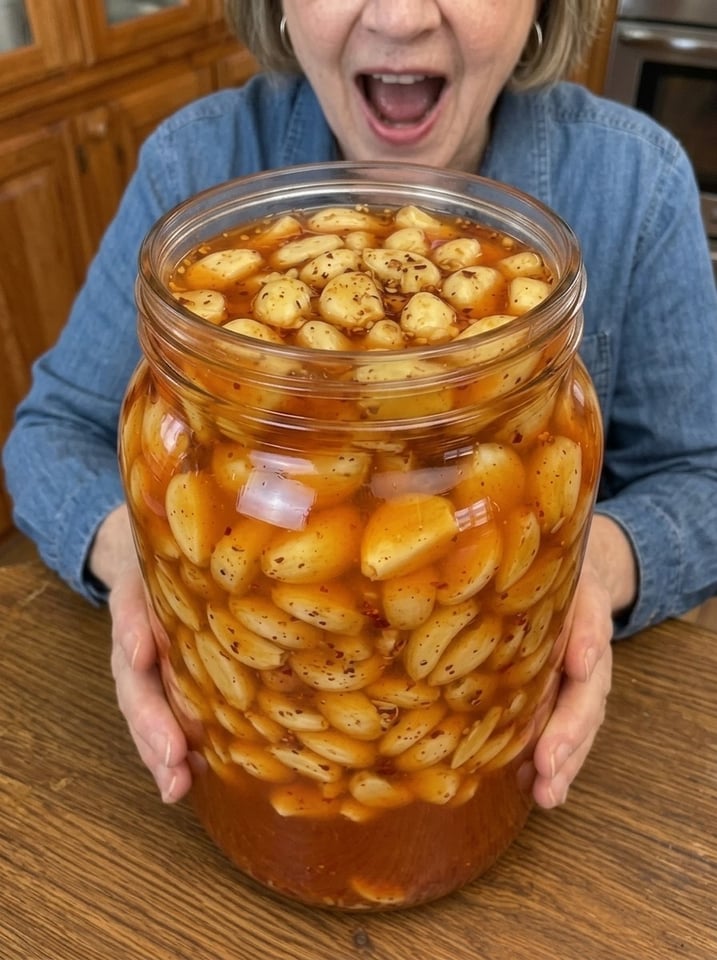
🧄🌶️ Sweet & Spicy Buffalo Mustard Pickled Garlic
Tangy, spicy, sweet and packed with fiery Buffalo-inspired flavor, this sweet and spicy Buffalo mustard pickled garlic turns humble garlic cloves into a bold, snackable condiment. Tender garlic is steeped in a sharp vinegar brine with honey, two kinds of mustard, red pepper flakes, smoked paprika and Buffalo-style hot sauce. Every bite delivers punchy garlic flavor, tangy mustard warmth and a buttery, wing-night finish. 😍🌶️
It is a delicious addition to burgers, sandwiches, wings, charcuterie boards, salads and spicy snack platters. It is also a small-batch refrigerator pickle, which means it needs careful handling. Garlic is a low-acid food, and storing it in liquid calls for real attention to temperature and time. This guide gives you the full recipe, plus plenty of ways to use it, tips for flavor, variations, troubleshooting, and a clear, conservative section on food safety. Please read that section before you make your first batch.
Why You Will Love This Pickled Garlic
- Big, bold flavor. Sweet honey, tangy vinegar, sharp mustard and Buffalo heat all in one clove.
- Easy to make. About 15 minutes of prep and 5 minutes on the stove.
- No canning equipment. It is a refrigerator recipe, so there are no jars to process.
- Mellow garlic bite. Pickling softens garlic’s raw sharpness while keeping its savory punch.
- Versatile. Use it on burgers, in sandwiches, on a charcuterie board or chopped into salads and dressings.
- Customizable heat. Adjust the red pepper flakes and hot sauce to suit your tolerance.
- A conversation starter. Few people expect Buffalo-flavored pickled garlic, and almost everyone wants a second clove.
What Is Pickled Garlic?
Pickled garlic is simply peeled garlic cloves preserved in a seasoned, acidic brine, usually vinegar-based. Over time, the brine mellows the garlic’s harsh bite and gives it a tangy, slightly sweet, crunchy-tender texture. It is enjoyed across many cuisines, eaten whole as a snack, chopped into dishes or served as a condiment alongside rich foods.
This recipe gives that tradition a Buffalo-inspired twist. Honey adds sweetness, mustard adds sharpness and warmth, and red pepper, smoked paprika and Buffalo-style hot sauce provide fiery, tangy heat. A little butter, added only to the portion you are about to serve, gives a rich, wing-sauce finish.
Recipe Card at a Glance
- Prep time: 15 minutes
- Cook time: 5 minutes
- Pickling time: 3 to 5 days
- Total time: Approximately 3 to 5 days
- Yield: 1 large jar
- Difficulty: Easy
- Storage: Refrigerator only (see food safety section)
- Flavor profile: Tangy, sweet, spicy, garlicky, mustard-forward and Buffalo-inspired
Ingredients
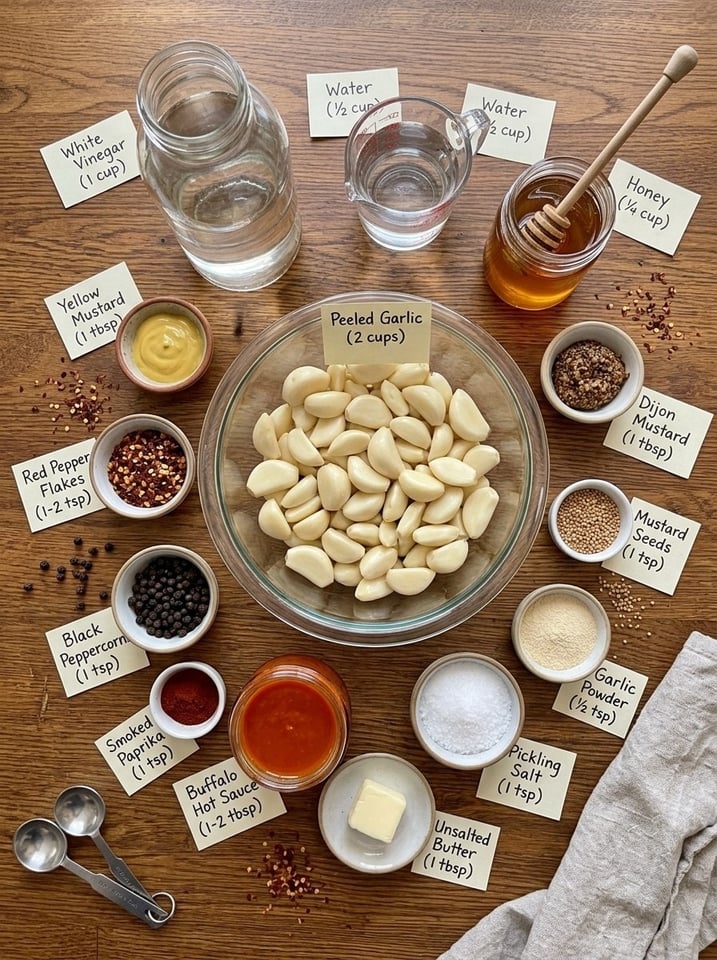
For the pickled garlic
- 2 cups peeled garlic cloves 🧄
- 1 cup white vinegar (5% acidity)
- ½ cup water
- ¼ cup honey
- 1 tablespoon yellow mustard
- 1 tablespoon Dijon mustard
- 1 to 2 teaspoons red pepper flakes, to taste
- 1 teaspoon mustard seeds
- 1 teaspoon black peppercorns
- 1 teaspoon smoked paprika
- 1 to 2 tablespoons Buffalo-style hot sauce, to taste
- 1 teaspoon pickling salt
- ½ teaspoon garlic powder, optional
- 1 tablespoon unsalted butter, optional, for serving only
Ingredient Notes
Garlic
Choose firm, fresh, plump garlic heads with tight skins. Avoid cloves that are soft, sprouting, moldy or discolored. Peel the cloves carefully and discard any with blemishes. Peeling two cups of cloves takes time, so consider using the shortcut below.
White vinegar (5% acidity)
The vinegar provides the acidity that makes the brine tangy and helps make the environment less hospitable to bacteria. Use a vinegar clearly labeled 5% acidity. Do not dilute the brine more than the recipe states, and do not reduce the vinegar.
Honey
Honey adds rounded sweetness that balances the vinegar and heat. Note that honey should not be given to infants under 12 months, so keep that in mind when serving.
Yellow and Dijon mustard
Two mustards give the brine layered flavor: yellow mustard brings a bright, tangy edge, and Dijon adds depth and sharp warmth.
Mustard seeds and black peppercorns
These whole spices float in the brine and add classic pickling flavor and a subtle crunch.
Smoked paprika and red pepper flakes
Smoked paprika adds color and a gentle smoky quality, while red pepper flakes bring the heat.
Buffalo-style hot sauce
Choose a vinegar-based cayenne hot sauce for the classic Buffalo flavor. Brands vary in heat and salt, so start with 1 tablespoon and add more if you like. Because the sauce contains salt, taste before adding extra.
Pickling salt
Pickling salt contains no anti-caking agents, so it keeps the brine clearer. If you use another salt, check how it measures by weight, because fine and coarse salts differ in volume.
Butter (serving only)
A little melted unsalted butter tossed with the pickled garlic you are about to eat gives a Buffalo-wing-style finish. Do not add butter to the storage jar.
Equipment
- A clean glass jar with a lid (about 1 pint or 500 ml to 1 quart or 1 liter in size, depending on how tightly you pack the garlic)
- A non-reactive saucepan (stainless steel or enamel)
- A fine-mesh strainer for rinsing
- A small paring knife for peeling and trimming
- Measuring cups and spoons
- A clean spoon or tongs for serving
Step-by-Step Instructions
Step 1: Prepare the garlic
Peel the garlic cloves and discard any damaged or discolored pieces. Rinse and drain well.
Step 2: Make the brine
In a saucepan, combine the white vinegar, water, honey, yellow mustard, Dijon mustard, red pepper flakes, mustard seeds, black peppercorns, smoked paprika, hot sauce and pickling salt.
Step 3: Heat the mixture
Bring the brine to a gentle simmer, stirring until the honey and salt dissolve. Remove from the heat.
Step 4: Fill the jar
Place the peeled garlic cloves in a clean glass jar. Pour the warm brine over them until the cloves are completely submerged.
Step 5: Cool safely
Let the jar cool briefly, then cover and refrigerate promptly.
Step 6: Let the flavors develop
Refrigerate for at least 3 to 5 days before tasting for a more developed mustard, honey and Buffalo-style flavor.
Step 7: Serve
Enjoy the pickled garlic straight from the refrigerator or add it to sandwiches, burgers, salads and charcuterie boards. For a buttery Buffalo-style finish, toss a serving with a little melted butter just before eating.
Important Food Safety Information
This is the most important section of the article, so please read it carefully.
This is a refrigerator pickle, not a shelf-stable canning recipe.
- Keep it refrigerated at 40°F (4°C) or below at all times. Do not leave the jar at room temperature, on the counter overnight or in a warm car.
- Do not store it at room temperature. Garlic is a low-acid vegetable that grows in soil, and it can carry spores of Clostridium botulinum, the bacterium that causes botulism. Improperly handled garlic stored in liquid or oil, particularly at room temperature, can create conditions where those spores may produce toxin. Refrigeration and acidity are what make this recipe safer.
- Use within 1 week. For a conservative home-preparation approach, plan to use the jar within one week of making it, and discard anything left after that.
- Discard if there are signs of spoilage. This includes a bulging lid, spurting liquid when opened, an off or unusual smell, mold, sliminess, cloudiness that is not from spices, or fizzing. If anything seems wrong, throw the jar out without tasting it.
- Do not can or water-bath process this recipe. Do not assume that a sealed lid or a “pop” means it is shelf-stable. This recipe has not been tested for canning, and it contains honey, mustard and hot sauce in proportions not designed for home canning.
- Do not add butter to the jar. Butter is a low-acid, dairy-based fat. It is for the portion you are serving immediately, not for storage.
- Keep everything clean. Wash the jar, lid, utensils, cutting board and your hands in hot, soapy water. Use clean utensils every time you take garlic from the jar.
- Do not reduce the vinegar or salt. The acid and salt are part of what helps keep the pickle safe. Do not substitute lower-acid liquids for the vinegar.
- Talk to a professional if in doubt. If you are making this for someone with a weakened immune system, pregnant, elderly or very young, or you have any question, consult your local food safety authority or extension service.
A note on timing. The recipe suggests letting the garlic develop flavor for 3 to 5 days, and also recommends using it within 1 week. That leaves a short window for enjoying it at its best. Plan accordingly, and consider making a smaller batch you can finish within the week.
Harmless Color Changes
Garlic can sometimes turn blue, green or teal when pickled. This is a natural chemical reaction between sulfur compounds in garlic and trace minerals or acids, and it is generally a harmless cosmetic change. It is more likely with very fresh garlic or when garlic is heated. However, because discoloration can also be a sign of something wrong, never rely on color alone. Use the safety guidance above, and if there are any other signs of spoilage, discard the jar.
Tips for the Best Pickled Garlic
1. Use fresh, firm garlic
Fresh, high-quality cloves give the best crunch and flavor. Avoid soft, sprouting or discolored garlic.
2. Peel garlic efficiently
To make peeling easier, trim the root ends, then crush each clove lightly with the flat of a knife to loosen the skin. For a lot of garlic, you can also separate the cloves and shake them vigorously between two metal bowls for a minute, though this may bruise them. Pre-peeled garlic from the store can save time, but check that it looks fresh and smells clean.
3. Make a smaller batch
A big jar of garlic is hard to finish within a week. Halve the recipe and use a smaller jar so the pickled garlic is enjoyed while it is fresh and within the recommended window.
4. Make sure the garlic is fully submerged
Cloves above the brine can discolor or spoil. Press them down, use a smaller jar so the level is higher or place a small, clean, non-reactive weight on top.
5. Adjust the heat gradually
Start with 1 teaspoon of red pepper flakes and 1 tablespoon of hot sauce. You can always add more next time, but you cannot remove heat once it is in the jar.
6. Balance sweet and tangy
If the brine tastes too sharp, a teaspoon more honey rounds it out. If it is too sweet, reduce the honey slightly next batch. Do not reduce the vinegar to compensate.
7. Shake or rotate the jar daily
Gently tipping the jar once a day helps redistribute the spices and ensures every clove is in contact with the brine.
8. Serve cold
Pickled garlic is best straight from the refrigerator, where its flavor and crunch are at their peak.
9. Save the brine for cooking, with caution
You can use a spoonful of the leftover brine in a vinaigrette or marinade soon after opening, but keep it refrigerated and discard it with the jar within the same one-week window.
10. Taste before adding more salt
Hot sauce and pickling salt both contribute sodium. The finished garlic will taste intense, so a little goes a long way.
Ways to Use Buffalo Mustard Pickled Garlic
This condiment is bold and versatile:
On sandwiches and burgers
- Slice cloves thinly and layer onto burgers, cheeseburgers and grilled sandwiches.
- Chop and stir into tuna salad, chicken salad or egg salad.
- Add to sub sandwiches, wraps and paninis for tangy heat.
On a board or platter
- Include in charcuterie boards alongside salami, sharp cheddar, olives and pickles.
- Serve with a spicy antipasto platter, cured meats and crusty bread.
- Pair with chicken wings, as a cooling, tangy counterpoint to the heat.
In cooking
- Chop into salads and grain bowls for a punchy accent.
- Stir into potato salad or coleslaw.
- Add to pasta salad or tossed with roasted vegetables after cooking.
- Mash into dips, such as ranch, blue cheese or yogurt dip.
- Use in marinades or dressings, finely minced.
- Top pizzas, flatbreads or toast right before serving.
As a snack
- Eat a clove straight from the jar, if you love bold flavors.
- Toss a serving with melted butter for a buttery Buffalo-style finish.
Best Pairings
- Chicken wings, drumsticks or fried chicken
- Burgers and grilled sandwiches
- Sharp cheddar, blue cheese or Monterey Jack
- Cured meats and sausages
- Creamy dips and ranch dressing
- Cold beer, hard cider or sparkling water with lemon
- Roasted potatoes and fries
Delicious Variations
These variations change the recipe, and any change to the brine’s acidity should be made conservatively. Keep the vinegar, water and salt amounts the same, and keep refrigerating the jar.
- Extra-hot version. Add more red pepper flakes or a sliced fresh chili.
- Smoky version. Increase the smoked paprika slightly.
- Honey-mustard focus. Add a little extra Dijon mustard.
- Sweeter version. Add a touch more honey.
- Herb boost. Add a sprig of fresh dill or a teaspoon of dried dill to the jar.
- Ranch-style. Serve with a spoonful of ranch dressing and chopped chives.
- Apple cider vinegar blend. You can replace part of the white vinegar with apple cider vinegar (5% acidity) for a fruitier flavor. Keep the overall acidity at 5% or above.
- Black pepper heavy. Increase the peppercorns for extra bite.
- Jalapeño garlic. Add a few jalapeño slices for green heat.
- Smaller batch. Halve all the ingredients and use a smaller jar for a fresher, shorter-lived batch.
Troubleshooting Common Problems
My garlic turned blue or green
This is a natural reaction and is typically harmless. Still, check for other signs of spoilage and follow the storage guidance. If you are unsure, discard it.
The garlic is too sharp or strong
It may need more time in the brine, or you may have used very pungent garlic. Let it sit a couple more days within the safe window, or serve it with creamy foods to balance it.
The brine is cloudy
Spices, mustard and honey can make the brine look cloudy or murky, which is normal. However, if it looks slimy, smells off or shows other signs of spoilage, discard it.
The garlic is too soft
Overheating the garlic or letting it sit too long can soften it. Do not boil the cloves in the brine, and pour the warm brine over raw garlic as directed. Use within the recommended week.
The brine is too spicy
Next time, reduce the red pepper flakes and hot sauce. You can also balance spicy garlic with sour cream, ranch or cheese when serving.
The brine is too salty
Check your hot sauce, which may have a lot of sodium, and do not exceed the measured salt. You can balance saltiness by serving the garlic with unsalted or fresh foods.
Some cloves are floating above the brine
Press them down, use a smaller jar or place a clean, non-reactive weight on top. Exposed cloves should be removed if they discolor.
Common Mistakes to Avoid
- Storing at room temperature. This is the biggest safety mistake.
- Treating it as a canning recipe. It is not tested or designed for that.
- Keeping it too long. Use within 1 week and discard leftovers.
- Adding butter to the jar. Butter is for serving only.
- Reducing the vinegar. The acid is important.
- Using damaged garlic. Discard any soft, moldy or discolored cloves.
- Not submerging the garlic. Cloves above the liquid can spoil.
- Using dirty jars or utensils. Always start with clean equipment.
- Ignoring signs of spoilage. When in doubt, throw it out.
- Making a huge batch. You will not finish it in a week.
Frequently Asked Questions
How long does Buffalo mustard pickled garlic last?
For a conservative home-preparation approach, use it within 1 week, keep it refrigerated at 40°F (4°C) or below at all times and discard it if there are any signs of spoilage.
Can I leave it on the counter?
No. Do not store it at room temperature. Garlic stored in liquid can pose a botulism risk if it is not handled properly, so this recipe must stay refrigerated.
Can I can it for shelf-stable storage?
No. This recipe is not designed or tested for canning. For safe, shelf-stable garlic pickles, you would need a tested canning recipe from a reliable source, such as a national home food preservation resource.
Can I freeze pickled garlic?
Freezing is not recommended, as the texture becomes soft and mushy.
Why do I need to wait 3 to 5 days before tasting?
The garlic needs time to absorb the brine and mellow. The flavors are more developed after a few days. Because the recommended window is 1 week, plan to use the jar soon after it is ready.
Can I use apple cider vinegar instead?
You can partly replace the white vinegar with apple cider vinegar that is labeled 5% acidity. Keep the total vinegar amount unchanged, and keep the jar refrigerated.
Can I use less salt or honey?
You can reduce the honey slightly for a less sweet pickle. Do not reduce the salt or vinegar significantly, since they are part of the safety and flavor balance.
Can I use pre-peeled garlic?
Yes, as long as it is fresh, firm and smells clean. Rinse it well and discard any damaged cloves.
What if my garlic cloves are very large?
Cut large cloves in half so the brine penetrates evenly.
Can I add butter to the jar for a Buffalo flavor?
No. Butter is only for the portion you are about to serve. Never add it to the storage jar.
Is it vegan?
The pickled garlic contains honey, so it is not vegan as written. Use maple syrup or another sweetener for a vegan option, though flavor will change. Skip the butter or use a plant-based butter when serving.
Is it gluten-free?
The ingredients are naturally gluten-free, but check the labels on your mustard and hot sauce, since formulations vary.
Can I use the leftover brine?
You can use a spoonful soon after making the jar, refrigerated, in a dressing or marinade. Discard the brine along with the garlic after a week.
Can I make it less spicy?
Yes. Reduce the red pepper flakes and hot sauce, or leave them out and add a little extra smoked paprika for flavor without heat.
Final Thoughts
Sweet and spicy Buffalo mustard pickled garlic is a bold, tangy, fiery little condiment that can transform a burger, brighten a charcuterie board or give wing night a clever sidekick. It is quick to make, simple to customize and packed with flavor. But because it is a refrigerator pickle made from garlic, it comes with real food safety responsibilities: keep it cold, keep it clean, use it within a week and toss it at the first sign that something is off. Make a small batch, enjoy it fresh and share it with people who love big flavors.
If you try it, leave a comment with how you served it, share the recipe with a friend who loves spicy pickles and save it for your next game-day spread. Enjoy! 🧄🌶️
Print
Sweet & Spicy Buffalo Mustard Pickled Garlic
Ingredients
For the pickled garlic
- 2 cups peeled garlic cloves 🧄
- 1 cup white vinegar (5% acidity)
- ½ cup water
- ¼ cup honey
- 1 tablespoon yellow mustard
- 1 tablespoon Dijon mustard
- 1 to 2 teaspoons red pepper flakes, to taste
- 1 teaspoon mustard seeds
- 1 teaspoon black peppercorns
- 1 teaspoon smoked paprika
- 1 to 2 tablespoons Buffalo-style hot sauce, to taste
- 1 teaspoon pickling salt
- ½ teaspoon garlic powder, optional
- 1 tablespoon unsalted butter, optional, for serving only
Ingredient Notes
Garlic
Choose firm, fresh, plump garlic heads with tight skins. Avoid cloves that are soft, sprouting, moldy or discolored. Peel the cloves carefully and discard any with blemishes. Peeling two cups of cloves takes time, so consider using the shortcut below.
White vinegar (5% acidity)
The vinegar provides the acidity that makes the brine tangy and helps make the environment less hospitable to bacteria. Use a vinegar clearly labeled 5% acidity. Do not dilute the brine more than the recipe states, and do not reduce the vinegar.
Honey
Honey adds rounded sweetness that balances the vinegar and heat. Note that honey should not be given to infants under 12 months, so keep that in mind when serving.
Yellow and Dijon mustard
Two mustards give the brine layered flavor: yellow mustard brings a bright, tangy edge, and Dijon adds depth and sharp warmth.
Mustard seeds and black peppercorns
These whole spices float in the brine and add classic pickling flavor and a subtle crunch.
Smoked paprika and red pepper flakes
Smoked paprika adds color and a gentle smoky quality, while red pepper flakes bring the heat.
Buffalo-style hot sauce
Choose a vinegar-based cayenne hot sauce for the classic Buffalo flavor. Brands vary in heat and salt, so start with 1 tablespoon and add more if you like. Because the sauce contains salt, taste before adding extra.
Pickling salt
Pickling salt contains no anti-caking agents, so it keeps the brine clearer. If you use another salt, check how it measures by weight, because fine and coarse salts differ in volume.
Butter (serving only)
A little melted unsalted butter tossed with the pickled garlic you are about to eat gives a Buffalo-wing-style finish. Do not add butter to the storage jar.
Instructions
Peel the garlic cloves and discard any damaged or discolored pieces. Rinse and drain well.
In a saucepan, combine the white vinegar, water, honey, yellow mustard, Dijon mustard, red pepper flakes, mustard seeds, black peppercorns, smoked paprika, hot sauce and pickling salt.
Bring the brine to a gentle simmer, stirring until the honey and salt dissolve. Remove from the heat.
Place the peeled garlic cloves in a clean glass jar. Pour the warm brine over them until the cloves are completely submerged.
Let the jar cool briefly, then cover and refrigerate promptly.
Refrigerate for at least 3 to 5 days before tasting for a more developed mustard, honey and Buffalo-style flavor.
Enjoy the pickled garlic straight from the refrigerator or add it to sandwiches, burgers, salads and charcuterie boards. For a buttery Buffalo-style finish, toss a serving with a little melted butter just before eating.