
Italian Pepperoncini, Feta & Olive Antipasto Jar
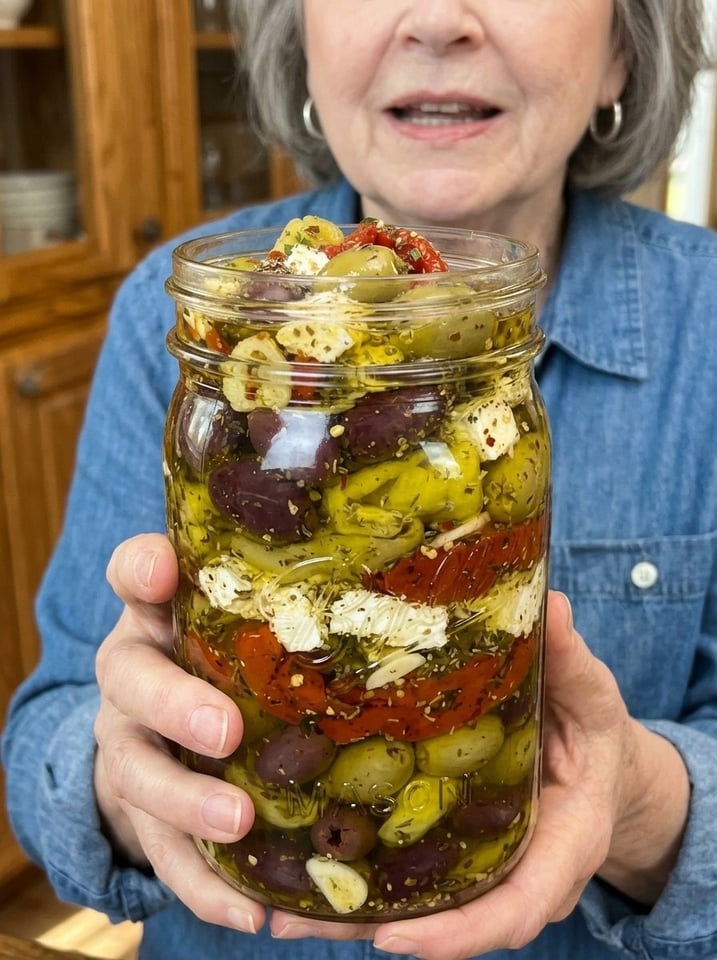
Italian Pepperoncini, Feta & Olive Antipasto Jar 🫒
Tangy, briny, creamy and bursting with irresistible Mediterranean flavor, this Italian pepperoncini, feta and olive antipasto jar is the kind of appetizer that earns a permanent place in your entertaining repertoire. Zesty pepperoncini, salty feta, juicy olives, roasted red peppers, garlic and aromatic Italian herbs are tossed in a simple olive oil and vinegar dressing, then chilled so the flavors meld into something far greater than the sum of its parts. 😍
Every bite balances creamy cheese, crunchy peppers, savory olives and bright tanginess. It is perfect for charcuterie boards, picnics, sandwiches, salads and easy party appetizers, and it takes just 15 minutes of hands-on time with no cooking at all. In this guide you will find the complete recipe, tips for the best flavor and presentation, ways to use the jar, variations, important food safety and storage guidance, troubleshooting and answers to frequently asked questions.
Why You Will Love This Antipasto Jar
- No cooking required. Chop, layer, pour and chill.
- Big Mediterranean flavor. Briny olives, tangy peppers, creamy feta and a zesty dressing hit every note.
- Make-ahead friendly. The flavors improve as the jar chills, so you can prepare it before guests arrive.
- Beautiful presentation. Layers of green and dark olives, red peppers and white feta look striking in clear glass.
- Versatile. Serve it on a board, toss it into salads, pile it on sandwiches or spoon it over grilled chicken.
- Naturally low-carb. Without bread or crackers, the jar itself is a fresh, savory, low-carb snack.
- Great for gifting and sharing. Bring a jar to a party or potluck (kept chilled, of course).
- Easy to customize. Add artichokes, sun-dried tomatoes, basil or extra heat to suit your taste.
What Is an Antipasto?
Antipasto is the traditional first course of an Italian meal, served before the pasta. The word literally means “before the meal.” Antipasti typically feature cured meats, cheeses, marinated vegetables, olives and bread, all designed to wake up the appetite with salty, tangy and savory flavors.
An antipasto jar captures that spirit in a single, convenient container. Instead of arranging many separate dishes, you combine marinated ingredients in one jar, where they soak up the dressing and develop a deeper flavor over time. The result is a ready-to-serve antipasto you can spoon onto a platter in seconds.
Ingredient Spotlight
Pepperoncini
Pepperoncini are mild, tangy, slightly sweet peppers, usually sold pickled in brine. They provide crunch, brightness and a gentle heat. Choose whole or sliced; if using whole, you can cut off the stems and slice them in half so the dressing penetrates.
Green and Kalamata olives
Using two kinds of olives adds contrast. Green olives are firm, bright and slightly buttery or briny, while Kalamata olives are dark, rich, fruity and more intense. Pitted olives make the jar easier to eat and serve.
Feta cheese
Feta is a crumbly, salty, tangy cheese that soaks up marinade beautifully. Block feta in brine gives the best texture for cubing. Pre-crumbled feta works but will break apart more easily and make the dressing cloudy.
Roasted red peppers
Sweet, smoky and tender, roasted red peppers add color and a soft contrast to the crunchy pepperoncini and firm olives. Drain them well and pat dry.
Red onion
Thinly sliced red onion adds a gentle sharpness and a pop of color. Soaking the slices in cold water for 10 minutes beforehand softens their bite.
Garlic
Crushed garlic perfumes the dressing. Because raw garlic is part of this recipe, the jar must stay refrigerated (more on safety below).
Fresh parsley and dried oregano
These herbs bring fresh, green and earthy notes that make the jar taste unmistakably Italian.
The dressing
A simple blend of extra-virgin olive oil, red wine vinegar, lemon juice, Italian seasoning and black pepper coats everything with fruity oil and a bright, acidic edge.
Ingredients
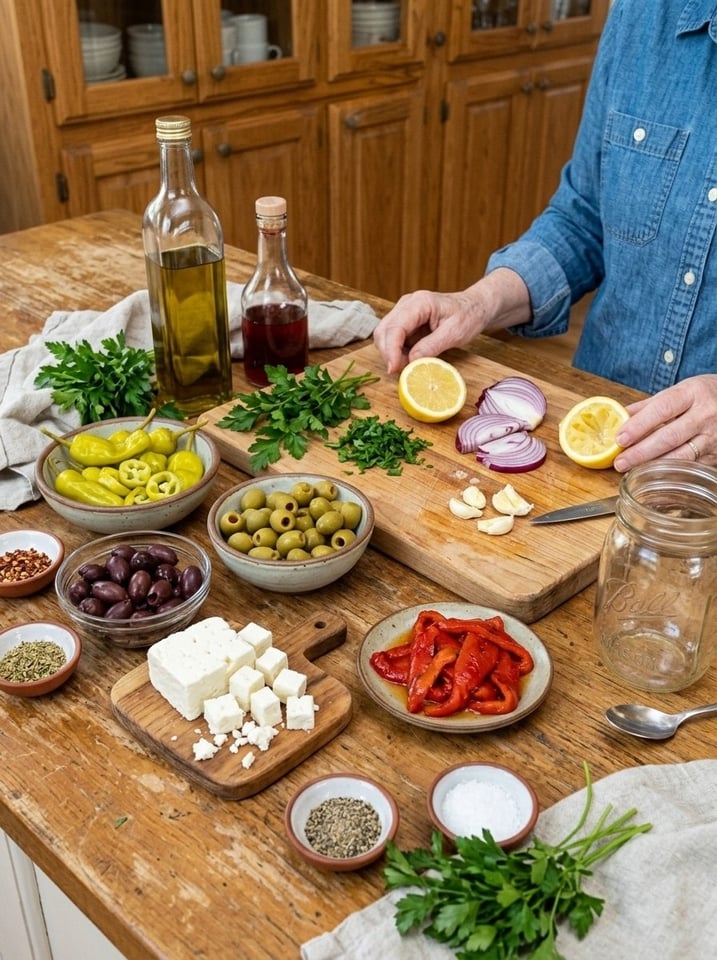
For the antipasto jar
- 1 cup whole or sliced pepperoncini, drained
- 1 cup green olives, pitted
- 1 cup Kalamata olives, pitted
- 6 oz (170 g) feta cheese, cut into cubes
- ½ cup roasted red peppers, sliced
- ¼ small red onion, thinly sliced
- 3 garlic cloves, peeled and lightly crushed
- 2 tablespoons fresh parsley, chopped
- 1 teaspoon dried oregano
- ½ teaspoon red pepper flakes, optional
For the Italian dressing
- ¼ cup extra-virgin olive oil
- 2 tablespoons red wine vinegar
- 1 tablespoon fresh lemon juice
- ½ teaspoon dried Italian seasoning
- ¼ teaspoon freshly ground black pepper
- Salt, to taste, if needed
Equipment
- A large, clean glass jar (about 1 liter or 1 quart) with a lid
- A small bowl and whisk or fork
- A cutting board and knife
- Measuring spoons and cups
- A spoon or tongs for serving
Step-by-Step Instructions
Step 1: Prepare the ingredients
Drain the pepperoncini and olives. Cut the feta into bite-sized cubes, slice the roasted peppers and red onion, and prepare the garlic and parsley.
Step 2: Make the dressing
In a small bowl, whisk together the olive oil, red wine vinegar, lemon juice, Italian seasoning and black pepper, plus the optional red pepper flakes if you like some heat.
Step 3: Layer the jar
Add the olives, pepperoncini, roasted red peppers, red onion and garlic to a clean glass jar.
Step 4: Add the feta
Gently tuck the feta cubes between the vegetables so they remain intact and evenly distributed.
Step 5: Pour in the dressing
Drizzle the dressing over the ingredients. Add the parsley and oregano, then gently toss or rotate the jar to distribute the flavors.
Step 6: Chill
Cover the jar and refrigerate for 1 to 2 hours to let the flavors blend.
Step 7: Serve
Gently stir before serving and spoon onto an antipasto platter with crusty bread, crackers or fresh vegetables.
Recipe Card at a Glance
- Prep time: 15 minutes
- Cook time: 0 minutes
- Chilling time: 1 to 2 hours
- Total time: 1 hour 15 minutes to 2 hours 15 minutes
- Yield: 1 large antipasto jar
- Servings: 4 to 6
- Difficulty: Easy
- Flavor profile: Briny, tangy, creamy, garlicky, herby and savory
Tips for the Best Antipasto Jar
1. Use good-quality ingredients
With so few ingredients, quality shows. Choose firm, flavorful olives, tangy pepperoncini and creamy feta. Block feta packed in brine generally has a better flavor and texture than dry pre-crumbled feta.
2. Drain and dry ingredients well
Excess brine or liquid dilutes the dressing and can make the jar watery. Drain the olives, pepperoncini and roasted peppers thoroughly, and pat the roasted peppers dry with a paper towel.
3. Taste before salting
Olives, pepperoncini and feta are all salty, so the dressing often needs no additional salt. Taste the jar after chilling, then adjust only if needed.
4. Cut the feta into sturdy cubes
Cubes about ¾ inch (2 cm) hold their shape better than small pieces. Handle them gently when stirring so they do not crumble into the dressing.
5. Tame the red onion
If you find raw red onion too sharp, soak the slices in cold water for 10 minutes, then drain and pat dry before adding. This keeps the crunch but softens the bite.
6. Let the flavors meld
One to two hours is enough for the flavors to blend, but the jar tastes even better after several hours. Within the safe storage window described below, the flavors will keep developing.
7. Give it a gentle stir
Oil and vinegar separate. Before serving, rotate the jar or gently stir to redistribute the dressing and herbs.
8. Bring it slightly toward room temperature before serving
Olive oil can thicken and look cloudy when cold. Let the jar sit out for 10 to 15 minutes before serving (not longer) so the oil loosens and the flavors open up. Return leftovers to the refrigerator promptly.
9. Use clean utensils
Always use clean spoons or tongs to take food from the jar. Do not double-dip or use utensils that have touched other foods, since this can introduce bacteria and shorten the jar’s life.
10. Use a clean jar
Wash the jar and lid thoroughly in hot, soapy water and dry them completely before filling.
Food Safety and Storage: Important Notes
This antipasto jar contains fresh garlic, feta cheese and fresh herbs sitting in oil. That combination needs careful handling.
- Keep it refrigerated at 40°F (4°C) or below. Never store it at room temperature.
- Use within 3 to 4 days. Because this jar contains feta and fresh garlic, it is best enjoyed within that window.
- Handle with clean utensils. Do not let anything touch the jar contents that has touched raw foods or been in your mouth.
- Do not treat it as a shelf-stable preserve. This is a fresh, refrigerated recipe, not a canned or pickled preserve. Do not try to can it or keep it in a pantry.
- Why this matters. Raw garlic and fresh herbs submerged in oil, stored in a low-acid, low-oxygen environment at the wrong temperature, can create conditions in which harmful bacteria can grow. Refrigeration and short storage greatly reduce that risk.
- Discard if in doubt. If the jar smells off, looks unusual, or has been left out for more than 2 hours (or 1 hour in hot weather), throw it away.
- When serving at parties, keep the jar chilled and set out only portions you expect to be eaten within an hour or two. Return the rest to the refrigerator.
These precautions are particularly important if you are serving people who are pregnant, elderly, very young or have weakened immune systems. If you are unsure about safe handling, consult official food safety guidelines in your area.
Serving Ideas
The jar is delicious on its own, but it is also a flexible ingredient:
On a platter
- Pile onto a charcuterie board with salami, prosciutto, cheeses and crusty bread.
- Serve alongside crackers, breadsticks or crostini.
- Add fresh vegetables such as cucumber slices, cherry tomatoes and radishes for crunch.
In meals
- Salads. Toss spoonfuls into a green salad or pasta salad, using a little of the marinade as dressing.
- Sandwiches and wraps. Layer on Italian subs, panini or grilled chicken sandwiches.
- Grilled chicken or fish. Spoon over warm grilled chicken, salmon or white fish.
- Pasta. Stir into hot or cold pasta with a little extra olive oil.
- Pizza. Scatter over a baked flatbread or pizza after baking.
- Grain bowls. Top bowls of rice, quinoa or couscous.
- Bruschetta-style. Spoon onto toasted bread with a little tomato.
- Eggs. Fold into an omelet or serve alongside scrambled eggs.
Good pairings
- Crusty ciabatta or baguette
- Salami, prosciutto, soppressata
- Fresh mozzarella and basil
- Marinated artichokes
- A crisp white wine, such as Pinot Grigio or Vermentino
- Sparkling water with lemon
Delicious Variations
- More Mediterranean. Add marinated artichoke hearts, sun-dried tomatoes or fresh basil.
- Spicy version. Include extra red pepper flakes or sliced hot cherry peppers.
- Mozzarella pearls. Replace or supplement the feta with mozzarella pearls for a milder, creamier cheese.
- Add cucumber. Fold in diced cucumber right before serving for freshness.
- Cherry tomatoes. Add halved cherry tomatoes just before serving so they do not soften.
- Citrus boost. Add lemon zest or thin lemon slices for brightness.
- Herb variation. Use fresh basil, oregano, dill or mint in place of or alongside parsley.
- Capers. Add a tablespoon of drained capers for extra brininess.
- Protein boost. Add cubes of salami, cooked chickpeas or white beans.
- Different cheeses. Try cubes of provolone, or marinated goat cheese (keeping the same refrigeration rules).
- Balsamic version. Replace the red wine vinegar with a splash of balsamic for a slightly sweeter flavor.
- Honey-feta. Drizzle a little honey over the finished jar when serving for a sweet-salty contrast.
How to Build a Beautiful Jar
Presentation matters when serving a jar like this:
- Choose a clear, wide-mouth glass jar so the colors show.
- Layer the ingredients in sections, alternating green olives, dark Kalamata olives, red peppers, feta and pepperoncini.
- Place feta cubes against the glass where they will be visible.
- Pour the dressing slowly so it runs down the sides.
- Finish with a sprinkle of fresh parsley and oregano on top.
- Tie a ribbon or label around the neck of the jar if you are bringing it to a party, and keep it chilled until serving.
Make-Ahead Plan for Entertaining
This antipasto jar is a host’s dream because it can be made ahead:
- Up to 3 days ahead: Make the jar and keep it refrigerated.
- The morning of your event: Give it a gentle stir and taste.
- 15 minutes before guests arrive: Take it out of the fridge so the oil loosens slightly.
- During the party: Serve in a bowl set over ice or in a chilled dish if the party is long, and return it to the refrigerator after about an hour or two.
Troubleshooting Common Problems
My jar tastes too salty
Olives, pepperoncini and feta are salty. Rinse the olives and feta briefly before adding, use low-sodium options and skip added salt. A little extra lemon juice or a pinch of sugar can also balance saltiness.
My jar is too sour
Reduce the vinegar slightly next time, or add a little extra olive oil. A pinch of sugar or a drizzle of honey softens the acidity.
The oil looks cloudy or solid
Olive oil can solidify or look cloudy when chilled. This is normal. Let the jar sit at room temperature for 10 to 15 minutes before serving, or gently stir.
The feta is falling apart
Use block feta and cut it into larger cubes, and stir gently. Pre-crumbled feta will break down more readily, but it is still tasty.
The jar is watery
Ingredients may not have been drained well. Drain thoroughly and pat the roasted peppers dry. You can also pour off a little of the liquid before serving.
The garlic flavor is too strong
Raw garlic intensifies over time. Use fewer cloves, or remove the crushed garlic after a few hours. This also reduces the amount of garlic sitting in oil.
The flavors seem flat
Season with a pinch of red pepper flakes, a squeeze of lemon, or extra herbs and black pepper. Let the jar chill longer.
Common Mistakes to Avoid
- Storing the jar at room temperature. It must stay refrigerated.
- Keeping it too long. Use within 3 to 4 days.
- Not draining the ingredients. Excess liquid dilutes the flavor.
- Over-salting. The ingredients are already salty.
- Using pre-crumbled feta and stirring roughly. It turns the dressing cloudy.
- Using dirty utensils or double-dipping. This speeds spoilage.
- Skipping the chilling time. The flavors need time to blend.
- Leaving it out at a party for hours. Serve in small portions and return the rest to the fridge.
- Treating it like a canned preserve. It is a fresh recipe, not a shelf-stable one.
Frequently Asked Questions
How long does the antipasto jar last?
Keep it refrigerated at 40°F (4°C) or below and use it within 3 to 4 days. Always use clean utensils, and never store it at room temperature.
Can I make it ahead of time?
Yes. It is ideal for make-ahead entertaining. Prepare it up to 3 days before and keep it chilled, then let it sit out briefly before serving.
Can I freeze it?
Freezing is not recommended. Feta and olives change texture, and the vegetables can become mushy.
Can I can this recipe or keep it in the pantry?
No. This is a fresh refrigerator recipe that includes raw garlic, feta cheese and fresh herbs. It is not a shelf-stable preserve and should not be canned or stored at room temperature.
Can I use pre-pitted olives?
Yes. Pre-pitted olives are convenient. If you use olives with pits, warn your guests, or pit them yourself before adding.
What can I use instead of feta?
Mozzarella pearls, cubed provolone, goat cheese or marinated cheeses all work. Feta gives the classic salty, tangy flavor.
Can I use jarred minced garlic?
Fresh crushed garlic cloves give the best flavor and are easy to remove. Whole crushed cloves can be taken out later, which is helpful if the garlic becomes too strong.
Can I use dried herbs instead of fresh parsley?
Yes, but use less and note that the flavor will be earthier and less bright. A teaspoon of dried parsley or extra oregano can substitute.
Is this recipe gluten-free?
The ingredients are naturally gluten-free. Serve it with gluten-free crackers or vegetables if needed, and check the labels on any jarred ingredients.
Is it vegetarian?
Yes, as written. Be aware that some feta cheeses use animal rennet, so check labels if you follow a strict vegetarian diet.
Can I use balsamic vinegar instead?
Yes. Balsamic gives a sweeter, darker flavor. Use slightly less if you prefer a milder tang.
What size jar do I need?
A jar of about 1 liter (1 quart) holds the full recipe. If you only have smaller jars, divide the ingredients and dressing evenly among them.
Can I serve it warm?
It is designed to be served chilled or slightly cool. You can warm some of the ingredients gently for a different use, such as stirring into pasta, but do not heat the jar itself.
Final Thoughts
The Italian pepperoncini, feta and olive antipasto jar is proof that a handful of simple, flavorful ingredients, a quick whisk of dressing and a little chilling time can create something impressive. It is briny, tangy, creamy and herby, ready to dress up a charcuterie board, brighten a sandwich or turn a simple salad into something special. Just remember to keep it cold, serve it with clean utensils and enjoy it within a few days.
If you make it, leave a comment with your favorite add-ins, share the recipe with a friend who loves Mediterranean flavors and save it for your next party or picnic. Buon appetito! 🫒🧀✨
Print
Italian Pepperoncini, Feta & Olive Antipasto Jar
Ingredients
For the antipasto jar
- 1 cup whole or sliced pepperoncini, drained
- 1 cup green olives, pitted
- 1 cup Kalamata olives, pitted
- 6 oz (170 g) feta cheese, cut into cubes
- ½ cup roasted red peppers, sliced
- ¼ small red onion, thinly sliced
- 3 garlic cloves, peeled and lightly crushed
- 2 tablespoons fresh parsley, chopped
- 1 teaspoon dried oregano
- ½ teaspoon red pepper flakes, optional
For the Italian dressing
- ¼ cup extra-virgin olive oil
- 2 tablespoons red wine vinegar
- 1 tablespoon fresh lemon juice
- ½ teaspoon dried Italian seasoning
- ¼ teaspoon freshly ground black pepper
- Salt, to taste, if needed
Equipment
- A large, clean glass jar (about 1 liter or 1 quart) with a lid
- A small bowl and whisk or fork
- A cutting board and knife
- Measuring spoons and cups
- A spoon or tongs for serving
Instructions
Step 1: Prepare the ingredients
Drain the pepperoncini and olives. Cut the feta into bite-sized cubes, slice the roasted peppers and red onion, and prepare the garlic and parsley.
Step 2: Make the dressing
In a small bowl, whisk together the olive oil, red wine vinegar, lemon juice, Italian seasoning and black pepper, plus the optional red pepper flakes if you like some heat.
Step 3: Layer the jar
Add the olives, pepperoncini, roasted red peppers, red onion and garlic to a clean glass jar.
Step 4: Add the feta
Gently tuck the feta cubes between the vegetables so they remain intact and evenly distributed.
Step 5: Pour in the dressing
Drizzle the dressing over the ingredients. Add the parsley and oregano, then gently toss or rotate the jar to distribute the flavors.
Step 6: Chill
Cover the jar and refrigerate for 1 to 2 hours to let the flavors blend.
Step 7: Serve
Gently stir before serving and spoon onto an antipasto platter with crusty bread, crackers or fresh vegetables.
Recipe Card at a Glance
- Prep time: 15 minutes
- Cook time: 0 minutes
- Chilling time: 1 to 2 hours
- Total time: 1 hour 15 minutes to 2 hours 15 minutes
- Yield: 1 large antipasto jar
- Servings: 4 to 6
- Difficulty: Easy
- Flavor profile: Briny, tangy, creamy, garlicky, herby and savory
Tips for the Best Antipasto Jar
1. Use good-quality ingredients
With so few ingredients, quality shows. Choose firm, flavorful olives, tangy pepperoncini and creamy feta. Block feta packed in brine generally has a better flavor and texture than dry pre-crumbled feta.
2. Drain and dry ingredients well
Excess brine or liquid dilutes the dressing and can make the jar watery. Drain the olives, pepperoncini and roasted peppers thoroughly, and pat the roasted peppers dry with a paper towel.
3. Taste before salting
Olives, pepperoncini and feta are all salty, so the dressing often needs no additional salt. Taste the jar after chilling, then adjust only if needed.
4. Cut the feta into sturdy cubes
Cubes about ¾ inch (2 cm) hold their shape better than small pieces. Handle them gently when stirring so they do not crumble into the dressing.
5. Tame the red onion
If you find raw red onion too sharp, soak the slices in cold water for 10 minutes, then drain and pat dry before adding. This keeps the crunch but softens the bite.
6. Let the flavors meld
One to two hours is enough for the flavors to blend, but the jar tastes even better after several hours. Within the safe storage window described below, the flavors will keep developing.
7. Give it a gentle stir
Oil and vinegar separate. Before serving, rotate the jar or gently stir to redistribute the dressing and herbs.
8. Bring it slightly toward room temperature before serving
Olive oil can thicken and look cloudy when cold. Let the jar sit out for 10 to 15 minutes before serving (not longer) so the oil loosens and the flavors open up. Return leftovers to the refrigerator promptly.
9. Use clean utensils
Always use clean spoons or tongs to take food from the jar. Do not double-dip or use utensils that have touched other foods, since this can introduce bacteria and shorten the jar’s life.
10. Use a clean jar
Wash the jar and lid thoroughly in hot, soapy water and dry them completely before filling.