
Easy Homemade Greek Flatbread
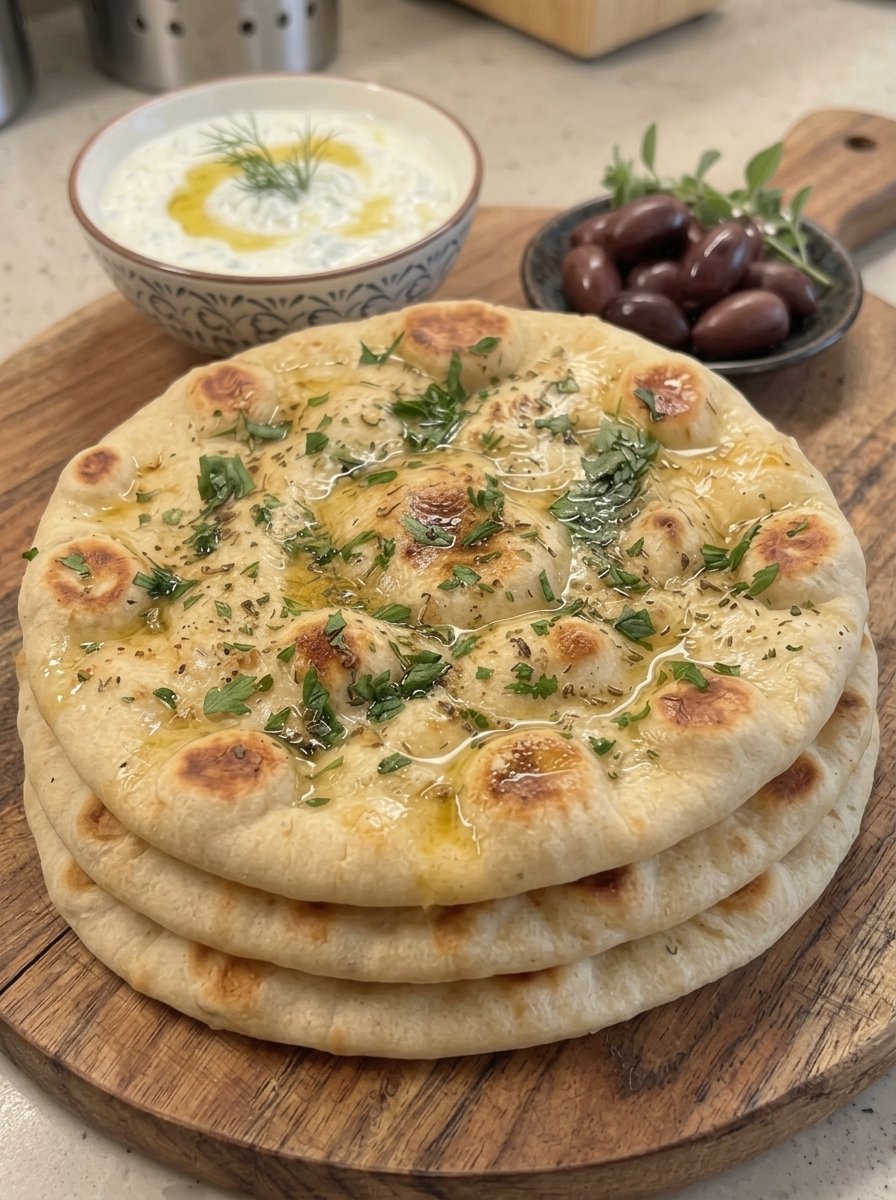
Easy Homemade Greek Flatbread: Soft, Fluffy and Ready in About an Hour
SEO title (under 60 characters): Easy Homemade Greek Flatbread (Soft & Fluffy)
Meta description (under 160 characters): Make soft, chewy homemade Greek flatbread with pantry staples and Greek yogurt. Cooked in a skillet, ready in about an hour. Perfect for gyros and dips.
Primary keyword: Greek flatbread
Secondary keywords: homemade flatbread recipe, easy flatbread, Greek yogurt flatbread, skillet flatbread, soft flatbread for gyros, Mediterranean flatbread, yeast flatbread
Suggested URL slug: /easy-homemade-greek-flatbread
Few things beat the smell of fresh flatbread hitting a hot skillet. The dough puffs, golden spots appear, and in just a minute or two you have a warm, pillowy round that is ready to scoop up dip, wrap around grilled meat or simply eat with a drizzle of olive oil.
This easy homemade Greek flatbread is soft, fluffy and wonderfully chewy, with golden spots and a delicious hint of olive oil. It is made with simple pantry ingredients and cooked right on the stovetop, so you do not need a pizza stone, a tandoor or any special equipment. It is perfect for wrapping grilled chicken, stuffing with gyros, or serving alongside hummus, tzatziki and fresh Mediterranean salads.
In this guide, you will find the complete recipe, clear step-by-step instructions, ingredient notes, troubleshooting help, serving ideas, variations and storage tips, plus answers to the questions bakers ask most often. If you can stir, knead for a few minutes and use a skillet, you can make this bread.
What Is Greek Flatbread?
Flatbreads are among the oldest breads in the world, and nearly every Mediterranean and Middle Eastern cuisine has its own version. In Greece, soft flatbreads are closely associated with pita, the pillowy bread used to wrap souvlaki and gyros, and with other rustic breads served with dips, grilled meats and meze.
This recipe is a home-cook-friendly take on that tradition. It uses a simple yeasted dough enriched with olive oil and a little plain Greek yogurt, which helps keep the bread tender. Instead of baking the rounds in a very hot oven, you cook them in a dry skillet, which gives them golden-brown spots and a soft, flexible texture that folds easily around fillings.
A quick note on authenticity: this is an easy, everyday-style flatbread inspired by Greek flavors and serving traditions. It is not meant to be a strict reproduction of any single regional recipe, and it will taste a little different from bakery pita. It is, however, delicious, fast and very versatile.
Why You Will Love This Easy Greek Flatbread Recipe
- Soft, fluffy and chewy. The yeast and Greek yogurt give a tender crumb with just enough chew.
- Simple pantry ingredients. Flour, water, yeast, olive oil, sugar, salt and yogurt are all you need.
- No oven required. The flatbreads cook in a skillet in just a minute or two per side.
- Ready in about an hour. Most of the time is hands-off rising.
- Makes 8 flatbreads. That is plenty for a family meal, and leftovers freeze well.
- Wonderfully versatile. Use them as wraps, dippers, pizza bases or a side for soups and salads.
- Beginner friendly. The dough is soft and forgiving, and the cooking cues are easy to spot.
Ingredients
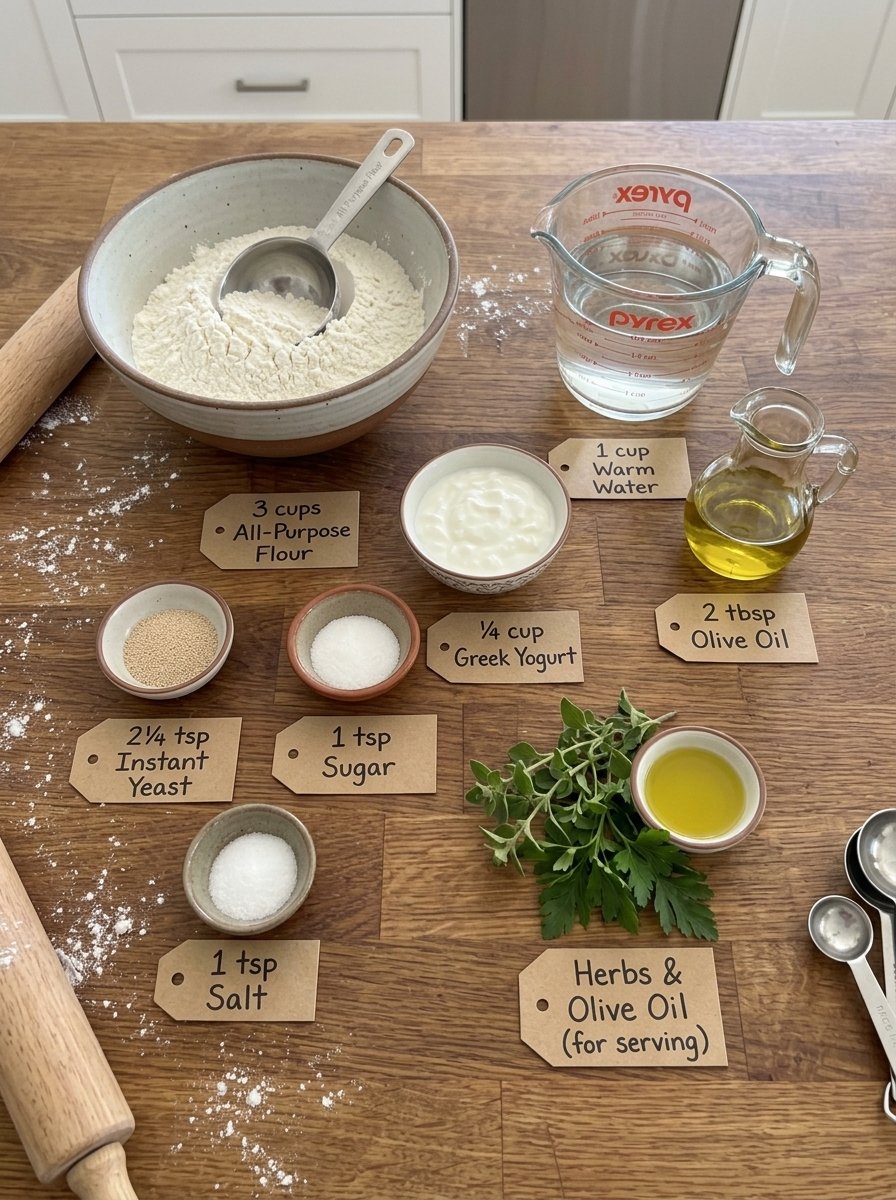
- 3 cups (375 g) all-purpose flour
- 1 cup (240 ml) warm water
- 2¼ teaspoons (7 g) instant yeast
- 2 tablespoons olive oil
- 1 teaspoon sugar
- 1 teaspoon salt
- ¼ cup plain Greek yogurt
For serving (optional):
- Extra virgin olive oil
- Chopped fresh parsley or oregano
- A pinch of sea salt
Ingredient Notes and Substitutions
Flour. All-purpose flour gives a soft, tender flatbread and is what this recipe is built around. Bread flour will work and gives a chewier bite, though the dough may need a touch more water. Weighing the flour is the most reliable method. If you measure by cup, spoon the flour into the cup and level it off instead of scooping directly from the bag, which packs in too much and leads to dry, tough bread.
Water. Use warm water, around 105°F to 115°F (about 40°C to 46°C), which feels comfortably warm to the touch. Water that is too hot can kill the yeast, while water that is too cool slows the rise.
Yeast. Instant yeast is mixed straight into the dough with the other ingredients. If you only have active dry yeast, you can use roughly the same amount, but let it sit in the warm water with the sugar for 5 to 10 minutes until foamy before adding the flour.
Olive oil. Olive oil adds flavor and softness. A good-quality extra virgin olive oil is especially nice for brushing the finished flatbreads, but a standard olive oil works fine inside the dough.
Sugar. Just a teaspoon feeds the yeast and encourages golden browning. It does not make the bread taste sweet.
Salt. Salt strengthens the dough and gives the bread flavor. Do not leave it out.
Plain Greek yogurt. The yogurt adds tenderness, a slight tang and moisture. Use plain, unsweetened yogurt. Full-fat or low-fat both work, though full-fat gives a richer result. If you need a dairy-free version, a thick plain unsweetened plant-based yogurt can be tried as a substitute, though the texture may differ slightly.
How to Make Greek Flatbread: Step by Step
Step 1: Mix the dough
In a large bowl, combine the warm water, yeast and sugar. Add the flour, salt, olive oil and Greek yogurt. Mix until a soft dough forms. It will look shaggy at first, which is normal. Make sure there are no dry pockets of flour left in the bottom of the bowl.
Step 2: Knead briefly
Knead the dough by hand for 5 to 7 minutes, until smooth and elastic. Add a tiny amount of flour if necessary, but keep the dough soft.
A soft dough is the secret to a soft flatbread, so resist the temptation to add a lot of extra flour. To test the dough, press it gently with a finger. It should spring back slowly. If you have a stand mixer, you can use the dough hook on medium-low speed for about the same amount of time.
Step 3: Let it rise
Place the dough in a lightly oiled bowl, cover and let it rise in a warm place for 45 to 60 minutes, or until doubled in size.
A turned-off oven with the light on, or a spot near (not directly on) a warm appliance, can help in a cool kitchen. Look for a dough that is puffy, domed and visibly larger. If you press a finger into it, the dent should fill back in slowly.
Step 4: Divide and shape
Turn the dough onto a lightly floured surface and divide it into 8 equal pieces. Roll each piece into a ball, cover and rest for 10 minutes.
Using a kitchen scale to divide the dough makes the flatbreads even in size, so they cook at the same rate. The short rest allows the gluten to relax, which makes the dough much easier to roll without springing back.
Step 5: Roll the flatbreads
Roll each ball into a round about 6 to 7 inches wide and approximately ¼ inch thick.
Do not worry about perfect circles. Slightly rustic shapes look charming. If the dough keeps shrinking back, cover it and let it rest for a couple more minutes, then roll again.
Step 6: Cook in a skillet
Heat a dry skillet over medium-high heat. Cook each flatbread for about 1 to 2 minutes per side, until puffed in places and marked with golden-brown spots.
A cast-iron skillet is ideal because it holds heat well, but any heavy-bottomed skillet or griddle works. The pan should be hot enough that the flatbread puffs and develops spots within the first minute. If it browns too quickly before cooking through, reduce the heat slightly. If it takes too long and looks pale, increase the heat a little.
Step 7: Keep them soft
Transfer the cooked flatbreads to a clean kitchen towel and cover while cooking the remaining pieces. The trapped steam keeps them soft and pliable instead of crisp.
Step 8: Finish and serve
Brush lightly with olive oil and sprinkle with chopped herbs or sea salt if desired. Serve warm with your favorite fillings or dips.
For the best flavor and texture, brush the flatbreads while they are still warm so the oil soaks in and the herbs stick.
Tips for the Best Homemade Flatbread
- Keep the dough soft. A slightly tacky dough yields a soft, tender bread. Add flour a little at a time and only if needed.
- Do not skip kneading. Five to seven minutes of kneading builds the gluten that gives these flatbreads their pleasant chew.
- Let the dough double. Under-risen dough produces dense, tough flatbreads.
- Rest the balls before rolling. The 10-minute rest makes rolling easier and prevents shrinking.
- Roll evenly. Aim for about ¼ inch thick so the flatbreads cook evenly and puff nicely.
- Use a properly hot pan. Medium-high heat gives the golden spots and soft interior you want.
- Cook without oil. A dry skillet gives the classic spotted look. Save the olive oil for brushing afterward.
- Stack and cover. Wrapping the cooked flatbreads in a clean towel keeps them soft while you finish the batch.
- Work in batches if needed. Keeping the rest of the dough covered prevents it from drying out.
Troubleshooting Common Flatbread Problems
My flatbreads are tough. This can result from too much flour, over-cooking or dough that was not given enough time to rise. Keep the dough soft, cook just until spotted and puffed, and cover the cooked flatbreads right away.
My flatbreads are dry or stiff. Cooking them too long or leaving them uncovered can dry them out. Pull them from the pan as soon as they are golden in places, and keep them wrapped in a towel.
The dough did not rise. The yeast may be old, or the water may have been too hot or too cold. Check the expiration date, use comfortably warm water and give the dough more time in a warm spot.
The dough keeps springing back when I roll it. The gluten is tight. Cover the dough and let it rest for 5 to 10 minutes, then try again.
The flatbreads did not puff. The pan may not be hot enough, or the dough may have been rolled too thin or too thick. Aim for about ¼ inch thickness and a properly hot skillet. Not every flatbread will puff dramatically, and that is perfectly fine.
They are burning before cooking through. Lower the heat slightly. A thick or very hot pan can brown the outside too fast.
They are pale and doughy. The pan may be too cool. Increase the heat a bit and cook until you see golden spots.
The dough is too sticky. Lightly flour your hands and the work surface, and knead a little longer. Sticky dough often becomes smoother after a few more minutes of kneading, so avoid adding too much flour too soon.
What to Serve with Greek Flatbread
This flatbread is a true all-rounder. Here are some of the best ways to enjoy it.
Classic Wraps and Gyros
- Grilled chicken with tzatziki, tomato, cucumber and red onion
- Homemade gyro-style meat with lettuce and a squeeze of lemon
- Falafel with hummus and pickled vegetables
- Roasted vegetables with feta and a drizzle of olive oil
Warm the flatbread briefly before filling so it folds without cracking.
Dips and Meze
- Hummus
- Tzatziki
- Baba ganoush
- Whipped feta dip
- Olive tapenade
Tear the warm flatbread into pieces and serve it on a board with olives, cucumber, cherry tomatoes and feta for an easy meze platter.
With Soups, Stews and Salads
Use the flatbread to scoop up lentil soup, tomato soup or a hearty stew, or serve it alongside a Greek salad with tomatoes, cucumber, olives and feta.
Quick Flatbread Pizzas
Top a flatbread with tomato sauce, cheese and your favorite toppings, then bake it in a hot oven until the cheese is bubbly. It makes a quick weeknight pizza.
Breakfast Ideas
Warm a flatbread and top it with scrambled eggs, feta and herbs, or serve it with olive oil, tomatoes and a fried egg.
Delicious Variations
Once you are comfortable with the basic recipe, try a few simple changes. These variations go beyond the base recipe, so treat them as experiments and adjust to taste.
- Garlic and herb flatbread: Brush the cooked flatbreads with olive oil mixed with a little minced garlic and chopped parsley or oregano.
- Za’atar flatbread: Mix za’atar with olive oil and brush it on the warm flatbreads.
- Lemon and oregano: Add a pinch of dried oregano to the dough and finish with a little lemon zest.
- Feta-topped: Crumble feta over the warm flatbreads along with fresh herbs.
- Partial whole wheat: Replace a portion of the all-purpose flour with whole wheat flour for a nuttier flavor. The dough may need slightly more water, so add it carefully.
- Seeded: Sprinkle sesame seeds or nigella seeds on the rolled dough and gently press them in before cooking.
Storage, Freezing and Reheating
Room temperature: Once the flatbreads have cooled, store them in an airtight container or resealable bag. They stay soft for about 1 to 2 days.
Refrigerator: If you want to keep them a little longer, refrigerate in an airtight bag for up to about 4 days. They may firm up slightly, but reheating brings them back to life.
Freezer: Stack the cooled flatbreads with parchment paper between them and freeze in a freezer-safe bag for up to about 2 to 3 months. Thaw at room temperature or warm them straight from the freezer.
Reheating: Warm each flatbread in a dry skillet for 20 to 30 seconds per side, in a toaster oven, or wrapped in foil in a 350°F (175°C) oven for a few minutes. A sprinkle of water on the flatbread before wrapping it in foil helps it steam and stay soft.
Make-ahead dough: You can shape the dough into balls, cover them and refrigerate for a few hours before rolling and cooking. Let the dough come closer to room temperature first so it is easier to roll.
Nutrition Overview
Exact nutrition depends on your specific ingredients and the final size of each flatbread. As a rough estimate, one flatbread from a batch of 8 may provide somewhere around 200 to 230 calories, with most of the energy from carbohydrates and a modest amount from the olive oil and yogurt. For precise numbers, enter your own ingredients into a nutrition calculator. This information is general and is not medical or dietary advice.
Can You Make It Vegan, Dairy-Free or Whole Wheat?
Dairy-free or vegan: The only dairy ingredient is the Greek yogurt. A thick, plain, unsweetened plant-based yogurt can be used in its place, though the texture and tang may be a little different. All other ingredients are plant-based.
Whole wheat: You can swap in part whole wheat flour. Using all whole wheat will change the texture significantly, giving a denser flatbread, so start with a partial swap.
Gluten-free: This recipe relies on wheat gluten for structure and is not gluten-free as written. A gluten-free version would need a recipe designed for gluten-free flour blends.
Frequently Asked Questions
Is this the same as pita bread?
Not exactly. Pita is typically baked in a very hot oven so that it puffs into a pocket. This flatbread is cooked in a skillet and has a soft, chewy texture that is great for wrapping and dipping. It may puff in places, but it is not meant to form a perfect pocket.
Do I have to knead the dough?
Yes, this recipe calls for a brief 5 to 7 minute knead by hand to develop gluten and give the flatbread its soft, chewy texture.
Can I use active dry yeast?
Yes. Dissolve it in the warm water with the sugar and wait until it looks foamy, about 5 to 10 minutes, then continue with the recipe.
What does the Greek yogurt do?
Greek yogurt adds moisture, tenderness and a slight tang to the dough, which helps the flatbread stay soft.
Can I skip the yogurt?
The yogurt contributes to the texture, so leaving it out will change the dough. If you want to try it, you may need a little extra water or oil to keep the dough soft. For consistent results, follow the recipe as written.
What kind of pan should I use?
A cast-iron skillet is ideal, but any heavy-bottomed skillet or griddle works. Make sure it is fully preheated before the first flatbread goes in.
Why do I cook them in a dry skillet?
A dry pan lets the dough brown and puff naturally, giving the classic golden spots. Brushing with olive oil after cooking adds flavor without making the bread greasy.
How thick should I roll the dough?
About ¼ inch thick and 6 to 7 inches wide. Thinner rounds cook faster and may turn crisp, while thicker ones can be doughy in the center.
Can I make the dough ahead of time?
Yes. After shaping the dough into balls, you can cover and refrigerate them for a few hours. Allow them to warm up slightly before rolling and cooking.
How do I keep the flatbreads from drying out?
Cover them with a clean kitchen towel as soon as they come off the pan, and store them in an airtight container once cool.
Final Thoughts
This easy homemade Greek flatbread shows how a handful of pantry ingredients can turn into something warm, soft and genuinely special. It is quick enough for a weeknight, impressive enough for guests, and flexible enough to go with just about anything from creamy dips to grilled chicken.
Remember the essentials: keep the dough soft, let it rise until doubled, rest the balls before rolling, cook in a properly hot dry skillet and cover the cooked flatbreads so they stay tender. Finish with a brush of olive oil and a sprinkle of herbs or sea salt, and serve while warm.
Once you have made these a time or two, you may find that store-bought flatbread no longer measures up. If you give the recipe a try, leave a comment and tell us how you served yours.