
The Easiest Baguette Bread
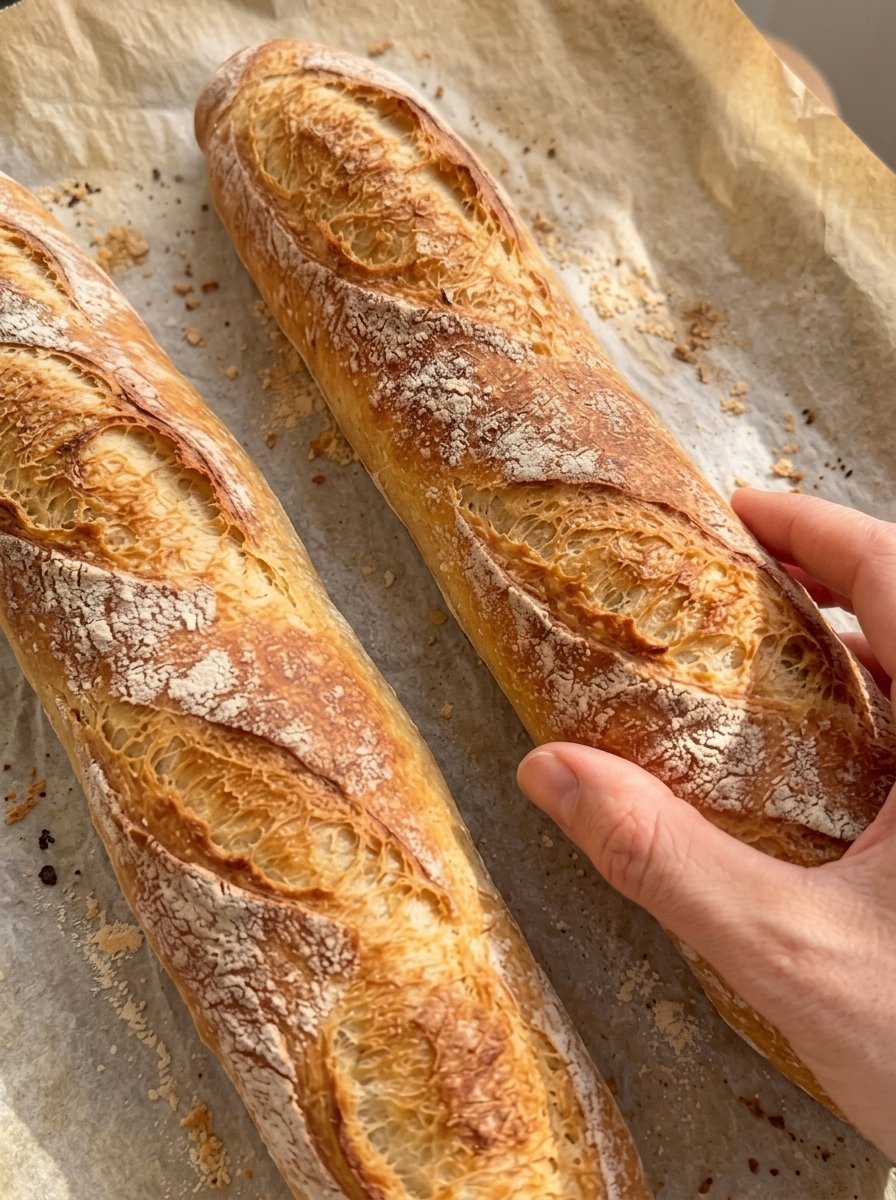
The Easiest Baguette Bread: Crisp, Golden French-Style Loaves at Home
Few foods say “fresh bakery” like a golden baguette: a crackling crust that shatters at the first bite, a soft, airy, chewy interior, and the unmistakable aroma of warm bread filling the kitchen. It’s a bread that many home bakers assume is out of reach, reserved for professional ovens and years of practice. This Easiest Baguette Bread recipe proves otherwise. With only a handful of basic ingredients, a bit of hand-kneading, and a simple steam trick, you can bake two beautiful, rustic, French-style baguettes in about two hours.
Perfect for sandwiches, dipping in olive oil, tearing alongside soup or pasta, or slicing into crostini, these baguettes taste like they came straight from a bakery, but they come from your own kitchen.
In this complete guide, you’ll find the full recipe, a detailed look at each ingredient, step-by-step instructions with visual cues, the science behind a crisp crust and airy crumb, how to shape and score like a baker, how to create steam without special equipment, troubleshooting help, creative variations, serving ideas, storage and freezing instructions, and answers to the most common baguette questions.
Why You’ll Love This Easy Homemade Baguette Recipe
It uses just a few basic ingredients. Flour, water, yeast, and salt are the heart of a classic baguette. A teaspoon of sugar is optional. There’s nothing exotic and nothing expensive.
It’s ready in about 2 hours. Traditional baguettes can take a day or more with preferments and long ferments. This streamlined recipe delivers bakery-style results in a fraction of the time.
The crust is crisp and golden. A hot oven and a pan of steam create that signature crackling, deeply golden crust.
The interior is soft and airy. A slightly tacky dough and a gentle hand when shaping preserve air bubbles, giving a light, chewy crumb.
You don’t need special equipment. A baking sheet, parchment paper, a sharp knife, and a heatproof pan for water are all you need. A bread lame and baking stone are nice but optional.
It’s beginner-friendly. The steps are simple, and the dough is forgiving. Even first-time bread bakers can make beautiful baguettes.
It makes two loaves. Enjoy one fresh and freeze one, share one with a neighbor, or serve both at a dinner party.
It’s incredibly versatile. Use it for sandwiches, garlic bread, crostini, bruschetta, French toast, croutons, and more.
Recipe Overview
- Prep Time: 15 minutes
- Cook Time: 25–30 minutes
- Total Time: About 2 hours
- Servings: 2 baguettes
Ingredients You’ll Need 🛒
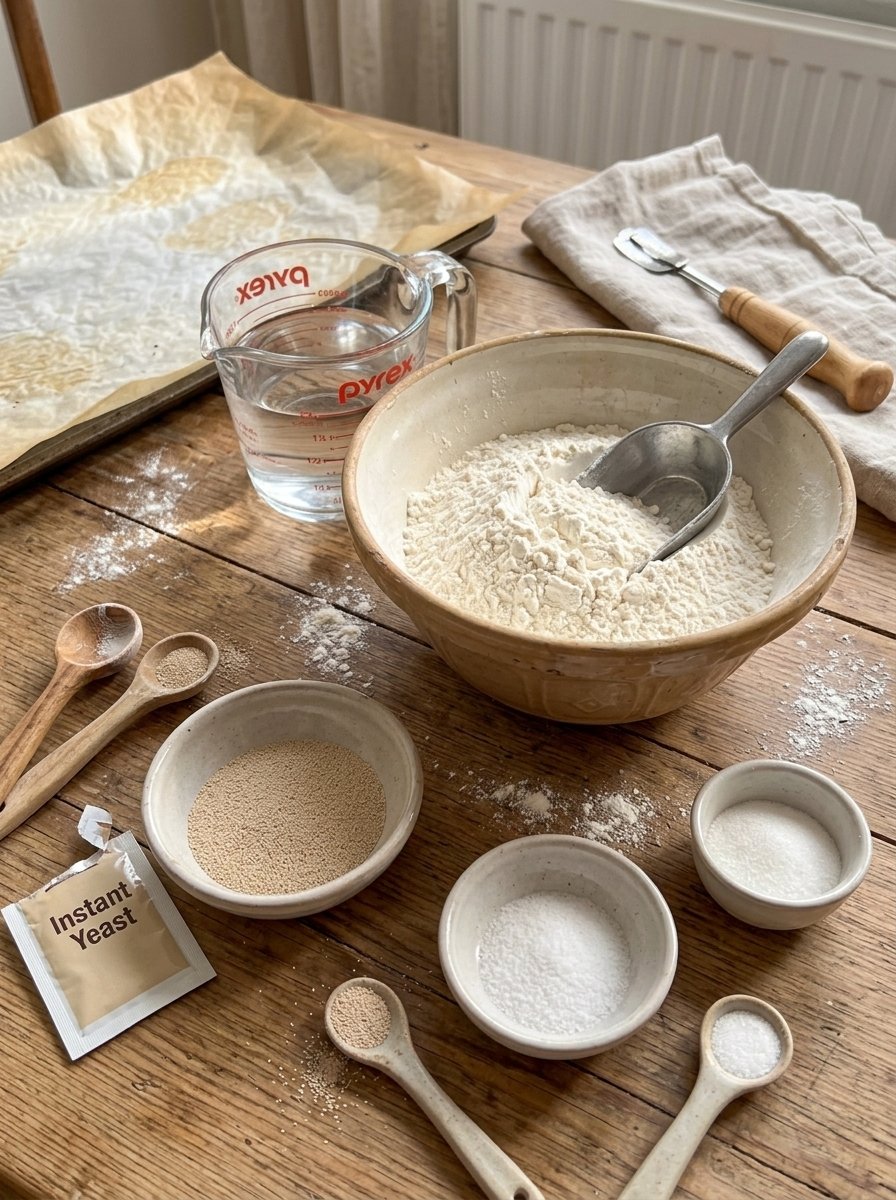
- 3½ cups (440 g) bread flour or all-purpose flour
- 1½ cups (360 ml) warm water
- 2¼ teaspoons instant yeast (1 packet)
- 1½ teaspoons salt
- 1 teaspoon sugar (optional)
- Extra flour, for shaping
- Water, for creating steam in the oven
A Closer Look at the Ingredients
Bread flour or all-purpose flour. Bread flour has a higher protein content, which builds more gluten and produces a chewier crumb and sturdier crust, closer to a classic baguette. All-purpose flour makes a slightly softer, more tender loaf, and still turns out delicious. For consistency, weigh your flour at 440 grams. A scooped cup of flour can vary by 20 percent or more, which can leave you with a dough that’s too dry or too wet.
Warm water. The water should feel comfortably warm, roughly 105°F to 115°F (40°C to 46°C). Water that’s too hot will kill the yeast, while water that’s too cold slows the rise. At 360 milliliters, the dough is hydrated enough to produce an open, airy interior while remaining manageable.
Instant yeast. Instant yeast can be mixed directly into the dough. If you only have active dry yeast, use the same amount and dissolve it in the warm water with the sugar for 5 to 10 minutes, until foamy, before adding the flour.
Salt. Salt is essential for flavor and structure. Without it, baguettes taste flat and the dough can rise too fast and unevenly. Add it with the flour, rather than directly onto the yeast.
Sugar (optional). A teaspoon gives the yeast a quick boost and promotes a bit of extra browning. It doesn’t make the bread sweet, and traditional baguettes often skip it.
Extra flour for shaping. A light dusting prevents sticking while you shape the dough, but use only as much as you need. Too much flour at this stage can create dense streaks in the crumb.
Water for steam. Steam in the early minutes of baking keeps the crust soft and stretchy so the loaf can expand fully, then helps it set into a thin, crisp, glossy shell.
Step-by-Step Instructions 👩🍳
Step 1: Mix the Dough
In a large bowl, combine the warm water, yeast, and optional sugar. Stir briefly and let it sit for a minute or two. Add the flour and salt, then mix with a wooden spoon or your hands until a shaggy dough forms and no dry flour remains. The dough will look rough and sticky at this stage, and that’s normal.
Step 2: Knead Briefly
Turn the dough onto a lightly floured surface and knead by hand for 5 to 8 minutes, until it becomes smoother and elastic. To knead, push the dough away from you with the heel of your hand, fold it back over itself, rotate a quarter turn, and repeat. The dough should remain slightly tacky. Resist adding too much extra flour. If it’s sticking badly, use a bench scraper and dust your hands rather than the dough. You can also use a stand mixer with a dough hook on low speed for about 5 minutes.
Step 3: First Rise
Place the dough in a lightly oiled bowl, turn it once to coat, and cover with plastic wrap or a damp towel. Let it rise in a warm place for 60 to 75 minutes, or until doubled in size. A turned-off oven with the light on makes a reliable, draft-free spot. The dough is ready when it’s puffy and springs back slowly when you gently press a fingertip into it.
Step 4: Shape the Baguettes
Turn the dough onto a lightly floured surface and divide it into two equal portions, using a scale for precision if you have one. Gently press each piece into a rough rectangle, being careful not to deflate it completely. Fold the top third down to the center and press to seal, then fold the bottom third up over it and seal again. Fold the dough in half lengthwise and seal the seam with the heel of your hand.
Then roll each piece with your palms, starting in the middle and working outward, applying gentle pressure and stretching it into a long baguette, approximately 12 to 14 inches long, with slightly tapered ends. Keep the seam side down.
Step 5: Second Rise
Place the baguettes seam-side down on a parchment-lined baking sheet, leaving space between them. For better support, you can bunch the parchment between the loaves, or use a baguette pan or a floured kitchen towel (couche). Cover loosely with a towel and let rise for 25 to 35 minutes, until puffy but not fully doubled.
Step 6: Score the Dough
Place a rack in the middle of the oven and another on the lowest rung. Preheat the oven to 450°F (230°C). Just before baking, make 3 to 5 shallow diagonal slashes along the top of each baguette using a sharp knife or bread lame. Hold the blade at roughly a 30-degree angle and cut about ¼ inch deep, with each slash overlapping slightly with the next. A confident, quick motion works better than a slow, careful one.
Step 7: Create Steam and Bake
Carefully place a heatproof pan of hot water on the lower oven rack to create steam. Slide the baking sheet onto the middle rack. Bake the baguettes for 25 to 30 minutes, until deeply golden and crisp. For extra steam, quickly spritz the walls of the oven with water from a spray bottle in the first few minutes, or toss a few ice cubes into the hot pan, closing the door promptly each time. Take care to avoid burns from the steam.
Step 8: Cool Before Slicing
Transfer the baguettes to a wire rack and let them cool for at least 20 minutes before cutting. You may hear them crackle as they cool, which is a sign of a great crust. Slicing too early releases steam and can leave a gummy crumb.
The Science Behind a Great Baguette 🔬
Steam creates the crust. In the first minutes of baking, steam keeps the dough surface moist and flexible so the loaf can rise to its full volume, a phenomenon called oven spring. As the steam dissipates, the surface dries, sets, and browns into a thin, crisp, shiny crust.
High heat gives color and flavor. At 450°F (230°C), the crust undergoes the Maillard reaction and caramelization, producing deep golden color and complex toasty flavor.
Hydration influences the crumb. A slightly tacky dough holds more water, which turns to steam inside the loaf and creates a lighter, more open crumb.
Gluten gives structure. Kneading and the first rise develop gluten, which traps gas and gives the baguette its characteristic chew.
Scoring directs expansion. Shallow cuts give the loaf a controlled place to expand, preventing random splitting and producing the classic baguette look.
Expert Tips for Perfect Baguettes 💡
Don’t add too much flour. A slightly tacky dough helps create a lighter crumb. If you work in too much flour, the baguettes will be dense and dry.
Create steam. Moisture during the early baking stage helps develop a crisp crust. Don’t skip the pan of water.
Score just before baking. This allows the bread to expand properly in the oven. If you score too early, the dough can deflate.
Listen for the crust. A fully baked baguette should sound hollow when tapped on the bottom, and the crust should crackle softly as it cools.
Use a sharp blade. A dull knife drags and deflates the dough. A razor blade or bread lame gives the cleanest cuts.
Handle the dough gently when shaping. You want to keep as many air bubbles as possible for an open crumb.
Use a baking stone or steel if you have one. Preheating it for 30 minutes gives a crisper bottom crust and bigger oven spring.
Don’t overproof the second rise. Overproofed baguettes lose their shape and spread. The dough should look puffy but still hold its form.
Check the oven temperature. An oven thermometer can reveal if your oven runs hot or cool, which affects browning and rise.
Bake until deeply golden. Pale baguettes taste bland and have a soft crust. Don’t be afraid of a dark, rich color.
Storage. Enjoy fresh on baking day. Store leftovers in a paper bag for up to 2 days, or freeze for longer storage.
Troubleshooting Common Baguette Problems
My baguettes are pale. The oven may not be hot enough, or the baguettes were pulled too early. Preheat fully, check your oven’s accuracy, and bake until deep golden.
The crust is soft, not crisp. There wasn’t enough steam, or the bread was stored in plastic. Make sure you add the pan of hot water, and let the loaves cool uncovered on a rack.
The crumb is dense. Too much flour, too little rise, or too-rough shaping can cause density. Weigh the flour, make sure the dough doubles, and shape gently.
The baguettes spread flat. The dough may have been too wet or overproofed. Use the lower end of the water range, shorten the second rise, and consider using a couche or baguette pan for support.
The scoring didn’t open. The slashes may have been too shallow, the dough overproofed, or the blade dull. Use a sharp blade and score with confidence.
The crust is too thick and hard. The bread may have baked too long or too much steam was left in too long. Check for doneness at the early end of the baking time.
The inside is gummy. The loaves may need a few more minutes, or were cut too soon. Let them cool for at least 20 minutes.
The bottom is burned. Move the rack up a notch, use a lighter-colored baking sheet, or double up the sheet pans.
The dough is too sticky to shape. Use a bench scraper and lightly flour your hands and work surface. Slightly tacky dough is normal.
Delicious Variations to Try 🧄
Garlic herb baguettes. Knead 1 to 2 teaspoons of dried herbs and a teaspoon of garlic powder into the dough.
Cheese-topped baguettes. Sprinkle shredded Parmesan or Gruyère over the baguettes in the last 5 to 8 minutes of baking.
Seeded baguettes. Brush the shaped loaves with water and sprinkle with sesame, poppy, or sunflower seeds before baking.
Olive baguettes. Fold ½ cup of chopped olives into the dough after the first rise.
Whole wheat baguettes. Replace up to 1 cup of the flour with whole wheat flour, adding a tablespoon or two of extra water.
Rosemary baguettes. Add finely chopped fresh rosemary to the dough, or sprinkle on top before baking.
Mini baguettes. Divide the dough into four portions for smaller loaves and reduce the baking time by about 5 to 8 minutes.
Rolls. Shape the dough into small rolls for sandwiches and bake for roughly 15 to 20 minutes.
Garlic bread. Slice a baked baguette, spread with garlic butter and parsley, and toast under the broiler.
What to Serve with Homemade Baguettes
- Olive oil and balsamic: Pour olive oil, a drizzle of balsamic, and a pinch of herbs into a small dish for dipping.
- Soups and stews: Tear a warm baguette alongside French onion soup, tomato soup, or beef stew.
- Pasta dishes: Serve alongside spaghetti, lasagna, or baked ziti to soak up the sauce.
- Butter and jam: Simple, classic, and unbeatable when the bread is warm.
- Cheese boards: Slice thinly and serve with brie, cheddar, cured meats, and fruit.
- Sandwiches: Fill with ham and Swiss, turkey and avocado, or Italian cold cuts for a French-style sandwich.
- Crostini and bruschetta: Slice, toast, and top with tomatoes and basil, whipped ricotta, or tapenade.
- Breakfast: Make French toast or serve with eggs and jam.
Storage and Freezing Instructions
Fresh is best. Baguettes are at their peak within hours of baking, when the crust is at its crispest.
Room temperature: Store leftover baguettes in a paper bag for up to 2 days. Paper lets the bread breathe so the crust doesn’t turn soggy. Avoid plastic bags, which trap moisture and soften the crust.
Freezer: Cool completely, wrap tightly in foil or a freezer bag, and freeze for up to 2 to 3 months. You can slice them first for convenience.
Reheating and refreshing: For a crisp, just-baked texture, warm a baguette in a 375°F (190°C) oven for 5 to 10 minutes. If it’s very stale, run it briefly under the tap or sprinkle with water before heating. Frozen baguettes can go straight into the oven, adding a few extra minutes.
Using stale baguettes: Day-old baguettes make wonderful croutons, breadcrumbs, French toast, bread pudding, and panzanella salad.
Frequently Asked Questions
Do I have to knead the dough? This recipe includes a brief 5 to 8 minute knead to develop the structure that gives baguettes their chew. A stand mixer with a dough hook can handle the kneading for you.
Can I use all-purpose flour instead of bread flour? Yes. All-purpose flour produces a slightly softer, less chewy baguette, but it still tastes delicious.
Can I use active dry yeast instead of instant yeast? Yes. Use the same amount, dissolve it in the warm water with the sugar for 5 to 10 minutes, then continue with the recipe. The rise may take slightly longer.
Do I need a baking stone? No. A parchment-lined baking sheet works well. A baking stone or steel gives a slightly crisper bottom and better rise, but it’s optional.
How do I make steam without special equipment? Place a heatproof pan on the lowest rack while the oven preheats, then carefully pour hot water into it as you load the bread. You can also spritz the oven walls with water or add ice cubes to the pan.
Do I need a bread lame to score the dough? No. A very sharp knife or a clean razor blade works fine. The key is a quick, confident cut at a shallow angle.
Why is my baguette crust not crispy? It could be a lack of steam, an underbaked loaf, or storing in plastic. Use the water pan, bake until deeply golden, and cool on a wire rack.
Can I make the dough ahead of time? Yes. After the first rise, you can refrigerate the covered dough overnight. Let it come closer to room temperature, then shape, rise, score, and bake.
How do I know when the baguettes are done? They should be deep golden brown and sound hollow when tapped on the bottom. The internal temperature should be about 200°F to 210°F (93°C to 99°C).
Can I freeze the dough? You can freeze the dough after the first rise, thaw it in the refrigerator overnight, then shape and bake. Freezing fully baked baguettes tends to give more consistent results.
Why are my baguettes flat? Overproofing, overly wet dough, or insufficient shaping tension can cause baguettes to spread. Shape firmly and consistently, and shorten the second rise if needed.
Can I make this recipe without sugar? Yes. Sugar is optional. Traditional baguettes are made without it, though it adds a slight boost to browning.
How is this different from a traditional French baguette? Traditional baguettes often use preferments or long, cold fermentation for deeper flavor, plus professional steam ovens. This is a faster, home-friendly version that delivers excellent crust and crumb with much less time and equipment.
Final Thoughts 🥖✨
This Easiest Baguette Bread recipe brings the magic of a French bakery to your home kitchen with minimal ingredients and about two hours of mostly hands-off time. A crisp, golden, crackling crust gives way to a soft, airy interior, and the aroma alone is worth the effort. Whether you slice it for sandwiches, tear it for soup, or serve it warm with butter, it’s the kind of bread that makes any meal feel special.
Mix the dough, shape those long loaves, add a little steam, and listen for the crust to crackle as it cools. Fresh bakery-style bread, made right in your own kitchen. Bon appétit!
Print
The Easiest Baguette Bread
Ingredients
- 3½ cups (440 g) bread flour or all-purpose flour
- 1½ cups (360 ml) warm water
- 2¼ teaspoons instant yeast (1 packet)
- 1½ teaspoons salt
- 1 teaspoon sugar (optional)
- Extra flour, for shaping
- Water, for creating steam in the oven
A Closer Look at the Ingredients
Bread flour or all-purpose flour. Bread flour has a higher protein content, which builds more gluten and produces a chewier crumb and sturdier crust, closer to a classic baguette. All-purpose flour makes a slightly softer, more tender loaf, and still turns out delicious. For consistency, weigh your flour at 440 grams. A scooped cup of flour can vary by 20 percent or more, which can leave you with a dough that’s too dry or too wet.
Warm water. The water should feel comfortably warm, roughly 105°F to 115°F (40°C to 46°C). Water that’s too hot will kill the yeast, while water that’s too cold slows the rise. At 360 milliliters, the dough is hydrated enough to produce an open, airy interior while remaining manageable.
Instant yeast. Instant yeast can be mixed directly into the dough. If you only have active dry yeast, use the same amount and dissolve it in the warm water with the sugar for 5 to 10 minutes, until foamy, before adding the flour.
Salt. Salt is essential for flavor and structure. Without it, baguettes taste flat and the dough can rise too fast and unevenly. Add it with the flour, rather than directly onto the yeast.
Sugar (optional). A teaspoon gives the yeast a quick boost and promotes a bit of extra browning. It doesn’t make the bread sweet, and traditional baguettes often skip it.
Extra flour for shaping. A light dusting prevents sticking while you shape the dough, but use only as much as you need. Too much flour at this stage can create dense streaks in the crumb.
Water for steam. Steam in the early minutes of baking keeps the crust soft and stretchy so the loaf can expand fully, then helps it set into a thin, crisp, glossy shell.
Instructions
In a large bowl, combine the warm water, yeast, and optional sugar. Stir briefly and let it sit for a minute or two. Add the flour and salt, then mix with a wooden spoon or your hands until a shaggy dough forms and no dry flour remains. The dough will look rough and sticky at this stage, and that’s normal.
Turn the dough onto a lightly floured surface and knead by hand for 5 to 8 minutes, until it becomes smoother and elastic. To knead, push the dough away from you with the heel of your hand, fold it back over itself, rotate a quarter turn, and repeat. The dough should remain slightly tacky. Resist adding too much extra flour. If it’s sticking badly, use a bench scraper and dust your hands rather than the dough. You can also use a stand mixer with a dough hook on low speed for about 5 minutes.
Place the dough in a lightly oiled bowl, turn it once to coat, and cover with plastic wrap or a damp towel. Let it rise in a warm place for 60 to 75 minutes, or until doubled in size. A turned-off oven with the light on makes a reliable, draft-free spot. The dough is ready when it’s puffy and springs back slowly when you gently press a fingertip into it.
Turn the dough onto a lightly floured surface and divide it into two equal portions, using a scale for precision if you have one. Gently press each piece into a rough rectangle, being careful not to deflate it completely. Fold the top third down to the center and press to seal, then fold the bottom third up over it and seal again. Fold the dough in half lengthwise and seal the seam with the heel of your hand.
Then roll each piece with your palms, starting in the middle and working outward, applying gentle pressure and stretching it into a long baguette, approximately 12 to 14 inches long, with slightly tapered ends. Keep the seam side down.
Place the baguettes seam-side down on a parchment-lined baking sheet, leaving space between them. For better support, you can bunch the parchment between the loaves, or use a baguette pan or a floured kitchen towel (couche). Cover loosely with a towel and let rise for 25 to 35 minutes, until puffy but not fully doubled.
Place a rack in the middle of the oven and another on the lowest rung. Preheat the oven to 450°F (230°C). Just before baking, make 3 to 5 shallow diagonal slashes along the top of each baguette using a sharp knife or bread lame. Hold the blade at roughly a 30-degree angle and cut about ¼ inch deep, with each slash overlapping slightly with the next. A confident, quick motion works better than a slow, careful one.
Carefully place a heatproof pan of hot water on the lower oven rack to create steam. Slide the baking sheet onto the middle rack. Bake the baguettes for 25 to 30 minutes, until deeply golden and crisp. For extra steam, quickly spritz the walls of the oven with water from a spray bottle in the first few minutes, or toss a few ice cubes into the hot pan, closing the door promptly each time. Take care to avoid burns from the steam.
Transfer the baguettes to a wire rack and let them cool for at least 20 minutes before cutting. You may hear them crackle as they cool, which is a sign of a great crust. Slicing too early releases steam and can leave a gummy crumb.
Steam creates the crust. In the first minutes of baking, steam keeps the dough surface moist and flexible so the loaf can rise to its full volume, a phenomenon called oven spring. As the steam dissipates, the surface dries, sets, and browns into a thin, crisp, shiny crust.
High heat gives color and flavor. At 450°F (230°C), the crust undergoes the Maillard reaction and caramelization, producing deep golden color and complex toasty flavor.
Hydration influences the crumb. A slightly tacky dough holds more water, which turns to steam inside the loaf and creates a lighter, more open crumb.
Gluten gives structure. Kneading and the first rise develop gluten, which traps gas and gives the baguette its characteristic chew.
Scoring directs expansion. Shallow cuts give the loaf a controlled place to expand, preventing random splitting and producing the classic baguette look.