
Mediterranean Roasted Butternut Squash Orzo
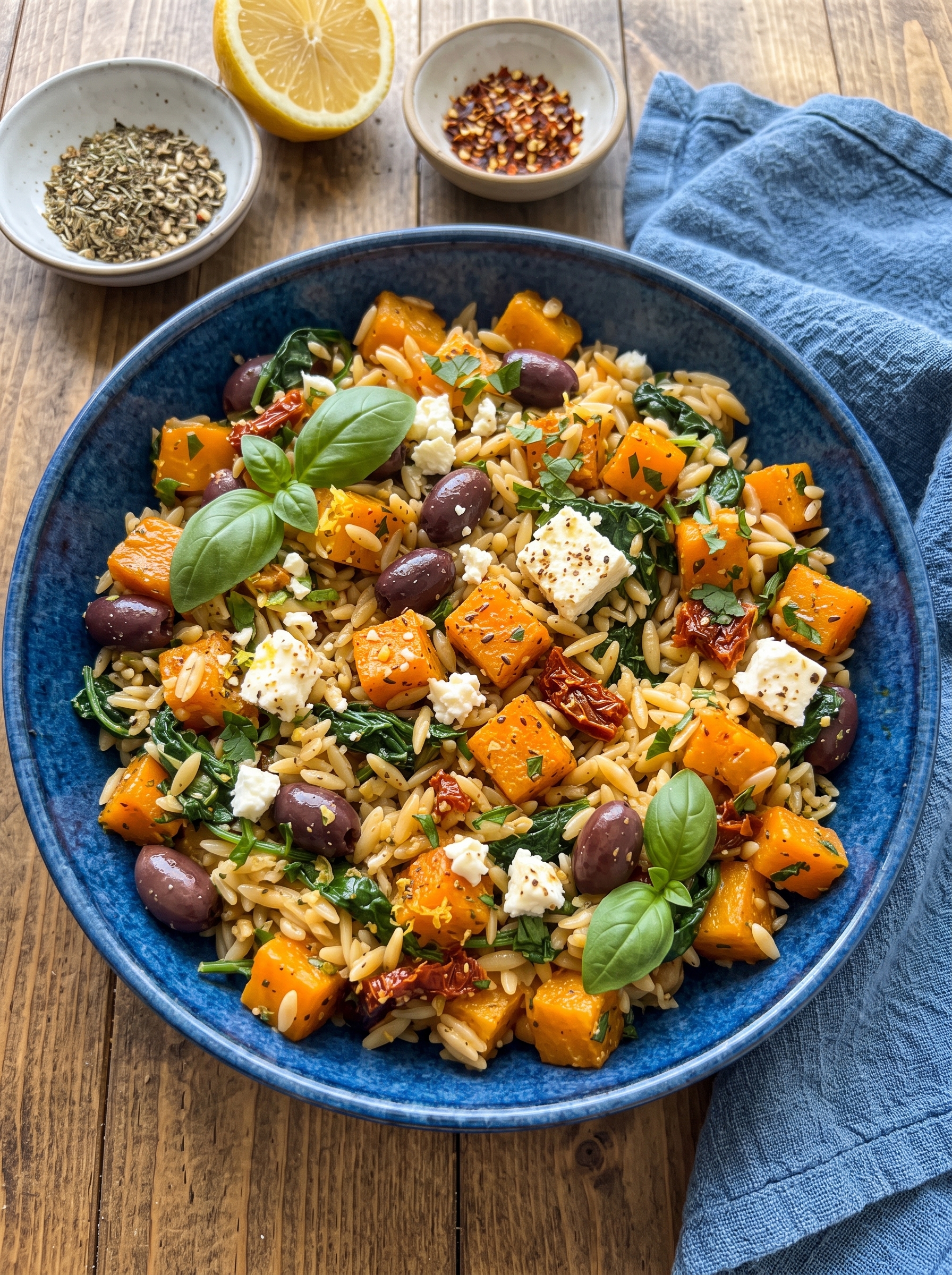
Mediterranean Roasted Butternut Squash Orzo: A Hearty, Flavor-Packed Vegetarian Meal 🧀
There’s something wonderfully satisfying about a dish that manages to be both comforting and vibrant at the same time, and this Mediterranean Roasted Butternut Squash Orzo achieves exactly that balance. Sweet, caramelized cubes of roasted butternut squash mingle with tender orzo pasta, creamy crumbled feta, wilted spinach, briny Kalamata olives, and a bright, tangy lemon dressing. The result is a dish that feels indulgent and comforting, yet is loaded with vegetables, fresh herbs, and Mediterranean flavors that keep every bite interesting.
This recipe strikes a rare balance — it’s hearty enough to serve as a satisfying main course for a vegetarian dinner, yet elegant and colorful enough to hold its own on a holiday table or as an impressive side dish for a dinner party. The combination of warm, roasted vegetables with a bright, citrusy dressing creates layers of flavor and texture that make this orzo dish feel far more special than a typical pasta side.
Best of all, despite its impressive presentation and complex flavor profile, this dish comes together in under an hour using mostly one-pot cooking methods. Whether you’re looking for a new vegetarian dinner staple, a stunning side dish for your next holiday gathering, or a make-ahead lunch that tastes just as good cold as it does warm, this Mediterranean Roasted Butternut Squash Orzo deserves a spot in your regular recipe rotation.
Why This Mediterranean Roasted Butternut Squash Orzo Recipe Works So Well
The success of this dish comes down to layering multiple cooking techniques and flavor elements that build on one another throughout the recipe.
Roasting the butternut squash at a high temperature (425°F) is essential to developing its natural sweetness and achieving those caramelized, slightly crispy edges that add so much depth of flavor to the dish. Roasting concentrates the squash’s natural sugars and creates a textural contrast — tender on the inside, with slightly crisp, caramelized edges — that would be impossible to achieve through simmering or steaming alone.
While the squash roasts, the orzo is prepared using a method similar to risotto: aromatics are sautéed first, the dry orzo is toasted briefly in the pan to deepen its flavor and add a subtle nuttiness, and then vegetable broth is added gradually and absorbed as the orzo cooks. This technique results in orzo that’s creamy and flavorful throughout, rather than bland pasta that simply serves as a base for other ingredients.
The bright lemon dressing, made with olive oil, fresh lemon juice and zest, honey, and oregano, ties the entire dish together. Tossing this dressing through the warm orzo just before serving adds a burst of acidity and brightness that balances the richness of the feta and the natural sweetness of the roasted squash.
Finally, the combination of mix-ins — spinach, sun-dried tomatoes, Kalamata olives, fresh herbs, and feta — brings classic Mediterranean flavors into every bite. The briny olives and tangy feta play beautifully against the sweet squash, while the fresh herbs and lemon keep the dish feeling light and vibrant rather than heavy.
Ingredients You’ll Need
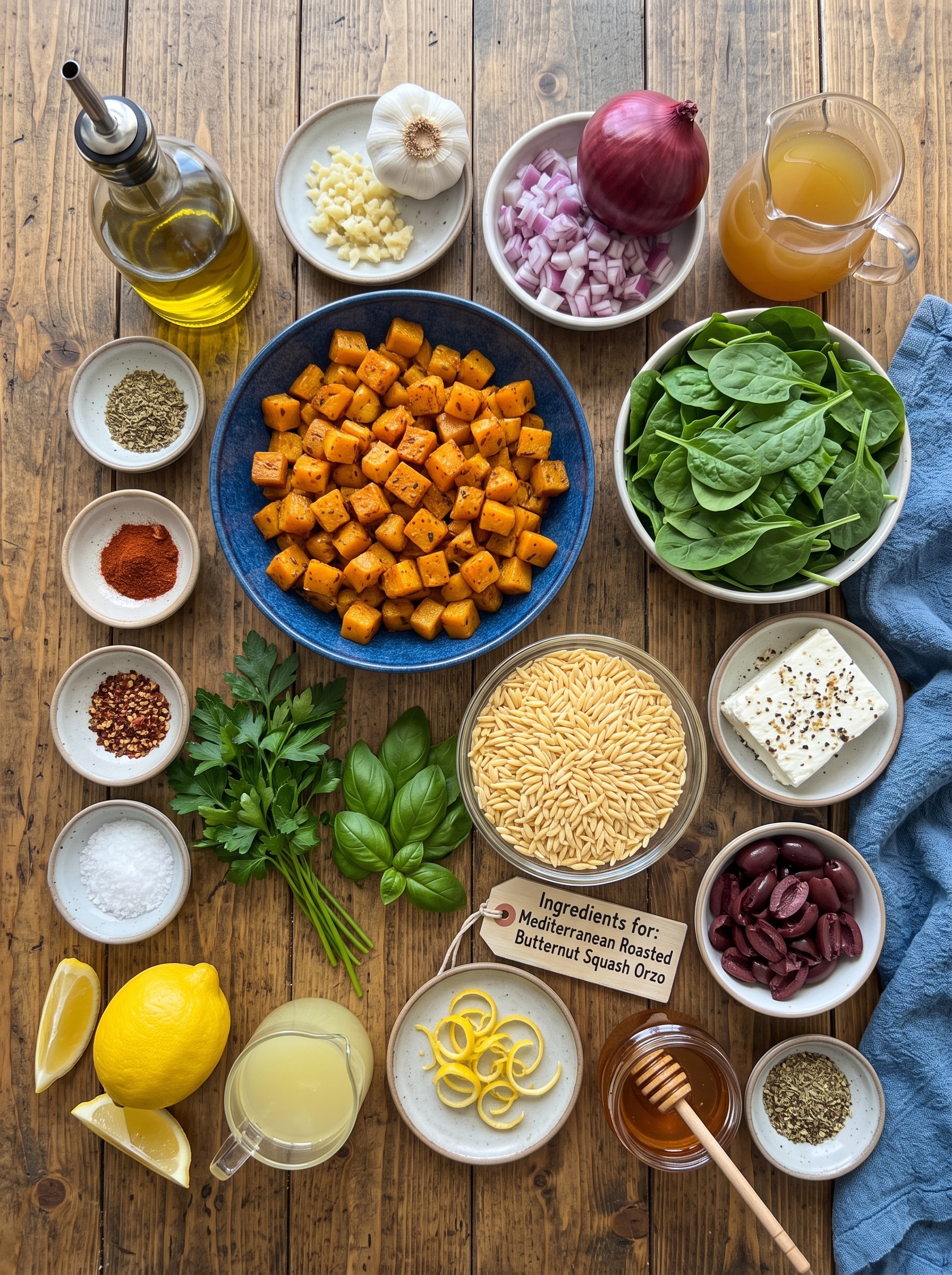
This recipe has several components, but each one is straightforward to prepare.
For the orzo and vegetables:
- 3 cups butternut squash, peeled and cut into ½-inch cubes
- 1½ cups dry orzo
- 2 tablespoons olive oil, divided
- 3 cloves garlic, minced
- 1 small red onion, diced
- 3 cups vegetable broth
- 2 cups fresh baby spinach
- ¾ cup crumbled feta cheese
- ½ cup Kalamata olives, sliced
- ¼ cup sun-dried tomatoes, chopped
- 2 tablespoons fresh parsley, chopped
- 1 tablespoon fresh basil or mint, chopped
- 1 teaspoon dried oregano
- ½ teaspoon smoked paprika
- ½ teaspoon salt
- ¼ teaspoon black pepper
For the lemon dressing:
- 2 tablespoons extra-virgin olive oil
- 2 tablespoons fresh lemon juice
- 1 teaspoon lemon zest
- 1 teaspoon honey or maple syrup
- ½ teaspoon dried oregano
- Salt and black pepper, to taste
Ingredient Notes and Substitutions
Butternut squash: Look for pre-cubed butternut squash at the grocery store to save prep time, or peel and cube a whole squash yourself using a sharp vegetable peeler and sturdy knife. Cutting the squash into uniform ½-inch cubes ensures even roasting and consistent texture throughout the dish.
Orzo: This small, rice-shaped pasta is the star starch of this dish, offering a texture similar to risotto once cooked using the toast-and-simmer method described in the instructions. If orzo isn’t available, a similarly small pasta shape like pearl couscous (Israeli couscous) can be used as a substitute, though cooking times may vary slightly.
Vegetable broth: Using vegetable broth rather than water to cook the orzo adds significant depth of flavor throughout the dish. Choose a good-quality, low-sodium broth if possible, so you can control the salt level of the final dish more precisely.
Feta cheese: Block feta that you crumble yourself tends to have a creamier texture and better flavor than pre-crumbled feta, which can sometimes be drier. Look for feta packed in brine for the best flavor and texture.
Kalamata olives: These deep purple, briny olives are a classic Mediterranean ingredient that adds a distinctive salty, tangy flavor. If Kalamata olives aren’t available, another brined black olive can be substituted, though the flavor will be slightly different.
Sun-dried tomatoes: Look for sun-dried tomatoes packed in oil for the best flavor and texture — they tend to be softer and more flavorful than the dry-packed variety. If using dry-packed sun-dried tomatoes, consider soaking them briefly in warm water to soften before chopping.
Fresh herbs: Fresh parsley and basil or mint add brightness and a pop of green color to the finished dish. Dried herbs can be used in a pinch, but fresh herbs make a noticeable difference in the overall freshness of the final result.
Step-by-Step Instructions
Step 1: Roast the Butternut Squash
Begin by preheating your oven to 425°F (220°C). In a large bowl, toss the cubed butternut squash with 1 tablespoon of olive oil, the smoked paprika, dried oregano, salt, and black pepper, making sure the squash is evenly coated with the oil and seasonings.
Spread the seasoned squash out in a single layer on a large baking sheet, making sure the pieces aren’t overcrowded, as this helps them roast rather than steam. Roast for 22 to 28 minutes, flipping the pieces once about halfway through, until the squash is tender when pierced with a fork and caramelized and lightly browned around the edges.
Step 2: Sauté the Aromatics
While the squash roasts, heat the remaining tablespoon of olive oil in a large skillet or Dutch oven over medium heat. Add the diced red onion and cook for 3 to 4 minutes, stirring occasionally, until it begins to soften and turn translucent.
Add the minced garlic to the pan and cook for about 30 seconds, just until fragrant, being careful not to let it burn.
Step 3: Toast the Orzo
Add the dry orzo directly to the skillet with the sautéed onion and garlic. Stir constantly for 1 to 2 minutes, allowing the orzo to toast lightly in the residual oil. This step adds a subtle, nutty depth of flavor to the pasta that makes a noticeable difference in the finished dish.
Step 4: Cook the Orzo
Pour the vegetable broth into the skillet and stir to combine. Bring the mixture to a gentle simmer, then reduce the heat slightly to maintain that simmer. Cook for 10 to 12 minutes, stirring occasionally to prevent sticking, until the orzo is tender and most of the liquid has been absorbed, resulting in a creamy, risotto-like consistency.
Step 5: Add the Vegetables
Once the orzo is cooked, stir in the fresh baby spinach, chopped sun-dried tomatoes, and the roasted butternut squash (which should be finished roasting around this time). Cook for another 1 to 2 minutes, just until the spinach wilts down into the orzo mixture.
Step 6: Make the Lemon Dressing
While the orzo finishes cooking, prepare the lemon dressing. In a small bowl, whisk together the extra-virgin olive oil, fresh lemon juice, lemon zest, honey (or maple syrup), dried oregano, and salt and black pepper to taste. Whisk until well combined and slightly emulsified.
Step 7: Finish the Orzo
Pour the prepared lemon dressing over the warm orzo mixture and gently stir to combine, making sure the dressing is evenly distributed throughout the dish. Fold in the sliced Kalamata olives, chopped parsley, and basil or mint, stirring gently to avoid breaking down the delicate ingredients too much.
Step 8: Add the Feta
Sprinkle the crumbled feta cheese over the top of the orzo and gently fold in a portion of it, leaving some feta reserved for garnishing just before serving. This creates pockets of creamy, tangy cheese throughout the dish while still leaving some visible on top for presentation.
Step 9: Serve
Serve the orzo warm, topped with the reserved feta, a sprinkle of additional fresh herbs, and a fresh squeeze of lemon juice if desired. This dish can also be served at room temperature, making it a wonderful option as a Mediterranean-style pasta salad for potlucks, picnics, or make-ahead lunches.
What to Serve with Mediterranean Roasted Butternut Squash Orzo
This dish is versatile enough to serve as either a satisfying vegetarian main course or a flavorful side dish alongside a variety of proteins.
- Grilled chicken or salmon: The bright, tangy flavors of the orzo pair beautifully with simply seasoned grilled proteins.
- Roasted lamb or lamb chops: A classic Mediterranean pairing that complements the warm spices and briny olives in the orzo.
- Falafel or hummus: For a fully vegetarian Mediterranean spread, serve alongside falafel, hummus, and warm pita bread.
- Grilled shrimp skewers: The sweetness of the squash and brightness of the lemon dressing pair wonderfully with lightly seasoned grilled shrimp.
- A simple green salad: A light, crisp salad with a lemon vinaigrette echoes the flavors already present in the dish for a cohesive meal.
- Crusty bread: Perfect for soaking up any extra lemon dressing left on the plate.
Tips for the Best Mediterranean Roasted Butternut Squash Orzo
Don’t overcrowd the baking sheet. Spreading the squash out in a single layer with space between the pieces allows it to roast and caramelize properly, rather than steaming in its own moisture, which would prevent those flavorful browned edges from developing.
Toast the orzo before adding liquid. This small step adds significant depth of flavor to the dish and is well worth the extra minute or two it takes.
Stir the orzo occasionally while it cooks. Stirring prevents the orzo from sticking to the bottom of the pan and helps release its starches gradually, creating that creamy, risotto-like texture.
Add the dressing while the orzo is still warm. Tossing the lemon dressing with warm orzo allows the pasta to absorb the bright, tangy flavors more effectively than if the dressing were added to cooled orzo.
Save some feta for garnish. Folding in most of the feta while reserving a bit for topping creates a beautiful presentation and ensures every serving gets that classic tangy feta flavor both mixed in and visible on top.
Taste and adjust the seasoning at the end. Since this dish includes several salty ingredients — feta, olives, and vegetable broth — it’s a good idea to taste before adding extra salt, adjusting only if needed.
Recipe Variations to Try
This recipe is a fantastic base that can be adapted in numerous ways depending on your preferences or what you have on hand.
Protein-Packed Version: Add cooked, shredded chicken or chickpeas to the dish for extra protein, making it an even more complete, filling main course.
Nutty Addition: Stir in toasted pine nuts or slivered almonds for added crunch and a nutty flavor that complements the sweetness of the squash.
Different Squash: Sweet potatoes or acorn squash can be used in place of butternut squash for a similar roasted, caramelized flavor with a slightly different texture.
Grain-Free Version: Substitute cauliflower rice for the orzo for a lower-carb version of the dish, adjusting the cooking method accordingly since cauliflower rice cooks much faster than orzo.
Extra Greens: Add arugula in place of or alongside the spinach for a peppery, slightly bitter contrast to the sweet squash and tangy feta.
Dairy-Free Version: Omit the feta or substitute a plant-based feta alternative for a dairy-free take on the dish that still maintains a similar flavor profile.
How to Store and Reheat Leftovers
This orzo dish stores well and is a great option for meal prepping, since it tastes delicious both warm and at room temperature.
Refrigerating: Store leftovers in an airtight container in the refrigerator for up to 4 days. Since this dish is enjoyable cold or at room temperature, it makes an excellent make-ahead lunch option.
Freezing: While the orzo and squash can technically be frozen, the texture of the feta, spinach, and overall creaminess of the dish may change slightly upon thawing. If freezing, store in an airtight, freezer-safe container for up to 2 months, and thaw overnight in the refrigerator before reheating.
Reheating: Reheat gently in the microwave or in a skillet over low heat, adding a small splash of broth or water if the orzo has thickened too much in the refrigerator. Alternatively, simply enjoy the dish cold or at room temperature straight from the fridge.
Frequently Asked Questions
Can I make this dish ahead of time?
Yes, this dish is a great make-ahead option. You can prepare it fully up to a day in advance and store it in the refrigerator, serving it cold, at room temperature, or gently reheated.
Can I use a different type of squash?
Yes, sweet potatoes, acorn squash, or even delicata squash can be used in place of butternut squash, offering a similar sweet, roasted flavor with slightly different textures.
Is this recipe gluten-free?
Orzo is a wheat-based pasta, so this recipe as written is not gluten-free. However, you can substitute a gluten-free small pasta shape or rice to make the dish gluten-free.
Can I make this dish vegan?
Yes, simply omit the feta cheese or substitute a plant-based feta alternative, and swap the honey in the dressing for maple syrup, which is already listed as an option in the recipe.
Can this be served as a cold pasta salad?
Absolutely. This dish is delicious served at room temperature or chilled, making it a wonderful option for potlucks, picnics, or make-ahead lunches throughout the week.
Final Thoughts
Mediterranean Roasted Butternut Squash Orzo brings together sweet, savory, tangy, and briny flavors in a way that feels both comforting and vibrant. The combination of caramelized roasted squash, creamy risotto-style orzo, tangy feta, briny olives, and a bright lemon dressing creates a dish that’s satisfying enough to serve as a main course, yet elegant enough to shine as a side dish on any holiday table.
Whether you’re looking for a new vegetarian dinner staple, a stunning dish to bring to your next gathering, or a make-ahead lunch that tastes just as good cold as it does warm, this recipe delivers on every front. Once you try this Mediterranean-inspired orzo, it’s easy to see why it deserves a permanent place in your regular meal rotation.