
Basic Focaccia Bread
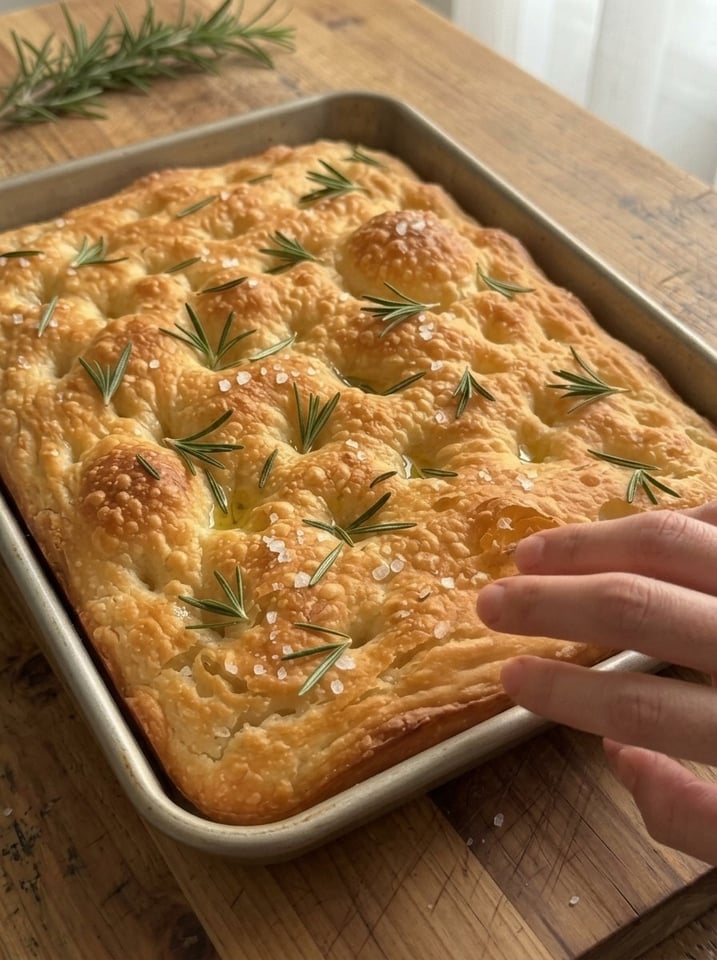
Basic Focaccia Bread: Easy Italian Olive Oil Focaccia With Rosemary & Crispy Edges 🍞🫒🌿
Few breads are as beloved as focaccia. Golden and airy, with a crisp, olive-oil-kissed crust and a soft, fluffy center, this classic Italian flatbread is as good dipped into soup as it is split open for a sandwich. This Basic Focaccia Bread uses simple pantry ingredients, generous extra-virgin olive oil, and fragrant rosemary, and it needs almost no hands-on work. There is no kneading and no special technique, just a sticky dough, a little patience, and a lot of olive oil.
The signature dimples are what make focaccia so special. Pressed deep into the dough, they catch little pools of olive oil and flaky sea salt that turn each bite rich, savory, and unforgettable.
In this complete guide you will find the full recipe, a closer look at each ingredient, step-by-step instructions with visual cues, the science behind a light and airy focaccia, expert tips, troubleshooting help, topping and flavor variations, serving ideas, storage and freezing instructions, and answers to the most frequently asked questions.
Why You’ll Love This Basic Focaccia 🤎
It uses simple pantry ingredients. Flour, water, yeast, salt, olive oil, rosemary, and flaky salt. That is all.
There is no kneading. The wet dough develops its structure on its own while it rests.
It has the best texture. A crisp, golden bottom and edges, with an airy, tender, open crumb inside.
The dimples are gorgeous and functional. They hold olive oil and seasoning, and they make the loaf look bakery-worthy.
It is endlessly versatile. Serve it plain, top it with tomatoes and olives, or turn it into sandwiches.
It is perfect for sharing. One pan serves 8 people, so it suits dinner parties, potlucks, and family meals.
It is a great beginner bread. The dough is forgiving, and the results always look impressive.
It makes the house smell like an Italian bakery. Olive oil, rosemary, and baking bread are a hard combination to beat.
Recipe Overview
- Prep Time: 15 minutes
- Rise Time: 1½–2 hours
- Cook Time: 20–25 minutes
- Total Time: About 2 hours 40 minutes
- Servings: 8
Ingredients You’ll Need 🛒
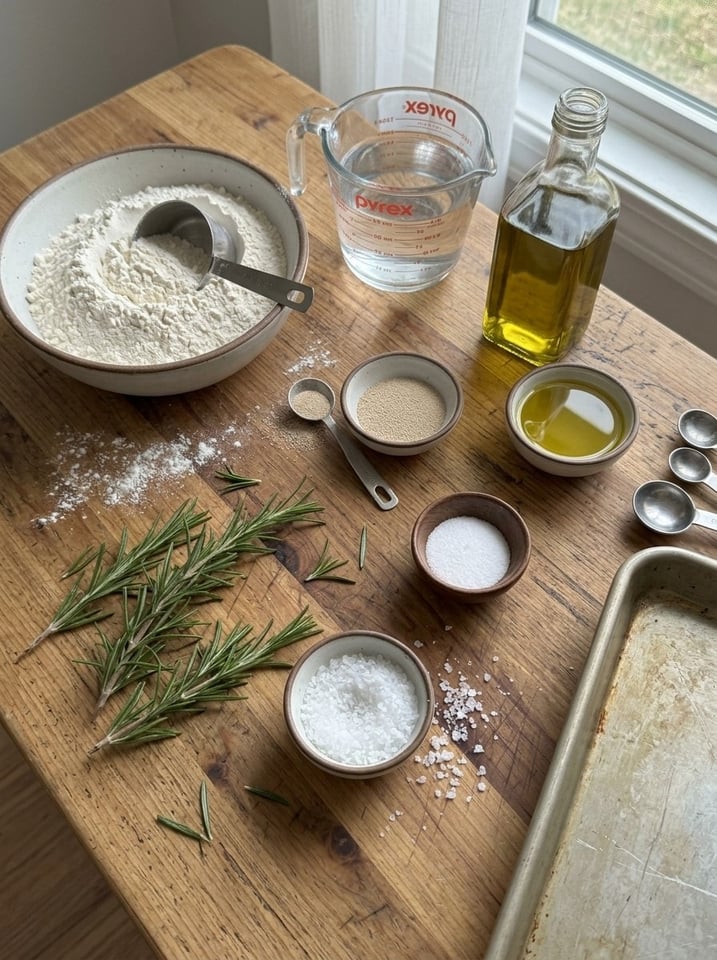
- 4 cups (500 g) all-purpose flour or bread flour
- 1¾ cups (420 ml) lukewarm water
- 2¼ teaspoons (7 g) instant yeast
- 2 teaspoons salt
- ¼ cup (60 ml) extra-virgin olive oil, divided
- 1 teaspoon dried rosemary or 1 tablespoon fresh rosemary
- Flaky sea salt, for topping
A Closer Look at the Ingredients
Flour. All-purpose flour makes a tender, soft focaccia. Bread flour has more protein and makes a chewier, loftier crumb with a bit more structure. Both work well. For best accuracy, weigh the flour: 500 g is more reliable than 4 cups, since scooped flour can be packed too tightly and make the dough dry and the bread dense.
Lukewarm water. Focaccia dough is high-hydration, about 84 percent water by weight in this recipe, which is what creates the open, airy crumb. The water should be lukewarm, around 100–110°F (38–43°C). Too hot and it can kill the yeast, and too cold will slow the rise.
Instant yeast. Instant yeast mixes right into the flour with no proofing. If using active dry yeast, dissolve it in the lukewarm water for 5 to 10 minutes first, and expect a slightly longer rise.
Salt. Two teaspoons of salt flavor the dough and strengthen the gluten. Do not skip it, because focaccia without enough salt tastes flat.
Extra-virgin olive oil. Olive oil is the star here. Some goes in the pan to fry the bottom of the bread to a crisp, golden crust, and the rest is drizzled over the top so it pools in the dimples. Choose a good-quality extra-virgin olive oil, since you will taste it in every bite.
Rosemary. Rosemary is the classic focaccia herb, piney and fragrant. Fresh rosemary gives the best flavor, but dried works well too. Strip the leaves from the stems and chop them lightly. Tuck sprigs into the dimples so the herbs stay moist and do not burn.
Flaky sea salt. Flaky salt gives pops of salinity and a pleasant crunch. Maldon or a similar flaky salt works best.
Step-by-Step Instructions 👩🍳
Step 1: Mix the Dough
In a large bowl, combine the flour, instant yeast, and salt. Add the lukewarm water and stir with a spatula or wooden spoon until a sticky dough forms and no dry flour remains. The dough will be wet, shaggy, and messy. That is exactly right, and you should resist the urge to add more flour.
Step 2: First Rise
Cover the bowl and let the dough rise in a warm place for 60 to 90 minutes, or until it is noticeably puffy and nearly doubled. You should see bubbles on the surface and around the edges of the bowl. The dough should jiggle when you shake the bowl.
Step 3: Prepare the Pan
Generously coat a 9 × 13-inch (23 × 33 cm) baking pan with olive oil, about 2 tablespoons from the total amount. Do not be shy. The oil gives the focaccia its crisp, golden bottom.
Step 4: Shape the Dough
With lightly oiled hands, transfer the dough to the pan. Gently stretch it toward the edges. If it springs back and resists, let it rest for 10 to 15 minutes and try again. The gluten relaxes as it rests, and the dough will stretch more easily. Do not force it or tear it.
Step 5: Second Rise
Cover loosely and let the dough rest for another 20 to 30 minutes, until it is airy and puffy. It should look full of bubbles and spread to fill the pan.
Step 6: Make the Dimples
Preheat the oven to 425°F (220°C). Drizzle the remaining olive oil over the dough, then press your fingertips deeply into the surface, almost to the bottom of the pan, to create the classic focaccia dimples. Spread your fingers and press straight down, rather than pinching.
Step 7: Add the Toppings
Sprinkle the rosemary and flaky sea salt evenly over the top, pressing the herbs lightly into the dimples.
Step 8: Bake
Bake for 20 to 25 minutes, until the focaccia is deep golden brown with crisp edges. Lift a corner with a spatula to check that the bottom is golden and crisp. If the top is browning too quickly, move the pan to a lower rack for the last few minutes.
Step 9: Cool and Serve
Let the focaccia cool in the pan for 5 to 10 minutes, then transfer it to a wire rack. This keeps the bottom crisp rather than steaming in the pan. Slice and serve warm.
The Science Behind Great Focaccia 🔬
High hydration creates an open crumb. The high water content turns to steam in the oven and expands the dough, leaving big, irregular air pockets and a moist, tender interior.
Time develops gluten. Without kneading, the flour proteins hydrate and align over the long rise, forming a stretchy network that traps gas.
Rest relaxes the dough. If the dough resists stretching, the gluten is tense. A short rest lets it relax, so the dough spreads without tearing.
Dimples control the rise. Pressing the dough deflates large bubbles, keeps the surface from puffing into a dome, and creates wells for olive oil.
Oil fries the bottom. The oil in the pan heats and effectively fries the underside of the dough, which gives the crisp, golden, almost fried-bread crust that characterizes focaccia.
Maillard browning builds flavor. Sugars and proteins on the surface brown at oven temperature, producing deep toasty flavor and golden color.
Hot ovens give oven spring. A 425°F (220°C) oven makes the dough rise quickly before the crust sets, giving a light, airy interior.
Expert Tips for Perfect Focaccia 💡
Don’t add too much flour. The dough should be sticky for a light, airy crumb. Use oiled hands instead.
Use plenty of olive oil. It helps create the signature crisp, golden bottom and rich flavor.
Press deep dimples. Push your fingertips almost to the bottom of the dough, because dimples shallow at first will puff up and disappear in the oven.
Let the dough rest if it resists. Rest for 10 to 15 minutes, then stretch again.
Use a metal pan. Metal conducts heat well and gives a crisper bottom than glass or ceramic.
Watch the dough, not the clock. Cooler kitchens need more time, and warmer ones less.
Don’t overbake. Pull the focaccia when it is deep golden, since overbaking dries out the crumb.
Cool on a rack. Moving the focaccia out of the pan keeps the bottom crisp.
Add fresh toppings carefully. Wet toppings like tomatoes can make the dough soggy, so press them in gently and pat them dry first.
Make it ahead. Refrigerate the dough overnight after the first rise for more flavor, then bring it back to room temperature before shaping.
Store leftovers properly. Keep in an airtight container at room temperature for up to 2 days, or freeze for longer storage.
Troubleshooting Common Problems
My dough didn’t rise. The yeast may be old, the water too hot or cold, or the kitchen too cool. Use fresh yeast and lukewarm water, and give the dough more time in a warm spot.
My focaccia is dense. Too much flour, too little rising time, or too-shallow dimples can cause density. Weigh the flour, keep the dough sticky, and let it get puffy.
The dough keeps shrinking back. The gluten is tight. Rest it 10 to 15 minutes and stretch again.
The bottom isn’t crisp. Use more oil, a metal pan, and a lower rack. Cool on a rack, not in the pan.
The top is pale. Bake a few minutes longer or move the pan to a higher rack for the last few minutes.
The rosemary burned. Tuck the herbs into the dimples, or add them partway through baking.
It’s too oily. Use slightly less oil in the pan, and blot the top lightly with a paper towel after baking.
The focaccia is gummy in the middle. It may be underbaked, or the dough too wet and not baked long enough. Bake until deep golden.
The crumb is too tight. Handle the dough gently to preserve air bubbles, and let it rise fully.
The focaccia is bland. Make sure you used the full 2 teaspoons of salt, plus flaky salt on top, and consider a longer, cooler rise for more flavor.
The bread is too thick or too thin. Use a pan close to 9 × 13 inches. A smaller pan makes a thicker loaf that needs more baking time.
Delicious Variations and Toppings to Try 🌿
Cherry tomato focaccia. Press halved cherry tomatoes into the dimples with a few olives.
Olive focaccia. Add sliced Kalamata or green olives.
Red onion focaccia. Top with thinly sliced red onion and a drizzle of olive oil.
Roasted garlic focaccia. Press cloves of roasted garlic into the dough.
Cheese focaccia. Sprinkle Parmesan or mozzarella on top for the last 5 minutes of baking.
Lemon and thyme focaccia. Swap rosemary for thyme and add a little lemon zest.
Garden focaccia. Press in thinly sliced vegetables and herbs to make a flower-garden design.
Everything focaccia. Sprinkle with everything bagel seasoning.
Pesto focaccia. Drizzle with basil pesto after baking.
Sweet focaccia. Top with grapes, honey, and a sprinkle of sugar for a sweet-savory treat.
What to Serve with Focaccia 🍽️
- Soup and stew: Dip into tomato soup, minestrone, or chili.
- Olive oil and balsamic: Serve with a dipping bowl of oil, vinegar, and herbs.
- Pasta dinners: Serve alongside lasagna, spaghetti, or baked ziti.
- Sandwiches: Split horizontally and fill with mozzarella, tomato, basil, or deli meats.
- Charcuterie boards: Add torn pieces to boards with cheese and cured meats.
- Salads: Serve with a big green salad or Caprese salad.
- Burrata and tomatoes: Top slices with burrata, tomatoes, and basil.
- Breakfast: Toast a slice and top it with eggs.
- Panini: Press with cheese and ham until crisp.
- Croutons: Cube leftovers and toast them for salads and soups.
Storage and Freezing Instructions
Room temperature. Once cooled completely, store focaccia in an airtight container or bag at room temperature for up to 2 days. Avoid the refrigerator, which dries the bread out faster.
Freezer. Cut into squares, wrap tightly, and freeze in a freezer bag for up to 3 months. Thaw at room temperature.
Reheating. Warm in a 350°F (175°C) oven for about 5 to 10 minutes, until hot and crisp again.
Make-ahead dough. After the first rise, cover and refrigerate the dough overnight, up to about 24 hours. Let it come to room temperature, then continue with the pan, shaping, and second rise.
Toppings. Wet toppings, such as fresh tomatoes, will soften the bread faster, so eat topped focaccia the same day when possible.
Frequently Asked Questions
Is focaccia hard to make? Not at all. This dough needs no kneading, only mixing, resting, and a little stretching.
Why is my dough so sticky? Focaccia is a high-hydration dough. Stickiness gives the airy crumb. Use oiled hands and avoid adding extra flour.
Can I use all-purpose flour? Yes. All-purpose flour gives a softer, more tender focaccia, while bread flour gives a chewier crumb.
Can I use active dry yeast? Yes. Use the same amount, dissolve it in the lukewarm water first, and allow a slightly longer rise.
How do I make the dimples? Press your fingertips deeply into the dough, almost to the pan, after drizzling the oil.
Why does my dough keep springing back? The gluten is tight. Let it rest 10 to 15 minutes and stretch again.
Can I make focaccia ahead of time? Yes. Refrigerate the dough overnight after the first rise for more flavor, or bake it in advance and reheat before serving.
Can I use a different pan? Yes. A 9 × 13-inch pan is ideal. A round cast-iron skillet or a rimmed baking sheet also works, with some adjustment in thickness and baking time.
How much olive oil should I use? This recipe uses ¼ cup, divided between the pan and the top. The oil is a main feature of the bread.
Can I use fresh rosemary instead of dried? Yes. Use 1 tablespoon of fresh chopped rosemary in place of 1 teaspoon dried.
Why is my focaccia dense? Common causes are too much flour, shallow dimples, old yeast, or not enough rise time.
How do I know when it’s done? It should be deep golden brown, with crisp edges, and a golden, crisp bottom when lifted with a spatula.
Can I freeze focaccia? Yes, for up to 3 months. Thaw and reheat in the oven to restore its crispness.
What’s the difference between focaccia and pizza dough? Focaccia dough is wetter, thicker, and made with plenty of olive oil, giving it a soft, airy crumb, while pizza dough is usually thinner and chewier.
Can I make it vegan? Yes, the recipe is already vegan, since it contains no dairy or eggs.
Final Thoughts🍞🫒
This Basic Focaccia Bread is proof that a handful of simple ingredients, a generous pour of olive oil, and a little time can create something extraordinary. With a crisp, golden crust, a soft, airy center, and those irresistible olive-oil-filled dimples, it is a loaf worth making again and again. Keep the dough sticky, use plenty of oil, press deep dimples, and top it with rosemary and flaky salt.
Print
Basic Focaccia Bread
Ingredients
- 4 cups (500 g) all-purpose flour or bread flour
- 1¾ cups (420 ml) lukewarm water
- 2¼ teaspoons (7 g) instant yeast
- 2 teaspoons salt
- ¼ cup (60 ml) extra-virgin olive oil, divided
- 1 teaspoon dried rosemary or 1 tablespoon fresh rosemary
- Flaky sea salt, for topping
A Closer Look at the Ingredients
Flour. All-purpose flour makes a tender, soft focaccia. Bread flour has more protein and makes a chewier, loftier crumb with a bit more structure. Both work well. For best accuracy, weigh the flour: 500 g is more reliable than 4 cups, since scooped flour can be packed too tightly and make the dough dry and the bread dense.
Lukewarm water. Focaccia dough is high-hydration, about 84 percent water by weight in this recipe, which is what creates the open, airy crumb. The water should be lukewarm, around 100–110°F (38–43°C). Too hot and it can kill the yeast, and too cold will slow the rise.
Instant yeast. Instant yeast mixes right into the flour with no proofing. If using active dry yeast, dissolve it in the lukewarm water for 5 to 10 minutes first, and expect a slightly longer rise.
Salt. Two teaspoons of salt flavor the dough and strengthen the gluten. Do not skip it, because focaccia without enough salt tastes flat.
Extra-virgin olive oil. Olive oil is the star here. Some goes in the pan to fry the bottom of the bread to a crisp, golden crust, and the rest is drizzled over the top so it pools in the dimples. Choose a good-quality extra-virgin olive oil, since you will taste it in every bite.
Rosemary. Rosemary is the classic focaccia herb, piney and fragrant. Fresh rosemary gives the best flavor, but dried works well too. Strip the leaves from the stems and chop them lightly. Tuck sprigs into the dimples so the herbs stay moist and do not burn.
Flaky sea salt. Flaky salt gives pops of salinity and a pleasant crunch. Maldon or a similar flaky salt works best.
Instructions
In a large bowl, combine the flour, instant yeast, and salt. Add the lukewarm water and stir with a spatula or wooden spoon until a sticky dough forms and no dry flour remains. The dough will be wet, shaggy, and messy. That is exactly right, and you should resist the urge to add more flour.
Cover the bowl and let the dough rise in a warm place for 60 to 90 minutes, or until it is noticeably puffy and nearly doubled. You should see bubbles on the surface and around the edges of the bowl. The dough should jiggle when you shake the bowl.
Generously coat a 9 × 13-inch (23 × 33 cm) baking pan with olive oil, about 2 tablespoons from the total amount. Do not be shy. The oil gives the focaccia its crisp, golden bottom.
With lightly oiled hands, transfer the dough to the pan. Gently stretch it toward the edges. If it springs back and resists, let it rest for 10 to 15 minutes and try again. The gluten relaxes as it rests, and the dough will stretch more easily. Do not force it or tear it.
Cover loosely and let the dough rest for another 20 to 30 minutes, until it is airy and puffy. It should look full of bubbles and spread to fill the pan.
Preheat the oven to 425°F (220°C). Drizzle the remaining olive oil over the dough, then press your fingertips deeply into the surface, almost to the bottom of the pan, to create the classic focaccia dimples. Spread your fingers and press straight down, rather than pinching.
Sprinkle the rosemary and flaky sea salt evenly over the top, pressing the herbs lightly into the dimples.
Bake for 20 to 25 minutes, until the focaccia is deep golden brown with crisp edges. Lift a corner with a spatula to check that the bottom is golden and crisp. If the top is browning too quickly, move the pan to a lower rack for the last few minutes.
Let the focaccia cool in the pan for 5 to 10 minutes, then transfer it to a wire rack. This keeps the bottom crisp rather than steaming in the pan. Slice and serve warm.
High hydration creates an open crumb. The high water content turns to steam in the oven and expands the dough, leaving big, irregular air pockets and a moist, tender interior.
Time develops gluten. Without kneading, the flour proteins hydrate and align over the long rise, forming a stretchy network that traps gas.
Rest relaxes the dough. If the dough resists stretching, the gluten is tense. A short rest lets it relax, so the dough spreads without tearing.
Dimples control the rise. Pressing the dough deflates large bubbles, keeps the surface from puffing into a dome, and creates wells for olive oil.
Oil fries the bottom. The oil in the pan heats and effectively fries the underside of the dough, which gives the crisp, golden, almost fried-bread crust that characterizes focaccia.
Maillard browning builds flavor. Sugars and proteins on the surface brown at oven temperature, producing deep toasty flavor and golden color.
Hot ovens give oven spring. A 425°F (220°C) oven makes the dough rise quickly before the crust sets, giving a light, airy interior.
Don’t add too much flour. The dough should be sticky for a light, airy crumb. Use oiled hands instead.
Use plenty of olive oil. It helps create the signature crisp, golden bottom and rich flavor.
Press deep dimples. Push your fingertips almost to the bottom of the dough, because dimples shallow at first will puff up and disappear in the oven.
Let the dough rest if it resists. Rest for 10 to 15 minutes, then stretch again.
Use a metal pan. Metal conducts heat well and gives a crisper bottom than glass or ceramic.
Watch the dough, not the clock. Cooler kitchens need more time, and warmer ones less.
Don’t overbake. Pull the focaccia when it is deep golden, since overbaking dries out the crumb.
Cool on a rack. Moving the focaccia out of the pan keeps the bottom crisp.
Add fresh toppings carefully. Wet toppings like tomatoes can make the dough soggy, so press them in gently and pat them dry first.
Make it ahead. Refrigerate the dough overnight after the first rise for more flavor, then bring it back to room temperature before shaping.
Store leftovers properly. Keep in an airtight container at room temperature for up to 2 days, or freeze for longer storage.
My dough didn’t rise. The yeast may be old, the water too hot or cold, or the kitchen too cool. Use fresh yeast and lukewarm water, and give the dough more time in a warm spot.
My focaccia is dense. Too much flour, too little rising time, or too-shallow dimples can cause density. Weigh the flour, keep the dough sticky, and let it get puffy.
The dough keeps shrinking back. The gluten is tight. Rest it 10 to 15 minutes and stretch again.
The bottom isn’t crisp. Use more oil, a metal pan, and a lower rack. Cool on a rack, not in the pan.
The top is pale. Bake a few minutes longer or move the pan to a higher rack for the last few minutes.
The rosemary burned. Tuck the herbs into the dimples, or add them partway through baking.
It’s too oily. Use slightly less oil in the pan, and blot the top lightly with a paper towel after baking.
The focaccia is gummy in the middle. It may be underbaked, or the dough too wet and not baked long enough. Bake until deep golden.
The crumb is too tight. Handle the dough gently to preserve air bubbles, and let it rise fully.
The focaccia is bland. Make sure you used the full 2 teaspoons of salt, plus flaky salt on top, and consider a longer, cooler rise for more flavor.
The bread is too thick or too thin. Use a pan close to 9 × 13 inches. A smaller pan makes a thicker loaf that needs more baking time.
Cherry tomato focaccia. Press halved cherry tomatoes into the dimples with a few olives.
Olive focaccia. Add sliced Kalamata or green olives.
Red onion focaccia. Top with thinly sliced red onion and a drizzle of olive oil.
Roasted garlic focaccia. Press cloves of roasted garlic into the dough.
Cheese focaccia. Sprinkle Parmesan or mozzarella on top for the last 5 minutes of baking.
Lemon and thyme focaccia. Swap rosemary for thyme and add a little lemon zest.
Garden focaccia. Press in thinly sliced vegetables and herbs to make a flower-garden design.
Everything focaccia. Sprinkle with everything bagel seasoning.
Pesto focaccia. Drizzle with basil pesto after baking.
Sweet focaccia. Top with grapes, honey, and a sprinkle of sugar for a sweet-savory treat.