
Easy Olive Baguettes
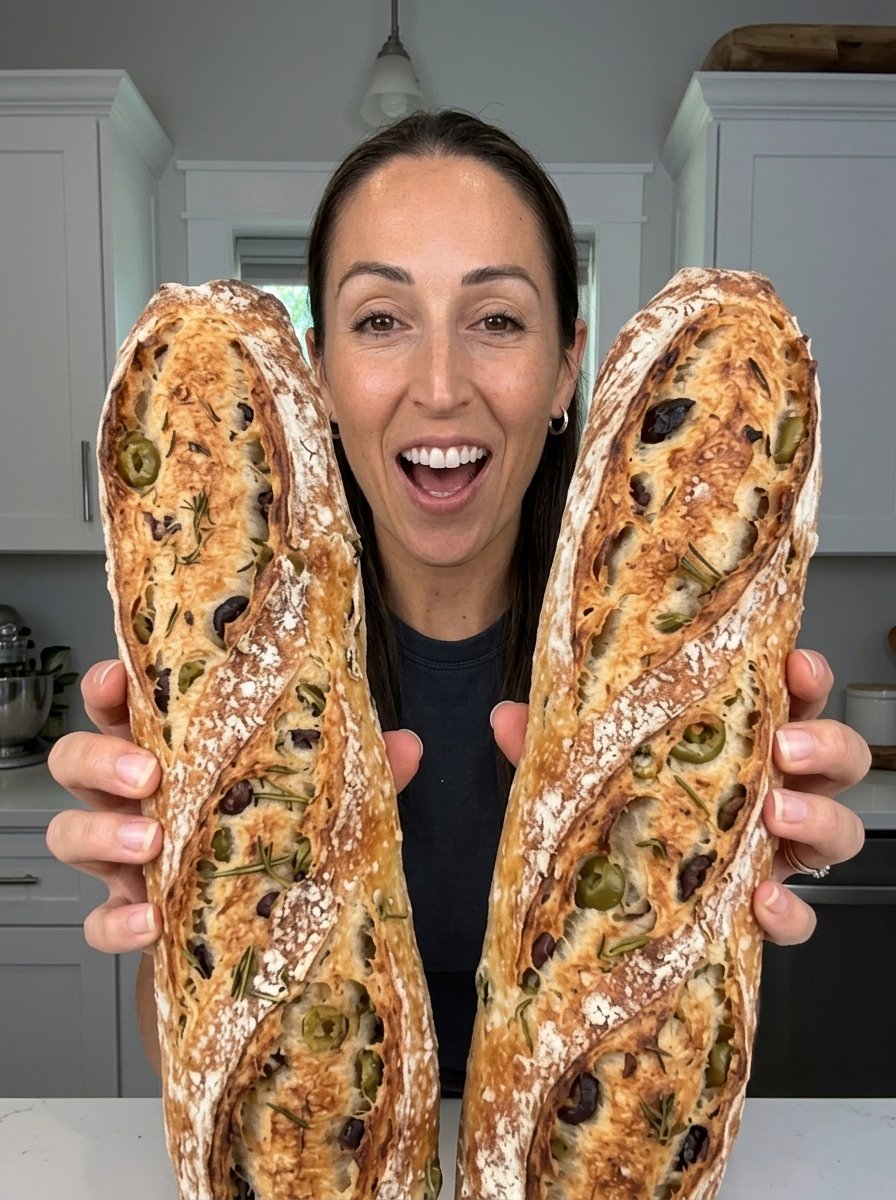
Easy Olive Baguettes: Crusty, Airy Homemade Bread Packed with Briny Olives
Meta title: Easy Olive Baguettes Recipe – Crusty, Golden & Full of Flavor Meta description: Learn how to make easy olive baguettes at home with a crisp golden crust, an airy crumb, and briny olives in every bite. Simple ingredients, step-by-step instructions, and expert tips. Focus keyword: easy olive baguettes Secondary keywords: homemade olive bread, olive baguette recipe, easy homemade baguette, olive bread recipe, how to make baguettes at home, rustic olive bread
There is something almost magical about pulling a tray of golden baguettes out of your own oven. The crackle of the crust as it cools, the smell of fresh bread drifting through the kitchen, and the first slice revealing a soft, airy interior studded with salty olives. These Easy Olive Baguettes deliver all of that without any special equipment, fancy techniques, or bakery experience.
They are crisp and golden on the outside, wonderfully airy inside, and filled with briny, savory olives in every bite. Serve them alongside soups, salads, cheese boards, or simply dip them in good olive oil. Whether you are a beginner who has never baked bread or a seasoned home baker looking for a reliable weekend project, this olive baguette recipe will become a favorite.
In this guide, you will find everything you need: the full recipe, a clear explanation of every step, ingredient tips and substitutions, troubleshooting advice, serving ideas, and answers to the most common questions about making olive bread at home.
Recipe at a Glance
- Prep Time: 20 minutes
- Cook Time: 22–25 minutes
- Total Time: 2 hours 30 minutes
- Servings: 2 baguettes
Why You’ll Love These Olive Baguettes
Homemade olive bread has a reputation for being complicated, but this recipe proves otherwise. Here is why it deserves a spot in your regular rotation:
- Bakery-style results at home. The combination of a hot oven and a little steam gives you a shatteringly crisp crust and a tender crumb.
- Simple, pantry-friendly ingredients. Flour, yeast, salt, water, olive oil, and olives. That is the heart of it.
- Big Mediterranean flavor. Olives, oregano, rosemary, and optional garlic and parsley turn plain dough into something truly special.
- Beginner friendly. There is no starter to maintain, no overnight fermentation, and no complicated folding schedule.
- Incredibly versatile. These baguettes work for sandwiches, appetizers, dinner sides, picnics, and gift giving.
- Ready in about two and a half hours. Most of that time is hands-off rising, so you can do other things while the dough works.
🛒 Ingredients for Easy Olive Baguette
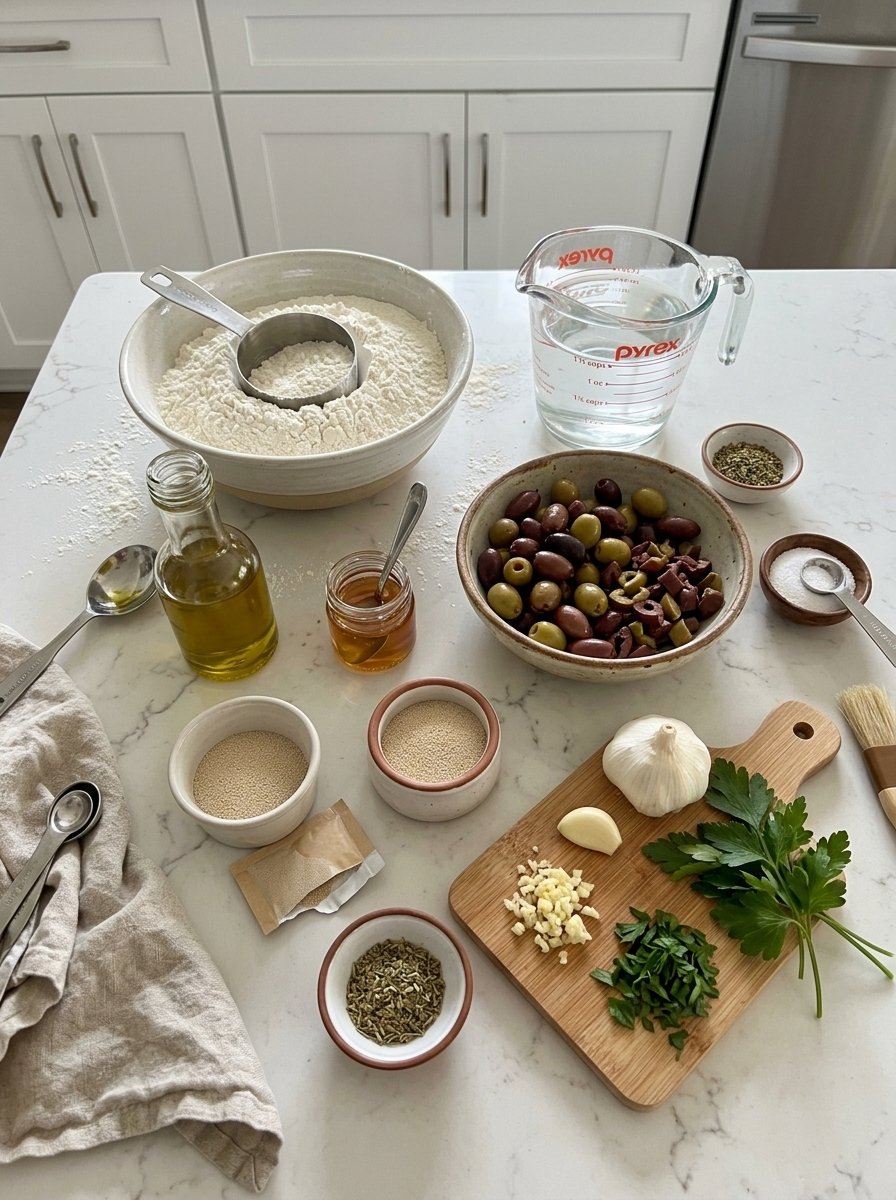
Here is what you need to make two baguettes:
- 3 cups (375 g) bread flour
- 1½ tsp salt
- 2¼ tsp (7 g) instant yeast
- 1¼ cups (300 ml) warm water
- 1 tbsp olive oil
- 1 tsp honey or sugar
- 1 cup (150 g) pitted mixed olives, roughly chopped
- 1 tsp dried oregano
- 1 tsp dried rosemary
- 1 garlic clove, finely minced (optional)
- 1 tbsp chopped fresh parsley (optional)
A closer look at the key ingredients
Bread flour. Bread flour contains more protein than all-purpose flour, which means it develops more gluten. Gluten is what gives baguettes their chewy, elastic structure and helps trap the air bubbles that create an open, airy crumb. If you only have all-purpose flour, you can still make this recipe, but the texture will be a little softer and less chewy.
Instant yeast. Instant yeast can be mixed directly into the dry ingredients, which makes this recipe especially quick and simple. If you only have active dry yeast, dissolve it in the warm water with the honey for about 5 to 10 minutes until foamy before adding it to the flour.
Warm water. The water should feel comfortably warm to the touch, around 105°F to 110°F (40°C to 43°C). Water that is too hot can kill the yeast, while water that is too cold will slow the rise considerably.
Honey or sugar. Just a teaspoon gives the yeast a little food to get going and adds a subtle depth of flavor and color to the crust. It does not make the bread sweet.
Mixed olives. This is where you can have fun. A blend of green and black olives gives a more complex flavor, but you can use only one type if you prefer. Kalamata olives bring a rich, fruity taste, green Castelvetrano olives are mild and buttery, and classic green olives add a sharper brininess. Always use pitted olives to protect your teeth and make the chopping easier.
Dried herbs. Oregano and rosemary are classic Mediterranean partners for olives. Their earthy, slightly woody aroma perfumes the whole loaf as it bakes.
Garlic and parsley. Both are optional, but they add a lovely savory kick and a fresh green note. If you love bold flavors, include them.
👩🍳 How to Make Easy Olive Baguettes: Step-by-Step
Step 1: Make the dough
In a large bowl, combine the flour, yeast, salt, and honey. Add the warm water and olive oil. Mix until a soft, slightly sticky dough forms.
Do not worry if the dough looks a little shaggy at this stage. It will come together beautifully once you knead it. A slightly sticky dough is exactly what you want, because wetter dough creates a more open, tender crumb. Resist the urge to add lots of extra flour at this point.
Step 2: Develop the dough
Knead by hand for 5 to 7 minutes, or use a stand mixer with a dough hook until the dough becomes smooth and elastic.
To knead by hand, push the dough away from you with the heel of your hand, fold it back over itself, give it a quarter turn, and repeat. After a few minutes, the dough will feel noticeably smoother and more springy. A good test is the windowpane test: pinch off a small piece and gently stretch it. If it stretches thin enough to let light through without tearing right away, the gluten is well developed.
Step 3: Add the olives
Gently fold in the chopped olives, oregano, rosemary, and garlic if using. Work them through the dough without overmixing.
Adding the olives after kneading is important. If you add them at the beginning, the sharp edges can tear the gluten strands and the dough can turn murky and wet. Folding them in at the end keeps the structure strong and distributes the olives evenly. Make sure the olives are well drained, and pat them dry with a paper towel if they are very wet. Excess brine can make the dough sticky and heavy.
Step 4: First rise
Place the dough in a lightly oiled bowl. Cover and let it rise in a warm place for 60 to 75 minutes, or until doubled in size.
A warm spot could be near a sunny window, on top of the refrigerator, or inside a turned-off oven with the light on. The dough is ready when it looks puffy and has roughly doubled. If you press a finger gently into it, the dent should spring back slowly.
Step 5: Shape the baguettes
Turn the dough onto a lightly floured surface and divide it into 2 equal pieces. Gently shape each piece into a long baguette about 12 to 14 inches (30 to 35 cm) long. Place on a parchment-lined baking sheet or baguette pan.
Here is a simple way to shape them. Press each piece into a rough rectangle, fold the top third down toward the center, and then fold the bottom third up like a letter. Seal the seam with your fingertips, then roll the dough back and forth with your palms, applying gentle pressure and working from the center outward until you reach the desired length. Place the baguettes seam side down.
Step 6: Second rise
Cover loosely and let the baguettes rest for 25 to 30 minutes.
This short rest lets the shaped dough relax and puff up slightly, which gives the finished loaves a lighter texture. Cover them with a clean kitchen towel or a sheet of lightly oiled plastic wrap so the surface does not dry out.
Step 7: Score the dough
Preheat the oven to 450°F (230°C). Using a sharp knife or bread lame, make 3 to 4 diagonal slashes across the top of each baguette.
Scoring is not just decorative. It controls where the bread expands in the oven, preventing random cracks and giving you that classic baguette look. Use a quick, confident motion and cut about ¼ inch (6 mm) deep at a shallow angle. A dull knife will drag and deflate the dough, so make sure your blade is sharp.
Step 8: Add steam and bake
Place a small oven-safe pan on the bottom rack while the oven preheats. When you are ready to bake, carefully add a little hot water to the pan to create steam. Bake the baguettes for 22 to 25 minutes, until deeply golden and crisp.
Steam is the secret to a bakery-quality crust. During the first part of baking, the moisture keeps the surface of the dough soft and stretchy so the loaf can expand fully, a phenomenon bakers call oven spring. Later, as the steam dissipates, the crust dries out, browns, and turns crisp. Be careful when adding hot water, as the steam will rise quickly. Use oven mitts and keep your face back.
Step 9: Cool
Transfer the baguettes to a wire rack and let them cool for at least 15 to 20 minutes before slicing.
It is tempting to cut into them right away, but the interior is still finishing its cooking as it cools. Slicing too early can leave the crumb gummy. Waiting gives you clean slices and the best texture.
Pro Tips for the Best Olive Baguettes
- Do not skip the steam. For the best crust, steam during the first part of baking makes all the difference.
- Drain the olives well. Make sure the olives are well drained before adding them so the dough does not become unnecessarily wet.
- Keep the dough slightly sticky. A little stickiness means a more tender, airy crumb. Use a light dusting of flour on your hands and surface rather than working in extra flour.
- Use a sharp blade. Clean, decisive scoring helps the baguettes open up beautifully.
- Check for doneness. The bread should be deeply golden and sound hollow when you tap the bottom. An internal temperature of about 200°F to 210°F (93°C to 99°C) means it is fully baked.
- Be patient with the cooling. Letting the baguettes rest allows the crumb to set and the crust to stay crisp.
Variations and Substitutions
One of the best things about this recipe is how easy it is to customize.
- Different olives: Use all Kalamata for a deeper flavor, or all green olives for a brighter, tangier loaf. Olives stuffed with garlic or pimento also work, just chop them well.
- Cheese-filled version: Fold in ½ cup of shredded Parmesan, crumbled feta, or grated Gruyère along with the olives for an even more indulgent bread.
- Sun-dried tomato twist: Add ¼ cup of chopped, drained sun-dried tomatoes for a sweet and tangy contrast.
- Herb swap: Replace the oregano and rosemary with thyme, basil, or Italian seasoning.
- Whole wheat blend: Replace up to ¾ cup of the bread flour with whole wheat flour for a nuttier, heartier loaf. You may need an extra splash of water.
- Make it a boule or rolls: Shape the dough into a round loaf and bake for 30 to 35 minutes, or divide it into small rolls and bake for 15 to 18 minutes.
- Skip the garlic: If you prefer a milder bread or want to serve it to a crowd, simply leave the garlic out.
- Sugar instead of honey: Both work equally well to feed the yeast.
🍽 What to Serve with Olive Baguettes
These baguettes are delicious on their own, but they also shine alongside a wide range of dishes:
- Soups and stews: Tomato soup, minestrone, lentil soup, or a hearty vegetable stew are all wonderful with a thick slice of olive bread for dipping.
- Fresh salads: Pair with a Greek salad, a caprese salad, or a simple arugula salad with lemon vinaigrette.
- Cheese and charcuterie boards: The salty olives pair beautifully with creamy brie, sharp cheddar, tangy goat cheese, and cured meats.
- Olive oil and balsamic dip: Pour good extra virgin olive oil onto a small plate, add a splash of balsamic vinegar and a pinch of flaky salt, and dip away.
- Sandwiches: Slice a baguette lengthwise and fill it with mozzarella, tomato, and basil, or with roasted vegetables and hummus.
- Bruschetta and crostini: Toast slices and top with whipped ricotta and honey, roasted tomatoes, or a drizzle of pesto.
- Pasta night: Serve alongside spaghetti, lasagna, or any pasta with a rich sauce for mopping up every last bit.
- Garlic olive bread: Brush slices with garlic butter and toast them until golden for a flavorful side dish.
Storage, Freezing, and Reheating
Room temperature: Baguettes are at their best the day they are baked. Store leftovers in a paper bag or wrapped in a clean kitchen towel at room temperature for up to 2 days. Avoid sealing them in plastic, which softens the crust.
Freezing baked bread: Once completely cooled, wrap the baguettes tightly in plastic wrap and then foil, or slice them and place in a freezer bag. They keep well for up to 3 months.
Reheating: Warm the baguettes in a 350°F (175°C) oven for 8 to 12 minutes, until the crust crisps up again and the inside is warm. For frozen loaves, thaw at room temperature for an hour or so first, or add a few extra minutes in the oven.
Freezing unbaked dough: After shaping, you can freeze the baguettes on a tray until solid, then wrap them well. Thaw overnight in the refrigerator, let them rise, then score and bake as directed.
🛠 Troubleshooting Common Problems
My dough did not rise. The most common culprits are old yeast or water that was too hot or too cold. Check the expiration date on your yeast, and use warm, not hot, water. Also make sure the dough is rising in a warm spot, since a cold kitchen can slow things down significantly. Give it extra time if needed.
The crust is not crisp. Make sure the oven is fully preheated and that you added steam at the start. Cooling the baguettes on a wire rack, rather than leaving them on the hot tray, also prevents steam from softening the bottom crust.
The baguettes spread flat instead of rising up. This usually means the dough was too wet or overproofed. Drain the olives thoroughly, avoid adding extra liquid, and keep the second rise to the recommended 25 to 30 minutes.
The crumb is dense. Dense bread can be the result of underkneading, underproofing, or too much flour. Knead until the dough is smooth and elastic, let it fully double in size during the first rise, and measure the flour carefully. Weighing it with a kitchen scale is the most reliable method.
The bread is too salty. Olives vary widely in saltiness. If you are using very salty olives, rinse them briefly under cool water and pat them dry before chopping. You can also reduce the salt in the dough slightly.
The olives are sinking or clumping. Make sure the olives are chopped evenly and gently folded through the dough rather than dumped in one spot. Patting them dry helps them distribute more easily.
❓ Frequently Asked Questions
Can I make olive baguettes without bread flour? Yes. All-purpose flour works, though the crumb will be a bit softer and less chewy. Bread flour is recommended for the best structure and texture.
Can I use a stand mixer? Absolutely. Use the dough hook on low to medium speed for about 5 to 7 minutes, until the dough is smooth and elastic. Fold in the olives and herbs by hand at the end.
Do I need a baguette pan? No. A parchment-lined baking sheet works perfectly well. A baguette pan helps the loaves keep their shape and bake more evenly, but it is not necessary.
What if I do not have a bread lame? A sharp serrated knife or a clean razor blade will do the job. Just make sure the blade is sharp so it glides through the dough.
Can I prepare the dough ahead of time? Yes. After kneading and adding the olives, place the dough in a lightly oiled bowl, cover it, and refrigerate for up to 24 hours. This slow rise develops even more flavor. Let it come to room temperature and finish rising before shaping.
Can I use jarred or canned olives? Yes, either works. Just drain them very well and pat them dry so they do not add extra moisture to the dough.
How do I know when the baguettes are done? They should be deeply golden brown, feel light for their size, and sound hollow when tapped on the bottom.
Are these baguettes vegan? Yes, as long as you use sugar instead of honey. Everything else in the recipe is plant-based.
Can I double the recipe? Yes. Double all the ingredients to make four baguettes, and bake them in batches or on two trays, rotating the trays halfway through.
The Magic of Olives in Bread
Olives and bread have been paired for centuries across the Mediterranean, from Italian focaccia to French fougasse and Greek olive breads. The reason is simple: bread is a perfect canvas for bold, salty flavors. The mild, slightly sweet dough balances the briny punch of the olives, while the olive oil in the dough echoes the fruity notes of the fruit itself.
Beyond flavor, olives add moisture pockets and a pleasing, chewy texture. As the baguettes bake, some of the olive oil and brine seeps into the surrounding crumb, perfuming it with savory richness. The result is a loaf that tastes complex and layered, even though the ingredient list is short.
Final Thoughts
These Easy Olive Baguettes prove that you do not need to be a professional baker to produce a stunning loaf. With a handful of simple ingredients, a bit of patience, and a few smart techniques like adding steam and draining your olives well, you can bring a taste of the Mediterranean bakery right into your own kitchen.
Serve them warm with a drizzle of olive oil, tear them apart at the dinner table, or stack them high with your favorite sandwich fillings. However you enjoy them, the crackling crust, airy crumb, and salty bursts of olive in every bite are sure to impress family and guests alike. 🫒✨
Give this olive baguette recipe a try, and make it your own with your favorite olives, herbs, and cheeses. Happy baking!