
Simple Blender Lentil Bread
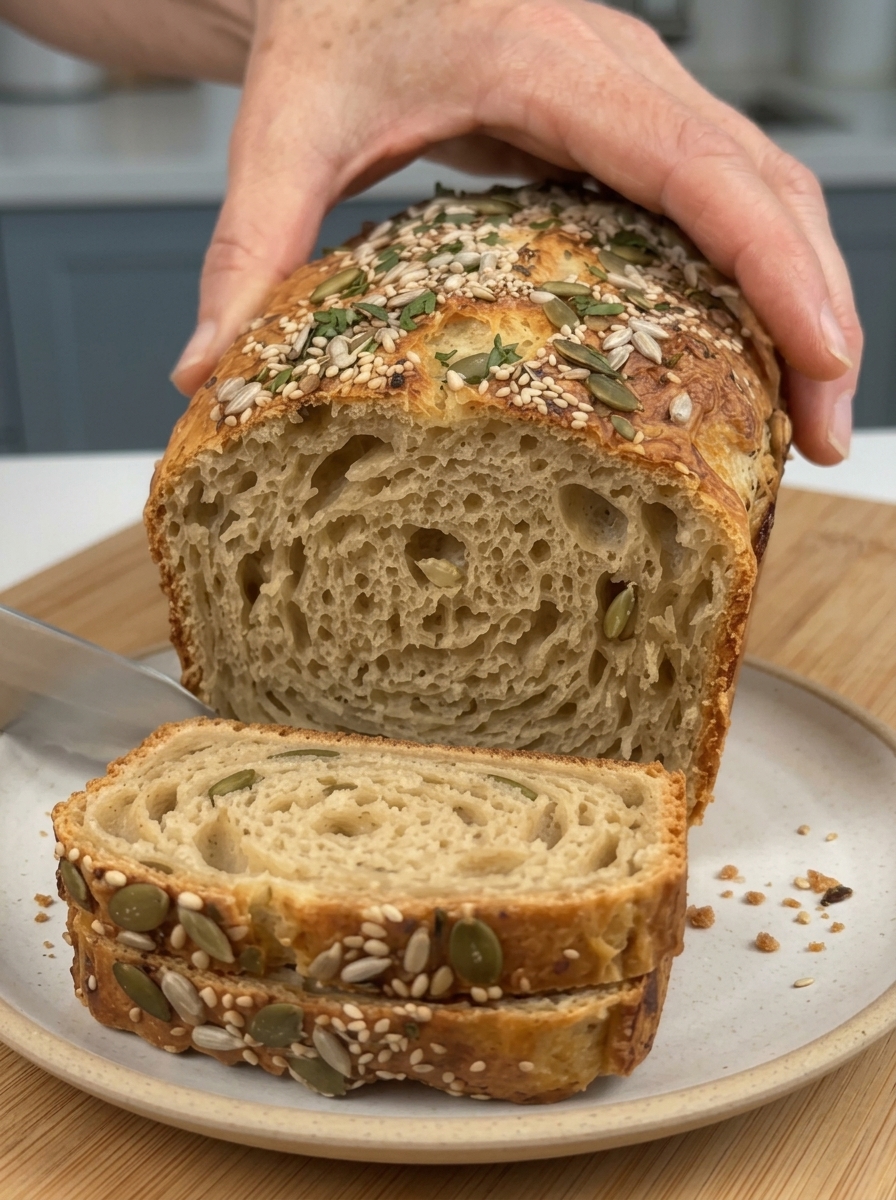
Simple Blender Lentil Bread: The Hearty, High-Protein Loaf You Make in One Blender ✨
If you have ever looked at a can of lentils and wondered whether it could become something more exciting than soup, this Simple Blender Lentil Bread is your answer. Everything comes together right in the blender: cooked lentils, eggs, Greek yogurt, olive oil, baking powder, and a few simple seasonings. Pour the batter into a loaf pan, bake for about 35 to 40 minutes, and you have a hearty, tender, savory loaf that is perfect for toast, sandwiches, or serving alongside soups and salads.
This is not a traditional fluffy sandwich bread, and it does not pretend to be. It is a moist, protein-rich, naturally flourless loaf with a savory, herby flavor and a soft, sliceable texture. It requires no yeast, no kneading, no rising time, and no special equipment beyond a blender and a loaf pan. With just 10 minutes of prep and about 50 minutes from start to finish, it is one of the easiest breads you will ever make.
Whether you are looking for a gluten-free bread option, trying to eat more plant-forward protein and fiber, or simply curious about baking with legumes, this recipe delivers. Below, you will find everything you need to know: why it works, how to make it step by step, ingredient notes and substitutions, troubleshooting tips, flavor variations, storage advice, and answers to frequently asked questions.
Why This Blender Lentil Bread Recipe Works So Well
Using lentils as the base of a bread may sound unusual, but the logic behind it is simple. Cooked lentils are soft, mild, and slightly earthy, and when blended until smooth they turn into a thick, creamy puree. That puree takes the place of flour, giving the loaf its body, bulk, and moisture while adding a generous dose of fiber and plant-based protein.
Eggs are the structural backbone of the recipe. Without gluten to hold everything together, the proteins in the eggs set as the batter bakes, transforming it from a thick puree into a firm, sliceable loaf. The eggs also contribute richness and help create a tender crumb.
Plain Greek yogurt adds moisture, a subtle tang, and even more protein. It keeps the loaf from tasting dry and gives it a soft, almost custardy interior. Olive oil contributes richness and helps the bread stay moist for days, while baking powder provides a gentle lift so the loaf is not completely dense.
The seasonings are what make this bread taste like bread rather than a lentil casserole. Salt, garlic powder, dried oregano, and black pepper create a savory, Mediterranean-style flavor that pairs well with nearly any topping or side. Because the seasoning is built right into the batter, every slice tastes balanced and flavorful from the first bite.
One small but helpful detail in this version of the recipe is the optional splash of water. Depending on how thick your lentils are and how powerful your blender is, the batter can sometimes be too stiff for the blades to catch. Adding water one tablespoon at a time, only if needed, helps the blender run smoothly without thinning the batter too much. This is a practical tip that makes the recipe work for nearly any blender, from a basic model to a high-speed one.
Ingredients You’ll Need
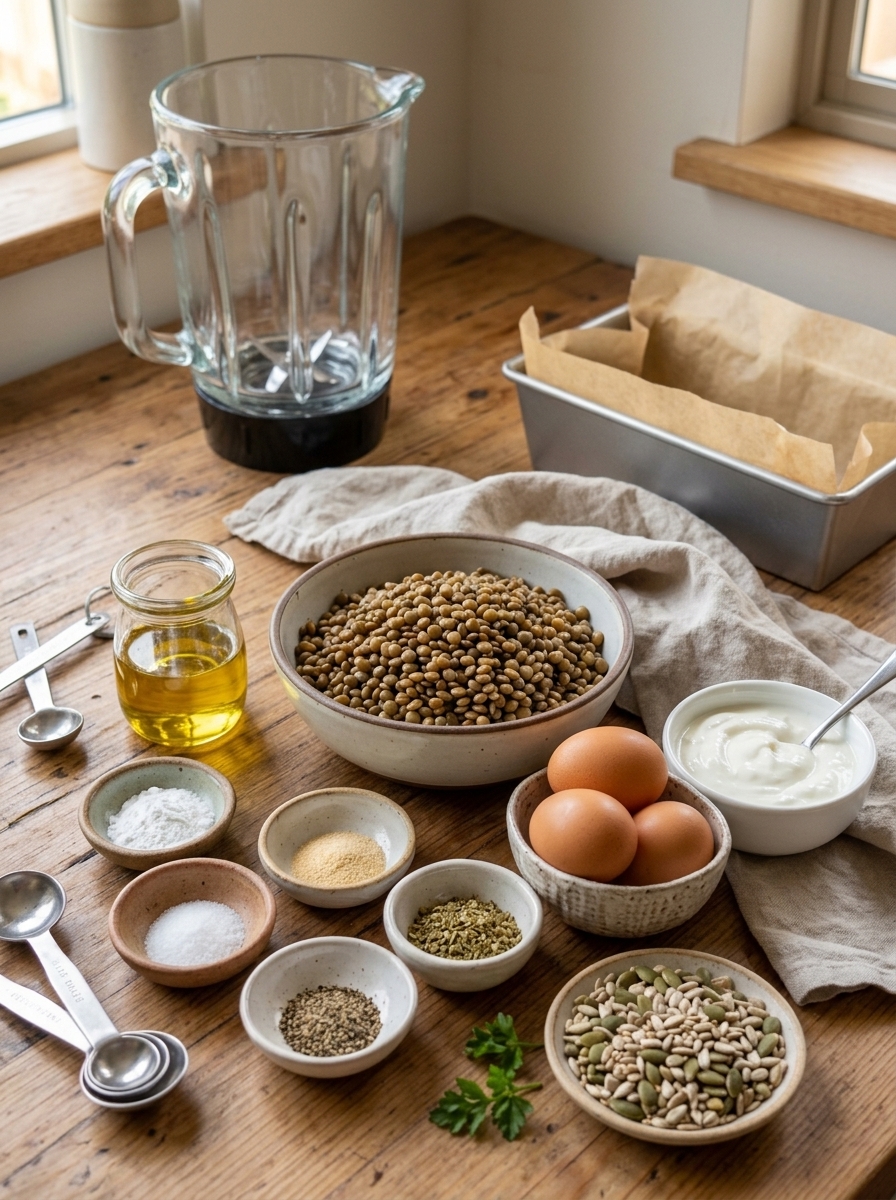
This recipe uses a short list of pantry-friendly ingredients, and everything gets blended together in a single step.
- 1½ cups cooked brown or green lentils, well drained
- 3 large eggs
- ½ cup plain Greek yogurt
- 2 tablespoons olive oil
- 1 teaspoon baking powder
- ½ teaspoon salt
- ½ teaspoon garlic powder
- ½ teaspoon dried oregano
- ¼ teaspoon black pepper
- 2 to 4 tablespoons water, as needed
Optional extras:
- Sesame seeds or extra dried herbs for sprinkling on top
- A little grated Parmesan or a pinch of smoked paprika for added flavor
Ingredient Notes and Substitutions
Cooked lentils: Brown or green lentils work best because they hold their shape when cooked and have a mild, earthy flavor. You can use canned lentils for convenience, or cook dried lentils yourself. As a rough guide, about ½ cup of dried lentils yields close to 1½ cups cooked. Whichever you use, drain them very well. If they look wet, spread them on a clean towel and pat them dry. Red and yellow lentils are not recommended, because they break down into a very soft, mushy puree and can make the loaf too wet.
Eggs: Three large eggs provide the structure that flour would normally give. Because this loaf depends so heavily on eggs, replacing them with flax eggs or other substitutes will change the texture significantly, so it is best to stick with real eggs for reliable results.
Plain Greek yogurt: Full-fat or low-fat Greek yogurt both work. Avoid flavored or sweetened varieties, since they will clash with the savory seasonings. If you only have regular plain yogurt, you can use it, but it contains more water, so you may not need to add any extra water to the blender.
Olive oil: Olive oil adds a pleasant richness and a subtle fruity flavor. Avocado oil or another mild-tasting oil can be used instead.
Baking powder: Check that yours is fresh. It is the only leavening agent in the recipe, so old baking powder will result in a flatter, denser loaf.
Water: This is optional and should only be added if your blender struggles to blend the thick mixture. Add it one tablespoon at a time. Too much water will make the batter loose and the loaf gummy.
Seasonings: Garlic powder, oregano, salt, and black pepper form a savory base. Feel free to swap the oregano for thyme, Italian seasoning, or rosemary, or to add a pinch of smoked paprika or cumin.
Step-by-Step Instructions
Step 1: Preheat the Oven
Preheat your oven to 350°F (175°C). Line an 8×4-inch loaf pan with parchment paper, leaving a little overhang on the long sides so you can lift the finished loaf out easily. If you prefer, you can lightly grease the pan instead, but parchment makes removal much easier, especially since this flourless bread is delicate while warm.
Step 2: Add Everything to the Blender
Add the cooked lentils, eggs, Greek yogurt, olive oil, baking powder, salt, garlic powder, dried oregano, and black pepper to your blender. There is no need to mix anything separately first. Putting the wet ingredients, such as the eggs, yogurt, and oil, in before the lentils can help the blades catch the mixture more easily.
Step 3: Blend Until Smooth
Blend on high until the mixture forms a thick, smooth batter. Stop and scrape down the sides with a spatula as needed. If the blender has trouble turning over because the mixture is too thick, add water one tablespoon at a time, blending briefly between additions. You should need no more than 2 to 4 tablespoons in total, and you may need none at all.
The finished batter should be thick but pourable, similar to a heavy pancake batter or a thick muffin batter. It should not be watery. If you can still see tiny bits of lentil skin, keep blending a little longer.
Step 4: Fill the Loaf Pan
Pour the batter into the prepared loaf pan and use a spatula to smooth the top into an even layer. If you like, sprinkle sesame seeds, extra dried herbs, or a little grated Parmesan over the top. The toppings add flavor and make the loaf look more like a traditional bakery bread.
Step 5: Bake
Place the pan in the preheated oven and bake for 35 to 40 minutes. The loaf is done when it feels firm in the center and a toothpick inserted into the middle comes out clean. Because this bread does not brown deeply like wheat bread, the toothpick test is more reliable than color alone. If the top starts to look too dark before the center is set, loosely tent the pan with foil for the remaining bake time.
Step 6: Cool and Slice
Let the bread rest in the pan for 10 minutes, then use the parchment overhang to lift it onto a wire rack. Allow it to cool completely before slicing. This resting time is important: the egg structure continues to firm up as the loaf cools, and slicing too early can lead to a crumbly or gummy texture. For the cleanest slices, use a serrated knife and a gentle sawing motion.
What to Serve with Lentil Bread
This bread has a hearty, savory personality, so it pairs well with a wide variety of foods.
- Soups and stews: Serve thick slices alongside tomato soup, vegetable soup, chili, or a creamy lentil soup. The sturdy texture is great for dipping.
- Avocado toast: Toast a slice and top it with mashed avocado, a drizzle of olive oil, flaky salt, and chili flakes.
- Hummus and veggies: Spread a slice with hummus and top with cucumber, tomato, and fresh herbs for a Mediterranean-style snack.
- Egg sandwiches: Layer a fried or scrambled egg with cheese and greens between two slices for a protein-packed breakfast sandwich.
- Cheese and charcuterie boards: Cut the loaf into small slices and serve with cheeses, olives, and cured meats for an unexpected addition to a board.
- Salads: Serve a slice on the side of a big green salad to make it a more filling meal.
- Simply with butter or olive oil: A warm, toasted slice with a little butter or a drizzle of olive oil is delicious on its own.
Tips for the Best Simple Blender Lentil Bread
Drain the lentils thoroughly. Excess moisture is the number one cause of a soggy or gummy loaf. Rinse canned lentils well, drain them completely, and pat them dry if needed.
Add water only if you need it. Start with none, and add it one tablespoon at a time only if the blender cannot turn the mixture. A thicker batter produces a better, firmer loaf.
Blend thoroughly. A smooth batter leads to a smooth, even crumb. Scrape down the sides and blend until no visible lentil skins remain.
Use an 8×4-inch loaf pan. This size gives you taller, more bread-like slices. A larger pan will produce a flatter loaf that bakes faster, so begin checking for doneness a little earlier.
Rely on the toothpick test. The bread should be firm in the center, and a toothpick should come out clean, with no wet batter clinging to it.
Cool completely before slicing. This is the key to clean slices. Give it at least an hour on the rack if you can.
Boost the flavor. For extra savory depth, blend in a small handful of grated Parmesan or a pinch of smoked paprika before baking.
Toast the slices. Toasting firms up the texture, adds a little crispness, and brings out the savory flavor even more.
Recipe Variations to Try
This loaf is a great base for experimenting with flavors. Here are a few ideas.
Parmesan Herb Lentil Bread: Blend in two tablespoons of grated Parmesan and add a teaspoon of Italian seasoning. Sprinkle a little more Parmesan on top before baking.
Smoky Paprika Lentil Bread: Add ½ teaspoon of smoked paprika to the batter for a warm, smoky flavor that pairs beautifully with eggs and avocado.
Mediterranean Lentil Bread: Stir in a few tablespoons of finely chopped sun-dried tomatoes and olives after blending, and top with dried oregano.
Spiced Lentil Bread: Swap the oregano for cumin and a pinch of coriander for a Middle Eastern-inspired loaf that is wonderful with hummus.
Seeded Lentil Bread: Top with a mix of sesame seeds, sunflower seeds, and pumpkin seeds for crunch and extra nutrition.
Spicy Lentil Bread: Add a pinch of cayenne or a small spoonful of chili flakes for gentle heat.
Everything Seasoning Loaf: Sprinkle the top with everything bagel seasoning before baking for a bold, savory crust.
How to Store and Reheat Leftovers
Because this bread is made with eggs, yogurt, and lentils, and contains no preservatives, it should be stored in the refrigerator.
Refrigerating: Once completely cooled, store the loaf in an airtight container in the refrigerator for up to 4 to 5 days. Placing parchment paper between slices helps keep them from sticking together.
Freezing: The bread freezes well. Slice the cooled loaf, separate the slices with parchment, and store them in a freezer-safe bag with as much air removed as possible. Frozen slices keep for up to 2 months and can be toasted straight from the freezer.
Reheating: Warm slices in a toaster, toaster oven, or dry skillet until heated through and lightly crisp. You can also enjoy the bread cold, straight from the refrigerator, especially in sandwiches.
Meal prep tip: Bake the loaf at the start of the week, slice it, and keep a few slices in the refrigerator while freezing the rest. That way you always have a protein-rich bread ready for quick breakfasts and lunches.
Troubleshooting Common Problems
The loaf is soggy or gummy in the middle. The most common causes are lentils that were not drained well enough, too much added water, underbaking, or slicing before the loaf cooled completely. Next time, drain the lentils thoroughly, use less water, bake until a toothpick comes out clean, and let the bread cool all the way.
The loaf is too dense. This bread is naturally denser than wheat-based bread, but very flat or heavy results can come from old baking powder or a batter that was too wet. Use fresh baking powder and keep the batter thick.
The loaf tastes too earthy. Lentils are naturally earthy, and a little extra seasoning can balance that. Try adding a pinch more salt, some Parmesan, or smoked paprika. Toasting the slices also helps mellow the flavor.
The bread is crumbly. This usually happens when the loaf is sliced while still warm. Let it cool fully and use a serrated knife.
The blender will not blend. If the mixture is too thick, add water one tablespoon at a time. Adding the liquid ingredients first and the lentils last can also help.
Frequently Asked Questions
Is this lentil bread gluten-free?
Yes, the recipe contains no wheat flour, so it is naturally gluten-free. If you need it to be certified gluten-free, check that your baking powder and any toppings are labeled gluten-free.
Can I use canned lentils?
Yes. Drain and rinse them well, then drain them again thoroughly. Pat them dry with a towel if they still seem wet.
Can I use red lentils?
Red and yellow lentils are not recommended, since they cook down into a very soft puree and can make the batter too wet. Brown or green lentils give the best texture.
Does the bread taste like lentils?
It has a mild, earthy, savory flavor, but the garlic, oregano, and pepper keep it from tasting like plain lentils. Many people describe it as savory and herby, similar to a hearty vegetable loaf.
Can I make it dairy-free?
You can try a thick unsweetened dairy-free yogurt in place of the Greek yogurt, though the texture and moisture may vary slightly. Keep the batter thick and use the toothpick test for doneness.
Can I make it without eggs?
Eggs provide the structure in this recipe, so replacing them is difficult and will change the result significantly. For the best texture, stick with eggs.
Can I double the recipe?
Yes. You can bake it in two 8×4-inch pans, or in one larger pan with a longer baking time. Rely on the toothpick test to check for doneness.
Is this bread high in protein?
Between the lentils, eggs, and Greek yogurt, it provides a good amount of protein and fiber per slice. Exact numbers depend on your ingredients and how you slice the loaf.
Why do I need to cool it completely?
The structure of the loaf comes from the eggs, which keep setting as the bread cools. Cutting it too early breaks that structure and leaves the center soft or crumbly.
Can I add vegetables or cheese to the batter?
Yes, in small amounts. Finely grated zucchini (squeezed dry), spinach, or a handful of shredded cheese can work, but too much moisture will make the loaf gummy.
Final Thoughts
Simple Blender Lentil Bread is proof that wholesome, satisfying bread does not need flour, yeast, or complicated steps. With one blender, a handful of everyday ingredients, and less than an hour, you can make a hearty, protein-rich loaf that is naturally gluten-free and full of savory flavor. It makes a great companion to soups and salads, a sturdy base for toast and sandwiches, and a smart meal-prep staple for busy weeks.
The formula for success is easy to remember: drain the lentils well, blend until smooth, add water only if you must, bake until a toothpick comes out clean, and let the loaf cool completely before slicing. Follow those simple rules and you will be rewarded with a tender, flavorful bread that makes lentils far more exciting than you ever expected.
Give this recipe a try, add your favorite herbs, seeds, or a little Parmesan, and see how quickly it becomes a regular in your kitchen.