
Flour-Free Oat & Chia Bread
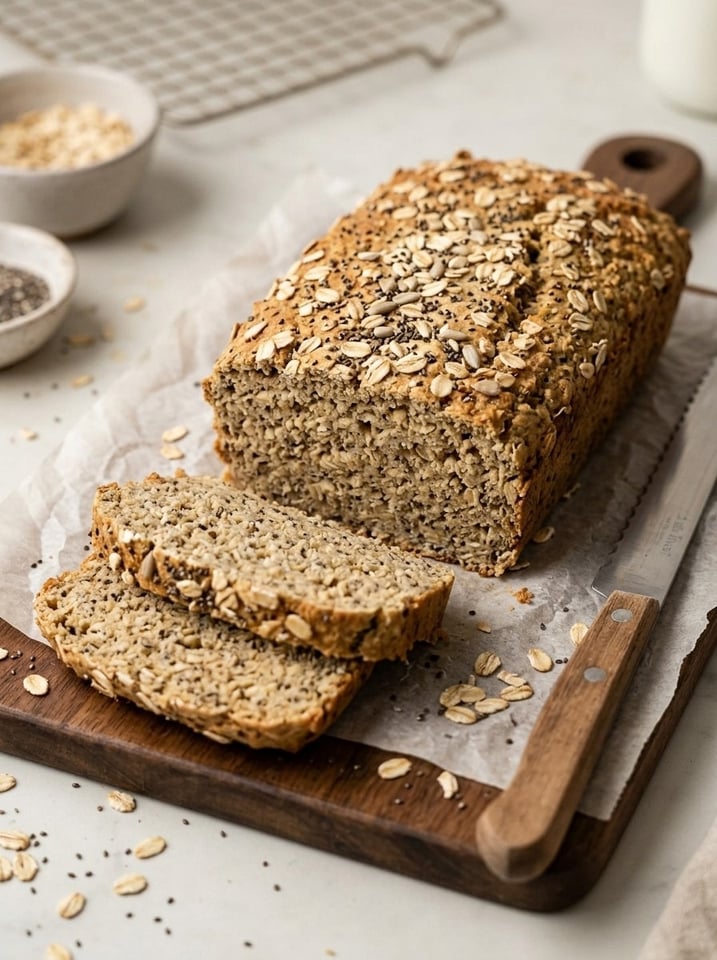
Flour-Free Oat & Chia Bread: A Healthy, Hearty Loaf Made Without Traditional Flour
Flour-Free Oat & Chia Bread – Healthy, Hearty & Easy Recipe
Meta description: Bake a hearty flour-free oat & chia bread with rolled oats, Greek yogurt and eggs. Easy, wholesome, no traditional flour. Step-by-step recipe, tips, storage and FAQs.
URL slug: flour-free-oat-chia-bread
Focus keyword: flour-free oat and chia bread
Secondary keywords: oat bread without flour, healthy oat bread recipe, chia seed bread, no flour bread, rolled oat bread, high-fiber bread, easy homemade bread, gluten-free oat bread
There is something deeply satisfying about slicing into a warm, homemade loaf of bread. Now imagine that loaf made with just a handful of simple pantry ingredients, no traditional flour, and no complicated kneading or proofing. That is exactly what you get with this flour-free oat and chia bread. Rolled oats give it a tender, rustic crumb, chia seeds bind everything together and add a pleasant nutty flavor, and Greek yogurt keeps every slice wonderfully moist.
Whether you are looking for a wholesome breakfast, a sturdy base for sandwiches, or a nourishing snack, this healthy oat bread recipe delivers. It is easy to prepare, naturally versatile, and a lovely addition to your everyday baking routine. Toast it and top it with avocado, spread it with nut butter, or finish it with your favorite jam.
In this complete guide you will find the full recipe, a clear explanation of how the bread works, ingredient notes, troubleshooting help, tasty variations, storage and freezing instructions, serving ideas, and answers to the questions bakers ask most.
Why You’ll Love This Flour-Free Oat & Chia Bread
This is not a bread that asks a lot from you. It is forgiving, flexible and genuinely good to eat. Here is why it deserves a spot in your recipe rotation:
- No traditional flour required. There is no wheat flour, no all-purpose flour and no bread flour. The structure comes from ground rolled oats, eggs, yogurt and chia seeds.
- No yeast, no kneading, no proofing. The loaf rises with baking powder and baking soda, so you simply mix, rest, and bake.
- Simple, familiar ingredients. Everything is easy to find in a regular grocery store, and you probably have most of it already.
- Hearty and satisfying. Oats and chia seeds make the bread filling, so a slice or two keeps you going for hours.
- Wonderfully versatile. It works as toast, a sandwich base, a side for soup, or a snack on its own.
- Great for meal prep. The loaf slices and freezes beautifully, so you can have fresh-tasting bread ready whenever you want it.
- Easy to adapt. Add herbs and seeds for a savory loaf, or adjust the ingredients to suit dairy-free or gluten-free needs.
What Is Flour-Free Oat Bread?
Flour-free oat bread is a quick-bread style loaf that replaces traditional wheat flour with whole rolled oats. Before mixing, the oats are pulsed in a food processor or blender until they resemble coarse meal. Strictly speaking, ground oats behave a bit like oat flour, so the phrase “flour-free” here means the recipe uses no conventional baking flour. Instead, whole grain oats do all the work.
On their own, oats would not hold a loaf together. That is where the supporting cast comes in. Eggs provide structure and richness. Greek yogurt adds moisture, tang and protein. Chia seeds absorb liquid and form a gel that acts like a natural binder. Baking powder and baking soda, activated by a splash of apple cider vinegar or lemon juice, give the loaf lift so it does not turn out like a brick.
The result is a dense-but-tender, moist, slightly chewy bread with a nutty flavor and a rustic texture. It will not be airy like a bakery sandwich loaf, and that is part of its charm. Think of it as a hearty, wholesome bread that tastes like real food.
Ingredients and Why Each One Matters
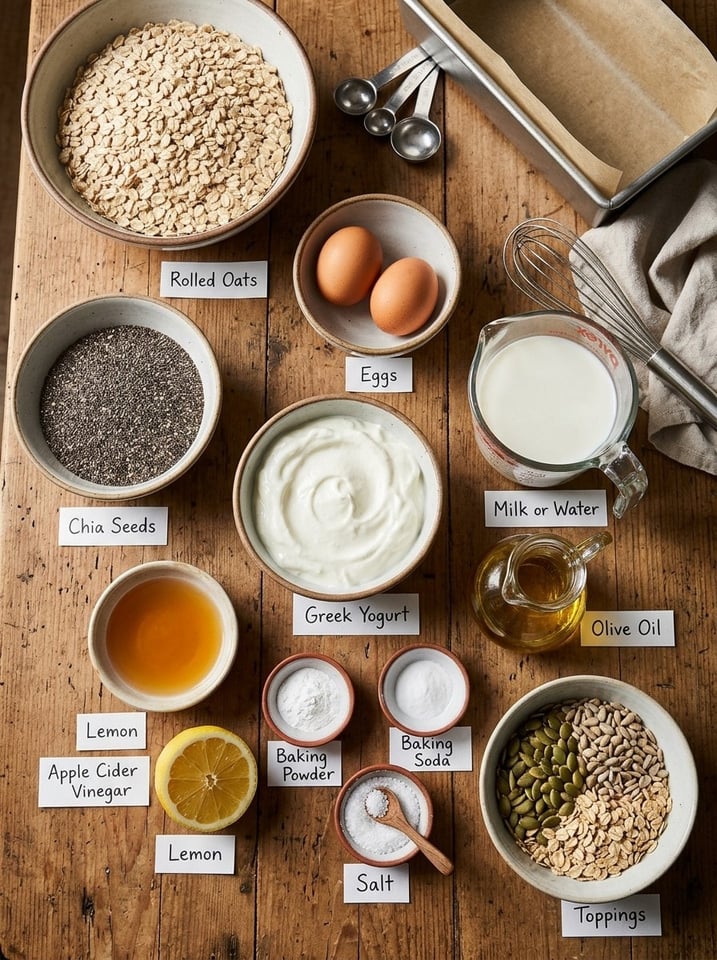
Understanding what each ingredient does makes you a more confident baker and helps you troubleshoot if something goes sideways.
Rolled Oats (300 g / 3¼ cups)
Rolled oats, also called old-fashioned oats, are the foundation of this loaf. They provide the tender, slightly chewy texture and a mild, toasty sweetness. Pulse them into a coarse meal rather than a fine powder, and you will keep a little rustic texture in the finished bread. Quick oats can work in a pinch, but they are cut finer and may absorb liquid differently, so stick with rolled oats when you can.
Chia Seeds (40 g / about ¼ cup)
Chia seeds are the secret binder. When they meet liquid they swell and form a gel, which holds the crumb together and adds moisture. They also lend a subtle nutty flavor and a lovely speckled look through every slice. This is why the resting time in the recipe matters so much.
Eggs (2 large)
Eggs add structure, richness and lift. Because there is no gluten from wheat flour to build a network, eggs do a lot of the heavy lifting in this recipe.
Plain Greek Yogurt (240 ml / 1 cup)
Greek yogurt keeps the bread moist and tender while adding a gentle tang and extra protein. Use plain, unsweetened yogurt. Full-fat or low-fat both work, though full-fat gives a slightly softer crumb.
Water or Milk (120 ml / ½ cup)
This extra liquid hydrates the oats and chia seeds. Water keeps the flavor neutral, while milk adds a touch more richness.
Olive Oil (2 tablespoons)
Olive oil contributes tenderness and a soft, moist mouthfeel. A mild extra virgin olive oil works well, and you can swap in another neutral oil if you prefer.
Baking Powder, Baking Soda and Salt
Baking powder (1 teaspoon) and baking soda (½ teaspoon) work together to lift the loaf. Salt (¾ teaspoon) brings out the natural flavor of the oats and seeds, so please do not skip it.
Apple Cider Vinegar or Lemon Juice (1 tablespoon)
The acid reacts with the baking soda to create bubbles that help the loaf rise and keep the crumb tender. You will not taste it in the finished bread.
Optional Toppings
A sprinkle of rolled oats, chia seeds, and sunflower or pumpkin seeds on top gives the loaf a bakery-style finish and a bit of crunch.
Flour-Free Oat & Chia Bread Recipe
Prep Time: 15 minutes
Resting Time: 20 minutes
Baking Time: 45–55 minutes
Total Time: Approximately 1 hour 30 minutes
Yield: 1 loaf (about 10–12 slices)
Ingredients
For the Oat & Chia Bread
- 300 g (3¼ cups) rolled oats
- 40 g (about ¼ cup) chia seeds
- 2 large eggs
- 240 ml (1 cup) plain Greek yogurt
- 120 ml (½ cup) water or milk
- 2 tablespoons olive oil
- 1 teaspoon baking powder
- ½ teaspoon baking soda
- ¾ teaspoon salt
- 1 tablespoon apple cider vinegar or lemon juice
Optional Toppings
- 1 tablespoon rolled oats
- 1 teaspoon chia seeds
- 1 tablespoon sunflower or pumpkin seeds
Instructions
1. Prepare the oats. Preheat your oven to 350°F (175°C). Line a standard loaf pan with parchment paper, leaving a little overhang on the sides for easy removal. Place the rolled oats in a food processor or blender and pulse until they resemble coarse meal. You do not need a perfectly fine powder. A little texture makes the bread wonderfully rustic.
2. Mix the wet ingredients. In a large mixing bowl, whisk together the eggs, Greek yogurt, water or milk, and olive oil until smooth. Add the apple cider vinegar or lemon juice and mix well. These ingredients help create a tender loaf and complement the baking soda.
3. Combine the dry ingredients. In a separate bowl, combine the ground oats, chia seeds, baking powder, baking soda and salt. Stir thoroughly to distribute the leavening ingredients evenly throughout the mixture.
4. Make the bread batter. Add the dry ingredients to the wet mixture and stir with a spatula until everything is evenly combined. The mixture will be thicker and more textured than ordinary cake batter. If it seems extremely dry, add 1–2 tablespoons of water. If it seems unusually loose, allow the chia seeds and oats more time to absorb the moisture.
5. Let the mixture rest. Cover the bowl and let the mixture rest for 20 minutes. During this time the chia seeds absorb moisture and form a gel that helps bind the bread together. The oats also soften, giving the finished loaf a more cohesive texture.
6. Transfer to the loaf pan. Spoon the mixture into your prepared loaf pan. Use a spatula to smooth the top and gently press the mixture into the corners. Sprinkle with rolled oats, chia seeds or sunflower seeds if desired, pressing the toppings lightly so they adhere.
7. Bake until golden. Place the pan in the preheated oven and bake for 45–55 minutes, until the top is golden and firm. Insert a toothpick into the center. It should come out without wet batter. If the top browns too quickly, loosely cover it with foil for the final part of baking.
8. Cool completely. Remove the loaf from the oven and let it rest in the pan for 10–15 minutes. Carefully lift it out using the parchment paper and transfer it to a wire rack. Allow it to cool completely before slicing. This bread firms up as it cools, and cutting it while hot may cause the slices to crumble or turn gummy.
9. Slice and enjoy. Use a sharp serrated knife to cut the cooled loaf into even slices. Enjoy it as is, toast it until lightly crisp, or add your favorite sweet or savory toppings. The finished bread should be hearty, moist and pleasantly nutty, with chia seeds throughout every slice.
Tips for Perfect Flour-Free Oat & Chia Bread
A few small habits make the difference between a good loaf and a great one.
- Choose certified gluten-free oats if you need gluten-free bread. Oats are naturally gluten-free, but they can be contaminated with gluten during growing or processing. Look for a certified gluten-free label if that matters for you.
- Do not skip the resting time. The chia seeds need those 20 minutes to absorb moisture and bind the loaf. Skipping the rest often leads to a crumbly result.
- Avoid slicing too early. Complete cooling is essential for a firm, sliceable texture. Patience here pays off.
- Blend the oats to your preference. A finer oat meal creates a more uniform, tender crumb, while coarser oats give a rustic, chewy loaf.
- Measure with a scale when possible. Oats vary in density, so weighing 300 g is more reliable than measuring by cups.
- Use a serrated knife. It glides through the crust and crumb without squashing the slice.
- Customize the flavor. Add dried herbs, garlic powder, pumpkin seeds, sunflower seeds or a pinch of black pepper for a savory variation.
- For a dairy-free version, try an unsweetened, thick plant-based yogurt. The texture may vary slightly.
- For a vegan version, replace the eggs with a suitable plant-based binder, such as a tested flax-and-chia mixture. Because eggs contribute significant structure, the loaf may be denser and more fragile.
Troubleshooting: Common Problems and Easy Fixes
My bread is crumbly. The most common causes are slicing before the loaf has cooled completely or skipping the resting time. Let the batter rest the full 20 minutes and cool the bread fully on a wire rack. If your batter seemed very dry, add a tablespoon or two of water next time.
The center is gummy or wet. The loaf may need more baking time, or your oven may run cool. Bake until a toothpick comes out clean from the center, and use foil to protect the top if it browns too fast. Make sure it cools thoroughly, because the interior continues to set as it rests.
The top browned too quickly. Tent the loaf loosely with foil for the last part of baking. Ovens vary, so an oven thermometer can help you check the real temperature.
The bread is too dense. Because the loaf has no wheat gluten, some density is normal. To lighten it, make sure your baking powder and baking soda are fresh, grind the oats a bit finer, and avoid over-packing the batter into the pan.
The batter looks too loose or too thick. Different brands of oats, yogurt and chia seeds absorb liquid differently. If the batter is too thick to stir, add 1–2 tablespoons of water. If it seems loose, give it a few extra minutes to rest so the chia and oats can absorb the moisture.
Variations to Try
Once you have the base recipe down, it is easy to make it your own.
Savory Herb and Seed Loaf
Stir in 1 teaspoon of dried herbs such as rosemary or thyme, ½ teaspoon of garlic powder, a pinch of black pepper, and an extra handful of pumpkin or sunflower seeds. This version is fantastic with soup or topped with cheese.
Cheesy Oat Bread
Fold in a small handful of shredded cheese and a pinch of paprika or Italian seasoning for a savory loaf that toasts beautifully.
Lightly Sweet Breakfast Loaf
Add a teaspoon of cinnamon and a small handful of raisins or chopped nuts. Keep the base recipe the same, and serve slices with butter or nut butter.
Seeded Crunch Loaf
Add extra sunflower seeds, pumpkin seeds or sesame seeds into the batter in addition to the topping for more crunch and a bakery-style feel.
Dairy-Free Oat Bread
Swap the Greek yogurt for a thick, unsweetened plant-based yogurt and use water or a plant-based milk. Expect slight differences in texture.
Vegan Oat Bread
Replace the eggs with a tested plant-based binder, such as a flax-and-chia mixture. The loaf will be denser and more delicate, so handle the slices gently and allow extra cooling time.
Storage and Freezing Instructions
Proper storage keeps your loaf fresh and tasting its best.
- Room temperature: Store in an airtight container for up to 2 days, provided the loaf has cooled completely.
- Refrigerator: Keep refrigerated for up to 5–7 days because the loaf is moist.
- Freezer: Slice the cooled loaf, separate slices with parchment paper, and freeze in a sealed bag for up to 3 months.
- To serve: Toast slices directly from frozen, or thaw them briefly before warming.
Freezing individual slices is the ultimate time-saver. You can pull out exactly what you need for a quick breakfast without defrosting the whole loaf.
Delicious Ways to Serve Oat & Chia Bread
This bread is a blank canvas for sweet and savory toppings alike.
- Avocado toast: Toast a slice and top it with mashed avocado, a squeeze of lemon juice and black pepper.
- Nut butter and banana: Spread peanut butter or almond butter and add sliced bananas.
- Honey, jam or butter: Keep it simple with honey, fruit preserves or a little butter.
- Cream cheese and cucumber: Add fresh herbs for a light, refreshing snack.
- Tomato and melted cheese: Use a slice as a hearty base for a warm open-faced toast.
- Eggs on the side: Pair with scrambled eggs for a satisfying breakfast.
- With soup or salad: Serve alongside a bowl of soup or a fresh salad for a filling lunch.
A Look at the Wholesome Ingredients
This loaf is built from whole-food ingredients that many people enjoy as part of a balanced diet. Rolled oats are a whole grain that contains soluble fiber. Chia seeds are naturally rich in fiber and are a source of plant-based omega-3 fats. Greek yogurt and eggs contribute protein, which can help a slice feel more satisfying. Olive oil adds a touch of healthy fat.
Keep in mind that exact nutrition depends on the brands you use and how thickly you slice the loaf, and that this article is general information rather than dietary or medical advice. If you follow a specific diet or have allergies or health concerns, check your ingredient labels and talk with a qualified professional.
Frequently Asked Questions
Is this bread really flour-free?
It contains no traditional baking flour such as wheat flour. The oats are ground into a coarse meal, so they do function a bit like a whole-grain flour, but the recipe relies on whole rolled oats rather than any packaged flour.
Is oat and chia bread gluten-free?
Oats are naturally gluten-free, but cross-contamination is common during processing. If you need the bread to be gluten-free, choose oats that are certified gluten-free and check the labels on all your other ingredients.
Can I make this bread without eggs?
Yes, but it will change the result. Eggs provide a lot of the structure, so an egg-free loaf may be denser and more fragile. A tested plant-based binder, such as a flax-and-chia mixture, is the best option, and you should handle the loaf gently once baked.
Can I use quick oats instead of rolled oats?
Rolled oats are recommended for the best texture. Quick oats are cut finer and may absorb liquid differently, so you might need to adjust the water slightly.
Why does the batter need to rest?
Resting lets the chia seeds absorb moisture and form a gel, which binds the loaf. The oats also soften, producing a more cohesive, less crumbly bread.
Can I make it dairy-free?
Yes. Use a thick, unsweetened plant-based yogurt in place of Greek yogurt and water or a plant-based milk for the liquid. The texture may vary a little.
How do I know when the bread is done?
The top should be golden and firm, and a toothpick inserted in the center should come out without wet batter. If the top browns too fast, cover it loosely with foil.
How long does it keep?
Store it at room temperature in an airtight container for up to 2 days, in the refrigerator for 5–7 days, or slice and freeze it for up to 3 months.
Can I freeze the whole loaf?
You can, but slicing first is far more convenient. Separate slices with parchment paper, freeze in a sealed bag, and toast them straight from frozen.
Why is my loaf gummy inside?
This usually means it needed more baking time or was sliced while still warm. Make sure the toothpick comes out clean and let the loaf cool completely before cutting.
Final Thoughts
This flour-free oat and chia bread proves that wholesome baking does not have to be complicated. With rolled oats, chia seeds, eggs, Greek yogurt and a few pantry staples, you can bake a hearty, moist, nutty loaf in about an hour and a half, most of it hands-off. It is a great everyday bread for breakfast, sandwiches and snacks, and it freezes beautifully for busy weeks.
Bake a loaf this week, let it cool completely, and enjoy it toasted with your favorite toppings. If you love the recipe, try one of the savory or seeded variations next. Happy baking!
Print
Flour-Free Oat & Chia Bread
Ingredients
For the Oat & Chia Bread
- 300 g (3¼ cups) rolled oats
- 40 g (about ¼ cup) chia seeds
- 2 large eggs
- 240 ml (1 cup) plain Greek yogurt
- 120 ml (½ cup) water or milk
- 2 tablespoons olive oil
- 1 teaspoon baking powder
- ½ teaspoon baking soda
- ¾ teaspoon salt
- 1 tablespoon apple cider vinegar or lemon juice
Optional Toppings
- 1 tablespoon rolled oats
- 1 teaspoon chia seeds
- 1 tablespoon sunflower or pumpkin seeds
Instructions
1. Prepare the oats. Preheat your oven to 350°F (175°C). Line a standard loaf pan with parchment paper, leaving a little overhang on the sides for easy removal. Place the rolled oats in a food processor or blender and pulse until they resemble coarse meal. You do not need a perfectly fine powder. A little texture makes the bread wonderfully rustic.
2. Mix the wet ingredients. In a large mixing bowl, whisk together the eggs, Greek yogurt, water or milk, and olive oil until smooth. Add the apple cider vinegar or lemon juice and mix well. These ingredients help create a tender loaf and complement the baking soda.
3. Combine the dry ingredients. In a separate bowl, combine the ground oats, chia seeds, baking powder, baking soda and salt. Stir thoroughly to distribute the leavening ingredients evenly throughout the mixture.
4. Make the bread batter. Add the dry ingredients to the wet mixture and stir with a spatula until everything is evenly combined. The mixture will be thicker and more textured than ordinary cake batter. If it seems extremely dry, add 1–2 tablespoons of water. If it seems unusually loose, allow the chia seeds and oats more time to absorb the moisture.
5. Let the mixture rest. Cover the bowl and let the mixture rest for 20 minutes. During this time the chia seeds absorb moisture and form a gel that helps bind the bread together. The oats also soften, giving the finished loaf a more cohesive texture.
6. Transfer to the loaf pan. Spoon the mixture into your prepared loaf pan. Use a spatula to smooth the top and gently press the mixture into the corners. Sprinkle with rolled oats, chia seeds or sunflower seeds if desired, pressing the toppings lightly so they adhere.
7. Bake until golden. Place the pan in the preheated oven and bake for 45–55 minutes, until the top is golden and firm. Insert a toothpick into the center. It should come out without wet batter. If the top browns too quickly, loosely cover it with foil for the final part of baking.
8. Cool completely. Remove the loaf from the oven and let it rest in the pan for 10–15 minutes. Carefully lift it out using the parchment paper and transfer it to a wire rack. Allow it to cool completely before slicing. This bread firms up as it cools, and cutting it while hot may cause the slices to crumble or turn gummy.
9. Slice and enjoy. Use a sharp serrated knife to cut the cooled loaf into even slices. Enjoy it as is, toast it until lightly crisp, or add your favorite sweet or savory toppings. The finished bread should be hearty, moist and pleasantly nutty, with chia seeds throughout every slice.