Garlic Parmesan Pull-Apart Bread
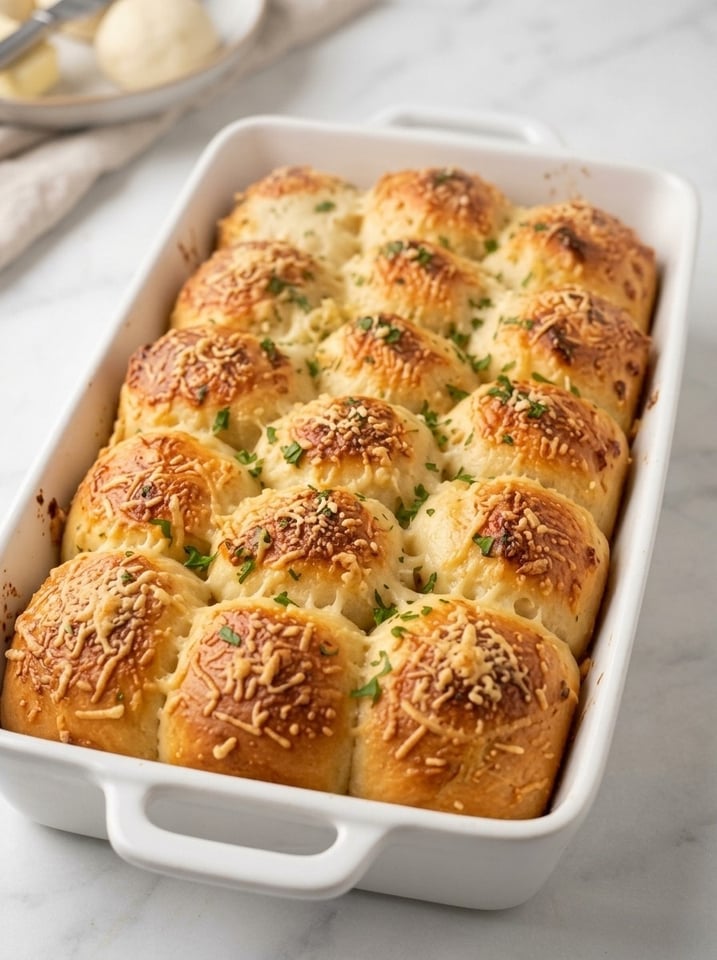
Garlic Parmesan Pull-Apart Bread: Buttery, Cheesy & Irresistible Homemade Recipe
Garlic Parmesan Pull-Apart Bread – Buttery, Cheesy & Easy Recipe
Meta description: Make soft, fluffy garlic Parmesan pull-apart bread at home. Garlic butter, fresh Parmesan and herbs in every bite. Step-by-step recipe, tips, storage and FAQs.
URL slug: garlic-parmesan-pull-apart-bread
Focus keyword: garlic Parmesan pull-apart bread
Secondary keywords: pull-apart bread recipe, garlic butter bread, cheesy garlic bread, homemade pull-apart bread, Parmesan garlic bread, easy yeast bread, garlic bread for pasta night, tear and share bread
Few things on a dinner table disappear as quickly as a warm, buttery loaf of garlic Parmesan pull-apart bread. It is soft, fluffy and loaded with savory garlic flavor, every piece is coated in fragrant garlic butter, and the top bakes up golden and cheesy while the inside stays wonderfully tender. Every pull reveals delicious layers made for sharing.
Whether you are serving it alongside pasta, soup, pizza or a family dinner, this homemade pull-apart bread is a guaranteed crowd-pleaser. The best part is the fun of it: you can tear off warm, buttery pieces straight from the pan, no knife required.
In this complete guide you will find the full recipe, an explanation of how the bread comes together, notes on every ingredient, troubleshooting help, creative variations, storage and reheating instructions, serving ideas and answers to the questions home bakers ask most. If you have never baked with yeast before, do not worry. The steps are simple, and the tips below will help you get a soft, fluffy result.
Why You’ll Love This Garlic Parmesan Pull-Apart Bread
This loaf has everything people love about garlic bread, plus the soft, pillowy texture of fresh homemade dough. Here is why it is worth making:
- Soft, fluffy and buttery. An enriched dough made with milk, egg and butter bakes into a tender, cloud-like crumb.
- Big garlic and cheese flavor. Fresh garlic, freshly grated Parmesan, parsley and Italian seasoning coat every layer.
- Made for sharing. The pull-apart format means everyone grabs a piece, which makes it ideal for family dinners, holidays and get-togethers.
- Simple, familiar ingredients. Flour, milk, yeast, butter, garlic and Parmesan are easy to find and affordable.
- Impressive but approachable. It looks like something from a bakery, yet the shaping is just rolling and cutting squares.
- The perfect side dish. It pairs beautifully with pasta, soup, salad, pizza, grilled meats and roasted vegetables.
- Easy to customize. Add mozzarella for a gooey version, or red pepper flakes for a little heat.
What Is Pull-Apart Bread?
Pull-apart bread, sometimes called monkey bread in its sweet form or tear-and-share bread, is a loaf made from many small pieces of dough baked together in one pan. The pieces are brushed or tossed with a flavored butter or filling, then arranged loosely so they bake into a single loaf that tears apart into individual soft pieces.
This savory version uses a classic yeast dough enriched with milk, egg and butter. After the first rise, the dough is rolled into a rectangle, brushed generously with garlic Parmesan butter, cut into squares and arranged in a pan. A short second rise makes the pieces puffy, and the bake turns the top golden brown. Because the garlic butter seeps between the layers, every piece is flavorful, not just the top.
Ingredients and Why Each One Matters
Knowing what each ingredient does helps you bake with confidence and fix problems if they appear.
All-Purpose Flour or Bread Flour (375 g / 3 cups)
Flour gives the dough its structure. All-purpose flour makes a soft, tender loaf, while bread flour has more protein and creates a slightly chewier, taller result. Either works well. Keep a little extra flour nearby for dusting and for adjusting the dough, but add it sparingly so the bread stays soft.
Warm Milk (180 ml / ¾ cup)
Milk adds richness, softness and a subtle sweetness, and it helps the crust brown. It should be comfortably warm to the touch, not hot, because excessive heat can damage the yeast.
Instant Yeast (7 g / 2¼ teaspoons)
Yeast is what makes the dough rise. Instant yeast is convenient and reliable. If you use active dry yeast instead, let it foam in the warm milk before continuing.
Granulated Sugar (25 g / 2 tablespoons)
A small amount of sugar feeds the yeast and adds a hint of flavor and browning. It will not make the bread taste sweet.
Egg (1 large, at room temperature)
The egg enriches the dough, adding tenderness, color and structure. Room temperature is easier to blend evenly into the dough.
Softened Unsalted Butter (45 g / 3 tablespoons)
Butter in the dough produces a soft, rich crumb. Make sure it is soft, not melted, so it incorporates smoothly while kneading.
Salt (1 teaspoon)
Salt controls the yeast and brings out the flavor of the bread. Do not skip it.
The Garlic Parmesan Butter
This is where the magic happens. The mixture combines melted unsalted butter (75 g / 5 tablespoons), 4–5 finely minced garlic cloves, about 60 g (⅔ cup) of freshly grated Parmesan, 2 tablespoons of chopped fresh parsley, ½ teaspoon of Italian seasoning and ¼ teaspoon of black pepper. Fresh garlic delivers the most delicious aroma, and freshly grated Parmesan melts and coats the bread better than many pre-grated varieties.
Optional Topping
A little extra grated Parmesan (about 25 g / ¼ cup), a sprinkle of chopped parsley and a pinch of red pepper flakes finish the loaf with extra flavor and color.
Garlic Parmesan Pull-Apart Bread Recipe
Prep Time: 25 minutes
Rising Time: 1 hour 30 minutes
Baking Time: 25–30 minutes
Total Time: Approximately 2 hours 25 minutes
Yield: 1 loaf, serving 6–8 people
Ingredients
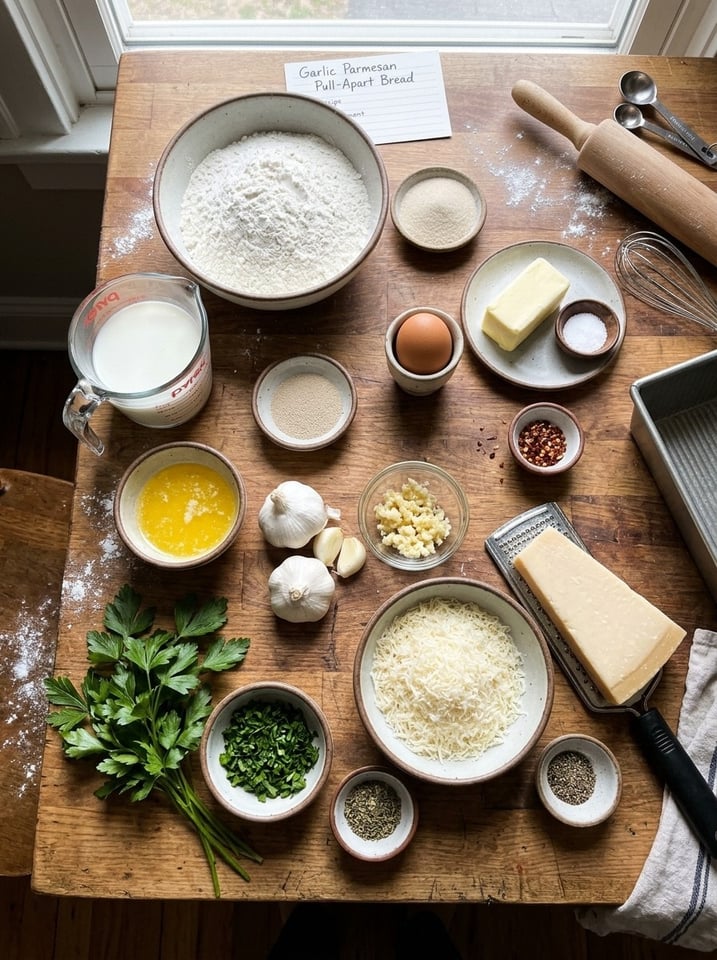
For the Bread Dough
- 375 g (3 cups) all-purpose flour or bread flour, plus a little extra if needed
- 180 ml (¾ cup) warm milk
- 7 g (2¼ teaspoons) instant yeast
- 25 g (2 tablespoons) granulated sugar
- 1 large egg, at room temperature
- 45 g (3 tablespoons) unsalted butter, softened
- 1 teaspoon salt
For the Garlic Parmesan Butter
- 75 g (5 tablespoons) unsalted butter, melted
- 4–5 garlic cloves, finely minced
- 60 g (about ⅔ cup) freshly grated Parmesan cheese
- 2 tablespoons fresh parsley, finely chopped
- ½ teaspoon Italian seasoning
- ¼ teaspoon black pepper
Optional Topping
- 25 g (¼ cup) extra grated Parmesan
- A little chopped fresh parsley
- A pinch of red pepper flakes
Instructions
1. Activate the yeast. In a large mixing bowl, combine the warm milk, sugar and instant yeast. Stir gently and let it sit for about 5 minutes. The milk should be comfortably warm, not hot. If using active dry yeast instead of instant yeast, allow it to foam before continuing.
2. Make the dough. Add the egg, softened butter, salt and flour to the yeast mixture. Mix until a shaggy dough forms. Transfer it to a lightly floured surface and knead for 8–10 minutes, or use a stand mixer with a dough hook for about 5–7 minutes. The dough should become smooth, soft and elastic. It may feel slightly tacky, but it should not stick heavily to your hands. Add extra flour sparingly if necessary.
3. Let the dough rise. Place the dough in a lightly greased bowl and turn it once to coat the surface. Cover with a clean kitchen towel or plastic wrap and let it rise in a warm place for about 60–90 minutes, or until doubled in size.
4. Prepare the garlic Parmesan butter. While the dough rises, combine the melted butter, minced garlic, grated Parmesan, chopped parsley, Italian seasoning and black pepper in a bowl. Mix well until the garlic and herbs are evenly distributed, then set aside. Freshly grated Parmesan melts and coats the bread beautifully, while fresh garlic gives the most delicious aroma.
5. Shape the pull-apart pieces. Once the dough has doubled, gently punch it down and transfer it to a lightly floured surface. Roll it into a rectangle approximately 12 × 16 inches (30 × 40 cm). Brush the surface generously with the garlic Parmesan butter mixture, reserving a little for the top. Cut the dough into small squares, approximately 2–3 inches (5–7 cm) wide.
6. Arrange the dough in the pan. Lightly grease a loaf pan or a round baking dish. Stack or arrange the dough squares loosely in the pan, allowing a little room for expansion. Sprinkle a little extra Parmesan between some of the layers for even more cheesy flavor. Cover the pan and let the shaped dough rise for another 25–35 minutes, until noticeably puffy.
7. Preheat the oven. Preheat your oven to 350°F (175°C) while the dough finishes its second rise. Brush the top of the bread with the remaining garlic butter. Sprinkle with extra Parmesan and a little parsley if desired.
8. Bake until golden. Bake for 25–30 minutes, until the top is golden brown and the bread is cooked through. If the top begins browning too quickly, loosely cover it with aluminum foil for the final 10 minutes. For the most reliable result, check that the center is fully baked. The internal temperature should reach approximately 190°F (88°C).
9. Add the final garlic butter. As soon as the bread comes out of the oven, brush the top with a little extra melted garlic butter if you have some left. Sprinkle with fresh parsley and a final dusting of Parmesan. Let the bread rest in the pan for about 5–10 minutes.
10. Pull apart and serve. Bring the bread to the table while it is still warm. Gently pull apart the soft, buttery pieces and enjoy the fragrant garlic, savory Parmesan and fluffy homemade dough. Serve immediately for the best texture and flavor.
Tips for Perfect Garlic Parmesan Pull-Apart Bread
These small details make a big difference in the final loaf.
- Use warm, not hot, milk. Excessive heat can damage the yeast and prevent the dough from rising properly.
- Knead until elastic. A smooth, stretchy dough helps create soft, fluffy bread. If you press the dough lightly and it springs back slowly, it is ready.
- Do not rush the rises. Let the dough become visibly puffy rather than relying only on the clock. A cooler kitchen takes longer, and a warm one is quicker.
- Use freshly grated Parmesan. It offers better flavor and texture than many pre-grated varieties.
- Distribute the butter evenly. Coat the dough well so every piece gets that irresistible garlic flavor, but save a little for brushing the top.
- Keep the pieces loosely arranged. This gives the dough space to expand and bake evenly.
- Avoid overbaking. Remove the bread once the center is cooked and the top is golden. A thermometer reading around 190°F (88°C) is a reliable guide.
- Make it extra cheesy. Add shredded mozzarella between the layers for stretchy, gooey cheese.
- Weigh your flour if you can. Too much flour is the most common reason enriched dough bakes up dry, and a scale keeps it accurate.
Troubleshooting: Common Problems and Easy Fixes
My dough did not rise. The most common causes are milk that was too hot or too cold, or yeast that is old. Check the expiration date, and make sure the milk feels comfortably warm. Also give the dough extra time in a warm, draft-free spot.
The bread turned out dense. The dough may have needed more kneading, more rising time, or too much flour may have been added. Knead until smooth and elastic, add extra flour only a little at a time, and let the dough puff up visibly before baking.
The top browned before the center cooked. Loosely cover the pan with aluminum foil for the final 10 minutes of baking, and check the center with a thermometer.
The garlic tasted harsh or burned. Mince the garlic finely so it distributes evenly, and brush it on as directed. If the top is browning quickly, use foil to protect it.
The pieces stuck together too tightly. A little room between the squares helps them bake evenly. Arrange them loosely rather than packing them down, and brush each layer well with butter.
The bread dried out. This usually means it was overbaked or too much flour was used. Pull it from the oven once the top is golden and the center is cooked, and brush with extra garlic butter while it is hot.
Variations to Try
Once you master the base recipe, it is easy to make it your own.
Extra Cheesy Mozzarella Pull-Apart Bread
Tuck shredded mozzarella between the layers before the second rise for gooey, stretchy pockets of cheese in every pull.
Spicy Garlic Parmesan Bread
Add a pinch of red pepper flakes to the garlic butter, not just the topping, for a gentle kick that pairs well with creamy pasta dishes.
Herb Lover’s Loaf
Increase the Italian seasoning and mix in other fresh herbs, such as chives or thyme, along with the parsley.
Roasted Garlic Version
For a milder, sweeter garlic flavor, swap some of the fresh garlic for roasted garlic. Mash it into the melted butter before brushing it on the dough.
Round Pull-Apart Loaf
Use a round baking dish instead of a loaf pan and arrange the squares in overlapping rings for a beautiful centerpiece that is ideal for parties.
Make-Ahead Option
Prepare the dough and garlic butter in advance, and plan your rising times around your schedule. The bread is at its absolute best served warm on the day it is baked.
Storage and Reheating Instructions
A little care keeps leftovers soft and flavorful.
- Room temperature: Store in an airtight container for up to 2 days.
- Refrigerator: Keep for up to 4–5 days, although refrigeration may make the bread dry out faster.
- Freezer: Wrap the fully cooled bread tightly and freeze for up to 2 months.
- Reheat: Warm individual pieces in the microwave for 10–15 seconds, or heat the loaf in a 325°F (165°C) oven for about 8–12 minutes until warm.
For best results, thaw frozen bread at room temperature before reheating, and consider covering it loosely with foil in the oven so the top does not over-brown.
Delicious Ways to Serve Garlic Parmesan Pull-Apart Bread
This bread goes with almost everything, and it is especially good with saucy, comforting meals.
- Pasta night: Serve alongside spaghetti, lasagna or creamy Alfredo pasta.
- Dipping: Pair with warm marinara sauce for dipping.
- Soup season: Enjoy with tomato soup, minestrone or creamy mushroom soup.
- Hearty mains: Serve alongside grilled chicken, steak or roasted vegetables.
- Extra cheesy: Add melted mozzarella for a cheesy variation.
- Light lunch: Serve with a fresh green salad for a simple, satisfying meal.
- Party appetizer: Set the pan in the center of the table and let everyone tear off their own piece.
Frequently Asked Questions
Can I use bread flour instead of all-purpose flour?
Yes. Both work. All-purpose flour gives a softer, more tender loaf, while bread flour produces a slightly chewier texture and a bit more height.
Can I use active dry yeast instead of instant yeast?
Yes. Dissolve it in the warm milk with the sugar and let it foam before adding the other ingredients. The rising time may be slightly longer.
Why does the milk need to be warm and not hot?
Yeast thrives in gentle warmth. If the milk is too hot, it can damage the yeast and prevent the dough from rising properly. It should feel comfortably warm to the touch.
Can I use pre-grated Parmesan?
You can, but freshly grated Parmesan has better flavor and melts and coats the bread more beautifully than many pre-grated varieties.
Can I use garlic powder instead of fresh garlic?
Fresh garlic gives the most delicious aroma and flavor, and it is recommended for this recipe. In a pinch, garlic powder can add flavor, but the taste will be different.
How do I know when the dough has doubled?
The dough should look visibly larger and puffy. If you press a finger gently into it, the indentation should fill back in slowly. Rely on how the dough looks, not only on the clock.
How do I know when the bread is done?
The top should be golden brown, and the center should be fully baked. The internal temperature should reach approximately 190°F (88°C).
Can I make this in a round pan?
Yes. A round baking dish works well, and the overlapping squares make a lovely centerpiece. A standard loaf pan works too.
How long does it keep?
Store it at room temperature in an airtight container for up to 2 days, in the refrigerator for 4–5 days, or freeze it for up to 2 months.
How do I reheat leftovers?
Warm individual pieces in the microwave for 10–15 seconds, or heat the loaf in a 325°F (165°C) oven for about 8–12 minutes until warm.
Can I add more cheese?
Absolutely. Shredded mozzarella between the layers makes the bread wonderfully stretchy and gooey.
Final Thoughts
This garlic Parmesan pull-apart bread is proof that homemade bread can be both simple and spectacular. With a soft, enriched dough, a fragrant garlic butter and plenty of freshly grated Parmesan, you get a warm, golden loaf that everyone wants a piece of. It is perfect alongside pasta, soup, pizza or a family dinner, and just as welcome as a party appetizer.
Set aside a little time for the dough to rise, brush on that garlic butter generously, and bake until golden. Then bring it to the table warm and let everyone pull off their own buttery, cheesy piece. Happy baking!
Print
Garlic Parmesan Pull-Apart Bread
Ingredients
For the Bread Dough
- 375 g (3 cups) all-purpose flour or bread flour, plus a little extra if needed
- 180 ml (¾ cup) warm milk
- 7 g (2¼ teaspoons) instant yeast
- 25 g (2 tablespoons) granulated sugar
- 1 large egg, at room temperature
- 45 g (3 tablespoons) unsalted butter, softened
- 1 teaspoon salt
For the Garlic Parmesan Butter
- 75 g (5 tablespoons) unsalted butter, melted
- 4–5 garlic cloves, finely minced
- 60 g (about ⅔ cup) freshly grated Parmesan cheese
- 2 tablespoons fresh parsley, finely chopped
- ½ teaspoon Italian seasoning
- ¼ teaspoon black pepper
Optional Topping
- 25 g (¼ cup) extra grated Parmesan
- A little chopped fresh parsley
- A pinch of red pepper flakes
Instructions
1. Activate the yeast. In a large mixing bowl, combine the warm milk, sugar and instant yeast. Stir gently and let it sit for about 5 minutes. The milk should be comfortably warm, not hot. If using active dry yeast instead of instant yeast, allow it to foam before continuing.
2. Make the dough. Add the egg, softened butter, salt and flour to the yeast mixture. Mix until a shaggy dough forms. Transfer it to a lightly floured surface and knead for 8–10 minutes, or use a stand mixer with a dough hook for about 5–7 minutes. The dough should become smooth, soft and elastic. It may feel slightly tacky, but it should not stick heavily to your hands. Add extra flour sparingly if necessary.
3. Let the dough rise. Place the dough in a lightly greased bowl and turn it once to coat the surface. Cover with a clean kitchen towel or plastic wrap and let it rise in a warm place for about 60–90 minutes, or until doubled in size.
4. Prepare the garlic Parmesan butter. While the dough rises, combine the melted butter, minced garlic, grated Parmesan, chopped parsley, Italian seasoning and black pepper in a bowl. Mix well until the garlic and herbs are evenly distributed, then set aside. Freshly grated Parmesan melts and coats the bread beautifully, while fresh garlic gives the most delicious aroma.
5. Shape the pull-apart pieces. Once the dough has doubled, gently punch it down and transfer it to a lightly floured surface. Roll it into a rectangle approximately 12 × 16 inches (30 × 40 cm). Brush the surface generously with the garlic Parmesan butter mixture, reserving a little for the top. Cut the dough into small squares, approximately 2–3 inches (5–7 cm) wide.
6. Arrange the dough in the pan. Lightly grease a loaf pan or a round baking dish. Stack or arrange the dough squares loosely in the pan, allowing a little room for expansion. Sprinkle a little extra Parmesan between some of the layers for even more cheesy flavor. Cover the pan and let the shaped dough rise for another 25–35 minutes, until noticeably puffy.
7. Preheat the oven. Preheat your oven to 350°F (175°C) while the dough finishes its second rise. Brush the top of the bread with the remaining garlic butter. Sprinkle with extra Parmesan and a little parsley if desired.
8. Bake until golden. Bake for 25–30 minutes, until the top is golden brown and the bread is cooked through. If the top begins browning too quickly, loosely cover it with aluminum foil for the final 10 minutes. For the most reliable result, check that the center is fully baked. The internal temperature should reach approximately 190°F (88°C).
9. Add the final garlic butter. As soon as the bread comes out of the oven, brush the top with a little extra melted garlic butter if you have some left. Sprinkle with fresh parsley and a final dusting of Parmesan. Let the bread rest in the pan for about 5–10 minutes.
10. Pull apart and serve. Bring the bread to the table while it is still warm. Gently pull apart the soft, buttery pieces and enjoy the fragrant garlic, savory Parmesan and fluffy homemade dough. Serve immediately for the best texture and flavor.