Garlic Parmesan Focaccia Bread
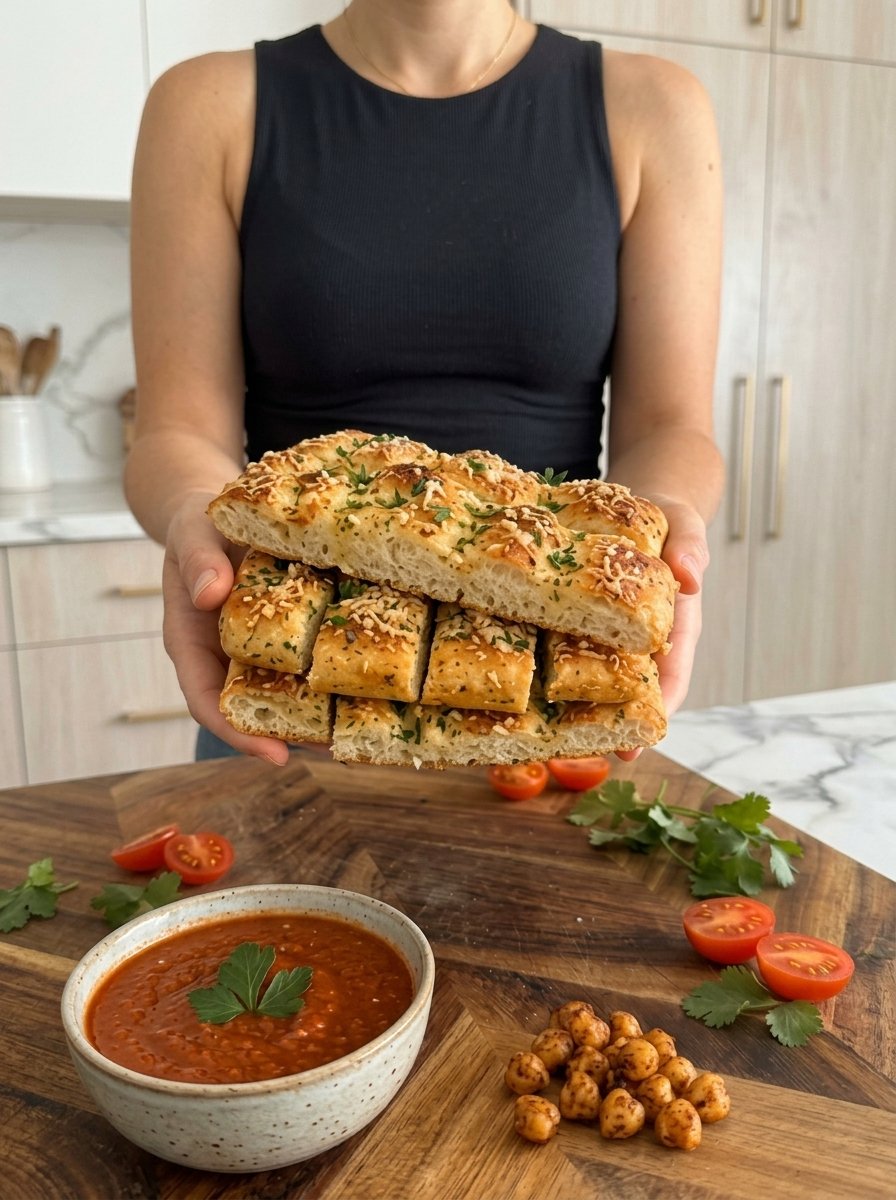
Garlic Parmesan Focaccia Bread: Soft, Airy and Golden with a Crisp Olive Oil Crust
Garlic Parmesan Focaccia Bread Recipe (Soft & Crispy)
Bake soft, airy garlic Parmesan focaccia with a golden olive oil crust, fragrant garlic and Italian herbs. Easy no-fuss recipe that serves 8 in about 2 hours.
Primary keyword: garlic Parmesan focaccia
Secondary keywords: garlic focaccia bread, easy focaccia recipe, homemade focaccia, Parmesan focaccia, focaccia for beginners, olive oil bread, sheet pan focaccia, focaccia dipping bread
Suggested URL slug: /garlic-parmesan-focaccia-bread
Some breads are so good that the whole kitchen goes quiet when they come out of the oven. Garlic Parmesan focaccia is one of them. The crust is golden and crisp where the olive oil has fried the edges, the inside is soft and wonderfully chewy, and the top is dotted with fragrant garlic, savory Parmesan and Italian herbs. Every bite is packed with flavor.
Better still, it is far easier than it looks. There is no complicated shaping, no scoring and no special equipment. You mix a sticky dough, knead it briefly, let it rise, stretch it into a pan, dimple it with your fingertips and bake. This focaccia is perfect for dipping in marinara sauce, serving alongside pasta, or enjoying warm straight from the oven.
In this guide you will find the full recipe, step-by-step instructions, ingredient notes, tips for the airiest crumb and crispiest crust, an important note on handling garlic in oil, troubleshooting help, variations, serving ideas, storage advice and answers to common questions. Whether you are a first-time bread baker or a seasoned one, this recipe will earn a regular spot in your rotation.
What Is Focaccia?
Focaccia is a flat, oven-baked Italian bread known for its olive-oil-rich, tender crumb and its signature dimpled surface. A basic focaccia dough contains flour, water, yeast, salt and olive oil. Just before baking, the baker presses fingertips into the dough to create the dimples, which collect pools of olive oil and any toppings. The result is a bread that is crisp and golden outside, soft and airy inside, and intensely flavorful.
Focaccia can be topped in countless ways, from simple coarse salt and rosemary to olives, tomatoes, onions and cheese. This recipe is a home-friendly, garlic-and-Parmesan version. It is not a strict reproduction of any single regional recipe, but it captures the key qualities of focaccia: lots of olive oil, a soft chewy interior and a flavorful, golden top.
Why You Will Love This Garlic Parmesan Focaccia
- Soft, airy and chewy inside. A well-hydrated dough and a proper rise create a light, open crumb.
- Golden, crisp crust. A generous coating of olive oil in the pan fries the bottom and edges until golden.
- Big savory flavor. Garlic, Parmesan, Italian seasoning and flaky salt make every bite delicious.
- Beginner friendly. The dough is forgiving, and the shaping is simply stretching and dimpling.
- Feeds a crowd. One 9 x 13-inch pan yields about 8 generous squares.
- Great with almost anything. Serve it with pasta, soup, salad or dipping sauces, or turn it into sandwiches.
- Simple ingredients. Most of what you need is already in your pantry.
Recipe Snapshot
- Prep time: 20 minutes
- Cook time: 25 to 30 minutes
- Total time: about 2 hours 15 minutes (including rising)
- Servings: 8
- Pan: 9 x 13-inch baking pan
- Oven temperature: 400°F (200°C)
Ingredients
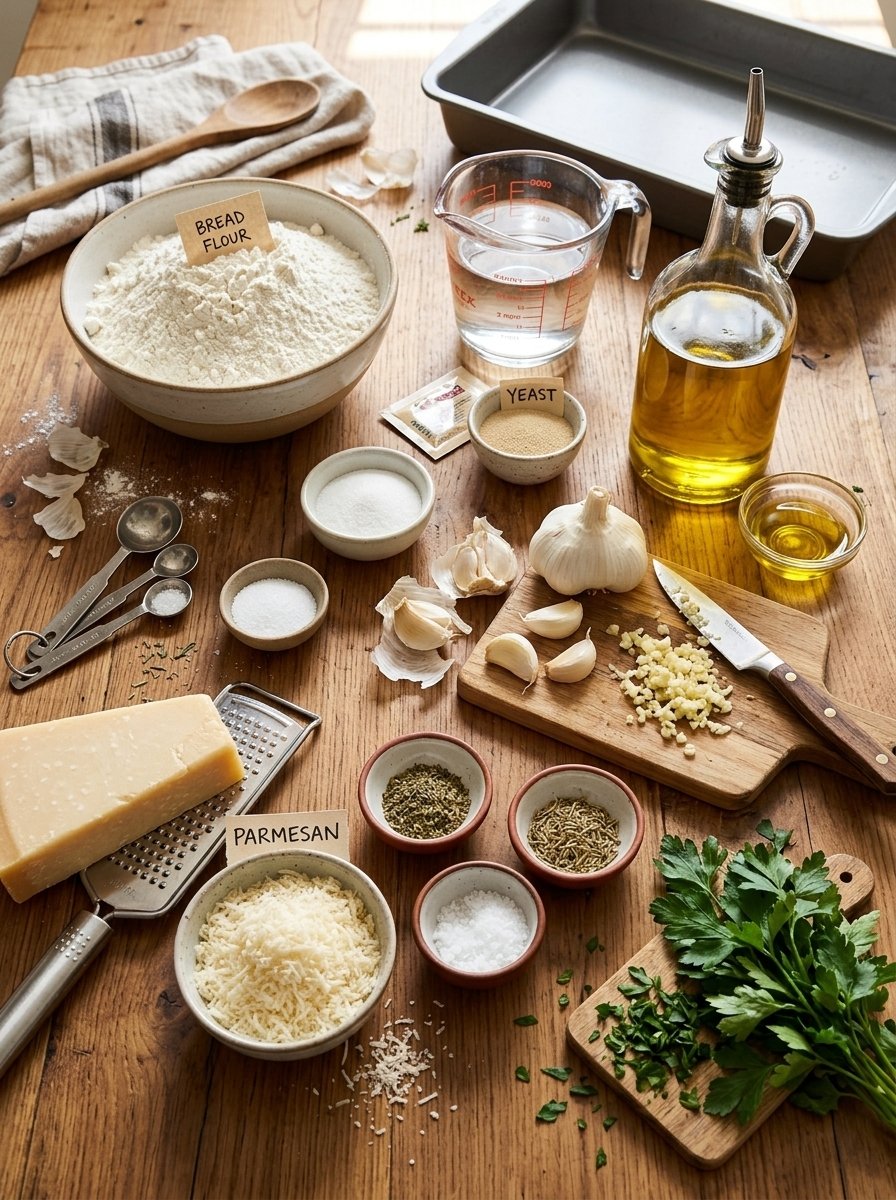
For the Dough
- 4 cups (500 g) bread flour or all-purpose flour
- 1¾ cups (420 ml) warm water
- 2¼ teaspoons (7 g) instant yeast
- 1 tablespoon sugar
- 2 teaspoons salt
- 2 tablespoons olive oil
For the Topping
- ¼ cup (60 ml) olive oil
- 4 cloves garlic, finely minced
- ½ cup (50 g) freshly grated Parmesan cheese
- 1 teaspoon dried Italian seasoning
- 1 teaspoon dried rosemary (optional)
- Flaky sea salt, to taste
- 2 tablespoons chopped fresh parsley (optional)
You will also need extra olive oil to coat the baking pan generously.
Ingredient Notes and Substitutions
Bread flour or all-purpose flour. Bread flour contains more protein, so it builds stronger gluten and tends to produce a chewier, taller focaccia. All-purpose flour gives a slightly softer, more tender result. Both work well. Weigh the flour when possible: 4 cups is 500 grams here. If you use measuring cups, spoon the flour in and level it off rather than scooping directly from the bag, which packs in too much flour.
Warm water. This dough is fairly wet, which is what creates the airy, open crumb. Use warm water, around 105°F to 115°F (about 40°C to 46°C). Water that is too hot can kill the yeast, and water that is too cool slows the rise.
Instant yeast. Instant yeast can be mixed in with the other ingredients. If you only have active dry yeast, you can use about the same amount, but let it sit in the warm water with the sugar for 5 to 10 minutes until foamy before continuing.
Sugar. A tablespoon feeds the yeast and promotes golden browning. It will not make the bread sweet.
Salt. Two teaspoons gives the dough good flavor and strengthens the gluten. Do not skip it, since focaccia tastes flat without enough salt.
Olive oil. Olive oil is the soul of focaccia. Use a good-quality extra virgin olive oil if you can, particularly for the topping and the pan. You will taste it in every bite.
Garlic. Fresh garlic gives the most vivid flavor. Mince it finely so it spreads evenly and is less likely to leave large burnt bits on top.
Parmesan. Freshly grated Parmesan melts, toasts and tastes better than pre-grated cheese, which often contains anti-caking agents. Use the finest holes of a grater for a light, even layer.
Italian seasoning and rosemary. Italian seasoning offers a blend of herbs for a rounded flavor. The rosemary is optional, but it adds the classic piney aroma associated with focaccia.
Flaky sea salt. A sprinkle on top adds a pleasant crunch and pops of salinity. Remember that Parmesan is salty too, so add it to taste.
Fresh parsley. Optional, but a handful of chopped parsley adds color and freshness at the end.
How to Make Garlic Parmesan Focaccia: Step by Step
Step 1: Mix the dough
In a large bowl, combine the warm water, yeast and sugar. Add the flour, salt and olive oil. Mix until a sticky dough forms. The dough will look shaggy and wet at first. That is normal and is exactly what gives focaccia its light, airy texture. Make sure there are no dry pockets of flour at the bottom of the bowl.
Step 2: Knead
Knead for 5 to 7 minutes until the dough becomes smooth and elastic. It should remain slightly tacky.
Use lightly oiled hands or a bench scraper, rather than a lot of extra flour, to manage the stickiness. If you have a stand mixer, a dough hook on medium-low speed works for the same amount of time. A good sign is that the dough begins to pull away from the sides of the bowl while still feeling soft and slightly tacky.
Step 3: First rise
Place the dough in a lightly oiled bowl, cover, and let rise for 60 to 90 minutes, until doubled in size. The time depends on the temperature of your kitchen. The dough should look puffy and airy, and a gently pressed finger should leave a dent that fills in slowly.
Step 4: Prepare the pan
Generously coat a 9 x 13-inch baking pan with olive oil. Do not be shy. The oil pools around and under the dough, frying the bottom and edges for a golden, crisp base and a rich flavor.
Step 5: Shape the dough
Transfer the dough to the pan and gently stretch it toward the edges. If it springs back, let it rest for 10 minutes before stretching again.
Use oiled fingertips and stretch the dough gently rather than pulling hard. If it keeps shrinking, the gluten is simply tight, and a short rest relaxes it. Turn the dough once in the oil so both sides are lightly coated. It does not need to reach every corner perfectly, because it will relax and spread further during the second rise.
Step 6: Second rise
Cover loosely and let rise for another 20 to 30 minutes, until puffy. The dough should look soft and pillowy, with visible bubbles. This second rise is essential for the light, airy interior.
Step 7: Prepare the topping
Mix the olive oil with the minced garlic and Italian seasoning. For a milder garlic flavor, briefly warm the garlic in the oil without browning it, then let it cool.
Warming the garlic gently in the oil softens its raw bite and mellows its flavor. Keep the heat low and stop as soon as the garlic becomes fragrant. Garlic that browns can turn bitter. Use the garlic oil right away.
Step 8: Dimple the dough
Preheat the oven to 400°F (200°C). Drizzle the garlic oil over the dough and press your fingertips deeply into the surface to create classic focaccia dimples. Press firmly enough that your fingertips reach nearly to the bottom of the pan, without tearing the dough. The dimples keep the surface from puffing up and hold pools of garlicky oil.
Step 9: Add Parmesan
Sprinkle the Parmesan, rosemary and flaky sea salt evenly over the top. Go easy on the flaky salt at first, since the cheese adds salt too, and you can always sprinkle a little more after baking.
Step 10: Bake
Bake for 25 to 30 minutes, until the focaccia is golden brown and the edges are crisp. Check at around 25 minutes. The top should be deeply golden and the cheese lightly toasted. If the top browns too fast, cover loosely with foil for the last few minutes.
Step 11: Finish and serve
Sprinkle with fresh parsley if desired. Let rest for a few minutes, slice into squares and serve warm. Run a thin spatula around the edges and slide it underneath to lift the focaccia out of the pan. Rest it briefly on a wire rack so the bottom stays crisp instead of steaming.
A Quick Note on Garlic and Olive Oil Safety
Garlic steeped in oil can pose a food safety risk if it is stored. Raw garlic in oil kept at room temperature, or even refrigerated for long periods, can create conditions in which harmful bacteria, including the type that causes botulism, can grow. For that reason, do not make the garlic oil far in advance. Prepare it just before using it, bake it straight into the focaccia, and discard any leftover garlic oil rather than storing it. Fully baked focaccia is a different situation, and the storage guidance below applies to the finished bread. This article offers general information and is not a substitute for guidance from food safety authorities.
Tips for the Best Garlic Parmesan Focaccia
- Don’t add too much flour. A slightly sticky dough helps create a light, airy crumb.
- Use plenty of olive oil. It gives focaccia its signature golden bottom and rich flavor.
- Avoid burning the garlic. Add it to the oil gently, keep it well coated and do not let it brown, so its flavor stays sweet and savory.
- For extra cheesy flavor. Sprinkle a little additional Parmesan over the bread during the final few minutes of baking.
- Let the dough get puffy. Underproofed dough bakes up dense, so wait until it looks pillowy before baking.
- Rest the dough if it springs back. A 10-minute rest relaxes the gluten and makes stretching easy.
- Dimple deeply. Press all the way down so the surface stays flat and the oil collects in the wells.
- Grate the cheese fresh. It melts and browns better than pre-grated.
- Use a metal or glass pan, well oiled. Dark metal pans give extra-crisp bottoms, so watch the color.
- Serve warm. Focaccia is at its best fresh from the oven.
Troubleshooting Common Focaccia Problems
My focaccia is dense. The dough may not have risen enough, or too much flour may have been added. Let the dough double in the first rise and get puffy in the second rise, and keep it slightly sticky.
The dough is too sticky to handle. This dough is meant to be sticky. Oil your hands and your work surface, and use a bench scraper. Adding a lot of flour will make the bread heavy.
The dough keeps shrinking back. Cover it and let it rest for 10 minutes, then stretch again with oiled fingertips.
It is not crispy on the bottom. Make sure the pan is generously oiled and that the oven is fully preheated. A pale metal pan may brown less, so bake until deeply golden.
The garlic burned. Garlic can burn on top of a hot loaf. Mince it finely, mix it into the oil so it is well coated and watch the focaccia in the last few minutes of baking. Covering the top loosely with foil helps if it is browning too fast.
The cheese burned. Parmesan darkens quickly. Use a light layer, and tent with foil if needed.
It is too salty. Parmesan and flaky salt both contribute sodium. Reduce the flaky salt next time.
The focaccia stuck to the pan. Use more oil, and loosen the edges with a spatula before lifting. Let it rest for a few minutes after baking.
The center is gummy. It may need a few more minutes in the oven, or it may have been cut too soon. Bake until deeply golden and rest it briefly before slicing.
The surface bubbled up unevenly. Dimple more deeply and evenly next time to keep the surface from puffing up in patches.
What to Serve with Garlic Parmesan Focaccia
With Pasta and Italian Dishes
Serve squares of focaccia alongside spaghetti, lasagna, baked ziti, chicken Parmesan or eggplant Parmesan. It is wonderful for soaking up sauce.
For Dipping
- Warm marinara sauce
- Olive oil and balsamic vinegar
- Whipped ricotta
- White bean dip or hummus
- Pesto
With Soups and Salads
Pair it with tomato soup, minestrone or a creamy vegetable soup. It also turns a simple Caesar, Caprese or green salad into a meal.
As Sandwiches
Slice the focaccia horizontally and fill it with mozzarella, tomato and basil, or with roasted vegetables, deli meats or grilled chicken. Lightly toast the cut sides to keep the sandwich from getting soggy.
As an Appetizer
Cut into small squares and serve warm on a board with olives, cheese and cured meats for an effortless party platter.
Delicious Variations
Once you are comfortable with the base recipe, try these ideas. They go beyond the original recipe, so treat them as experiments and adjust to taste.
- Tomato and basil: Press halved cherry tomatoes into the dimples and finish with fresh basil after baking.
- Olive focaccia: Add sliced olives to the dimples before baking.
- Caramelized onion: Top with soft, caramelized onions.
- Cheesy mozzarella: Add a little shredded mozzarella with the Parmesan, watching closely so it does not burn.
- Spicy: Sprinkle a pinch of red pepper flakes over the top.
- Lemon and herb: Add lemon zest and fresh thyme or oregano after baking.
- Roasted garlic: Use soft roasted garlic cloves instead of raw minced garlic for a sweeter, mellower flavor.
- Partial whole wheat: Replace a small portion of the flour with whole wheat flour for a nuttier taste, adding a little extra water if the dough feels stiff.
Make-Ahead, Storage and Freezing
Make-ahead dough: After mixing and kneading, you can let the dough rise slowly in the refrigerator, covered, for several hours or overnight. This develops deeper flavor. Allow it to come closer to room temperature and become puffy before shaping and baking, and expect the timing to differ from the recipe.
Room temperature: Focaccia is best on the day it is baked. Once cooled, store leftovers loosely wrapped or in a paper bag for 1 to 2 days. Airtight storage keeps the crumb soft, though the crust will lose its crispness.
Refrigerator: Wrapped leftovers can be refrigerated for a few days, but the bread may dry out faster, so reheat before serving.
Freezer: Cut cooled focaccia into squares, wrap well and freeze for about 2 to 3 months. Thaw at room temperature or warm directly from the freezer.
Reheating: Warm squares in a 350°F (175°C) oven for about 8 to 10 minutes, until the crust crisps and the inside is warm. A hot skillet also revives the bottom nicely.
Nutrition Overview
Exact nutrition depends on your ingredients, how much oil stays in the pan and how you cut the focaccia. As a rough estimate, one of 8 servings may provide somewhere around 330 to 380 calories, mostly from carbohydrates and olive oil, with some protein from the flour and Parmesan. For precise numbers, enter your own ingredients into a nutrition calculator. This information is general and not medical or dietary advice.
Can You Make It Vegan, Dairy-Free or Gluten-Free?
Dairy-free or vegan: The dough contains no dairy or eggs. The only dairy ingredient is the Parmesan topping, which you can omit or replace with a plant-based Parmesan-style topping or nutritional yeast.
Gluten-free: This recipe relies on wheat gluten for structure and is not gluten-free as written. A gluten-free focaccia generally needs a different flour blend and method, so use a recipe developed for that purpose.
Lower sodium: Reduce or omit the flaky sea salt and use a little less Parmesan.
Frequently Asked Questions
Can I use all-purpose flour instead of bread flour?
Yes. All-purpose flour gives a slightly softer, more tender crumb. Bread flour gives a chewier, taller focaccia.
Why is the dough so sticky?
Focaccia dough is high in water, which creates the airy interior. Use oiled hands and avoid adding too much flour.
Do I need to knead the dough?
This recipe calls for a 5 to 7 minute knead to build structure. The dough should become smooth and elastic but remain slightly tacky.
Can I use a different pan size?
A 9 x 13-inch pan gives a medium-thick focaccia. A smaller pan makes a thicker loaf that may need extra baking time, while a larger pan makes it thinner and crisper.
Can I use pre-minced garlic from a jar?
Fresh garlic gives the best flavor. Jarred garlic works in a pinch, but the taste is usually milder and sometimes a bit sharper.
How do I keep the garlic from burning?
Mince it finely, mix it into the oil so it is well coated, avoid browning it when warming and watch the loaf during the final minutes of baking.
Can I use dried garlic instead?
Garlic powder is a convenient substitute and is less likely to burn. Use a smaller amount, about 1 teaspoon, and adjust to taste.
Can I use active dry yeast?
Yes. Dissolve it in the warm water with the sugar and wait until foamy before adding the other ingredients.
How do I know when the focaccia is done?
The top should be deep golden brown, the edges crisp and the cheese lightly toasted.
Can I freeze focaccia?
Yes. Wrap squares well and freeze for a couple of months. Reheat in the oven to refresh the crust.
Why is my focaccia flat?
The yeast may be weak, the dough may not have risen enough or the pan may be too large. Check that the yeast is fresh, and let the dough become puffy before baking.
Can I double the recipe?
Yes, bake it in two pans, or use a half sheet pan. Baking time may change depending on thickness, so check for deep golden color.
Final Thoughts
This garlic Parmesan focaccia bread proves that a showstopping loaf does not require advanced skills. With a sticky, forgiving dough, plenty of olive oil and a simple topping of garlic, Parmesan and herbs, you get a bread that is soft and airy inside with a golden, crisp crust and big savory flavor.
Remember the essentials: keep the dough slightly sticky, use plenty of olive oil, let the dough become puffy before baking, dimple deeply, handle the garlic gently so it does not burn and use the garlic oil right away. Serve the focaccia warm with marinara, pasta, soup or simply a little extra olive oil.
If you try it, leave a comment and tell us how you served your focaccia.