
High-Protein Beef Lasagna
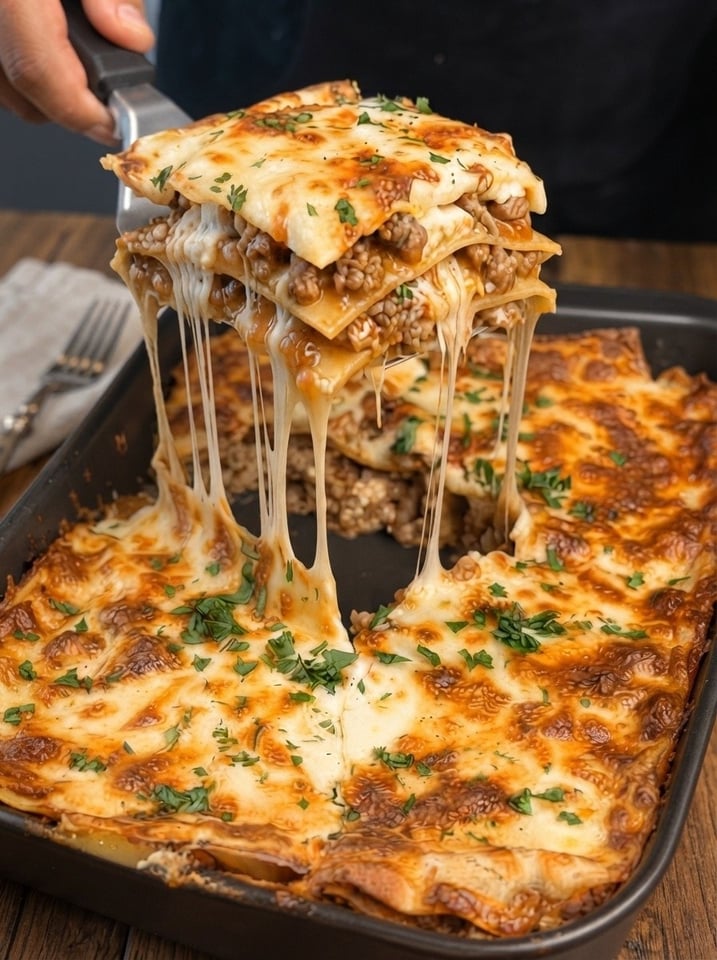
High-Protein Beef Lasagna: The Ultimate Comforting Family Dinner 🧀🔥
Few dishes deliver the same level of comfort as a classic beef lasagna, and this High-Protein Beef Lasagna takes that timeless favorite and makes it even more satisfying. Layers of hearty, seasoned lean beef marinara sauce are stacked between tender noodles, a creamy ricotta cheese filling, and generous amounts of melted mozzarella and Parmesan. The result is a rich, protein-packed casserole that’s as nourishing as it is indulgent — the kind of dish that brings the whole family to the table.
What sets this lasagna apart is its focus on lean ground beef and a generous cheese filling that delivers plenty of protein alongside all that classic Italian-American comfort. It’s a dish that feels like a weekend labor of love but is actually simple enough to make any night of the week with a little planning. Whether you’re cooking for a family dinner, meal prepping for the week ahead, or bringing a dish to a potluck, this lasagna is guaranteed to be a hit.
In this guide, you’ll find a full breakdown of why this recipe works so well, step-by-step instructions for building the perfect lasagna, plus tips, variations, and answers to the most common questions people have about making lasagna at home.
Why This High-Protein Beef Lasagna Recipe Works
Lasagna has a reputation for being time-consuming and a little finicky, but this recipe strikes the perfect balance between depth of flavor and approachable technique.
The foundation of the dish is a rich beef marinara sauce, built by browning lean ground beef with onion and garlic, then simmering it with marinara sauce, crushed tomatoes, and a blend of Italian seasoning, basil, garlic powder, salt, and pepper. Simmering the sauce for 10 to 15 minutes allows the flavors to meld together and thicken slightly, creating a robust, savory base for the lasagna.
The cheese filling is where a lot of the protein and creaminess comes from. Combining ricotta cheese with an egg and Parmesan creates a filling that’s rich but holds its shape well once baked, rather than becoming watery or runny. The egg acts as a binder, helping the ricotta layer set into a cohesive, sliceable texture rather than oozing out when the lasagna is cut.
Layering is key to a well-balanced lasagna, and this recipe follows a tried-and-true method: a thin layer of sauce on the bottom of the dish to prevent sticking, followed by noodles, ricotta mixture, more sauce, and mozzarella, repeated until the dish is full. Finishing with a generous layer of mozzarella and Parmesan on top ensures that beautiful golden, bubbly cheese crust that makes lasagna so irresistible straight out of the oven.
Using lean ground beef keeps the protein content high while managing excess grease, making this a heartier, more protein-forward take on a classic comfort food dish without sacrificing any of the richness or flavor people love about traditional lasagna.
Ingredients You’ll Need
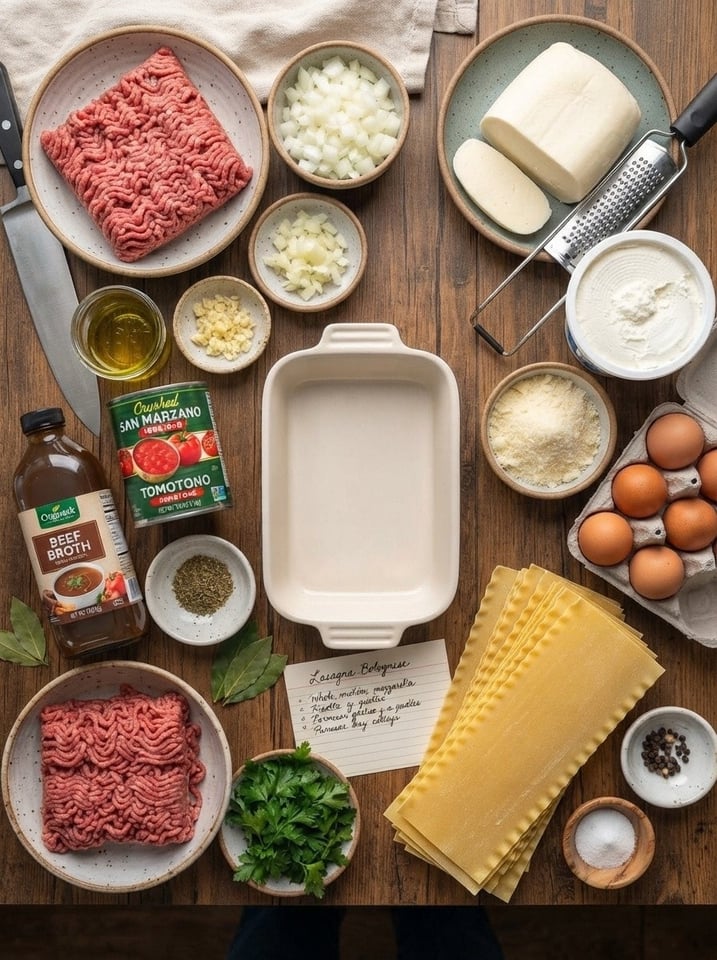
This recipe comes together in three main components: the beef sauce, the cheese filling, and the noodles and cheese for layering.
For the beef sauce:
- 1½ lbs lean ground beef
- 1 small onion, finely diced
- 3 cloves garlic, minced
- 24 oz marinara sauce
- 1 can (14.5 oz) crushed tomatoes
- 1 teaspoon Italian seasoning
- 1 teaspoon dried basil
- ½ teaspoon garlic powder
- ½ teaspoon black pepper
- ½ teaspoon salt
For the cheese filling:
- 15 oz ricotta cheese
- 1 large egg
- ½ cup grated Parmesan
- 1 teaspoon Italian seasoning
- ½ teaspoon garlic powder
- ¼ teaspoon black pepper
For the lasagna:
- 12 lasagna noodles
- 2½ cups shredded mozzarella
- ½ cup grated Parmesan
- Fresh parsley or basil, for garnish
Ingredient Notes and Substitutions
Lean ground beef: Using lean ground beef (typically 90% lean or higher) keeps the sauce hearty and protein-rich without excessive grease. If you’d like to boost the protein content even further, ground beef can be mixed with lean ground turkey, or you can use an extra-lean variety.
Marinara sauce and crushed tomatoes: Using both a prepared marinara sauce and canned crushed tomatoes creates a sauce with great depth and a slightly chunky, hearty texture. Choose a good-quality marinara for the best flavor, since it forms the backbone of the dish.
Ricotta cheese: Whole-milk ricotta provides the creamiest texture, though part-skim ricotta can be used for a slightly lighter filling. For an even higher-protein filling, some cooks substitute a portion of the ricotta with cottage cheese blended smooth, which boosts protein while maintaining a similar creamy texture.
Lasagna noodles: Traditional lasagna noodles are used here and cooked until just tender before assembling. No-boil noodles can be substituted, though you may need to add a bit of extra sauce or liquid to the layers to ensure they cook through properly, since they rely on moisture from the sauce to soften during baking.
Mozzarella and Parmesan: This combination provides the classic gooey, stretchy cheese pull along with a sharper, nutty flavor from the Parmesan. Using freshly shredded cheese, rather than pre-shredded bagged cheese, will give you a smoother melt.
Step-by-Step Instructions
Step 1: Cook the Beef
Preheat your oven to 375°F (190°C). Heat a large skillet over medium-high heat and add the ground beef along with the diced onion. Cook, breaking the beef apart with a spatula as it browns, until the meat is fully cooked through and the onion has softened, typically about 6 to 8 minutes. If there’s excess grease in the pan after cooking, drain it off to keep the sauce from becoming too oily.
Step 2: Build the Marinara Sauce
Add the minced garlic to the skillet with the beef and onion, and cook for about 30 seconds, just until fragrant. Be careful not to let the garlic burn, as it can turn bitter quickly.
Stir in the marinara sauce, crushed tomatoes, Italian seasoning, dried basil, garlic powder, salt, and black pepper. Reduce the heat slightly and let the sauce simmer for 10 to 15 minutes, stirring occasionally. This simmering time allows the flavors to develop and the sauce to thicken slightly, which helps prevent a watery lasagna later on.
Step 3: Prepare the Cheese Filling
While the sauce simmers, prepare the cheese filling. In a mixing bowl, combine the ricotta cheese, egg, Parmesan, Italian seasoning, garlic powder, and black pepper. Stir until the mixture is smooth and well combined. The egg helps bind the ricotta so that it sets properly during baking, giving you clean, structured layers when the lasagna is sliced.
Step 4: Cook the Noodles
Bring a large pot of salted water to a boil and cook the lasagna noodles according to the package directions, until just tender (avoid overcooking, as they’ll continue to soften slightly during baking). Drain the noodles and lay them flat on a sheet of parchment paper or a clean kitchen towel so they don’t stick together while you assemble the rest of the dish.
Step 5: Layer the Lasagna
Spread a thin layer of the beef sauce across the bottom of a 9×13-inch baking dish — this prevents the noodles from sticking to the pan and adds flavor to the very first layer.
Place a layer of noodles over the sauce, followed by a layer of the ricotta cheese mixture, spread evenly. Add another layer of beef sauce over the ricotta, followed by a sprinkle of shredded mozzarella. Repeat these layers — noodles, ricotta, sauce, mozzarella — until all the ingredients are used, typically resulting in three to four layers depending on the size of your dish.
Step 6: Add the Final Cheese Layer
Once all the layers are assembled, finish the top of the lasagna with a generous layer of shredded mozzarella and grated Parmesan. This top layer is what creates that iconic golden, bubbling cheese crust once baked.
Step 7: Bake to Golden, Bubbly Perfection
Cover the baking dish loosely with foil, making sure it doesn’t touch the cheese on top, and bake for 30 minutes. This covered baking period allows the lasagna to heat through evenly without the top layer of cheese burning.
After 30 minutes, remove the foil and continue baking for another 10 to 15 minutes, until the cheese on top is fully melted, golden in spots, and bubbling around the edges.
Step 8: Rest and Serve
Once out of the oven, resist the urge to cut into the lasagna right away. Let it rest for 10 to 15 minutes before slicing. This resting period is crucial — it allows the layers to set, making it much easier to cut clean, structured slices rather than having everything slide apart on the plate.
Garnish with freshly chopped parsley or basil before serving warm.
What to Serve with High-Protein Beef Lasagna
Lasagna is a hearty, satisfying main dish on its own, but pairing it with the right sides can round out the meal beautifully.
- Garlic bread: A classic pairing that’s perfect for soaking up any extra sauce on the plate.
- Simple green salad: A crisp salad with a light vinaigrette helps balance the richness of the lasagna.
- Roasted vegetables: Roasted zucchini, broccoli, or asparagus add color and nutrients alongside the hearty pasta dish.
- Steamed green beans: A light, simple side that complements the richness of the lasagna without competing with it.
- Caprese salad: Fresh tomatoes, mozzarella, and basil echo the flavors in the lasagna while adding a refreshing, light contrast.
Tips for the Best High-Protein Beef Lasagna
Don’t skip draining excess grease. Even with lean ground beef, some fat will render out during cooking. Draining this off before adding the sauce ingredients helps prevent a greasy final dish.
Let the sauce simmer long enough. Rushing the simmering step can result in a thinner, less flavorful sauce. Giving it the full 10 to 15 minutes allows the flavors to concentrate and the sauce to thicken to the right consistency for layering.
Use freshly shredded cheese. Pre-shredded cheese often contains anti-caking agents that can affect how smoothly it melts. Shredding your own mozzarella and Parmesan will give you a creamier, more cohesive melt.
Let the lasagna rest before cutting. This is one of the most important steps for achieving clean slices. Cutting into the lasagna too soon will cause the layers to slide apart and the filling to spill out.
Cover with foil for the first part of baking. This helps the lasagna heat through evenly without the top layer of cheese over-browning or drying out before the inside is fully cooked.
Consider assembling in advance. Lasagna is a great make-ahead dish. You can assemble it a day in advance, refrigerate it, and bake it the next day, which can also help the flavors meld even further.
Recipe Variations to Try
This recipe serves as an excellent base for a variety of delicious variations.
Spinach and Beef Lasagna: Stir a few cups of fresh chopped spinach or thawed, drained frozen spinach into the ricotta filling for added nutrients and flavor.
Turkey Lasagna: Substitute lean ground turkey for the beef for a slightly lighter version of the dish while keeping the protein content high.
Extra Veggie Lasagna: Add layers of sautéed mushrooms, zucchini, or bell peppers between the noodle layers for extra texture and nutrition.
Spicy Arrabbiata Lasagna: Add red pepper flakes to the beef sauce, or use a spicy arrabbiata-style marinara, for a lasagna with a bit of a kick.
Cottage Cheese Swap: For an even higher-protein filling, blend cottage cheese until smooth and use it in place of some or all of the ricotta.
Three-Cheese Version: Add a layer of provolone or fontina cheese between the mozzarella layers for extra depth of flavor and an even more indulgent, cheesy result.
How to Store and Reheat Leftovers
Lasagna is well known for tasting just as good, if not better, the next day, making it a fantastic option for leftovers and meal prep.
Refrigerating: Store leftover lasagna in an airtight container, or tightly cover the baking dish, and refrigerate for up to 4–5 days.
Freezing: Lasagna freezes exceptionally well, either as a whole dish or in individual portions. Wrap tightly in plastic wrap and foil, and freeze for up to 3 months. Thaw overnight in the refrigerator before reheating for the best texture.
Reheating: Reheat individual portions in the microwave for a quick meal, or reheat larger portions in the oven at 350°F (175°C), covered with foil, until warmed through, about 20–25 minutes. Reheating in the oven helps maintain the texture of the noodles and prevents the cheese from becoming rubbery.
Frequently Asked Questions
Can I make this lasagna ahead of time?
Yes, this lasagna is a great make-ahead dish. You can fully assemble it, cover tightly, and refrigerate for up to 24 hours before baking. You may need to add a few extra minutes to the baking time if starting from cold.
Can I use no-boil lasagna noodles?
Yes, no-boil noodles can be used in place of traditional noodles. Since they rely on moisture from the sauce to cook through, you may want to add a small amount of extra sauce or a splash of water to ensure they soften fully during baking.
How do I keep my lasagna from being watery?
Watery lasagna is often the result of excess liquid from the ricotta filling or sauce. Simmering the sauce until slightly thickened, and using well-drained ricotta, can help prevent this. Letting the lasagna rest before cutting also allows excess liquid to be reabsorbed into the layers.
Can I boost the protein even further?
Yes, you can increase the protein content by adding cottage cheese to the ricotta filling, using extra-lean ground beef, or mixing in a scoop of unflavored protein powder into the sauce (though this is a less common approach and may slightly alter the flavor).
Is this recipe freezer-friendly?
Absolutely. This lasagna freezes well both before and after baking, making it an excellent option for meal prepping or preparing meals in advance for busy weeks.
Final Thoughts
High-Protein Beef Lasagna brings together everything people love about classic comfort food — hearty beef marinara sauce, creamy ricotta, and layers of melted, bubbly cheese — while offering a heartier, more protein-focused take on the traditional dish. It’s a recipe that’s satisfying enough for a special family dinner, yet practical enough for meal prepping or freezing for busy weeknights ahead.
With its rich layers of flavor and comforting, cheesy finish, this lasagna is the kind of dish that brings everyone back for seconds. Once you try this version, it’s likely to become a permanent favorite in your recipe collection.