
Red Lentil Quinoa Bread
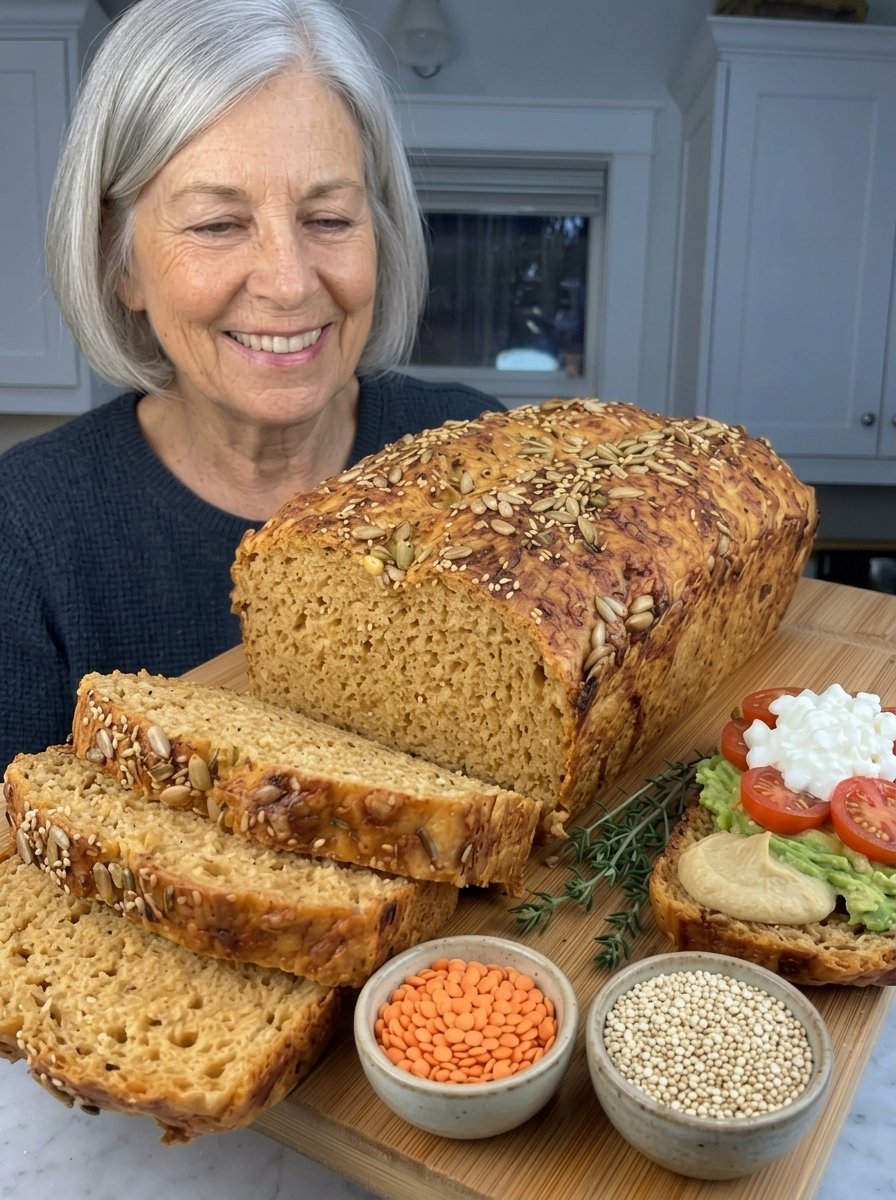
Red Lentil Quinoa Bread (Gluten-Free): An Easy, High-Protein Loaf
If you’ve been searching for a gluten-free bread that doesn’t taste like cardboard, crumble into dust, or cost a small fortune at the store, this red lentil quinoa bread is worth trying. It’s hearty, wholesome, and naturally gluten-free. It uses just a handful of pantry ingredients and a blender. There’s no flour, no yeast, no proofing, and no kneading.
Red lentils and quinoa blend into a smooth batter that bakes into a tender loaf with a lightly nutty flavor and a soft crumb. It’s sturdy enough for sandwiches, toasts up well, and tastes great with both sweet and savory toppings.
In this guide, you’ll find the full recipe, the reasons it works, ingredient notes, substitutions, troubleshooting tips, storage advice, serving ideas, and answers to common questions.
Why You’ll Love This Gluten-Free Lentil Quinoa Bread
It’s naturally gluten-free. The bread relies on lentils, quinoa, and eggs for structure instead of wheat, barley, or rye. If you avoid gluten, you can enjoy a proper slice of toast again. (If you’re cooking for celiac disease, always check that your lentils and quinoa are labeled gluten-free, since cross-contact can happen during processing.)
It’s made in a blender. Soak, blend, pour, bake. There’s no mixer, no dough hook, and no rising time.
It’s protein- and fiber-rich. Lentils and quinoa are both known for their protein and fiber, and Greek yogurt and eggs add more. A slice is more filling than many store-bought gluten-free breads, which are often made mostly from starches.
It uses simple ingredients. You probably have most of them already: red lentils, quinoa, eggs, Greek yogurt, olive oil, baking powder, and a few seasonings.
It’s versatile. The savory seasoning works with breakfast toppings, lunch sandwiches, and dinner sides alike.
It’s good for meal prep. Bake one loaf, slice it, and you have bread for the week.
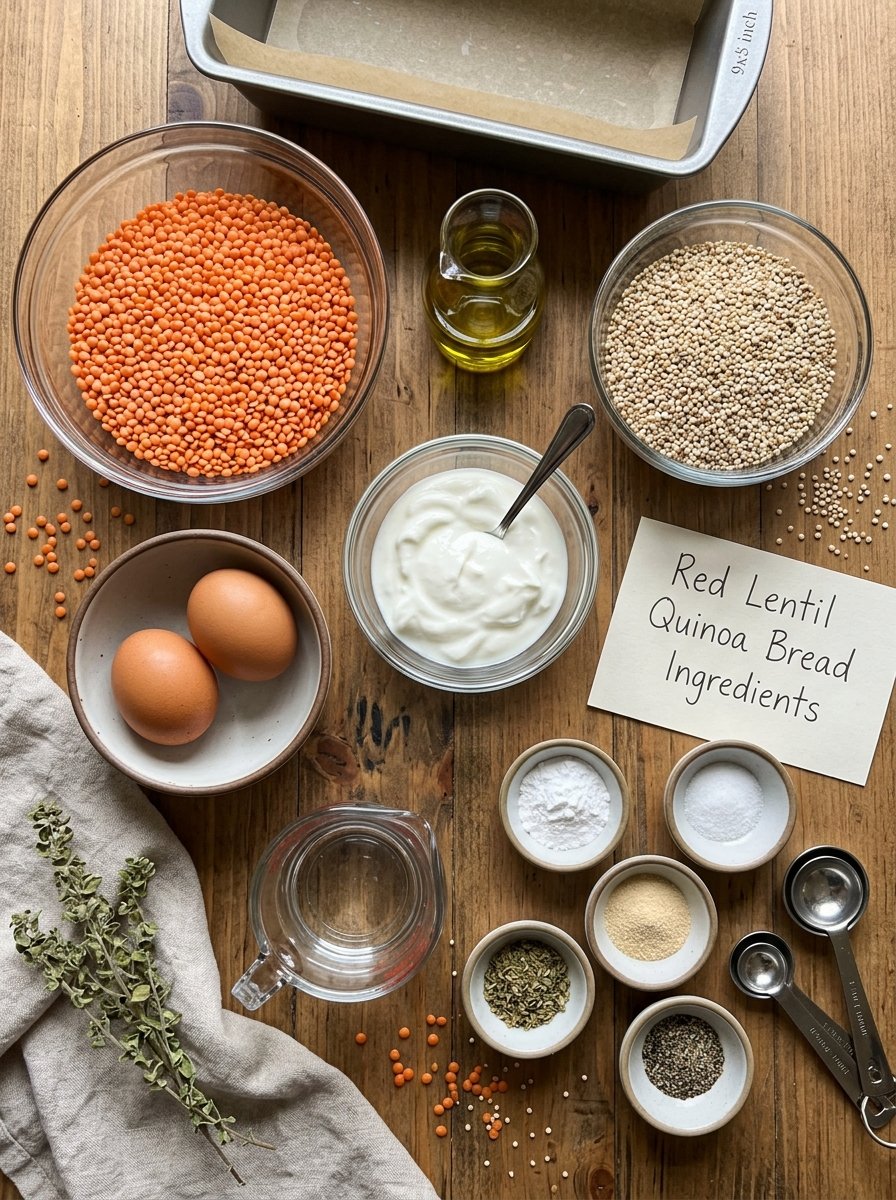
Ingredients
- 1 cup dry red lentils
- ¾ cup uncooked quinoa
- 2 large eggs
- ½ cup plain Greek yogurt
- 2 tbsp olive oil
- 1 tsp baking powder
- ½ tsp salt
- ½ tsp garlic powder
- ½ tsp dried oregano
- ¼ tsp black pepper
- 2–4 tbsp water, as needed
Ingredient Notes: What Each One Does
Knowing why each ingredient is in the loaf makes it easier to adapt the recipe and fix problems.
Red Lentils
Red lentils are the base of the bread. They’re split and skinless, so they soften quickly and blend into a very smooth, creamy batter. Brown or green lentils have tougher skins and produce a grainier, earthier loaf, so red (or yellow) lentils are the best choice here. They also have a mild flavor that won’t overpower the bread.
Quinoa
Quinoa adds body, a slightly nutty taste, and a pleasant texture. Rinsing it well matters because quinoa has a natural coating that can taste bitter or soapy. White, red, and tricolor quinoa all work, though white gives the lightest color.
Eggs
The eggs bind the batter and give it structure as it bakes. Without a gluten network, eggs are what keep the loaf from falling apart when sliced.
Plain Greek Yogurt
Greek yogurt adds moisture, a gentle tang, and tenderness. Choose plain, unsweetened yogurt. Full-fat gives the softest crumb, but low-fat works too.
Olive Oil
Olive oil keeps the bread moist and adds richness. It also helps the slices toast evenly and prevents dryness.
Baking Powder
Baking powder gives the loaf a little lift. Since there’s no yeast, this is the only leavening agent, so make sure it’s fresh. Old baking powder is one of the most common reasons for dense gluten-free quick breads.
Seasonings
Salt, garlic powder, oregano, and black pepper turn a plain legume loaf into a savory, flavorful bread. Don’t skip the salt. Lentils and quinoa are mild and need seasoning to taste like bread.
How to Make Red Lentil Quinoa Bread
Step 1: Soak the Lentils and Quinoa
Rinse the red lentils and quinoa thoroughly under cold running water. Place them in separate bowls and cover each with plenty of water. Let the lentils soak for 3–4 hours and the quinoa for at least 2 hours. Drain both very well.
Soaking softens the grains so your blender can make a smooth batter. It also helps reduce any grittiness in the finished bread. Using separate bowls lets you time each one properly, since the lentils need a little longer.
Step 2: Blend the Batter
Add the soaked lentils, quinoa, eggs, Greek yogurt, olive oil, baking powder, salt, garlic powder, oregano, and black pepper to a high-speed blender. Blend until smooth and thick. If the blender struggles, add water 1 tablespoon at a time, up to 4 tablespoons, only as needed.
The batter should be thick and pourable, similar to a heavy pancake batter or thick cake batter. If it’s too thin, the loaf can turn out gummy. If it’s too thick, the blades won’t catch it.
Step 3: Prepare the Pan
Preheat the oven to 350°F (175°C). Line a 9×5-inch loaf pan with parchment paper and lightly grease it. Leaving a little parchment hanging over the sides makes it easy to lift the loaf out later.
Step 4: Add the Batter
Pour the batter into the prepared pan and smooth the top with a spatula. Sprinkle with a few quinoa seeds or sesame seeds if you like, for a bakery-style finish.
Step 5: Bake
Bake for 40–45 minutes, until the loaf is firm, lightly golden, and a toothpick inserted into the center comes out clean. Ovens vary, so start checking at 40 minutes. If the top browns too quickly, loosely tent the pan with foil.
Step 6: Cool Completely
Let the bread cool in the pan for 10–15 minutes, then transfer it to a wire rack. Allow it to cool completely before slicing.
This step matters more than it sounds. Gluten-free breads finish setting as they cool. Slicing too early can leave the center looking gummy and the slices falling apart.
Step 7: Serve
Slice and enjoy toasted with avocado, hummus, cottage cheese, eggs, fresh vegetables, or your favorite sandwich fillings.
Optional Savory Variation
For extra flavor, add ½ tsp onion powder, ½ tsp smoked paprika, and 2 tbsp grated Parmesan to the blender. You can also fold in chopped fresh herbs before baking. Rosemary, thyme, chives, and parsley all work well.
Pro Tips for the Best Texture
Drain thoroughly. Excess water is the number one cause of a gummy loaf. After soaking, let the lentils and quinoa sit in a fine-mesh strainer for several minutes and shake out the extra water.
Blend until truly smooth. Any visible bits of quinoa or lentil will stay chewy after baking. A high-speed blender works best. If yours is less powerful, blend in short bursts and scrape down the sides.
Add water sparingly. Start with none and add only what the blades need. Thick batter makes a better loaf than thin batter.
Don’t skip the parchment. Legume-based batters can stick. Parchment plus a light grease means clean release.
Cool fully before cutting. For the cleanest slices, allow the loaf to cool completely before cutting. Use a serrated knife and a gentle sawing motion.
Toast the slices. Toasting gives the bread a crisp edge and a more bread-like texture. .
Troubleshooting Common Problems
My bread is gummy in the middle. The batter may have been too wet, the lentils and quinoa may not have been drained well, or the loaf was cut before it cooled. Next time, drain more thoroughly, use less water, and give the bread more cooling time. Bake a few extra minutes if your oven runs cool.
My bread is dense. Check that your baking powder is fresh. Dense loaves can also come from an underblended batter. Blend until the mixture is completely smooth.
The bread tastes bitter. Quinoa that wasn’t rinsed well is the usual cause. Rinse it under running water for at least a minute before soaking.
The loaf crumbles when sliced. Let it cool completely, and use a sharp serrated knife. Make sure the eggs were measured correctly, since they hold the loaf together.
The top is browning too fast. Tent the loaf loosely with foil for the last 15 minutesSubstitutions and Variations
Dairy-free: Swap the Greek yogurt for unsweetened dairy-free yogurt, such as coconut or almond yogurt. The texture will be a little different but still good. Skip the Parmesan if you try the savory variation.
Egg-free: Eggs are a major structural ingredient here, so replacing them is tricky. Flax eggs can work in some lentil breads, but results will be denser and I haven’t tested them in this exact recipe. Expect a softer, more fragile loaf.
Different lentils: Yellow split lentils behave much like red. Whole green or brown lentils don’t blend as smoothly and usually need longer soaking.
Different grain: Millet or cooked rice can stand in for quinoa in similar lentil breads, but the flavor and texture will change.
Herb loaf: Add 2–3 tablespoons of chopped fresh herbs, such as parsley, chives, or rosemary.
Seeded loaf: Fold in 2 tablespoons of sunflower seeds, pumpkin seeds, or flax seeds, and press a few on top before baking.
Cheesy loaf: Stir in ¼ cup of shredded cheddar or add the Parmesan from the savory variation.
Spicy loaf: Add a pinch of red pepper flakes or ¼ teaspoon of cayenne to the blender.
What to Serve With Red Lentil Quinoa Bread
This bread is as flexible as any sandwich loaf. Some ideas:
Breakfast
- Toast topped with mashed avocado, a pinch of salt, and a squeeze of lemon
- Toast with a fried or soft-boiled egg
- Toast with cottage cheese and sliced tomato
Lunch
- Sandwiches with turkey, chicken salad, or egg salad
- Open-faced veggie sandwiches with hummus, cucumber, and sprouts
- Grilled cheese, toasted in a skillet until crisp
Dinner
- As a side with soup, stew, or chili
- Alongside a big salad
- Cut into cubes and toasted for croutons
Snacks
- Thin slices with nut butter
- Toast with cream cheese and sliced radishes
- Hummus and roasted vegetables on toast
How to Store Red Lentil Quinoa Bread
Room temperature: Keep the cooled loaf wrapped or in an airtight container for up to 1–2 days.
Refrigerator: For longer freshness, store in an airtight container or wrapped well for up to 5 days. Toasting the slices brings back their texture.
Freezer: Slice the cooled loaf, place parchment between slices, and freeze in a freezer bag for up to 3 months. Toast slices straight from frozen, no thawing needed.
Because this bread contains no preservatives, it’s best treated like fresh-baked bread. Refrigerate or freeze it if you won’t finish it within a couple of days.
Is Red Lentil Quinoa Bread Healthy?
Compared to many store-bought gluten-free breads, which often rely on refined starches, this loaf is built on whole-food ingredients. Lentils and quinoa contribute plant protein and fiber, and the eggs and Greek yogurt add more protein. Many people find slices of this bread more filling than typical white sandwich bread.
That said, “healthy” depends on your own needs. If you’re managing a medical condition or have specific dietary requirements, it’s best to check with a doctor or registered dietitian. I’m not able to provide exact nutrition numbers for this recipe, since values vary by brand and measurement. For precise calories and macros, plug your exact ingredients into a nutrition calculator.
Frequently Asked Questions
Is this bread really gluten-free?
Yes. None of the ingredients contain gluten by nature: red lentils, quinoa, eggs, yogurt, olive oil, and the seasonings are all gluten-free. If you have celiac disease or a serious gluten sensitivity, buy products labeled gluten-free to avoid cross-contact.
Do I have to soak the lentils and quinoa?
Soaking is strongly recommended. It softens the lentils and quinoa so they blend into a smooth batter and bake evenly. Skipping it often leads to a gritty texture.
Can I use a regular blender instead of a high-speed blender?
You can, but you may need to blend longer, scrape down the sides, and add a little more water. Work in short bursts so you don’t overheat the motor. A food processor can also work, though the batter may be a bit less smooth.
Can I use canned or cooked lentils?
This recipe is designed for dry, soaked red lentils. Cooked lentils contain much more water and would change the batter’s consistency, so I don’t recommend swapping them in without adjusting the recipe.
Why is my bread wet in the middle?
Usually the batter had too much liquid, the soaked grains weren’t drained well, or the loaf was sliced before it fully cooled. Drain thoroughly, add water only if needed, and let the bread cool completely.
Can I make this bread without yogurt?
Dairy-free yogurt is the easiest swap. You could also try a thick plant-based yogurt alternative. Expect small differences in tang and moistness.
Can I double the recipe?
You can make two loaves by doubling the ingredients and baking them in separate pans. Blend the batter in two batches so your blender isn’t overloaded.
Does the bread taste like lentils?
It has a mild, lightly nutty flavor. The garlic, oregano, and pepper make it taste savory rather than “beany,” and red lentils are the mildest variety. Toasting helps too.
Can I add sweet flavors instead of savory?
This version is seasoned for savory use. For a sweeter spin, you could omit the garlic, oregano, and pepper and add a little cinnamon, but that would be a new recipe and may need testing and adjustment.
What’s the best way to slice it?
Let it cool completely, then use a serrated bread knife with a gentle sawing motion. Cutting slices a bit thicker, around ½ inch, helps them hold together.
Final Thoughts
Red lentil quinoa bread proves that gluten-free baking doesn’t have to be complicated. With a blender, a loaf pan, and a few everyday ingredients, you get a protein-rich, satisfying loaf that works for breakfast, lunch, and dinner. Plan ahead for the soaking time, drain well, blend until smooth, and let it cool before slicing. Those steps are what make the difference.
Try the basic recipe first, then experiment with the savory variation, herbs, or seeds to make it your own. Once you’ve made it, you’ll likely keep a loaf in your weekly rotation.
If you enjoyed this recipe, save it, share it with a friend who’s gluten-free, and leave a comment letting us know how you topped your slices.