
Spicy Garlic Sauerkraut
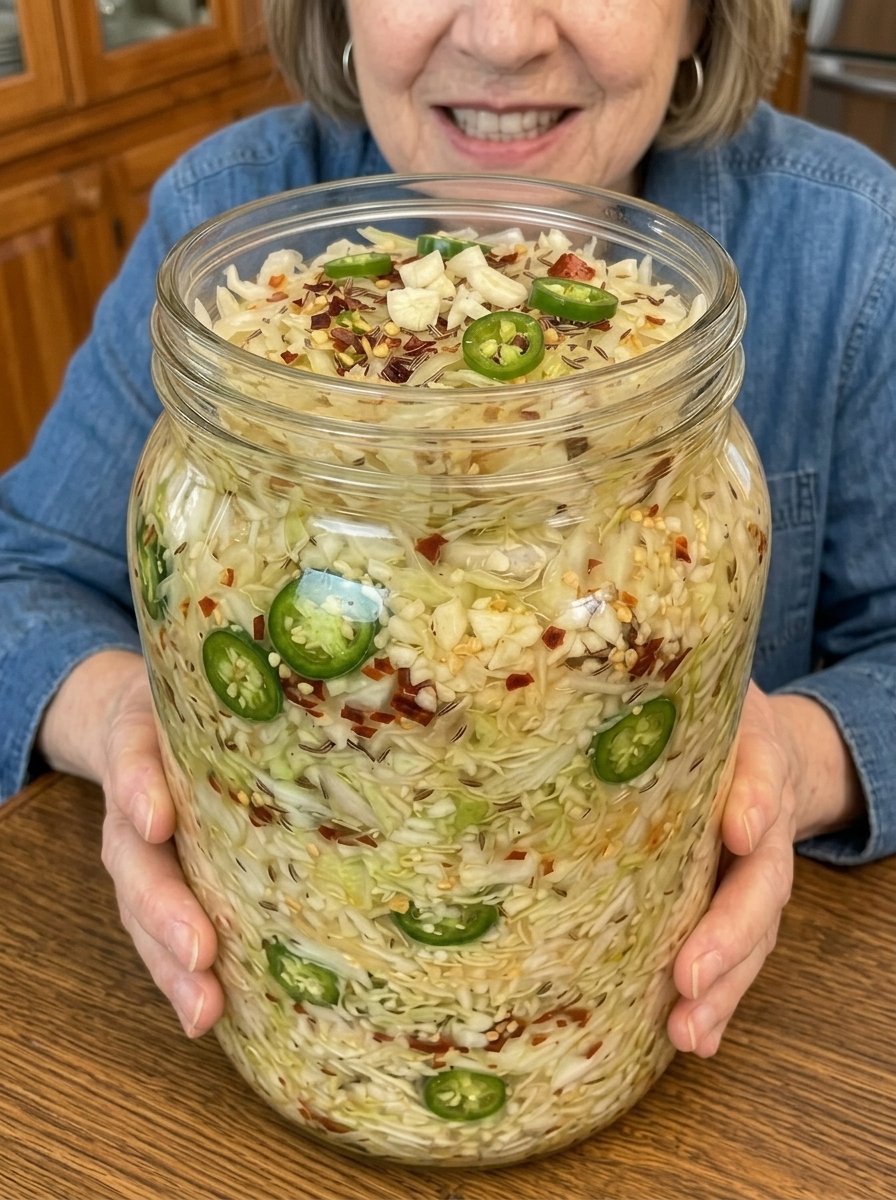
Spicy Garlic Sauerkraut: The Easy Homemade Recipe with Serious Flavor
Store-bought sauerkraut is fine. Homemade spicy garlic sauerkraut is something else entirely. It is crunchy, tangy, and loaded with garlic, with a fiery kick from fresh jalapeños and red pepper flakes and a savory backbone from caraway seeds. And the whole thing starts with just cabbage and salt.
If you’ve never fermented anything before, sauerkraut is the best place to start. It needs no starter culture, no special equipment beyond a jar, and very little active work. You shred, salt, massage, pack, and wait. The cabbage does the rest, transforming itself through wild fermentation into a deeply sour, complex condiment that puts the jarred supermarket version to shame.
This guide covers the full recipe, step-by-step instructions, the science behind fermentation, troubleshooting tips, flavor variations, storage, and plenty of ways to use your finished kraut.
Why You’ll Love This Spicy Sauerkraut
It’s incredibly simple. The core of sauerkraut is cabbage and salt. Everything else is flavor. If you can chop vegetables and squeeze them, you can make this recipe.
The flavor is bold. Garlic, fresh chiles, red pepper flakes, caraway, black pepper, and optional ginger create a kraut that’s tangy, savory, and genuinely spicy.
It’s naturally fermented. Wild lactic acid bacteria already living on the cabbage create the sour flavor. No vinegar is required.
It’s inexpensive. A head of cabbage costs very little and yields a generous jar or two of kraut.
It’s versatile. Spicy garlic sauerkraut works on sausages, sandwiches, tacos, eggs, grain bowls, roasted potatoes, and more.
It keeps for months. Once refrigerated, a jar of kraut stays good for a long time and keeps developing flavor.
What Is Sauerkraut, and How Does Fermentation Work?
Sauerkraut means “sour cabbage” in German, and it’s one of the oldest preserved foods in the world. It’s made by lacto-fermentation, a process in which naturally occurring Lactobacillus bacteria convert the sugars in cabbage into lactic acid.
Here’s how it works in practice:
- Salt draws out water. When you salt and massage shredded cabbage, the salt pulls moisture from the cells, creating its own brine.
- The brine creates a safe environment. The salty, oxygen-free liquid discourages spoilage organisms while allowing salt-tolerant lactic acid bacteria to thrive.
- Bacteria produce lactic acid. Over days, the bacteria consume sugars and produce lactic acid, which lowers the pH, develops tangy flavor, and preserves the cabbage.
This is why keeping the cabbage fully submerged under the brine matters so much. Beneath the liquid, the right bacteria flourish. Above it, mold can grow.
Because fermentation is a living process, the flavor changes daily. Young kraut tastes mild, fresh, and crunchy. Longer-fermented kraut tastes sharper, more sour, and softer.
Ingredients for Spicy Garlic Sauerkraut
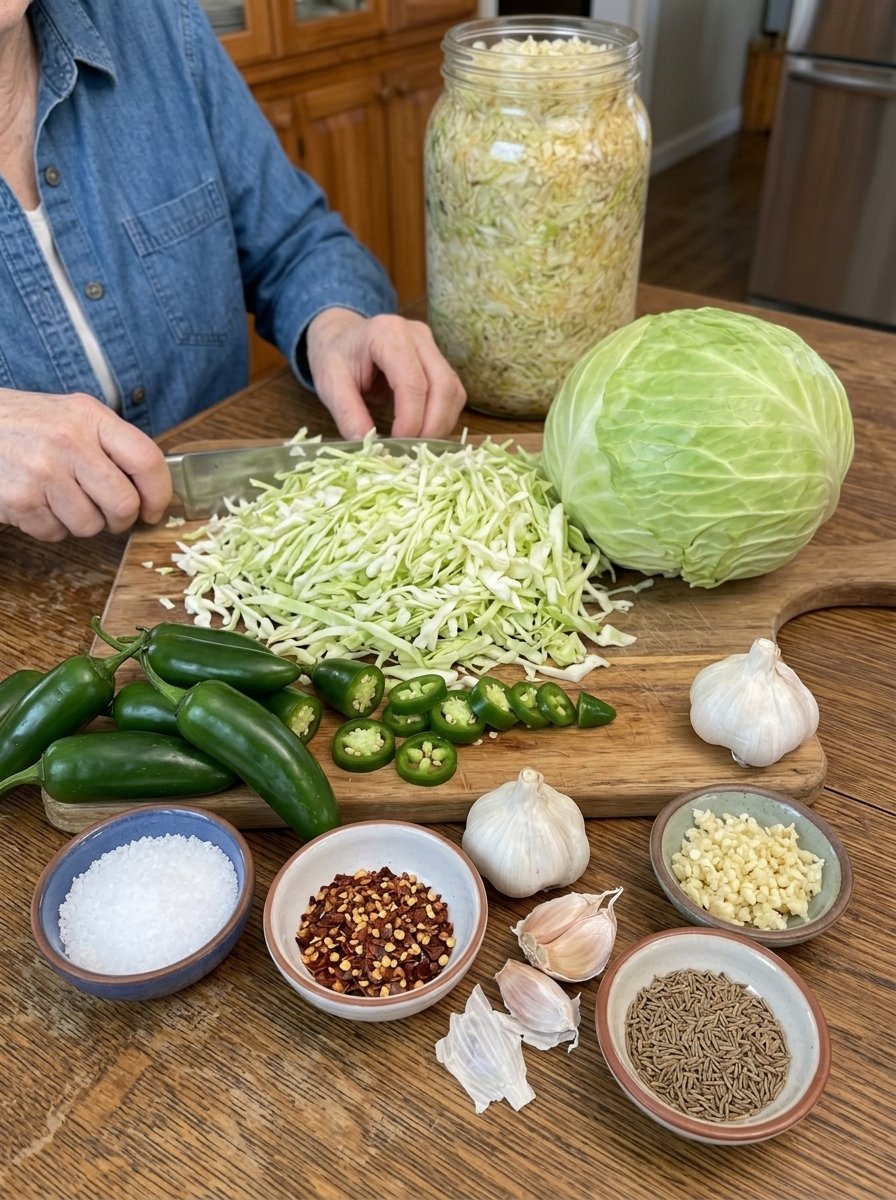
This recipe makes about 1 to 1½ quarts:
- 1 medium green cabbage, about 2 to 2½ pounds, finely shredded
- 1 tablespoon kosher salt
- 6 to 8 garlic cloves, finely minced
- 1 to 2 fresh jalapeños or serrano peppers, thinly sliced
- 1 teaspoon red pepper flakes
- 1 teaspoon caraway seeds
- ½ teaspoon black pepper
- 1 tablespoon fresh ginger, finely grated (optional)
Ingredient Notes and Smart Swaps
Green cabbage. Fresh, firm, heavy green cabbage is ideal. It has the right balance of sugar and moisture for a crisp, flavorful kraut. Red cabbage also works and produces a gorgeous purple kraut, though it can be slightly firmer and take longer to release liquid. Savoy and napa cabbage are also usable but give a softer texture.
Kosher salt. Use plain salt without iodine or anti-caking agents. Kosher salt, sea salt, and pickling salt are all fine. Iodized table salt can interfere with fermentation in some cases and may cloud the brine. A good guideline for sauerkraut is about 2% salt by weight. For a 2 to 2½ pound cabbage (roughly 900 to 1,150 grams), 1 tablespoon of kosher salt is a workable amount for many brands. Because kosher salt crystals vary in size, weighing your salt is the most accurate approach. If you use a scale, aim for roughly 18 to 23 grams of salt for this size cabbage.
Garlic. Fresh garlic gives the kraut its signature punch. Mince it finely so it distributes evenly through the cabbage. Garlic may turn slightly blue or green during fermentation, which is a harmless reaction and doesn’t affect safety or flavor.
Jalapeños or serranos. Jalapeños bring moderate heat and a green, grassy flavor. Serranos are noticeably hotter. Remove the seeds and membranes for less heat, or leave them in for a fiery kraut.
Red pepper flakes. These add a layer of dry, lingering heat that complements the fresh chiles.
Caraway seeds. A classic in traditional sauerkraut, caraway adds an earthy, slightly anise-like savory flavor that balances the spice.
Black pepper. It adds warmth and a subtle bite.
Fresh ginger (optional). Ginger brings a bright, zesty heat and a fresh aroma. It’s optional but highly recommended.
Equipment You’ll Need
You don’t need much, but a few tools make fermentation easier and safer:
- A large mixing bowl for massaging the cabbage
- A sharp knife, mandoline, or food processor for shredding
- A clean fermentation jar, such as a wide-mouth quart or half-gallon mason jar
- A fermentation weight, such as a glass weight, to keep the cabbage submerged
- A fermentation lid or airlock that lets carbon dioxide escape
- A kitchen scale (optional) for accurately measuring salt
- A tamper or the back of a wooden spoon for packing the jar
Clean everything with hot, soapy water before you begin. You don’t need to sterilize the jar, but cleanliness helps the right bacteria dominate.
How to Make Spicy Garlic Sauerkraut (Step by Step)
Step 1: Prepare the Cabbage
Remove the tough outer leaves of the cabbage and set one clean, large leaf aside to use later as a cover. Rinse the cabbage, cut it into quarters, and remove the core. Finely shred the cabbage using a sharp knife, a mandoline, or the slicing blade of a food processor. Thin shreds release more liquid and ferment more evenly.
Step 2: Salt and Massage the Cabbage
Place the shredded cabbage in a large bowl and sprinkle the salt over it. With clean hands, massage and squeeze the cabbage firmly for 5 to 10 minutes. At first it will feel dry and squeaky. Keep going. The cabbage will gradually soften, turn glossy, and release plenty of liquid. When you squeeze a handful, brine should run freely between your fingers.
This step is the most important in the recipe. The liquid you create now becomes the brine that preserves the cabbage.
Step 3: Add the Flavor
Add the minced garlic, sliced jalapeños or serranos, red pepper flakes, caraway seeds, black pepper, and grated ginger if using. Mix thoroughly until the seasonings are evenly distributed. Wear gloves if you’re handling hot peppers, and avoid touching your face.
Step 4: Pack the Jar
Transfer the mixture to a clean fermentation jar a handful at a time. After each addition, press down hard with a tamper or fist to remove air pockets and force the brine upward. Continue until the jar is packed, leaving at least 1 to 2 inches of headspace at the top, because the kraut will expand as it ferments. Pour any remaining liquid from the bowl into the jar.
Step 5: Submerge the Cabbage
The cabbage must stay completely beneath the brine. Fold the reserved cabbage leaf and place it on top of the shreds, then set a fermentation weight on top to hold everything down. If the brine doesn’t fully cover the cabbage after pressing and waiting an hour, you can add a little salt brine made from 1 cup of water mixed with ½ teaspoon of salt (it must be dissolved and the water should be non-chlorinated).
Step 6: Ferment
Cover the jar with a fermentation lid or airlock. If you use a regular lid, loosen it slightly or “burp” the jar daily to release built-up gas. Place the jar on a plate or in a shallow dish to catch any overflow, and keep it at room temperature, ideally 65°F to 72°F (18°C to 22°C), away from direct sunlight.
Ferment for 5 to 14 days. In warmer kitchens, fermentation happens faster. In cooler kitchens, it takes longer.
Step 7: Taste and Refrigerate
Begin tasting around day 5 using a clean fork. You’re looking for a tangy, pleasantly sour flavor and a texture you like. For a milder, crunchier kraut, stop at 5 to 7 days. For a sharper, more sour flavor, go closer to 10 to 14 days. When it tastes right, seal the jar with a regular lid and move it to the refrigerator to slow fermentation.
How to Tell Fermentation Is Working
Knowing what’s normal removes the worry from your first batch.
Signs of healthy fermentation:
- Small bubbles rising through the brine
- Cloudy, milky brine
- A pleasantly sour, tangy smell
- Brine rising in the jar
- A slight fizz when opened
- The cabbage changing from bright green to a paler yellow-green
Normal but surprising:
- White sediment at the bottom of the jar is dead yeast and bacteria, called lees, and is harmless.
- Cloudy brine is exactly what you want.
- Overflowing brine happens when fermentation is vigorous, which is why a plate under the jar helps.
Troubleshooting: When Fermentation Goes Wrong
Mold. Fuzzy, colorful growth (white, green, blue, black, or pink) on the surface means mold. It usually appears when cabbage rises above the brine. If you see mold, discard the batch. Don’t scrape and eat the remainder.
Kahm yeast. A flat, white, wrinkled film on the surface is typically kahm yeast, which is harmless but can affect flavor. It’s different from fuzzy mold. Skim it off and make sure the cabbage remains submerged. If you’re unsure whether you’re seeing yeast or mold, it’s safer to discard.
Slimy texture. Sliminess can occur early in fermentation or in too-warm conditions. If the kraut smells foul, throw it out.
Mushy kraut. Too much heat, too little salt, or over-fermentation can make kraut soft. Ferment in a cooler spot and use accurate salt measurements.
Not enough brine. Keep massaging, pack more firmly, let it rest for an hour, then press again. Older cabbage holds less water, so fresh cabbage matters.
Off smells. Fermentation smells sour, tangy, and slightly sulfurous. It should never smell rotten, putrid, or like spoiled meat. When in doubt, throw it out.
No bubbles. Cool temperatures slow activity. Give it a few more days in a slightly warmer spot.
Tips for the Best Spicy Garlic Sauerkraut
- Use fresh, heavy cabbage. The fresher the cabbage, the more liquid it releases.
- Weigh your salt. Accurate salt keeps kraut crunchy and safe.
- Massage patiently. Don’t stop until the cabbage is dripping with brine.
- Pack tightly. Eliminating air pockets reduces mold risk.
- Keep it submerged. This is the most important rule in fermentation.
- Control the temperature. A cooler spot makes crunchier, more complex kraut.
- Taste as you go. Your preference determines when it’s done.
- Use non-chlorinated water for any added brine, as chlorine can inhibit fermentation.
- Leave headspace. Fermentation expands the contents.
- Wear gloves with hot peppers.
Flavor Variations
- Extra fiery: Use habanero or Thai chiles, or add more serrano peppers.
- Mild and garlicky: Remove the pepper seeds and skip the red pepper flakes.
- Smoky: Add a teaspoon of smoked paprika.
- Carrot and cabbage: Mix in a grated carrot for color and sweetness.
- Korean-inspired: Add gochugaru, scallions, and a little extra ginger.
- Herbal: Add dill seeds or fresh dill.
- Citrus: Add lemon or lime zest at the end for brightness.
- Red cabbage version: Swap green for red for a vivid purple kraut.
- Turmeric: Add ½ teaspoon of ground turmeric for color and earthiness.
- Juniper: Add a few crushed juniper berries for a traditional European flavor.
How to Use Spicy Garlic Sauerkraut
On sausages and hot dogs. Bratwurst, kielbasa, and hot dogs are classic partners.
On sandwiches. Reubens, pastrami sandwiches, and grilled cheese all gain tang and crunch.
On tacos and bowls. Spicy kraut works like a fermented slaw on carnitas, fish tacos, or rice bowls.
With eggs. Spoon it onto fried eggs, omelets, or breakfast hash.
With roasted vegetables. Serve it next to roasted potatoes, Brussels sprouts, or sweet potatoes.
With roasted meats. It cuts through the richness of pork, duck, and roast chicken.
On burgers. Use it in place of pickles or relish.
In salads. Toss a spoonful into potato salad, grain salads, or green salads.
On avocado toast. The tang pairs perfectly with creamy avocado.
As a snack. Eat it straight from the jar, or serve it on a cheese board.
In cooking. Stir it into soups, stews, and braises for acidity, or fold it into dumpling and pierogi fillings.
Use the brine, too. A spoonful can liven up salad dressings, marinades, and Bloody Marys.
How to Store Spicy Garlic Sauerkraut
Once the kraut tastes right, seal the jar and refrigerate. Cold temperatures slow fermentation dramatically, although it continues very slowly. Kept submerged in brine, sauerkraut can last several months in the fridge, with the flavor deepening over time.
Storage tips:
- Always use a clean utensil to remove kraut.
- Keep the remaining kraut below the brine line.
- Store it in glass, not reactive metal.
- Discard it if you see mold, smell rot, or notice slimy texture.
Frequently Asked Questions
How long does it take to make sauerkraut?
Most batches are ready in 5 to 14 days at room temperature, depending on temperature and personal taste. Cooler kitchens take longer.
Do I need a fermentation weight?
It’s strongly recommended. A weight keeps the cabbage submerged, which is the key to preventing mold. Alternatives include a small glass jar filled with water or a clean ceramic dish that fits inside the larger jar.
Can I use a regular mason jar?
Yes. Use a standard lid, loosened slightly, and burp the jar daily to release gas. A fermentation lid or airlock makes the process easier.
Is sauerkraut probiotic?
Raw, unpasteurized, fermented sauerkraut contains live bacteria. Store-bought versions that are pasteurized or vinegar-based generally don’t. Because the live cultures remain active in raw kraut, it’s often enjoyed as part of a healthy diet. Individual health outcomes vary, so talk to your doctor about any specific health concerns.
Is homemade sauerkraut safe?
Sauerkraut has a long record of safe preparation when made correctly. The keys are accurate salt, a clean jar, and keeping the cabbage submerged. If you see mold or smell something rotten, discard it.
Why is my sauerkraut not sour?
It may need more time, or your kitchen may be cool. Give it a few more days and taste again.
Why is my sauerkraut too salty?
You may have used too much salt or a dense, fine-grained salt. Weigh your salt next time. If your finished kraut is too salty, rinse it briefly before using.
Can I make sauerkraut without salt?
Salt is essential for texture, safety, and flavor. A very low-sodium kraut isn’t recommended for beginners.
Can I use less spice?
Absolutely. Reduce or remove the peppers and flakes to control the heat level.
Can I double the recipe?
Yes. Scale everything proportionally, especially the salt, and use a larger vessel.
Should I rinse my cabbage?
A quick rinse is fine, but don’t scrub it aggressively, as the wild bacteria that drive fermentation live on the leaf surface.
Does sauerkraut need to be refrigerated?
Once fermented to your liking, refrigerate it for best long-term storage and flavor.
Final Thoughts
Spicy garlic sauerkraut is the kind of recipe that rewards a little patience. With about 20 minutes of hands-on work, some salt, and a few spices, you turn a plain head of cabbage into a jar of crunchy, tangy, fiery, deeply savory kraut that beats anything on the supermarket shelf.
Once you’ve made your first batch, you’ll likely start experimenting with other vegetables, spices, and ferments. But this jar is a great place to begin: simple, forgiving, and full of flavor.
Quick Recipe Recap:
- Shred a medium cabbage, add 1 tablespoon kosher salt, and massage for 5 to 10 minutes.
- Mix in garlic, jalapeños or serranos, red pepper flakes, caraway, black pepper, and ginger.
- Pack tightly into a jar and keep everything below the brine.
- Ferment at room temperature for 5 to 14 days, tasting along the way.
- Refrigerate when it tastes right.