
Easy 10-Minute Baguette
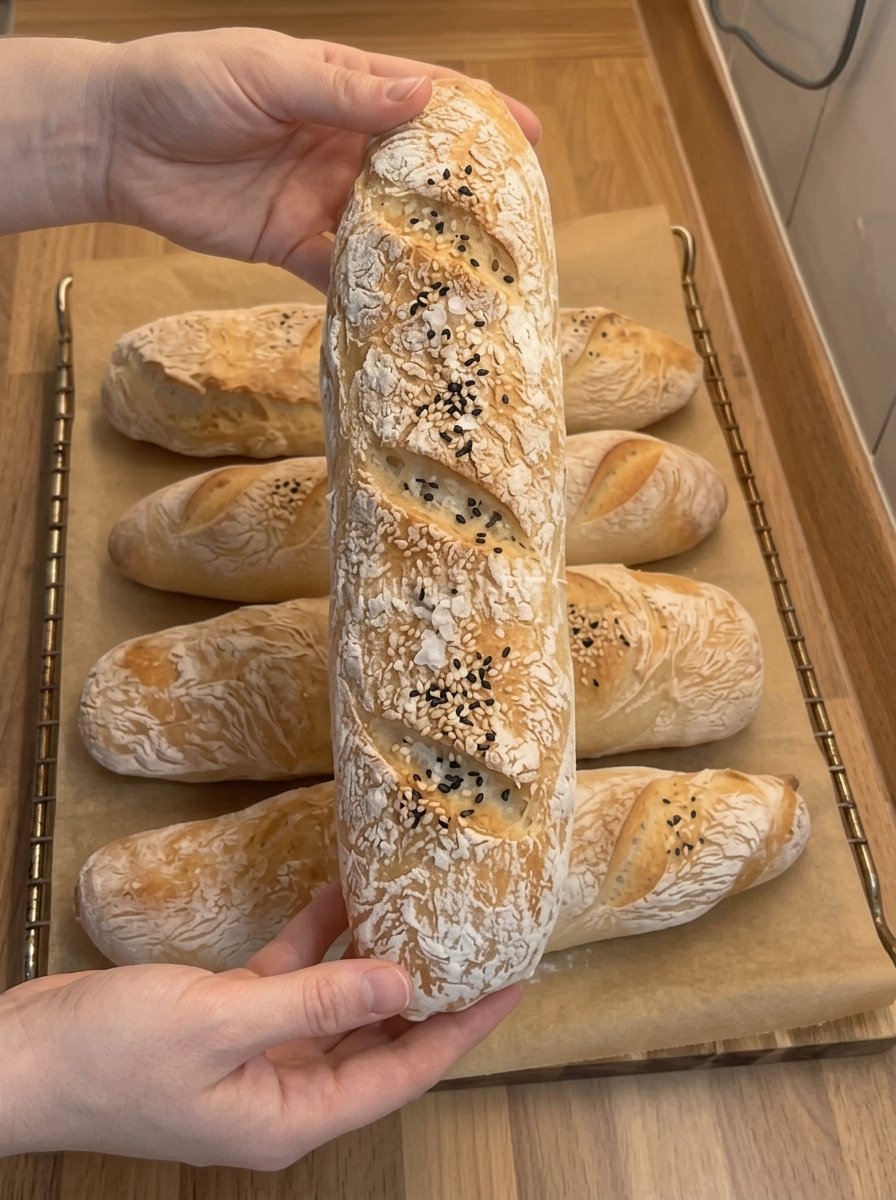
Easy 10-Minute Baguette: A Quick Homemade Recipe with a Golden Crust and Chewy Center
Few things are as satisfying as tearing into a warm baguette: the crackle of the crust, the steam that escapes from the soft, chewy middle, and the smell that fills the kitchen. Most people assume that kind of bread takes all day, a sourdough starter, or years of practice. It doesn’t.
This Easy 10-Minute Baguette is a quick-prep bread recipe built for busy people who still want fresh homemade bread. With just flour, warm water, instant yeast, and salt, you can have two rustic baguettes shaped and ready to rise in about 10 minutes of hands-on work. There’s no kneading, no complicated folding, and no special equipment.
The “10 minutes” refers to the active preparation, and it’s worth being upfront about that. The dough still needs time to rise and bake, and the total time from start to finish is about 1 hour 15 minutes. But for nearly all of that time, you’re free to do something else while the yeast and the oven do the work.
This guide covers the full recipe, step-by-step instructions, ingredient notes, the science behind a crisp crust, troubleshooting, variations, storage, and plenty of ways to serve your bread.
Recipe at a Glance
- Prep time: 10 minutes
- Rise time: 45 to 60 minutes
- Cook time: 25 to 30 minutes
- Total time: About 1 hour 15 minutes
- Servings: 2 small baguettes
- Difficulty: Beginner-friendly
Why You’ll Love This Easy Baguette Recipe
It’s genuinely quick to prepare. Stir, shape, rise, and bake. The hands-on work really does take about 10 minutes.
It uses basic pantry ingredients. Flour, water, yeast, and salt are all you need. A pinch of sugar is optional.
There’s no kneading. The wet, sticky dough develops structure on its own as it rests, so you don’t need a stand mixer or any dough-handling experience.
It’s beginner-friendly. If you’ve been intimidated by bread baking, this is a forgiving place to start.
The results look and taste impressive. You get a golden, crackly crust and a soft, chewy interior that looks like it came from a bakery.
It’s versatile. Use it for sandwiches, garlic bread, bruschetta, dipping in soup, or slathering with butter while it’s still warm.
What Makes a Baguette a Baguette?
A traditional French baguette is a long, slender loaf with a crisp, golden crust, a chewy and slightly airy crumb, and the distinctive diagonal slashes along the top. Classic baguettes are made with only four ingredients: flour, water, yeast, and salt. Authentic versions often rely on long, slow fermentation, sometimes overnight, to build flavor.
This recipe is a fast, simplified take on that tradition. It skips the long fermentation in favor of instant yeast and a short rise, so the flavor is milder and cleaner than a slow-fermented loaf. Still, it delivers the traits people love most: a crisp crust, a soft chewy center, and the satisfying look of a rustic baguette.
If you want to build deeper flavor later, you can explore overnight versions. But for a weeknight dinner or a last-minute sandwich, this quick method is hard to beat.
Ingredients for Easy 10-Minute Baguette
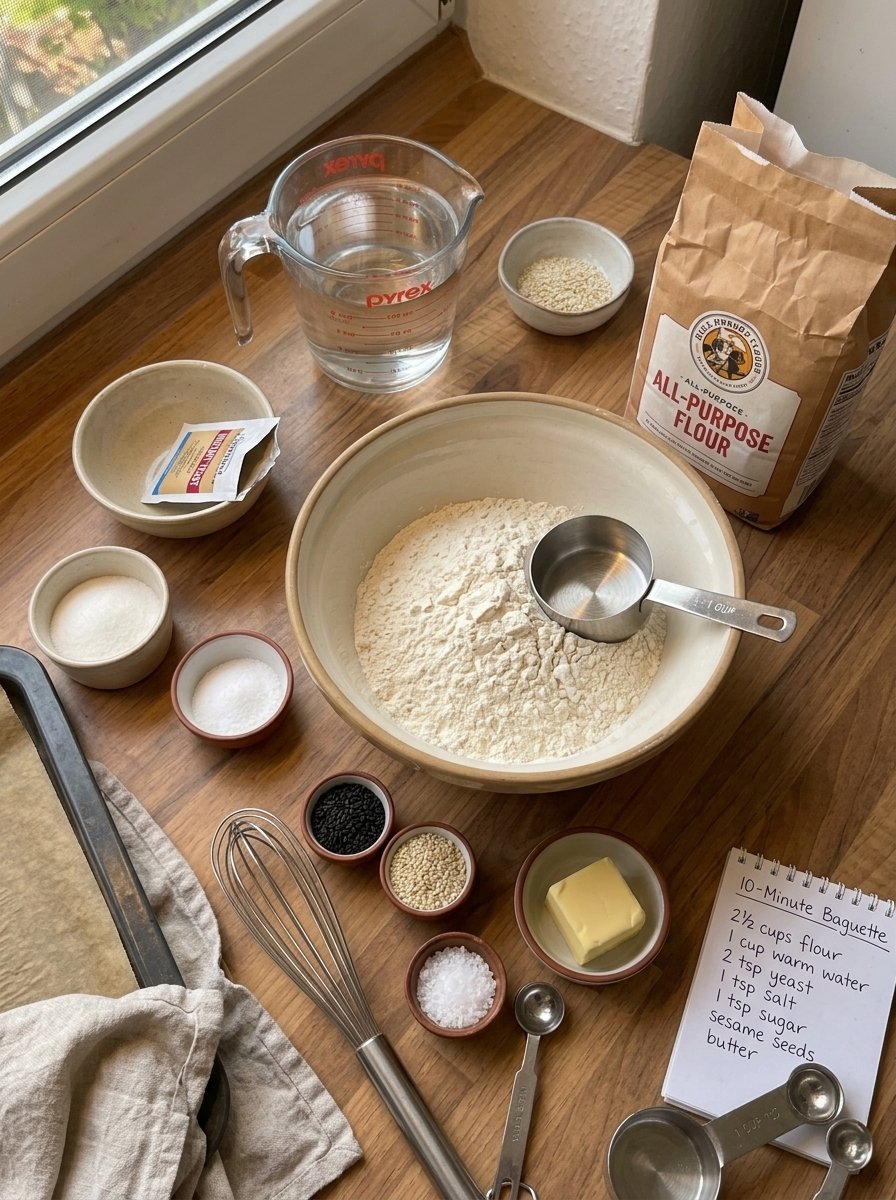
This recipe makes 2 small baguettes:
- 3 cups (375 g) bread flour or all-purpose flour
- 1¼ cups (300 ml) warm water
- 2¼ teaspoons (7 g) instant yeast
- 1 teaspoon salt
- 1 teaspoon sugar (optional)
- Extra flour for dusting
Ingredient Notes and Smart Swaps
Bread flour or all-purpose flour. Bread flour has a higher protein content, which means more gluten and a chewier texture, so it’s the best choice if you have it. All-purpose flour also works well and produces a slightly softer, less chewy loaf. Both are good options for this recipe. For the most accurate results, weigh your flour. A cup of flour can vary by 20 grams or more depending on how it’s scooped, and too much flour makes the dough dry and dense.
Warm water. The water should feel comfortably warm, not hot, ideally around 105°F to 115°F (40°C to 46°C). Water that’s too hot can kill the yeast, and water that’s too cold slows the rise. If you don’t have a thermometer, aim for the temperature of a warm bath that you could comfortably dip your finger into.
Instant yeast. Instant yeast (sometimes sold as rapid-rise or bread machine yeast) can be mixed directly into the flour without proofing first, which is why it’s perfect for a quick recipe. A standard packet contains about 2¼ teaspoons, making this recipe easy to measure. If you only have active dry yeast, you can use the same amount, but dissolve it in the warm water for about 5 minutes first, and expect the rise to take a little longer.
Salt. Salt adds flavor and helps regulate the yeast and strengthen the dough. Don’t skip it, or the bread will taste flat. Fine sea salt or table salt works well. If you use coarse kosher salt, you may want to slightly increase the amount, since it’s less dense by volume.
Sugar (optional). A small amount of sugar gives the yeast a little extra food, promoting browning and a slightly better rise. It’s optional, and the bread will still turn out well without it.
Extra flour for dusting. Use just enough to keep your hands and the surface from sticking. Too much flour changes the dough and makes the bread dry.
Equipment You’ll Need
You don’t need specialized gear to make a baguette at home:
- A large mixing bowl
- A sturdy spoon or dough whisk
- A baking sheet lined with parchment paper
- A sharp knife or razor blade for scoring (a lame is ideal but not required)
- A heatproof pan (such as a metal baking pan or cast-iron skillet) for steam
- A wire cooling rack
- A kitchen scale (optional) for accurate measurements
- A baguette pan (optional) for more uniform shape
How to Make an Easy 10-Minute Baguette (Step by Step)
Step 1: Mix the Dry Ingredients
In a large bowl, combine the flour, instant yeast, salt, and optional sugar. Whisk or stir briefly so the yeast and salt are evenly distributed through the flour.
Step 2: Add the Warm Water
Pour in the warm water and stir until a sticky dough forms. Mix just until no dry flour remains. The dough should look shaggy and wet. Resist the urge to add more flour. The stickiness is intentional and helps produce a soft, open interior.
Step 3: Shape the Baguettes Quickly
Lightly flour your hands and your work surface. Turn the dough out and divide it into two equal portions. Gently shape each portion into a long, narrow log, roughly 12 to 14 inches long, by patting it into a rectangle and rolling it up, then lightly rolling it back and forth to lengthen it. Avoid adding too much extra flour. A slightly tacky dough is better than a dry one.
Don’t worry about perfection. A rustic, slightly uneven baguette has plenty of charm.
Step 4: Let the Dough Rise
Place the shaped baguettes on a parchment-lined baking sheet, leaving a few inches between them. Cover loosely with a clean kitchen towel or lightly oiled plastic wrap, and let them rise in a warm spot for 45 to 60 minutes, until noticeably puffy. They should look visibly larger and feel soft and airy when gently touched.
Step 5: Preheat the Oven
While the dough rises, heat your oven to 450°F (230°C). If you want a crispier crust, place a heatproof pan on the lower rack while the oven preheats. This pan will hold the water that creates steam.
Step 6: Score the Loaves
Just before baking, use a sharp knife or razor blade to make 3 to 4 shallow diagonal slashes along the top of each baguette, about ¼ inch deep. Scoring controls where the bread expands in the oven and gives baguettes their classic look.
Step 7: Add Steam
If you’re using steam, carefully pour hot water into the preheated pan on the lower rack, then quickly close the oven door. Keep your face and hands well away from the escaping steam, and use oven mitts.
Step 8: Bake
Slide the baking sheet into the oven and bake for 25 to 30 minutes, until the baguettes are deep golden brown and sound hollow when tapped on the bottom. If they’re browning too quickly, tent them loosely with foil.
Step 9: Cool
Transfer the baguettes to a wire rack and let them cool for at least 15 to 20 minutes before slicing. This resting time allows the interior to finish setting. Cutting too early can leave the center gummy.
Step 10: Serve
Slice and enjoy fresh with butter, cheese, soup, or your favorite sandwich fillings.
The Science of a Crispy Crust: Why Steam Matters
If you’ve ever wondered why bakery baguettes have such a shiny, crackly crust, the answer is steam.
During the first part of baking, steam in the oven keeps the surface of the dough moist and flexible. This delays the formation of a hard crust, which lets the loaf expand fully, a phenomenon bakers call oven spring. The moisture also helps gelatinize the starches on the surface, which creates that glossy, golden shine and a thin, crackly shell once the steam dissipates.
Without steam, the crust sets quickly and can feel thicker, duller, and less crisp. The bread will still taste good, but the texture won’t be quite as bakery-like.
You can create steam at home in a few simple ways:
- Hot water in a preheated pan on the lower rack, as in this recipe
- A spray bottle to mist the oven walls (not the glass or light) during the first few minutes
- A tray of ice cubes tossed into the hot pan for a slower steam release
Always use caution when working with steam. Wear oven mitts and keep your face away from the oven door as you add water.
Tips for a Better Baguette
- Don’t add too much flour. A slightly sticky dough keeps the inside soft and chewy.
- Use steam for a crispier crust. Steam during the first part of baking helps the crust develop.
- Remember the timing. The 10 minutes refers to hands-on preparation. The dough still needs time to rise and bake.
- Measure the flour carefully. Spoon flour into the measuring cup and level it, or better yet, weigh it.
- Check your yeast. Old or expired yeast is the most common reason bread doesn’t rise. Store yeast in the refrigerator or freezer.
- Use a warm spot for rising. An oven with just the light on, or a spot near a warm (not hot) appliance, works well.
- Score confidently. A quick, decisive slash with a sharp blade works better than a slow saw.
- Preheat fully. Let the oven reach temperature before baking so you get strong oven spring.
- Let it cool. Waiting 15 to 20 minutes is hard but worthwhile.
- For extra flavor, sprinkle sesame seeds or dried herbs on top before baking.
Troubleshooting Common Baguette Problems
The dough didn’t rise. Your yeast may be old, or your water may have been too hot or too cold. Check the expiration date, and use warm, not hot, water. A cool kitchen can also slow the rise, so give the dough extra time in a warmer spot.
The baguettes are dense. Too much flour, too little rise time, or old yeast can cause dense bread. Measure by weight and let the dough get properly puffy before baking.
The crust is pale or soft. Make sure your oven is fully preheated, and use steam. If the bread is still pale at the end of baking, bake a few extra minutes.
The crust is too hard. Reduce steam slightly or shorten the baking time by a few minutes. Wrapping the bread in a towel while it cools can soften the crust.
The baguettes spread out flat. The dough may have been too wet, or the loaves over-proofed. Use the right amount of flour and bake once the dough is puffy rather than letting it rise too long. A baguette pan or a rolled towel on either side can help the loaves hold their shape.
The inside is gummy. The bread may have been cut too soon or underbaked. Let it cool fully and make sure it sounds hollow when tapped.
The bread tastes bland. Check that you didn’t skip the salt. For more flavor, try a longer, slower rise (see variations below).
Variations to Try
Once you’ve mastered the basic recipe, these easy twists add variety:
- Garlic herb baguette: Brush with melted butter mixed with minced garlic and chopped parsley after baking.
- Sesame or poppy seed topping: Brush the dough with water and sprinkle seeds on before baking.
- Italian herb baguette: Mix a teaspoon of dried Italian herbs into the flour.
- Cheese baguette: Press shredded cheddar, Parmesan, or Gruyère on top during the last 5 minutes of baking.
- Whole wheat baguette: Replace up to one cup of flour with whole wheat flour. Add a splash more water, since whole wheat absorbs more liquid.
- Rosemary and sea salt: Sprinkle chopped fresh rosemary and flaky salt before baking.
- Everything bagel baguette: Top with everything bagel seasoning for a savory crunch.
- Overnight flavor boost: For a deeper, more complex flavor, cover the shaped dough and chill it in the refrigerator overnight, then let it come to room temperature and rise until puffy before baking. This takes more time, but the flavor improves noticeably.
How to Serve Your Baguette
A fresh baguette is one of the most versatile breads in the kitchen. Here are some of the best ways to enjoy it:
With butter. Warm slices with salted butter and a sprinkle of flaky salt are hard to beat.
As sandwiches. Fill it with ham and Swiss, turkey and avocado, roast beef and horseradish, or caprese ingredients like tomato, mozzarella, and basil.
As garlic bread. Slice it, spread it with garlic butter, and bake until golden.
With soup and stew. A baguette is the ideal tool for soaking up tomato soup, French onion soup, chili, or hearty stews.
As bruschetta. Toast slices and top them with chopped tomatoes, basil, garlic, and olive oil.
On a cheese board. Pair slices with brie, goat cheese, cured meats, olives, and fruit.
As crostini. Slice thinly, brush with olive oil, toast, and top with spreads like hummus, whipped ricotta, or tapenade.
With breakfast. Make French toast from day-old baguette slices, or serve with jam and eggs.
As croutons or breadcrumbs. Cube leftover bread, toss with olive oil, and bake for homemade croutons, or pulse stale bread in a food processor for breadcrumbs.
With dips. Serve with olive oil and balsamic vinegar, spinach dip, or fondue.
How to Store Baguettes
Baguettes are best enjoyed the day they’re baked, since the crisp crust softens over time. Here’s how to keep leftovers at their best:
- Room temperature: Store in a paper bag or wrapped loosely in a clean kitchen towel for up to 1 day. Avoid airtight plastic, which makes the crust soggy.
- For 2 to 3 days: Wrap tightly in foil or a resealable bag, though the crust will soften.
- Freezer: Slice or leave whole, wrap tightly in plastic wrap and foil, and freeze for up to 2 to 3 months.
- Reheating: Warm in a 350°F (175°C) oven for 5 to 10 minutes to restore crispness. Sprinkle the crust lightly with water before reheating for extra crunch.
Avoid refrigerating baguettes, as the cold speeds up staling and dries out the crumb.
Frequently Asked Questions
Is it really a 10-minute baguette?
The 10 minutes refers to hands-on preparation: mixing and shaping. The dough still needs 45 to 60 minutes to rise and 25 to 30 minutes to bake, for a total time of about 1 hour 15 minutes.
Do I need to knead the dough?
No. This is a simple, no-knead recipe. Mixing until no dry flour remains is enough, and the dough develops structure as it rests.
Can I use all-purpose flour instead of bread flour?
Yes. All-purpose flour works well, though bread flour produces a slightly chewier loaf thanks to its higher protein content.
Can I use active dry yeast instead of instant yeast?
Yes. Use the same amount, dissolve it in the warm water for about 5 minutes until foamy, then proceed with the recipe. The rise may take a little longer.
Do I have to use steam?
No. Steam is optional, but it helps create a crispier, shinier, more bakery-style crust. Without it, the bread will still be delicious.
Why is my dough so sticky?
A sticky dough is normal and desirable for this recipe. It keeps the interior soft. Use lightly floured hands and a lightly floured surface to handle it, but avoid adding too much flour.
Can I make the dough ahead of time?
Yes. After mixing, you can refrigerate the dough covered for up to 24 hours. The slow, cold rise adds flavor. Let it come back toward room temperature before shaping and baking.
How do I know when the baguettes are done?
They should be deep golden brown and sound hollow when you tap the bottom. An internal temperature of about 200°F to 210°F (93°C to 99°C) also indicates doneness.
Can I make one large baguette instead of two?
Yes, but a single long loaf may be difficult to fit on a standard baking sheet. You can place it diagonally on the pan and add a few extra minutes of baking time.
Can I bake these without parchment paper?
Yes. Dust the baking sheet with flour or cornmeal to prevent sticking.
Why did my baguette not get golden brown?
The oven may not have been hot enough, or the loaf may need a few more minutes. Use an oven thermometer to check that your oven is truly at 450°F.
Can I freeze the dough?
Yes, you can shape the dough, freeze it, and thaw it in the refrigerator overnight. Let it rise until puffy before baking. Results vary, but it’s a handy option.
Final Thoughts
You don’t need hours, a sourdough starter, or professional experience to bake a beautiful baguette at home. This Easy 10-Minute Baguette proves that with a few pantry staples and about 10 minutes of hands-on time, you can pull a golden, crusty, soft-centered loaf out of your own oven.
It’s the kind of recipe that works for a weeknight soup dinner, a weekend sandwich lunch, or an impromptu gathering where you want something warm and homemade on the table. Once you’ve tried it, you may find yourself baking it again and again, tweaking it with herbs, seeds, or cheese.
Quick Recipe Recap:
- Combine flour, instant yeast, salt, and optional sugar in a bowl.
- Stir in warm water until a sticky dough forms.
- Divide, shape into two baguettes, and let rise 45 to 60 minutes.
- Preheat the oven to 450°F (230°C), score the loaves, and add steam.
- Bake 25 to 30 minutes until golden and hollow-sounding.
- Cool 15 to 20 minutes before slicing.