
High-Protein Cottage Cheese Italian Herb Bagel Bread
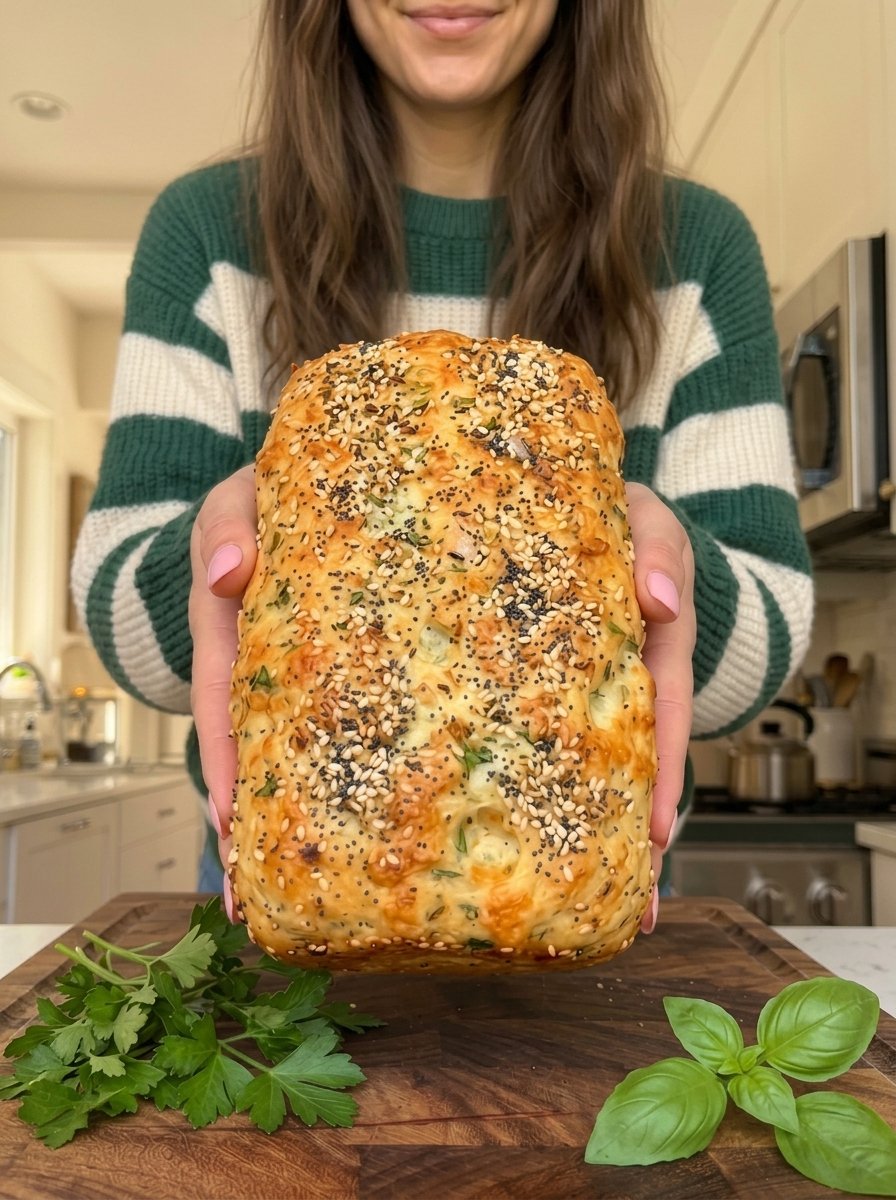
High-Protein Cottage Cheese Italian Herb Bagel Bread: Easy No-Yeast Homemade Loaf 🥯🇮🇹
If you’re looking for a savory, satisfying homemade bread that comes together in minutes and doesn’t require yeast, kneading, or hours of rising time, this High-Protein Cottage Cheese Italian Herb Bagel Bread is exactly what you need. Creamy cottage cheese blends into a soft, tender dough seasoned with Italian herbs and garlic, then bakes into a golden, chewy-crusted loaf with a bagel-inspired shape. It’s perfect for breakfast, sandwiches, snacks, or serving alongside soup and salad.
In this complete guide, you’ll find the full recipe, a detailed look at each ingredient, step-by-step instructions with helpful visual cues, expert tips, troubleshooting advice, creative variations, serving ideas, storage and freezing instructions, and answers to the most common questions. Whether you’re looking for a higher-protein bread option, a quick savory bake, or a fun twist on traditional bagels, this recipe delivers big flavor with very little effort.
Why You’ll Love This Cottage Cheese Italian Herb Bagel Bread 💪
It’s naturally higher in protein. Cottage cheese and eggs form the base of this dough, giving the bread a protein boost compared to a typical flour-based loaf. That makes it a smart choice for breakfast, post-workout snacks, or anyone looking to add more protein to their day.
No yeast and no rising time. Because baking powder provides the lift, there’s no proofing, no waiting, and no yeast to worry about. From the moment you start mixing to the moment the bread is out of the oven, it takes only about 50 minutes.
It’s incredibly easy. If you can whisk eggs and stir in flour, you can make this bread. The dough comes together in one bowl with a handful of ingredients and minimal cleanup.
The flavor is savory and aromatic. Italian seasoning, garlic powder, and optional mozzarella or Parmesan give each slice a bakery-style taste that’s wonderful on its own or loaded with toppings.
It’s wonderfully versatile. Shape it as a thick ring for a bagel-style loaf, form an oval for sandwich slicing, or make individual bagels for grab-and-go breakfasts.
The texture is soft and moist. Cottage cheese keeps the crumb tender and rich, while the golden crust provides a satisfying chew.
Recipe Overview
- Prep Time: 10 minutes
- Cook Time: 35–40 minutes
- Total Time: 50 minutes
- Servings: 8 slices
Ingredients You’ll Need 🛒
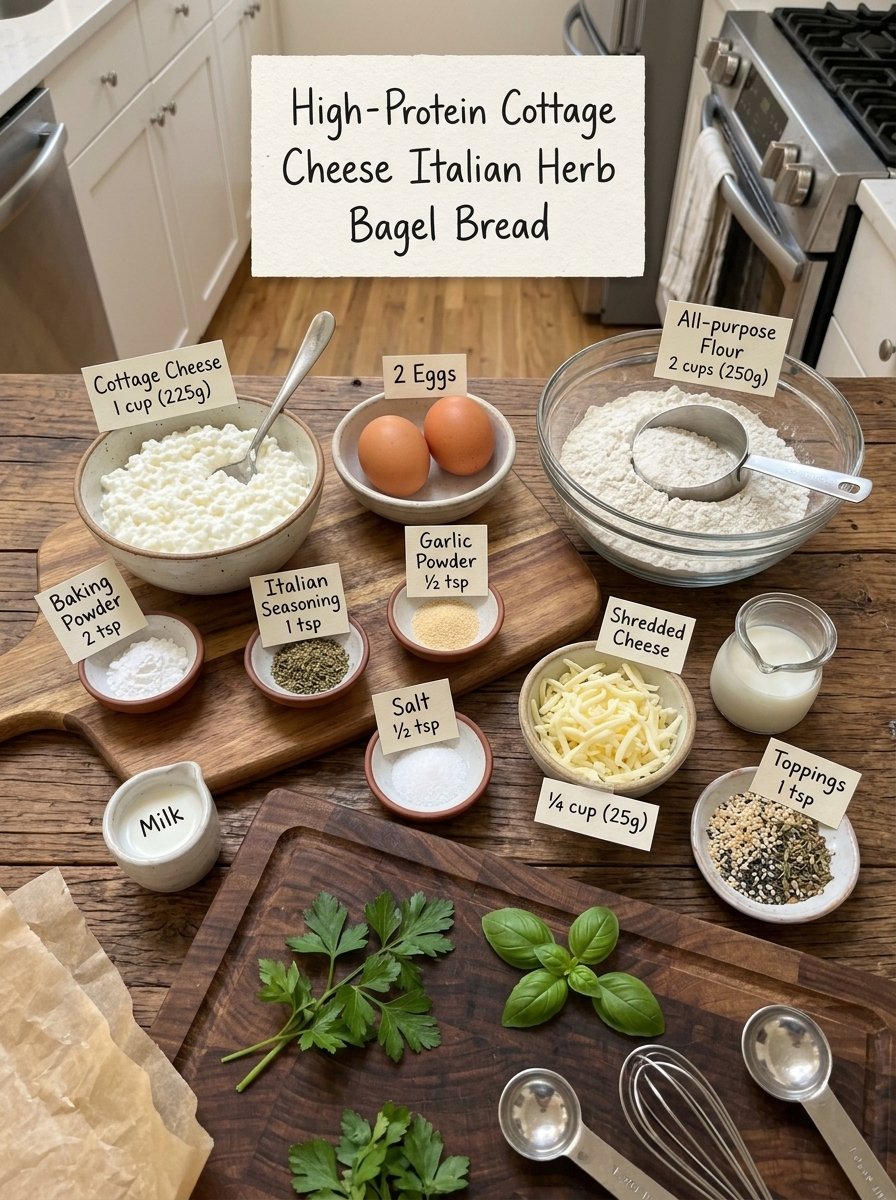
- 1 cup (225 g) cottage cheese
- 2 large eggs
- 2 cups (250 g) all-purpose flour
- 2 tsp baking powder
- 1 tsp Italian seasoning
- ½ tsp garlic powder
- ½ tsp salt
- ¼ cup (25 g) shredded mozzarella or Parmesan (optional)
- 1 tbsp milk or beaten egg, for brushing (optional)
- 1 tsp sesame seeds or dried herbs, for topping (optional)
A Closer Look at the Ingredients
Cottage cheese. This is the star ingredient. It adds moisture, tenderness, richness, and protein. Full-fat or low-fat cottage cheese both work, though full-fat tends to produce a slightly richer, softer crumb. Small-curd cottage cheese blends more easily, but large-curd works too once blended. Choose a thick cottage cheese rather than a watery one, as excess liquid can make the dough too sticky.
Eggs. Eggs bind the dough, add structure, and contribute additional protein. Using large eggs at room temperature helps them blend smoothly with the cottage cheese.
All-purpose flour. Standard all-purpose flour gives the bread a soft, tender structure. For the most accurate results, weigh your flour at 250 grams rather than scooping with a cup, since scooped flour can pack down and make the dough dry and heavy.
Baking powder. This is your leavening agent in place of yeast. Check that your baking powder is fresh, since old baking powder loses its power and can leave the bread dense.
Italian seasoning. A blend of dried basil, oregano, thyme, rosemary, and marjoram, Italian seasoning gives the bread its signature herby flavor.
Garlic powder. It adds savory depth without the moisture of fresh garlic, which helps keep the dough from becoming too wet.
Salt. Salt sharpens every flavor in the loaf. Without it, the bread tastes flat.
Shredded mozzarella or Parmesan (optional). Mozzarella adds gentle, melty richness, while Parmesan contributes a sharper, saltier, nuttier flavor. Both are excellent, and you can use a combination.
Milk or beaten egg (optional). Brushing the surface before baking creates a shiny, deeply golden crust. Egg wash gives the glossiest finish, while milk produces a softer, more matte brown.
Sesame seeds or dried herbs (optional). These add visual appeal, crunch, and a classic everything-bagel-style look.
Step-by-Step Instructions 👩🍳
Step 1: Preheat the Oven
Heat your oven to 375°F (190°C). Line a baking sheet with parchment paper so the loaf releases easily and cleanup stays simple.
Step 2: Prepare the Cottage Cheese
For the smoothest, most even dough, blend the cottage cheese in a blender or food processor until it’s creamy and smooth. This step is optional, but it creates a more uniform crumb and prevents visible curds in the finished bread. If you prefer a more rustic texture with little pockets of cheese, you can skip blending.
Step 3: Mix the Wet Ingredients
In a large bowl, whisk together the cottage cheese and eggs until fully combined and smooth. The mixture should look creamy and slightly loose.
Step 4: Add the Dry Ingredients
Stir in the flour, baking powder, Italian seasoning, garlic powder, and salt. Add the shredded mozzarella or Parmesan now if you’re using it. Mix gently with a spatula or wooden spoon.
Step 5: Form the Dough
Stir just until a soft dough forms. If it’s very sticky and impossible to handle, add a little extra flour, one tablespoon at a time, until the dough is workable but still soft. Avoid adding too much flour, as this can make the finished bread dry and dense.
Step 6: Shape the Bread
Transfer the dough to a lightly floured surface and gently shape it into a thick ring or oval loaf. For a classic bagel shape, form a ring and make a wide hole in the center, keeping in mind that the hole will shrink slightly as the bread bakes, so make it generous. Use floured hands to prevent sticking.
Step 7: Add the Topping
Place the shaped dough on the prepared baking sheet. Brush the surface lightly with milk or beaten egg, then sprinkle with sesame seeds or extra Italian herbs if desired.
Step 8: Bake
Bake for 35 to 40 minutes, or until the bread is golden brown and cooked through. If you’re making individual bagels instead of one large loaf, start checking them earlier, around 20 to 25 minutes. A toothpick or knife inserted into the thickest part should come out clean, and the bottom should sound hollow when tapped.
Step 9: Cool
Let the bread rest on the baking sheet for 10 minutes, then transfer it to a wire rack. Allow it to cool before slicing for the best texture. Cutting too soon can leave the center seeming gummy, since the crumb continues to set as it cools.
Step 10: Serve
Enjoy the bread warm or toasted. Spread it with cream cheese, layer it with sliced tomatoes and turkey, or use it as the base for your favorite sandwich.
Expert Tips for the Best Bagel Bread 💡
Use thick cottage cheese. If your cottage cheese is very watery, drain it in a fine-mesh strainer for several minutes before using. Excess liquid is the most common cause of a sticky, hard-to-shape dough.
Don’t overmix. Mix only until the dough comes together. Overworking it can make the bread tough rather than tender.
Boost the Italian flavor. Stir in a tablespoon of chopped fresh parsley, a pinch of dried oregano, or a spoonful of grated Parmesan to take the flavor up a notch.
Check the center. Cottage-cheese dough can stay moist, so make sure the loaf is fully baked before taking it out of the oven. If the top browns too quickly, tent the loaf loosely with foil and continue baking.
Flour your hands, not the dough. The dough is soft, so lightly flouring your hands and work surface helps you shape it without incorporating too much extra flour.
Make the hole wide. If you’re shaping a bagel-style ring, a wide center hole keeps the shape clear after baking, since the dough puffs and spreads slightly in the oven.
Troubleshooting Common Problems
My dough is too sticky to shape. The cottage cheese may have been too wet. Add a tablespoon of flour at a time, and use floured hands. Next time, drain the cottage cheese before blending.
The bread is dense. This can result from old baking powder, too much flour, or overmixing. Measure the flour by weight, use fresh baking powder, and mix only until combined.
The center is gummy. The loaf may need a few more minutes in the oven, or it may have been sliced before cooling. Bake until the bottom sounds hollow, then let it cool fully.
The crust is too pale. Brush with beaten egg before baking for deeper color, or bake a few minutes longer.
The bread is dry. Too much flour or too much baking time are the likely causes. Measure carefully and check for doneness at the early end of the baking window.
Delicious Variations to Try 🌿
Everything bagel style. Top the loaf with sesame seeds, poppy seeds, dried minced onion, dried minced garlic, and coarse salt.
Cheesy garlic version. Increase the shredded cheese to ½ cup and add an extra pinch of garlic powder for a bold, cheesy loaf.
Jalapeño cheddar. Swap the mozzarella for sharp cheddar and fold in a few tablespoons of diced pickled jalapeños.
Sun-dried tomato and basil. Stir in 2 tablespoons of chopped sun-dried tomatoes and a spoonful of dried basil for a Mediterranean twist.
Whole wheat blend. Replace up to half of the all-purpose flour with whole wheat flour for extra fiber and a nuttier flavor. You may need a splash of milk if the dough seems dry.
Mini bagels. Divide the dough into 6 to 8 portions, shape each into a small ring, and bake for 20 to 25 minutes for easy grab-and-go breakfasts.
Rosemary and olive. Add chopped rosemary and sliced olives for a rustic, Italian bakery feel.
What to Serve with Italian Herb Bagel Bread
This bread is delicious on its own, but it also shines as part of a larger meal.
- Breakfast: Toast slices and top them with cream cheese, smoked salmon, cucumber, and a squeeze of lemon, or build a breakfast sandwich with eggs and cheese.
- Sandwiches: Layer with turkey, tomato, lettuce, and pesto or mayonnaise for a satisfying lunch.
- With soup: Serve warm alongside tomato soup, minestrone, or a creamy vegetable soup.
- With salad: A slice or two alongside a big green salad turns it into a complete meal.
- Snacks: Toast it and top with ricotta, tomatoes, and olive oil for an easy bruschetta-style bite.
- With dips: Cut into strips or cubes and serve with hummus, marinara, or olive oil and balsamic vinegar.
Storage Instructions
Room temperature: Once fully cooled, store the bread in an airtight container or wrapped tightly for up to 2 days.
Refrigerator: Because of the cottage cheese and eggs, it’s best to refrigerate leftovers in an airtight container for up to 4 to 5 days. Toasting slices brings back the crisp crust and soft interior.
Freezer: Slice the cooled bread, place it in a freezer-safe bag with parchment between slices if desired, and freeze for up to 3 months. Toast slices directly from frozen or thaw them in the refrigerator overnight.
Reheating: Warm slices in a toaster, toaster oven, or a 350°F (175°C) oven for several minutes until heated through and lightly crisp.
Frequently Asked Questions
Is this bread really high in protein? It contains more protein than many standard breads thanks to the cottage cheese and eggs. The exact amount depends on the brand of cottage cheese, the cheese topping, and how you slice the loaf, so check your own ingredient labels if you’re tracking nutrition.
Can I make this bread without yeast? Yes, this recipe is specifically designed without yeast. Baking powder provides all the lift, so there’s no proofing or rising time.
Do I have to blend the cottage cheese? No, but blending creates a smoother dough and a more uniform crumb. If you prefer a rustic texture with small cheesy pockets, you can stir the cottage cheese in as it is.
Can I use low-fat or fat-free cottage cheese? Yes. Low-fat works well, though the bread may be slightly less rich. Fat-free versions often contain more liquid, so drain them well before using.
Can I use whole wheat flour or gluten-free flour? Whole wheat flour can replace some or all of the all-purpose flour, though the texture will be denser. A one-to-one gluten-free baking blend may work, but results can vary and the dough may need adjustments.
Why is my dough so sticky? Cottage cheese contains moisture, and brands vary. Drain it if watery, add flour gradually, and use floured hands for shaping.
Can I make individual bagels instead of one loaf? Absolutely. Divide the dough into 6 to 8 pieces, shape each into a ring, and bake for roughly 20 to 25 minutes, checking for golden color and doneness.
Is this the same as a traditional bagel? Not exactly. Traditional bagels use yeast and are boiled before baking, which gives them their characteristic chew. This recipe is a quick, bagel-inspired bread with a soft interior and golden crust, without the boiling step.
Can I make the dough ahead of time? Baking powder begins working once it meets moisture, so it’s best to bake the dough soon after mixing for the best rise.
Can I add other herbs or seasonings? Yes. Fresh parsley, basil, oregano, rosemary, onion powder, or red pepper flakes all work well and let you tailor the flavor to your taste.
Final Thoughts 🥯✨
This High-Protein Cottage Cheese Italian Herb Bagel Bread is proof that homemade bread can be fast, flexible, and flavorful. With just a handful of ingredients, a single bowl, and no yeast or rising time, you can have a golden, herb-scented loaf on the table in under an hour. It’s perfect for busy mornings, easy lunches, and savory snacking, and it’s endlessly adaptable with your favorite cheeses, seasonings, and toppings.
Give it a try, toast a slice, spread it with cream cheese, and enjoy savory Italian herbs, creamy cottage cheese, and homemade bread goodness in every bite!