
3-Ingredient High-Protein Black Bean Bread
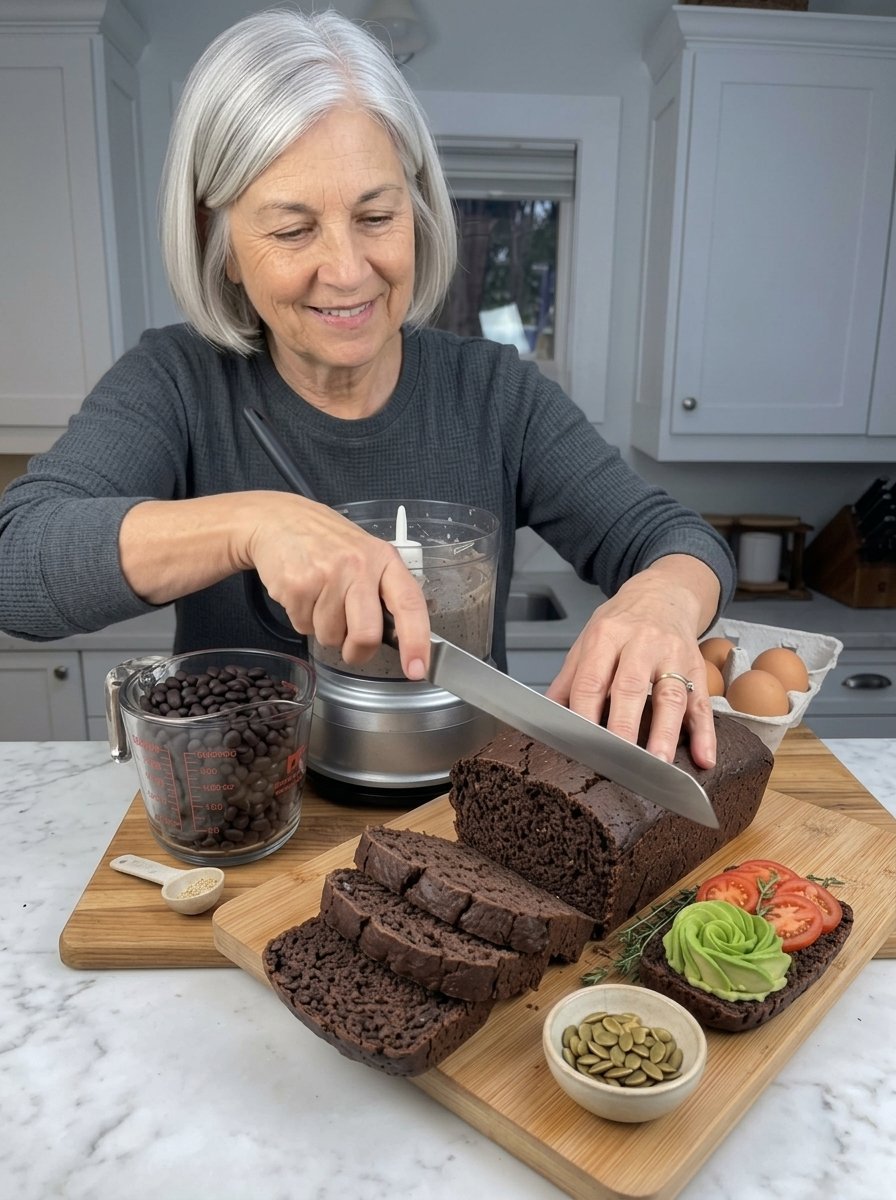
3-Ingredient High-Protein Black Bean Bread: The Simplest Bread You’ll Ever Bake
In a world of increasingly complicated recipes, there’s something truly refreshing about a dish that strips everything down to its absolute essentials — and this 3-Ingredient High-Protein Black Bean Bread does exactly that. Made with nothing more than black beans, eggs, and baking powder, this unassuming loaf proves that you don’t need flour, yeast, sugar, or a long list of pantry staples to create a satisfying, sliceable bread. It’s soft, hearty, naturally gluten-free, and absolutely packed with protein, making it one of the most nutrient-dense homemade breads you can possibly make.
This recipe sits at the intersection of simplicity and nutrition in a way that’s hard to find elsewhere. Black beans, when blended smooth with eggs, create a surprisingly cohesive batter that bakes up into a tender, moist loaf with a subtly savory flavor — far more neutral in taste than you might expect from a bean-based bread. With baking powder as the only leavening agent needed, there’s no yeast to proof, no rising time to wait through, and no kneading required whatsoever. Simply blend, pour, and bake.
For anyone following a gluten-free or low-carb lifestyle, looking to boost their protein intake, or simply curious about creative, minimal-ingredient baking, this black bean bread is a fascinating and genuinely delicious option worth trying. Let’s take a closer look at why this ultra-simple recipe works so well and how to make it turn out perfectly every time.
Why This 3-Ingredient Black Bean Bread Recipe Works So Well
It might seem almost too good to be true that just three ingredients — black beans, eggs, and baking powder — can combine to create something resembling bread, but the science behind this recipe is actually quite logical once you break it down.
Black beans, once fully cooked and blended until smooth, take on a surprisingly neutral, creamy texture similar to a thick puree. This puree acts as the structural base of the bread, replacing the role that flour would typically play in a traditional recipe. While black beans do carry their own subtle, earthy flavor, this flavor becomes much more muted and neutral once blended and baked, particularly when combined with the richness of the eggs.
Eggs play an absolutely critical role in this recipe, arguably even more so than in the lentil bread variation, since there’s no yogurt or oil here to provide additional moisture or richness. The eggs serve as both the primary binding agent and a key source of structure, as their proteins set and coagulate during baking, transforming the wet, blended bean mixture into a sliceable, bread-like texture. Using three eggs relative to the amount of black beans ensures there’s enough protein structure to help the loaf hold together properly once baked and cooled.
Baking powder is the sole leavening agent in this recipe, and it’s an essential component given the complete absence of yeast or any other rising agent. As the batter bakes, the baking powder reacts with the moisture and heat in the oven, producing small bubbles of carbon dioxide gas that help the bread rise slightly and develop a lighter, less dense texture than the bean and egg base alone would produce.
Because this recipe omits any oil, dairy, or seasoning entirely, the resulting bread has a clean, simple flavor that’s more neutral and adaptable than heavily seasoned alternatives. This makes it an excellent base for both sweet and savory toppings, since the bread itself doesn’t carry a strong, dominant flavor of its own.
Ingredients You’ll Need
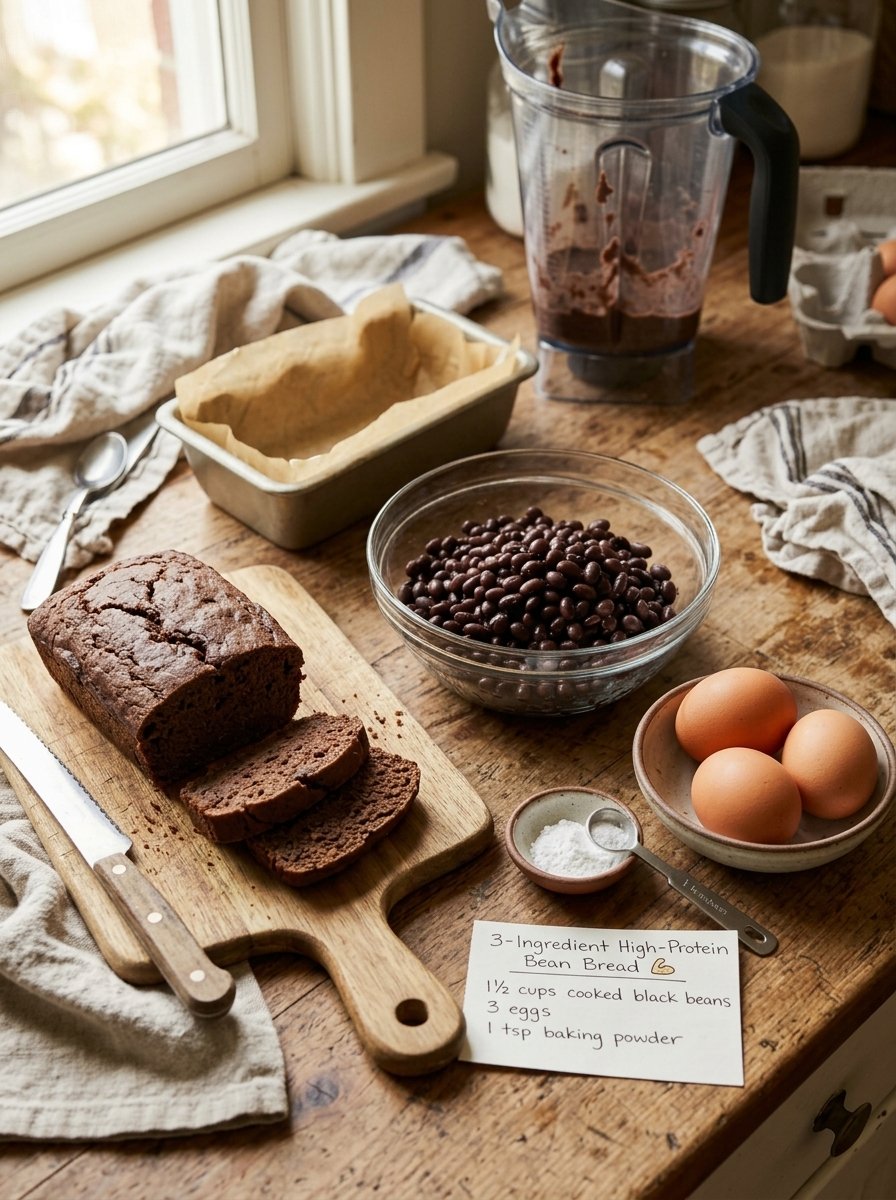
This recipe truly lives up to its name, requiring just three ingredients to create a complete, satisfying loaf of bread.
- 1½ cups cooked black beans, well drained and rinsed
- 3 large eggs
- 1 teaspoon baking powder
Ingredient Notes and Substitutions
Cooked black beans: You can use canned black beans for convenience, or cook dried black beans yourself if you prefer. If using canned beans, make sure to drain and rinse them thoroughly under cold water before measuring, as the canning liquid can be quite starchy and could affect the final consistency of the batter if not properly removed. If cooking dried beans, allow them to cool slightly before draining well and measuring out the correct amount.
Eggs: Large eggs are essential to this recipe’s structure, given the complete absence of flour or any other binding agent. Since this recipe relies so heavily on eggs for both moisture and structure, substitutions aren’t recommended if you’re hoping to achieve a similar texture and result.
Baking powder: Make sure your baking powder is fresh and hasn’t expired, as this is the only ingredient in the entire recipe responsible for giving the bread any lift or rise. Using old, inactive baking powder would likely result in a notably flatter, denser final loaf.
While this recipe is intentionally kept to just three ingredients, many people choose to add simple seasonings like salt, garlic powder, or dried herbs to enhance the flavor — more on that in the variations section below.
Step-by-Step Instructions
Step 1: Prepare the Oven and Pan
Preheat your oven to 350°F (175°C). Line a small loaf pan with parchment paper, leaving a little overhang on the sides for easy removal later. Lightly grease the parchment paper or any exposed areas of the pan to help prevent sticking.
Step 2: Blend the Ingredients
Add the well-drained and rinsed black beans, eggs, and baking powder to a blender or food processor. Blend on high speed until the mixture becomes completely smooth and creamy, with absolutely no visible bean skins or chunks remaining. Depending on the power of your blender, this may take a minute or two — stop periodically to scrape down the sides with a spatula, ensuring everything is fully incorporated into a smooth, uniform batter.
Achieving a truly smooth blend is particularly important in this minimal-ingredient recipe, since there’s no flour or other ingredient to help mask any remaining texture from unblended beans.
Step 3: Fill the Pan
Pour the smooth, blended batter into your prepared loaf pan. Use a spatula to spread and smooth the top evenly, ensuring the batter is distributed consistently throughout the pan for even baking.
Step 4: Bake Until Set
Place the loaf pan into your preheated oven and bake for 30 to 35 minutes. You’ll know the bread is done when it feels firm to the touch in the center, and a toothpick inserted into the middle of the loaf comes out clean, without any wet batter sticking to it. Because this bread doesn’t develop a traditional golden-brown crust the way flour-based bread does, the toothpick test is the most reliable method for determining doneness.
Step 5: Cool Completely Before Slicing
Once out of the oven, allow the bread to cool in the pan for about 10 minutes. This initial resting period helps the structure firm up slightly, making it easier to remove from the pan in one piece. After 10 minutes, carefully transfer the loaf to a wire cooling rack and let it cool completely before attempting to slice it.
This cooling step is especially crucial for this particular recipe. Given the complete reliance on eggs for structure, with no flour or gluten to provide additional support, the bread needs adequate time to fully set as it cools. Slicing too early will likely result in a loaf that falls apart or has a gummy, underset texture in the center.
What to Serve with 3-Ingredient Black Bean Bread
Thanks to its neutral, adaptable flavor, this bread pairs well with both savory and lightly sweet toppings, making it a versatile addition to many different meals.
- Avocado toast: Top slices with mashed avocado, a pinch of salt, and red pepper flakes for a satisfying, protein-rich breakfast or snack.
- Nut butter and fruit: For a slightly sweeter option, top with almond or peanut butter and sliced banana or berries.
- Eggs: Serve alongside scrambled or fried eggs for an extra-high-protein breakfast that pairs naturally with the bread’s own egg-based composition.
- Soups and stews: The bread’s dense, hearty texture makes it great for dipping into warm, comforting soups.
- Savory spreads: Hummus, cream cheese, or a simple herbed cheese spread all work beautifully with this bread’s neutral flavor base.
- Simply with salt and olive oil: A good drizzle of olive oil and flaky salt lets the bread’s simple flavor shine as a quick, satisfying snack.
Tips for the Best 3-Ingredient Black Bean Bread
Drain and rinse the beans thoroughly. Excess liquid from canned beans can throw off the consistency of the batter, so take care to drain and rinse the beans well, shaking off as much excess liquid as possible before adding them to the blender.
Blend until completely smooth. Since this recipe has no flour to help bind or mask any texture, any remaining bean chunks or skins will be noticeable in the finished bread. Blend thoroughly and scrape down the sides as needed for the smoothest possible result.
Use the toothpick test for doneness. This bread won’t develop a traditional golden crust, so relying on a toothpick inserted into the center is the most accurate way to determine when it’s fully baked.
Don’t skip the cooling time. Given this bread’s complete reliance on eggs for structure, allowing it to cool fully before slicing is essential for achieving clean slices and the right final texture.
Store in the refrigerator. Due to its high moisture content and egg-based composition, this bread should be refrigerated rather than stored at room temperature.
Add seasoning if desired. While the base recipe is intentionally minimal, feel free to mix in a pinch of salt, garlic powder, or dried herbs for a more flavorful loaf without compromising the simplicity of the method.
Recipe Variations to Try
While this recipe’s charm lies in its simplicity, there are a few easy ways to customize it if you’d like to experiment.
Savory Herb Version: Add a teaspoon of garlic powder, a pinch of salt, and a teaspoon of dried Italian herbs or oregano to the blender for a more seasoned, flavorful loaf.
Cheesy Version: Blend in a handful of shredded cheddar or grated Parmesan for a richer, cheesier bread.
Spiced Version: Add ground cumin and a pinch of smoked paprika for a Southwestern-inspired flavor profile that pairs particularly well with the black beans.
Seeded Topping: Sprinkle sesame seeds, sunflower seeds, or everything bagel seasoning over the top of the batter before baking for added crunch and visual appeal.
Spicy Version: Add a pinch of cayenne pepper or a few dashes of hot sauce to the batter for a loaf with a subtle, warming heat.
Lightly Sweet Version: For a slightly different take, add a touch of cinnamon and a small amount of a natural sweetener like mashed banana, keeping in mind this will shift the bread away from its purely savory, minimal-ingredient roots.
How to Store and Reheat Leftovers
Due to its simple but moisture-rich, egg-and-bean-based composition, proper storage is important for maintaining this bread’s freshness and safety.
Refrigerating: Store the bread in an airtight container in the refrigerator for up to 4–5 days. Because this bread contains no preservative-rich flour and has a relatively high moisture content from the beans and eggs, refrigeration is recommended over leaving it at room temperature.
Freezing: This bread freezes well, either as a whole loaf or sliced into individual portions. Wrap tightly in plastic wrap and then foil, or place in a freezer-safe bag with as much air removed as possible, and freeze for up to 2 months. Thaw in the refrigerator before serving.
Reheating: This bread can be enjoyed cold directly from the refrigerator, or lightly toasted for a few minutes if you prefer a warm slice with a slightly crisp exterior. Toasting is particularly recommended, as it can help firm up the texture slightly and enhance the overall eating experience.
Frequently Asked Questions
Can I use a different type of bean?
While this recipe is specifically developed around black beans, other cooked beans such as pinto beans or kidney beans could potentially be substituted, though the flavor and color of the finished bread would be different. Black beans tend to result in a more neutral flavor once blended compared to some other bean varieties.
Does this bread taste like black beans?
The flavor is noticeably more neutral and mild than you might expect, especially once baked. The eggs help mellow and balance the beans’ natural earthy flavor, resulting in a bread that’s subtly savory rather than strongly “beany” in taste.
Why did my bread turn out too dense or gummy?
This is most commonly caused by not blending the batter long enough to achieve a fully smooth consistency, using expired baking powder, or slicing into the bread before it had fully cooled and set. Make sure to blend thoroughly, use fresh baking powder, and allow adequate cooling time.
Is this bread keto-friendly?
While black beans do contain carbohydrates, this bread is relatively low in carbs compared to traditional flour-based bread, and it’s high in protein, making it a reasonable option for some moderate low-carb approaches, though strict keto dieters may want to verify it fits within their specific carb limits.
Can I add flour to this recipe to change the texture?
While the beauty of this recipe lies in its three-ingredient simplicity, some people do experiment with adding a small amount of flour or almond flour to achieve a slightly different texture. Keep in mind that doing so moves away from the original minimal-ingredient concept and may require adjusting the baking time accordingly.
Final Thoughts
3-Ingredient High-Protein Black Bean Bread is a true testament to the idea that simplicity and nutrition can go hand in hand. With nothing more than black beans, eggs, and baking powder, this recipe creates a genuinely satisfying, sliceable bread that’s naturally gluten-free, packed with protein, and endlessly adaptable to whatever toppings or flavors you’re in the mood for.
Whether you’re looking for a quick, nutrient-dense bread alternative, following a gluten-free lifestyle, or simply intrigued by the challenge of baking something delicious with just three humble ingredients, this black bean bread is well worth trying. Once you taste how surprisingly good — and how incredibly easy — this bread is to make, it may just earn a regular spot in your kitchen routine.