
Simple Blender Lentil Bread
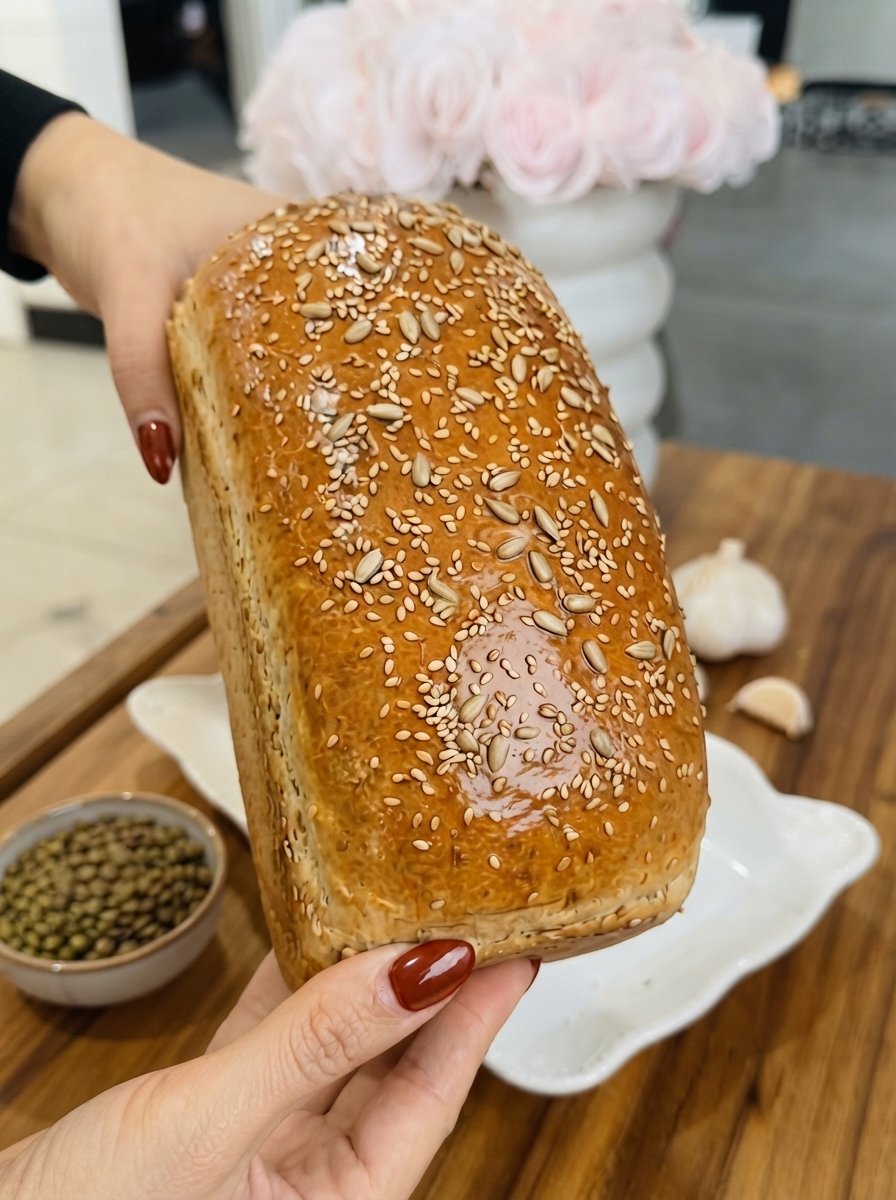
Simple Blender Lentil Bread: The Hearty, Protein-Packed Loaf You Make in One Blender ✨
There’s something wonderfully satisfying about a recipe that defies expectations, and this Simple Blender Lentil Bread does exactly that. Made almost entirely in a blender, this hearty, tender loaf transforms humble cooked lentils into a surprisingly delicious bread that’s perfect for toast, sandwiches, or serving alongside your favorite soups and salads. If you’ve never considered lentils as a bread ingredient before, this recipe is about to change your mind completely.
What makes this bread so remarkable is both its simplicity and its nutritional profile. Unlike traditional bread recipes that rely on flour, yeast, and extended kneading and rising times, this recipe uses cooked lentils blended with eggs, Greek yogurt, and a handful of seasonings to create a naturally gluten-free, protein-rich bread base. There’s no flour at all in this recipe, making it an excellent option for anyone following a gluten-free diet, looking to increase their protein and fiber intake, or simply searching for a new, interesting bread recipe to add to their repertoire.
The entire process, aside from cooking the lentils (or using pre-cooked ones to save time), comes together in a single blender, meaning minimal dishes and virtually no hands-on effort beyond measuring ingredients and pressing a button. In under an hour of active time, you can have a warm, hearty, nutrient-dense loaf ready to slice and enjoy. Let’s explore exactly why this unconventional bread recipe works so well and how to make it perfectly every time.
Why This Simple Blender Lentil Bread Recipe Works So Well
At first glance, using lentils as the primary base for a bread recipe might seem unusual, but the science behind why this works is actually quite straightforward. Cooked lentils, once blended until smooth, take on a texture similar to a thick, hearty batter or puree — not unlike how blended beans are often used in grain-free baking. This puree provides structure, moisture, and a significant protein and fiber boost to the finished bread.
Combined with eggs, which act as the primary binding and leavening agent in this flourless recipe, the blended lentils create a cohesive batter that holds together beautifully once baked. Eggs are particularly important in this recipe since there’s no gluten-forming flour present to provide structure — the eggs’ proteins coagulate during baking, helping the loaf set into a sliceable, bread-like texture rather than remaining a dense, wet mass.
Greek yogurt contributes additional moisture and a subtle tanginess to the bread, while also adding even more protein to an already protein-forward recipe. The combination of lentils, eggs, and Greek yogurt results in a bread that’s significantly higher in protein than traditional wheat-based bread, making it a particularly satisfying option for breakfast or a midday snack.
Olive oil adds richness and helps keep the bread moist, while baking powder provides the necessary lift, since this recipe doesn’t rely on yeast or any traditional rising process. The seasonings — garlic powder, dried oregano, salt, and black pepper — infuse the bread with a savory, herby flavor profile that makes it a wonderful pairing for soups, salads, or served alongside savory spreads like hummus or avocado.
Because this bread contains no flour, it has a naturally dense, moist texture quite different from traditional wheat bread — more similar to a savory quick bread or a hearty vegetable loaf than a classic fluffy sandwich bread. This unique texture is part of what makes it so satisfying and filling, perfect for those looking for a heartier, more substantial bread option.
Ingredients You’ll Need
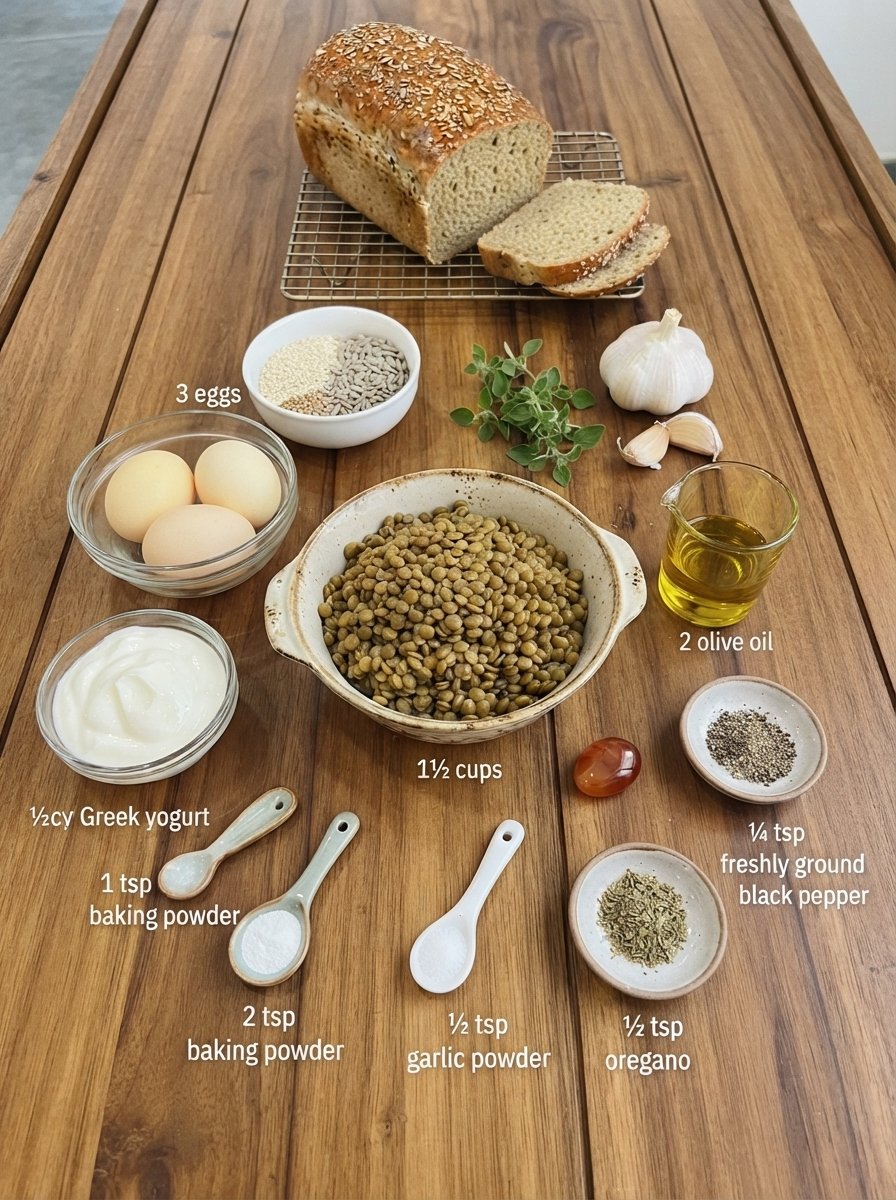
This recipe uses just a handful of simple, accessible ingredients, all blended together in one step.
- 1½ cups cooked brown or green lentils, well drained
- 3 large eggs
- ½ cup plain Greek yogurt
- 2 tablespoons olive oil
- 1 teaspoon baking powder
- ½ teaspoon salt
- ½ teaspoon garlic powder
- ½ teaspoon dried oregano
- ¼ teaspoon black pepper
Ingredient Notes and Substitutions
Cooked lentils: Brown or green lentils both work well in this recipe, as they hold their shape well when cooked and have a mild, earthy flavor that blends smoothly into the batter. You can cook dried lentils yourself (about ½ cup dried lentils will yield roughly 1½ cups cooked), or use canned lentils for convenience, making sure to drain and rinse them thoroughly before using. Red or yellow lentils are not recommended for this recipe, as they tend to break down into a much softer, mushier texture that isn’t ideal for this bread’s structure.
Eggs: Large eggs provide essential structure and binding in this flourless recipe. Since there’s no gluten present to hold the bread together, the eggs play a particularly crucial role here, so this substitution isn’t recommended if you’re looking to replicate the same texture.
Greek yogurt: Plain Greek yogurt adds moisture, protein, and a subtle tang to the bread. Full-fat or low-fat versions both work well. If Greek yogurt isn’t available, plain regular yogurt can be used, though it has a slightly higher water content, which may result in a marginally softer final texture.
Olive oil: This adds richness and moisture to the bread. Any neutral or mild-flavored oil can be substituted if you prefer, such as avocado oil.
Baking powder: This is the sole leavening agent in this recipe, so make sure it’s fresh and active for the best rise and texture.
Garlic powder and dried oregano: These seasonings give the bread a savory, herby flavor profile reminiscent of a Mediterranean-style flatbread. Feel free to experiment with other dried herbs and spices based on your personal taste preferences.
Step-by-Step Instructions
Step 1: Prepare the Oven and Pan
Preheat your oven to 350°F (175°C). Line a small loaf pan with parchment paper, leaving a bit of overhang on the sides to make removing the finished bread easier. Lightly grease the parchment paper or any exposed sides of the pan to further prevent sticking.
Step 2: Blend Everything Together
Add the cooked, well-drained lentils, eggs, Greek yogurt, olive oil, baking powder, salt, garlic powder, dried oregano, and black pepper to a blender. Blend on high speed until the mixture is completely smooth and creamy, with no visible lentil skins or chunks remaining. This may take a minute or two of blending, depending on the power of your blender — stop and scrape down the sides as needed to ensure everything is evenly incorporated and smoothly blended.
Step 3: Fill the Pan
Pour the smooth batter into your prepared loaf pan. Use a spatula to smooth the top evenly, making sure the batter is distributed evenly throughout the pan for consistent baking.
Step 4: Bake Until Set
Place the loaf pan in your preheated oven and bake for 35 to 40 minutes. The bread is done when it’s firm to the touch in the center and a toothpick inserted into the middle comes out clean, without any wet batter clinging to it. Since this bread doesn’t rise or brown quite the same way traditional flour-based bread does, relying on the toothpick test is the most reliable way to check for doneness.
Step 5: Cool Completely Before Slicing
Once baked, remove the loaf from the oven and let it cool in the pan for about 10 minutes. This initial cooling period allows the bread to firm up slightly, making it easier to remove without falling apart. After 10 minutes, carefully transfer the loaf to a wire cooling rack and allow it to cool completely before slicing.
Cooling completely is especially important for this particular bread, as its flourless, egg-based structure needs adequate time to fully set. Slicing into it while still warm can result in a gummy, overly soft texture that falls apart rather than holding together in clean slices.
What to Serve with Simple Blender Lentil Bread
Given its hearty, savory flavor profile, this bread pairs particularly well with a variety of soups, spreads, and savory toppings.
- Soups and stews: This bread’s dense, hearty texture makes it perfect for dipping into warm soups or stews, soaking up flavorful broth beautifully.
- Hummus or other dips: The savory, herby flavor of the bread pairs naturally with Mediterranean-style dips like hummus, baba ganoush, or tzatziki.
- Avocado toast: Top slices with mashed avocado, a sprinkle of salt, and red pepper flakes for a nutritious, protein-packed breakfast or snack.
- Cheese and charcuterie boards: This bread’s unique flavor and texture make it an interesting addition to a cheese board, served alongside various cheeses and cured meats.
- Salads: Serve alongside a fresh green salad for a light, balanced, protein-rich meal.
- Simply with butter or olive oil: Sometimes the simplest approach is best — a warm slice with a bit of butter or a drizzle of good olive oil highlights the bread’s natural, savory flavor.
Tips for the Best Simple Blender Lentil Bread
Drain the lentils thoroughly. Excess moisture from insufficiently drained lentils can throw off the batter’s consistency, potentially resulting in a bread that’s too wet or dense. Take the time to drain the cooked lentils well, and pat them dry with a clean towel if needed.
Blend until completely smooth. Any remaining lentil chunks or skins can affect the final texture of the bread. Blend thoroughly, scraping down the sides of the blender as needed, to achieve the smoothest possible batter.
Use the toothpick test for doneness. Since this bread doesn’t rise or develop a traditional golden crust the way flour-based bread does, relying on a toothpick inserted into the center is the most reliable way to determine when the bread is fully baked through.
Let the bread cool completely. This is a crucial step for this particular recipe. Because the bread’s structure relies heavily on eggs rather than gluten, it needs adequate time to fully set as it cools. Slicing too early can result in a gummy, less structured texture.
Add toppings before baking for extra flavor and texture. Sprinkling the top of the batter with sesame seeds, additional dried herbs, or a bit of grated Parmesan before baking adds extra flavor and a pleasant textural contrast to the finished loaf.
Store in the refrigerator. Due to its moist, egg-and-dairy-based composition, this bread should be stored in the refrigerator rather than at room temperature, to maintain freshness and prevent spoilage.
Recipe Variations to Try
This unique bread recipe offers several opportunities for creative customization.
Herb-Loaded Version: Add additional fresh or dried herbs, such as rosemary, thyme, or chives, to the batter for a more complex, herbaceous flavor throughout the bread.
Cheesy Version: Blend in a handful of grated Parmesan or shredded cheddar directly into the batter for a cheesier, richer flavor throughout the loaf.
Spiced Version: Add warming spices like cumin and smoked paprika in place of the oregano for a Middle Eastern or North African-inspired flavor profile.
Seeded Topping: Sprinkle the top of the batter with a mixture of sesame seeds, sunflower seeds, or pumpkin seeds before baking for added crunch and visual appeal.
Sun-Dried Tomato and Herb Version: Fold finely chopped sun-dried tomatoes into the batter before baking for bursts of tangy, concentrated flavor throughout the bread.
Spicy Version: Add a pinch of red pepper flakes or a small amount of cayenne pepper to the batter for a bread with a subtle, warming heat.
How to Store and Reheat Leftovers
Due to its unique, egg-and-dairy-based composition, this bread requires slightly different storage considerations compared to traditional flour-based bread.
Refrigerating: Store the bread in an airtight container in the refrigerator for up to 4–5 days. Because of its moisture content and lack of preservative-rich flour, refrigeration is recommended over room-temperature storage to maintain freshness and food safety.
Freezing: This bread freezes well, either as a whole loaf or in individual slices. Wrap tightly in plastic wrap and foil, or place in a freezer-safe bag, and freeze for up to 2 months. Thaw in the refrigerator before serving or reheating.
Reheating: Enjoy slices cold straight from the refrigerator, or warm them briefly in a toaster oven or regular oven for a few minutes if you prefer a warm slice. Toasting individual slices also works well and can add a pleasant, slightly crisp texture to the exterior.
Frequently Asked Questions
Can I use canned lentils for this recipe?
Yes, canned lentils work well in this recipe. Just be sure to drain and rinse them thoroughly before measuring and adding them to the blender, as excess liquid from the can could affect the batter’s consistency.
Is this bread gluten-free?
Yes, since this recipe uses no flour at all and relies entirely on lentils, eggs, and Greek yogurt for its structure, it’s naturally gluten-free, making it a great option for those avoiding gluten.
Why is my bread dense and heavy?
This bread naturally has a denser, heartier texture compared to traditional flour-based bread due to its lack of gluten. However, if it seems excessively dense or undercooked, make sure your baking powder is fresh and that the bread was baked long enough to fully set in the center, using the toothpick test to confirm doneness.
Can I use a different type of bean or legume?
While this recipe is specifically designed around lentils, other cooked legumes like chickpeas or white beans could potentially be used as a substitute, though the flavor and texture of the finished bread would likely be somewhat different.
Does this bread taste like lentils?
The lentils contribute a mild, earthy, savory flavor to the bread rather than an overpowering lentil taste. Combined with the garlic powder and oregano, the overall flavor leans more toward a savory, herby bread than anything distinctly “lentil-flavored.”
Final Thoughts
Simple Blender Lentil Bread is a wonderful example of how creative, unconventional ingredients can come together to create something genuinely delicious and satisfying. This hearty, protein-packed, naturally gluten-free loaf proves that bread doesn’t need flour or yeast to be enjoyable — just a blender, a handful of nutritious ingredients, and a bit of patience while it bakes and cools.
Whether you’re looking for a new gluten-free bread option, trying to increase your protein and fiber intake, or simply want to try something different from your usual bread routine, this Simple Blender Lentil Bread is well worth adding to your recipe collection. Its hearty texture and savory flavor make it a wonderful companion to soups, salads, and spreads, offering a nutritious and satisfying addition to any meal.