3-Ingredient High-Protein Kidney Bean Bread
3-Ingredient High-Protein Kidney Bean Bread: Easy Flourless Loaf With Eggs & Baking Powder 🫘🍞💪
Bread without flour sounds like a trick, but this 3-Ingredient High-Protein Kidney Bean Bread is the real thing: a tender, sliceable, savory loaf made from just cooked kidney beans, eggs, and baking powder. There’s no flour, no yeast, no kneading, and no waiting for dough to rise. You drop everything into a blender, pour the batter into a loaf pan, and about 50 minutes later you’re slicing into a soft, hearty loaf that’s perfect for breakfast toast, sandwiches, or a satisfying savory snack.
It’s an easy, flourless alternative to traditional bread, and a smart way to turn a humble can of beans into something unexpected. The loaf is naturally higher in protein than typical sandwich bread, thanks to the beans and eggs, and it comes together with a handful of pantry staples.
In this complete guide, you’ll find the full recipe, a closer look at each of the three ingredients, step-by-step instructions with visual cues, important notes on cooking kidney beans safely, the science behind this flourless loaf, expert tips, troubleshooting help, savory and sweet variations, serving ideas, storage and freezing instructions, and answers to the most common questions.
Why You’ll Love This Kidney Bean Bread ❤️
It truly takes three ingredients. Kidney beans, eggs, and baking powder are all you need. No flour, sugar, oil, or yeast required.
It’s flourless. For anyone avoiding wheat flour, this is a simple way to enjoy a bread-like loaf. If you need it to be strictly gluten-free, check that your baking powder and beans are labeled gluten-free.
It’s higher in protein. Beans and eggs both contribute protein, so a slice is more filling than a typical white bread slice.
It’s incredibly quick. Ten minutes of prep, then it bakes while you do something else. Total time is about 50 minutes.
There’s no kneading, rising, or proofing. Baking powder gives lift, and the blender does the mixing.
It’s budget-friendly. Canned kidney beans, eggs, and baking powder are inexpensive staples.
It’s versatile. Toast it and top it with avocado, spread it with cream cheese, build a sandwich, or serve it next to eggs and soup.
It’s great for meal prep. Slice and freeze for quick breakfasts and snacks.
It’s a creative way to use beans. Even bean-skeptics are often surprised at how mild and bread-like the loaf tastes.
Recipe Overview
- Prep Time: 10 minutes
- Cook Time: 35–40 minutes
- Total Time: 50 minutes
- Servings: 8 slices
Ingredients You’ll Need 🛒
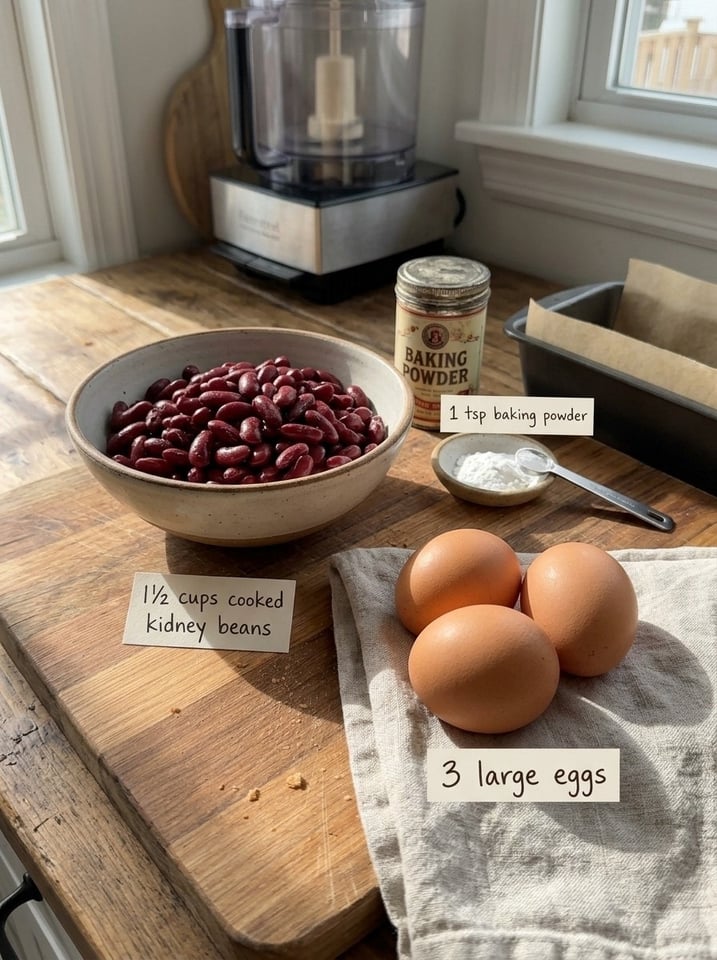
- 1½ cups (about 250 g) cooked kidney beans, drained and rinsed
- 3 large eggs
- 1 teaspoon baking powder
A Closer Look at the Ingredients
Cooked kidney beans. Kidney beans are the base of this loaf. They provide structure, protein, fiber, and a mild, earthy flavor. Canned kidney beans are the easiest option. Drain and rinse them thoroughly to remove the canning liquid, which can be salty and make the batter too wet. Pat them dry for the best results. A standard 15-ounce can yields about 1½ cups of drained beans, close to the amount you need. Light red and dark red kidney beans both work. If you cook dried beans yourself, see the safety notes below.
Large eggs. Eggs bind the batter, add protein, and give the loaf its structure and lift. They act as the glue that holds the blended beans together and set as the loaf bakes. Use large eggs at room temperature for the smoothest blend and the most even rise.
Baking powder. Baking powder provides lift, making the loaf lighter and less dense than a plain blended bean mixture would be. Use fresh baking powder, since it loses strength over time. To test it, stir a half teaspoon into a little hot water. It should fizz right away.
Important: Cooking Kidney Beans Safely
Kidney beans naturally contain a compound called phytohaemagglutinin, which can cause illness if the beans are eaten raw or undercooked. Canned kidney beans are fully cooked during processing and are safe to use straight from the can after draining and rinsing.
If you’re using dried kidney beans, soak them for at least 5 hours or overnight, drain and discard the soaking water, then boil them vigorously in fresh water for at least 10 minutes, followed by simmering until completely tender, usually around 45 to 60 minutes. Don’t use a slow cooker to cook raw kidney beans, because the low temperature may not destroy the compound. Cool and drain the cooked beans before using them in this recipe. When in doubt, use canned beans.
Step-by-Step Instructions 👩🍳
Step 1: Preheat the Oven
Heat your oven to 350°F (175°C). Line a small loaf pan with parchment paper, leaving an overhang on the long sides so you can lift the loaf out easily, or lightly grease the pan. A pan around 8½ × 4½ inches works well. If you only have a standard 9 × 5-inch pan, the loaf will be thinner and may bake slightly faster, so check for doneness a few minutes early.
Step 2: Prepare the Beans
Drain and rinse the kidney beans thoroughly under cold water until the water runs clear. Pat them dry with a clean towel or paper towels to remove excess moisture. Excess liquid is the main reason bean breads turn out damp or dense, so don’t skip this step.
Step 3: Blend the Ingredients
Add the beans, eggs, and baking powder to a blender or food processor. Blend until smooth, scraping down the sides as needed. The batter should look thick, pourable, and uniform, a bit like a thick pancake batter, with no visible bean pieces. If you’re using a food processor, process longer and scrape down the bowl several times to avoid chunks. A high-speed blender gives the smoothest result. Because the baking powder activates when it meets moisture, work quickly from here.
Step 4: Fill the Pan
Pour the batter into the prepared loaf pan and smooth the top with a spatula. Tap the pan gently on the counter to release large air bubbles.
Step 5: Bake
Bake for 35 to 40 minutes, or until the loaf is set in the center and a toothpick inserted comes out mostly clean. The top should be firm to the touch and lightly golden, and the edges should pull away slightly from the pan. If the top is browning too quickly, loosely cover it with foil for the last 10 minutes.
Step 6: Cool Completely
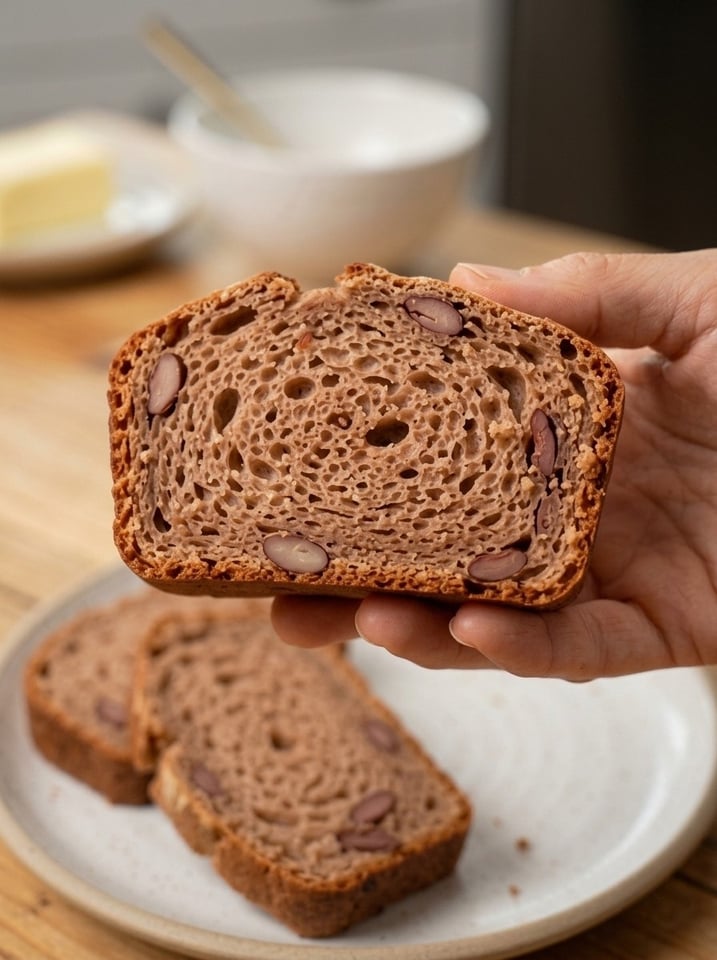
Let the bread rest in the pan for 10 minutes, then lift it out and transfer it to a wire rack. Allow it to cool fully before slicing so it holds together better. Bean and egg-based loaves are delicate when warm, and the structure firms up as it cools.
Step 7: Serve and Enjoy
Slice the loaf and toast the slices for the best texture. Top with avocado, cream cheese, eggs, or your favorite sandwich fillings.
The Science Behind This Flourless Loaf 🔬
Beans provide structure. Cooked beans are rich in starch and protein. When blended, the starch absorbs moisture and sets as it heats, while the proteins help form a cohesive structure. That’s why the loaf holds together without wheat flour.
Eggs bind and set. Egg proteins coagulate as they heat, firming the batter into a sliceable loaf. They also trap air, which adds lightness.
Baking powder adds lift. The acid and base in baking powder react with moisture and heat to release carbon dioxide, puffing the batter and keeping the loaf from being too dense.
No gluten means a tender, delicate crumb. Wheat bread gets its chew and elasticity from gluten. This loaf has none, so it’s softer, more cake-like or custardy, and more fragile than traditional bread. That’s why cooling and toasting matter.
Cooling sets the crumb. As the loaf cools, starches and proteins firm up and moisture redistributes, making clean slices possible.
Expert Tips for Best Results 💡
Drain the beans well. Extra liquid can make the bread dense or damp. Rinse, drain, and pat dry.
Blend thoroughly. A smooth batter gives the loaf a more even texture. Scrape down the sides and blend until completely smooth.
Add flavor if desired. Garlic powder, black pepper, or dried herbs can make it more savory, though these additions mean it’s no longer a three-ingredient recipe.
Use room-temperature eggs. They blend more smoothly and bake more evenly.
Line the pan. Parchment makes removal easy and prevents sticking.
Bake until fully set. The center should feel firm and a toothpick should come out mostly clean. An underbaked loaf is gummy.
Cool completely. It’s tempting to slice early, but a fully cooled loaf holds together much better.
Toast the slices. Toasting improves flavor and texture, giving a crisp edge and a more bread-like bite.
Use a sharp or serrated knife. Slice gently with a sawing motion to avoid crumbling.
Don’t open the oven door early. Wait until the last 10 minutes to check, so the loaf doesn’t sink.
Storage. Refrigerate in an airtight container for up to 4 days, or freeze slices individually.
Troubleshooting Common Problems
My loaf is dense and heavy. Wet beans, old baking powder, or underblending can cause density. Dry the beans, check your baking powder, and blend until smooth.
My loaf is gummy in the center. It may need more baking time, or it was sliced before cooling. Bake until set, and let it cool fully.
My loaf sank in the middle. The oven door may have been opened too early, or the loaf was underbaked. Bake until the center is firm.
My loaf is crumbly. It may have been sliced while warm, or overbaked. Cool completely and slice gently with a serrated knife.
My loaf tastes eggy. Add garlic powder, herbs, or a pinch of salt to balance the flavor. Using fresh eggs and baking until just set also helps.
My loaf tastes too beany. Rinse the beans very well, and add savory seasonings, such as garlic powder, onion powder, or cumin.
My loaf is bland. The recipe has no salt. Add a pinch of salt, or serve toasted with flavorful toppings.
The loaf has a bitter or metallic taste. The baking powder may not have been well mixed, or you may have used too much. Use exactly 1 teaspoon and blend well.
The loaf is too pale. Bake a few minutes longer, or brush the top with a little beaten egg before baking.
The loaf is too dark on top. Tent with foil and reduce the oven temperature slightly.
The loaf is greyish or pinkish in color. Kidney beans give the loaf a slightly earthy, reddish-brown tint. This is normal.
Delicious Variations to Try 🌿
Note: The variations below add ingredients, so they’re no longer three-ingredient recipes.
Savory herb bean bread. Add 1 teaspoon of dried Italian herbs, ½ teaspoon of garlic powder, and a pinch of salt.
Cheesy bean bread. Fold in ½ cup of shredded cheddar or Parmesan before baking.
Everything seasoning loaf. Sprinkle everything bagel seasoning on top before baking.
Spiced bean bread. Add ½ teaspoon of cumin and ½ teaspoon of smoked paprika for a Tex-Mex flavor.
Jalapeño cheddar version. Add diced pickled jalapeños and cheddar.
Seeded bean bread. Sprinkle sesame seeds, pumpkin seeds, or sunflower seeds on top before baking.
Garlic and rosemary version. Add roasted garlic and chopped fresh rosemary.
Mini muffins. Divide the batter into a lined muffin tin and bake for about 18 to 22 minutes.
Flatbread version. Spread the batter thin on a lined baking sheet and bake for around 15 to 20 minutes for a sturdy savory flatbread.
Other beans. Try black beans, pinto beans, or white beans for a different flavor and color.
What to Serve with Kidney Bean Bread 🍽️
- Avocado toast: Top with sliced avocado, lemon, and chili flakes.
- Cream cheese and veggies: Spread cream cheese and top with cucumbers or tomatoes.
- Eggs: Serve with scrambled, fried, or poached eggs.
- Sandwiches: Fill with turkey, chicken salad, or hummus and vegetables. Toast the bread first for sturdiness.
- Soup and chili: Serve alongside a bowl of chili, vegetable soup, or tomato soup.
- Cheese toasts: Top with cheese and broil until bubbly.
- Hummus and veggies: Spread hummus and top with roasted peppers.
- Smoked salmon: Top with cream cheese, salmon, and dill.
- Nut butter: For a lightly sweet snack, spread with almond or peanut butter.
- Salads: Serve a slice on the side of a green salad.
Storage and Freezing Instructions
Refrigerator: Because the loaf contains eggs and beans, it’s best stored in the refrigerator. Cool completely, then store in an airtight container for up to 4 days.
Freezer: Slice the cooled loaf, place parchment between the slices, and freeze in a freezer bag for up to 3 months. Toast slices directly from frozen, or thaw in the refrigerator.
Reheating: Warm slices in a toaster, toaster oven, or a 350°F (175°C) oven for 5 to 8 minutes, until heated through and lightly crisp.
Room temperature: Don’t leave the bread out for more than 2 hours, since it contains eggs.
Make-ahead: Because the baking powder begins working as soon as it meets moisture, bake right after blending. Instead, bake the loaf ahead and refrigerate or freeze it.
Frequently Asked Questions
Is this bread really made with just three ingredients? Yes. Cooked kidney beans, eggs, and baking powder are all it needs. Any seasonings or toppings you add make it more than three.
Does it taste like beans? It has a mild, earthy, savory flavor, and many people find it surprisingly neutral. Toasting and flavorful toppings help.
Is this bread gluten-free? It contains no wheat flour, but check that your baking powder and canned beans are labeled gluten-free if you need to avoid gluten strictly.
Is it high in protein? Beans and eggs both provide protein, making the loaf more protein-rich than typical bread. The exact amount depends on your ingredients, so check labels if you’re tracking nutrition.
Can I use dried kidney beans? Yes, but they must be fully cooked first. Soak, boil vigorously for at least 10 minutes, and simmer until completely tender. Never use raw or undercooked kidney beans, and don’t cook raw kidney beans in a slow cooker.
Can I use other beans? Yes. Black beans, pinto beans, white beans, and chickpeas can work, though the flavor and color will differ.
Can I make it without eggs? Eggs are essential for structure in this recipe. An egg replacement may work, but results will vary.
Why is my loaf gummy? It was likely underbaked, or sliced before it cooled completely. Bake until set and cool fully.
Can I make it sweet? Yes. Add a tablespoon or two of honey or maple syrup, a teaspoon of vanilla, and cinnamon, though it will no longer be a three-ingredient recipe.
Can I use a food processor instead of a blender? Yes, but blend longer and scrape down the sides often to make sure the batter is smooth.
Can I double the recipe? Yes, for a 9 × 5-inch pan or two small pans. Check for doneness a few minutes early or later depending on the pan.
Can I make muffins instead? Yes. Bake in a lined muffin tin for roughly 18 to 22 minutes, until set.
Why does the bread need to cool before slicing? It’s delicate and fragile when warm. Cooling lets the structure set, so slices hold together.
Does it brown like regular bread? It turns lightly golden on top, but not as deeply as wheat bread. Toasting adds color and crispness.
Final Thoughts 🫘🍞
This 3-Ingredient High-Protein Kidney Bean Bread shows how a simple can of beans can become a tender, sliceable loaf with almost no effort. With just beans, eggs, and baking powder, a blender, and under an hour, you have a flourless bread that’s ideal for breakfast toast, sandwiches, and savory snacking. It’s quick, affordable, protein-rich, and easy to customize with your favorite herbs and spices.
Drain and dry those beans, blend until smooth, bake until set, and let the loaf cool before slicing. Then toast it, top it, and enjoy. Save this recipe for the next time you want an easy homemade loaf!
Print
3-Ingredient High-Protein Kidney Bean Bread
Ingredients
Scale
- 1½ cups (about 250 g) cooked kidney beans, drained and rinsed
- 3 large eggs
- 1 teaspoon baking powder
A Closer Look at the Ingredients
Cooked kidney beans. Kidney beans are the base of this loaf. They provide structure, protein, fiber, and a mild, earthy flavor. Canned kidney beans are the easiest option. Drain and rinse them thoroughly to remove the canning liquid, which can be salty and make the batter too wet. Pat them dry for the best results. A standard 15-ounce can yields about 1½ cups of drained beans, close to the amount you need. Light red and dark red kidney beans both work. If you cook dried beans yourself, see the safety notes below.
Large eggs. Eggs bind the batter, add protein, and give the loaf its structure and lift. They act as the glue that holds the blended beans together and set as the loaf bakes. Use large eggs at room temperature for the smoothest blend and the most even rise.
Baking powder. Baking powder provides lift, making the loaf lighter and less dense than a plain blended bean mixture would be. Use fresh baking powder, since it loses strength over time. To test it, stir a half teaspoon into a little hot water. It should fizz right away.
Important: Cooking Kidney Beans Safely
Kidney beans naturally contain a compound called phytohaemagglutinin, which can cause illness if the beans are eaten raw or undercooked. Canned kidney beans are fully cooked during processing and are safe to use straight from the can after draining and rinsing.
If you’re using dried kidney beans, soak them for at least 5 hours or overnight, drain and discard the soaking water, then boil them vigorously in fresh water for at least 10 minutes, followed by simmering until completely tender, usually around 45 to 60 minutes. Don’t use a slow cooker to cook raw kidney beans, because the low temperature may not destroy the compound. Cool and drain the cooked beans before using them in this recipe. When in doubt, use canned beans.
Instructions
Step 1: Preheat the Oven Heat your oven to 350°F (175°C). Line a small loaf pan with parchment paper, leaving an overhang on the long sides so you can lift the loaf out easily, or lightly grease the pan. A pan around 8½ × 4½ inches works well. If you only have a standard 9 × 5-inch pan, the loaf will be thinner and may bake slightly faster, so check for doneness a few minutes early.
Step 2: Prepare the Beans Drain and rinse the kidney beans thoroughly under cold water until the water runs clear. Pat them dry with a clean towel or paper towels to remove excess moisture. Excess liquid is the main reason bean breads turn out damp or dense, so don’t skip this step.
Step 3: Blend the Ingredients Add the beans, eggs, and baking powder to a blender or food processor. Blend until smooth, scraping down the sides as needed. The batter should look thick, pourable, and uniform, a bit like a thick pancake batter, with no visible bean pieces. If you’re using a food processor, process longer and scrape down the bowl several times to avoid chunks. A high-speed blender gives the smoothest result. Because the baking powder activates when it meets moisture, work quickly from here.
Step 4: Fill the Pan Pour the batter into the prepared loaf pan and smooth the top with a spatula. Tap the pan gently on the counter to release large air bubbles.
Step 5: Bake Bake for 35 to 40 minutes, or until the loaf is set in the center and a toothpick inserted comes out mostly clean. The top should be firm to the touch and lightly golden, and the edges should pull away slightly from the pan. If the top is browning too quickly, loosely cover it with foil for the last 10 minutes.
Step 6: Cool Completely Let the bread rest in the pan for 10 minutes, then lift it out and transfer it to a wire rack. Allow it to cool fully before slicing so it holds together better. Bean and egg-based loaves are delicate when warm, and the structure firms up as it cools.
Step 7: Serve and Enjoy Slice the loaf and toast the slices for the best texture. Top with avocado, cream cheese, eggs, or your favorite sandwich fillings.