
Easy Homemade French Loaf Bread
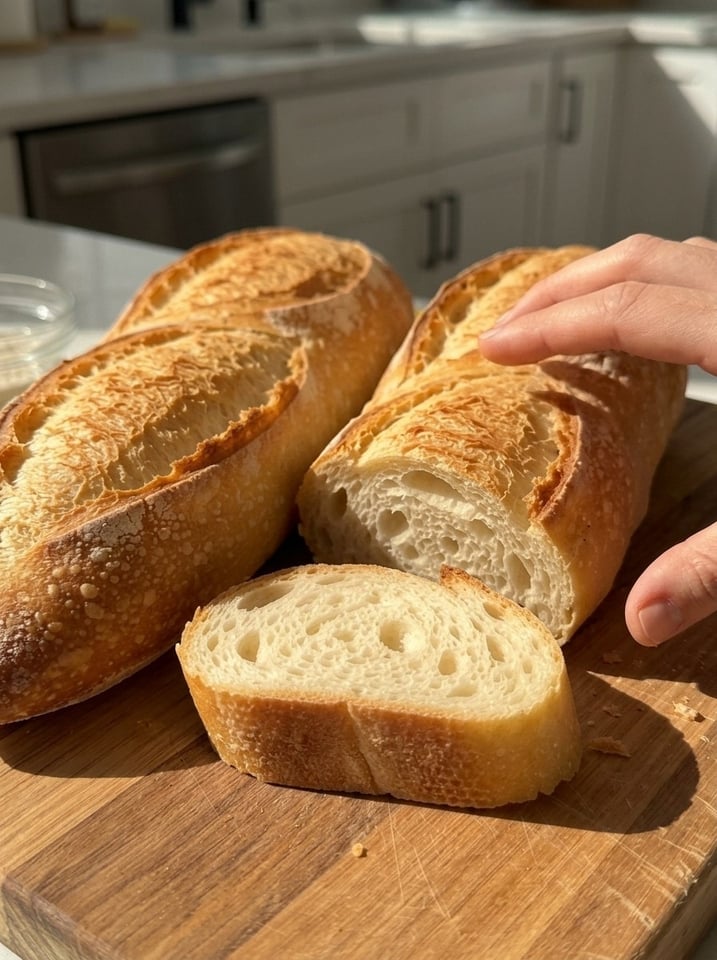
Easy Homemade French Loaf Bread: Golden, Crispy, and Chewy
There is nothing quite like the sound of a crusty loaf crackling as it cools on the counter. That golden crust, the soft and airy center, and the smell filling your kitchen are the reasons so many home bakers fall in love with homemade French bread. The good news is that it does not take a professional oven or years of practice. All you need is five basic ingredients, a little patience, and the tips in this guide.
This French loaf bread is crispy on the outside and soft, airy, and chewy on the inside, just like fresh bakery bread. It is perfect for sandwiches, dunking in soup, turning into garlic bread, or simply eating warm with butter.
In this guide you will find the full recipe, step-by-step instructions with photos-worthy details, expert tips for a crackly crust, ways to flavor and vary the loaves, and answers to the most common questions about storing, freezing, and troubleshooting.
Recipe at a glance
- Prep time: 20 minutes
- Cook time: 25 to 30 minutes
- Total time: About 2 hours
- Servings: 2 small loaves
- Course: Bread, side dish
- Cuisine: French-style
Why You Will Love This French Loaf Bread
Bakery-style results at home
The crust turns deeply golden and crisp, while the inside stays soft, light, and chewy. It is the classic texture people expect from a good French loaf.
Only five simple ingredients
Flour, water, yeast, salt, and a little sugar are all you need. There is no butter, no milk, and no eggs, so you can make it any time using pantry staples.
Beginner friendly
The dough is mixed in one bowl and kneaded by hand. There are no special techniques, and the steps are easy to follow even if you have never baked bread before.
Incredibly versatile
Slice it for sandwiches, toast it for bruschetta, tear it for dipping in soup, or turn it into garlic bread. One recipe covers many meals.
Makes two loaves
The recipe yields two small loaves. Enjoy one fresh and freeze the other, or share it with a neighbor or friend.
Better than store-bought
Fresh homemade bread has a flavor and aroma that packaged loaves cannot match, and it contains no preservatives.
Ingredients You Will Need
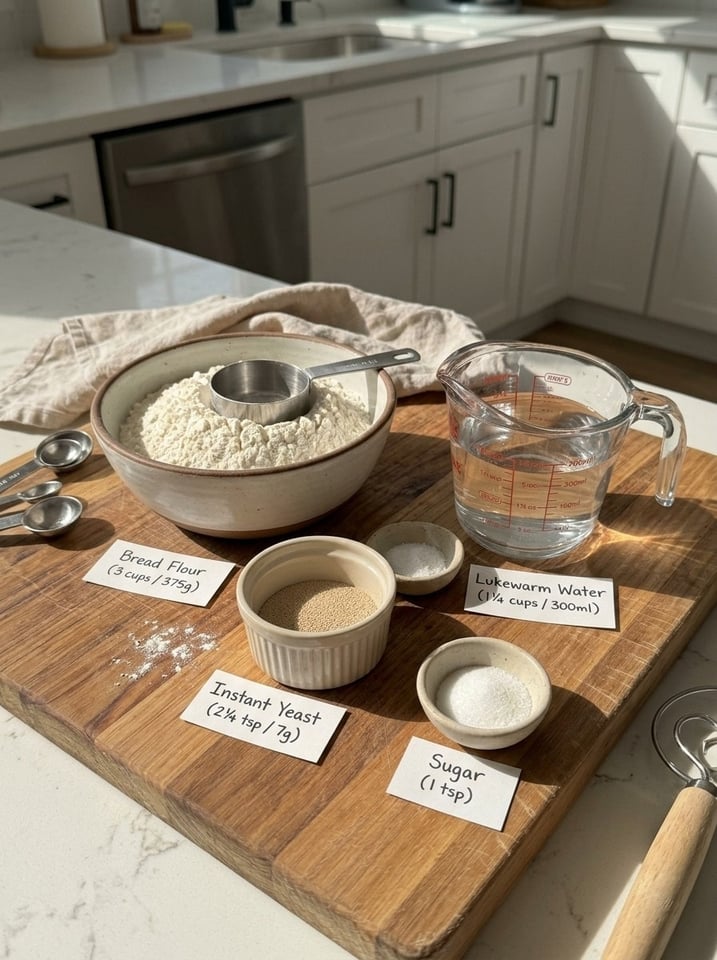
3 cups (375 g) bread flour or all-purpose flour
Bread flour has a higher protein content, which produces more gluten and a chewier, taller loaf. All-purpose flour also works well and gives a slightly softer crumb. Use whichever you have.
1¼ cups (300 ml) lukewarm water
Water hydrates the flour and activates the yeast. It should feel comfortably warm, around 105 to 110°F (40 to 43°C). Water that is too hot can kill the yeast, and water that is too cold slows the rise.
2¼ tsp (7 g) instant yeast
This is one standard packet. Instant yeast can be mixed directly with the dry ingredients, with no need to proof it first. If you only have active dry yeast, see the FAQ below.
1½ tsp salt
Salt adds flavor and strengthens the gluten structure. Do not skip it, since bread without salt tastes flat.
1 tsp sugar
A small amount of sugar gives the yeast a quick boost and helps the crust brown nicely. It does not make the bread sweet.
How to Make French Loaf Bread: Step by Step
Step 1: Mix the ingredients
In a large bowl, combine the flour, yeast, sugar, and salt. Pour in the lukewarm water and stir with a spoon or spatula until a rough, shaggy dough forms and no dry flour remains.
Step 2: Knead the dough
Turn the dough onto a lightly floured surface and knead for 8 to 10 minutes, until it feels smooth and elastic. Push the dough away with the heel of your hand, fold it back over itself, turn it, and repeat. If the dough is very sticky, add flour a tablespoon at a time. A stand mixer with a dough hook works too, at medium-low speed for about 6 to 8 minutes.
To check if you have kneaded enough, try the windowpane test. Pinch off a small piece and gently stretch it. If it stretches thin enough to let light through without tearing, the gluten is ready.
Step 3: Let the dough rise
Place the dough in a lightly greased bowl and turn it once to coat. Cover with a damp towel or plastic wrap and let it rise in a warm spot for 60 to 75 minutes, until doubled in size.
Step 4: Shape the loaves
Punch down the dough gently to release the air, then divide it into two equal portions. On a lightly floured surface, pat each piece into a rectangle. Roll it up tightly from the long side, pinch the seam closed, and roll gently back and forth to lengthen it into a loaf with tapered ends. Tight shaping gives the loaf structure and a better rise in the oven.
Step 5: Let the loaves rise a second time
Place the loaves seam side down on a parchment-lined baking sheet, leaving space between them. Cover loosely and let them rest for 25 to 35 minutes, until puffy. They should look visibly larger but not fully doubled.
Step 6: Preheat and score
While the loaves rest, preheat your oven to 450°F (230°C). Just before baking, use a sharp knife or razor blade to make 3 to 4 shallow diagonal slashes across the top of each loaf, about ¼ inch deep. Scoring lets steam escape and controls where the bread expands, so the loaf does not burst at the sides.
Step 7: Bake until golden
Bake for 25 to 30 minutes, until the crust is deeply golden and crisp. For an extra crusty finish, place an oven-safe metal tray on a lower rack while the oven preheats. When you load the bread, carefully pour about a cup of hot water into the tray to create steam, and close the door quickly.
Step 8: Cool and enjoy
Transfer the loaves to a wire rack and let them cool for at least 20 minutes before slicing. Cutting too early can make the inside gummy, because the crumb is still setting.
Expert Tips for the Best French Bread
Create steam for a crackly crust
Steam in the first part of baking keeps the surface of the dough soft so the loaf can expand fully, then helps form a thin, shiny, crisp crust. A tray of hot water on the lower rack is the simplest home method. Always use caution with hot water and steam.
Knead until smooth and elastic
Proper kneading builds the gluten network that traps air and gives the bread its chew. Do not stop early. The dough should spring back slightly when poked.
Let the dough rise fully
Rising times depend on the temperature of your kitchen. Judge by the dough, not the clock. When you press a finger gently into the dough and the dent springs back slowly, it is ready.
Use the overnight method for more flavor
For deeper flavor, let the dough rise slowly in the refrigerator overnight, then shape and bake the next day. The long, cool fermentation develops complex, slightly tangy notes similar to artisan bakery bread. Let the dough sit at room temperature for 30 to 45 minutes before shaping.
Do not skip scoring
Unscored loaves can crack unevenly. Use a very sharp blade and make quick, confident cuts.
Measure flour carefully
Too much flour makes a dry, dense loaf. Spoon the flour into your measuring cup and level it off, or better yet, weigh it. This recipe uses 375 g.
Cool completely before slicing
It is tempting to cut into warm bread, but the best slices come from a loaf that has cooled. Waiting also keeps the crust crisp.
Keep your water temperature in check
Lukewarm water should feel warm, not hot, on your wrist. Too hot and the yeast dies, and the bread will not rise.
Variations and Flavor Ideas
Garlic bread
Slice the loaf in half lengthwise and spread with butter mixed with minced garlic and parsley. Bake at 400°F (200°C) for 8 to 10 minutes, until golden and fragrant.
Cheesy French bread
Top the sliced loaf with mozzarella or cheddar and bake until bubbly.
Herb loaf
Knead 1 to 2 tablespoons of dried Italian herbs or chopped fresh rosemary into the dough for an aromatic loaf.
Seeded crust
Brush the loaves with water and sprinkle with sesame, poppy, or sunflower seeds before baking.
Whole wheat blend
Replace up to one cup of the flour with whole wheat flour for a nuttier flavor. You may need a splash more water.
Baguette style
Divide the dough into three or four pieces and roll each into a long, thin baguette. Reduce the baking time to about 18 to 22 minutes.
Dinner rolls
Divide the dough into 10 to 12 pieces, shape into rolls, and bake for 15 to 18 minutes.
Sandwich subs
Cut the loaf into sections, split, and fill with deli meats, cheese, and fresh vegetables for sub sandwiches.
What to Serve with French Loaf Bread
- Soups and stews: Tomato soup, French onion soup, beef stew, and chili are all excellent with crusty bread.
- Pasta night: Serve alongside spaghetti or lasagna with garlic butter.
- Cheese and charcuterie: Slice and serve with cheeses, cured meats, olives, and fruit.
- Dips and spreads: Olive oil and balsamic vinegar, hummus, spinach dip, or whipped butter.
- Breakfast: Toast slices and top with jam, honey, or avocado, or use for French toast.
- Sandwiches: Use as the base for subs, paninis, or open-faced sandwiches.
How to Store, Freeze, and Reheat
Storing at room temperature
Keep the cooled bread in a paper bag or wrapped in a clean kitchen towel for up to 2 days. Paper helps the crust stay crisp. Plastic bags trap moisture and soften the crust, though they keep the crumb soft longer.
Freezing baked loaves
Cool the loaves completely, wrap them tightly in plastic wrap and foil or place them in a freezer bag, and freeze for up to 3 months. Slice before freezing if you want to pull out single servings.
Freezing unbaked dough
After the first rise, shape the loaves and freeze them on a tray. Once solid, wrap well and store for up to a month. Thaw overnight in the fridge, let them rise until puffy, then score and bake.
Reheating
Warm the bread in a 350°F (175°C) oven for 8 to 10 minutes to refresh the crust. For frozen loaves, bake straight from the freezer for 15 to 20 minutes, loosely wrapped in foil for the first half.
Reviving stale bread
Lightly sprinkle the loaf with water and bake at 350°F (175°C) for 5 to 8 minutes. Stale bread also makes great croutons, breadcrumbs, or bread pudding.
The Science Behind Great French Bread
Yeast creates the rise. Yeast feeds on sugars in the dough and releases carbon dioxide, which gets trapped in the gluten network and makes the bread airy.
Gluten gives chew. Kneading aligns the proteins in flour into a stretchy network. More kneading and a higher protein flour create a chewier crumb.
Steam builds the crust. Moisture in the oven delays crust formation, allowing the loaf to expand fully. It also gelatinizes the starches on the surface, which dry into a thin, glossy, crisp shell.
High heat gives color. At 450°F, the surface browns through the Maillard reaction and caramelization, creating deep flavor and a golden color.
Nutrition Notes
Homemade French bread is a simple lean dough made without fats, eggs, or dairy. It is a good option for people who want to avoid those ingredients, though it is still a refined carbohydrate when made with white flour. Using part whole wheat flour adds fiber. Exact nutrition depends on ingredients and serving size, so use a nutrition calculator if you need precise numbers.
Frequently Asked Questions
Can I use all-purpose flour instead of bread flour?
Yes. All-purpose flour works well and produces a slightly softer, less chewy loaf. Bread flour gives a taller loaf with more chew.
Can I use active dry yeast instead of instant yeast?
Yes. Use the same amount, but dissolve it in the lukewarm water with the sugar and let it sit for 5 to 10 minutes until foamy before adding it to the flour. Rise times may be slightly longer.
Why did my bread not rise?
The most common causes are expired yeast, water that was too hot or too cold, or a cold kitchen. Check the expiration date, use lukewarm water, and let the dough rise in a warm spot.
Why is my bread dense?
Dense bread usually comes from under-kneading, too much flour, or not letting the dough rise long enough. Knead until smooth and elastic, measure carefully, and let the dough double.
How do I get a crispier crust?
Add steam in the first minutes of baking, bake at a high temperature, and cool the bread on a wire rack. Avoid storing it in plastic while it is still warm.
Can I make the dough in a stand mixer or bread machine?
Yes. Use the dough hook on a stand mixer for 6 to 8 minutes, or use the dough cycle on a bread machine, then shape and bake in the oven.
Can I make this dough ahead of time?
Yes. After kneading, place the dough in an oiled bowl, cover tightly, and refrigerate for 8 to 24 hours. Bring it to room temperature, shape, rise, and bake.
What is the difference between French bread and a baguette?
A traditional baguette is longer and thinner and has a stricter ingredient and method standard in France. This recipe makes a French style loaf that is shorter, softer, and easier to make at home.
How do I know when the bread is done?
The crust should be deeply golden and the bottom should sound hollow when tapped. The internal temperature should reach about 200 to 210°F (93 to 99°C).
Why did my loaf burst on the side?
This usually means the loaf was not scored deeply enough or was under-proofed. Make confident ¼ inch cuts and let the loaves puff up before baking.
Final Thoughts
This homemade French bread proves that a bakery-quality loaf is within reach of any home cook. With simple ingredients, a few easy techniques, and a little patience, you can pull a golden, crackly loaf out of your own oven.
Remember the essentials: knead until smooth, let the dough rise fully, score the top, and add steam for that crisp crust. Once you have the basic recipe down, try garlic bread, herb loaves, or an overnight rise for even more flavor.
Save this recipe for the next time the craving for fresh, crusty bread hits. Your kitchen will smell wonderful, and your table will be better for it.
Recipe Card
Easy Homemade French Loaf Bread
Prep: 20 minutes | Cook: 25 to 30 minutes | Total: About 2 hours | Yield: 2 small loaves
Ingredients
- 3 cups (375 g) bread flour or all-purpose flour
- 1¼ cups (300 ml) lukewarm water
- 2¼ tsp (7 g) instant yeast
- 1½ tsp salt
- 1 tsp sugar
Instructions
- Combine the flour, yeast, sugar, and salt in a large bowl. Add the lukewarm water and stir until a rough dough forms.
- Knead for 8 to 10 minutes until smooth and elastic.
- Place in a greased bowl, cover, and let rise 60 to 75 minutes, until doubled.
- Divide into two portions and shape each into a long loaf with tapered ends.
- Place on a parchment-lined baking sheet, cover loosely, and rest 25 to 35 minutes until puffy.
- Preheat the oven to 450°F (230°C). Make 3 to 4 shallow diagonal slashes across each loaf.
- Bake 25 to 30 minutes until deeply golden and crisp. For extra crust, add a tray of hot water to a lower rack for steam.
- Cool on a wire rack for at least 20 minutes before slicing.
Easy Homemade French Loaf Bread
Ingredients
- 3 cups (375 g) bread flour or all-purpose flour
- 1¼ cups (300 ml) lukewarm water
- 2¼ tsp (7 g) instant yeast
- 1½ tsp salt
- 1 tsp sugar
Instructions
- Combine the flour, yeast, sugar, and salt in a large bowl. Add the lukewarm water and stir until a rough dough forms.
- Knead for 8 to 10 minutes until smooth and elastic.
- Place in a greased bowl, cover, and let rise 60 to 75 minutes, until doubled.
- Divide into two portions and shape each into a long loaf with tapered ends.
- Place on a parchment-lined baking sheet, cover loosely, and rest 25 to 35 minutes until puffy.
- Preheat the oven to 450°F (230°C). Make 3 to 4 shallow diagonal slashes across each loaf.
- Bake 25 to 30 minutes until deeply golden and crisp. For extra crust, add a tray of hot water to a lower rack for steam.
- Cool on a wire rack for at least 20 minutes before slicing.