
Homemade Pretzel Rolls
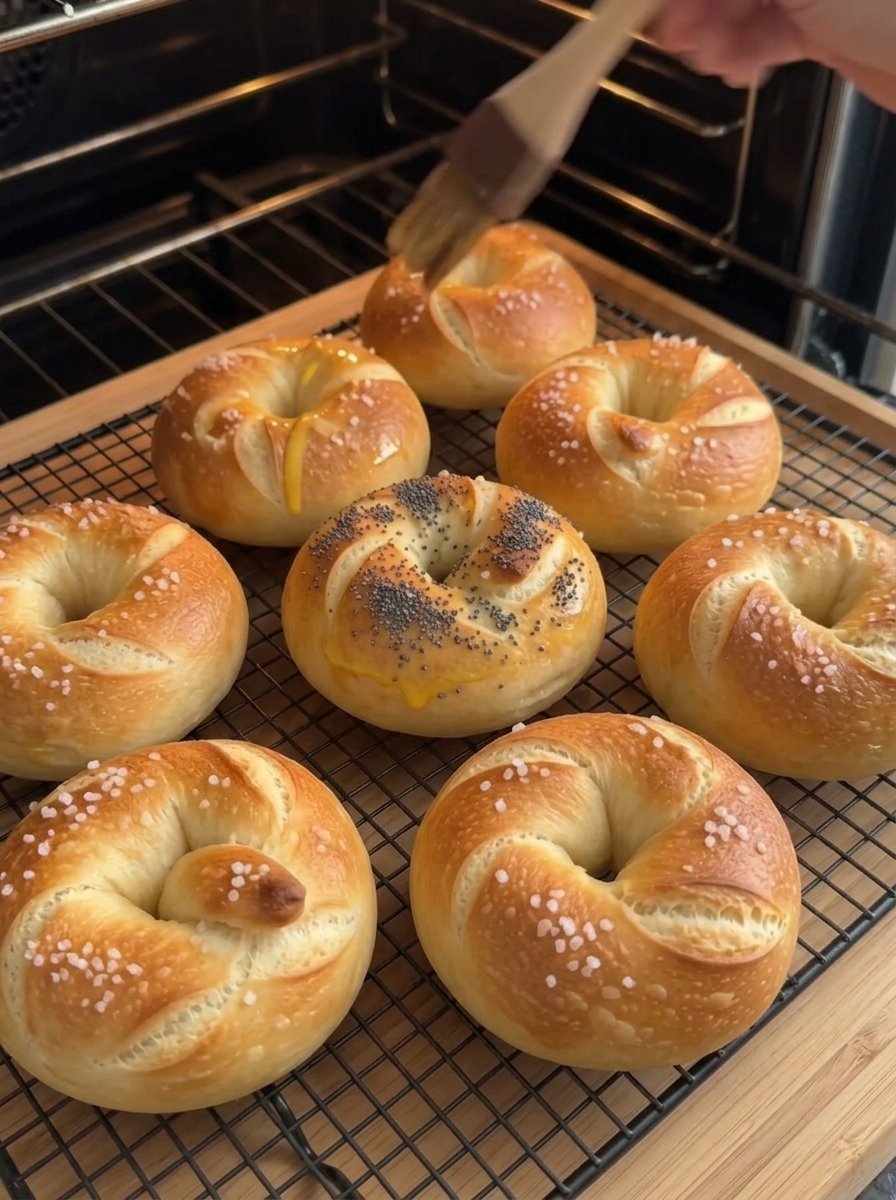
Homemade Pretzel Rolls: The Boiled Dough Secret for a Golden, Chewy Crust
Have you ever boiled dough before baking it? It sounds strange, maybe even like a mistake, but this one step is the secret behind every great pretzel. A quick dip in simmering baking soda water transforms ordinary bread dough into something extraordinary: a deep golden-brown, glossy, chewy crust wrapped around a soft, fluffy center.
These homemade pretzel rolls deliver everything you love about a bakery pretzel in a shape that’s perfect for sandwiches, burgers, breakfast, and snacking. They’re wonderful warm with melted butter, sturdy enough for fillings, and surprisingly easy to make with basic ingredients: bread flour, instant yeast, sugar, salt, warm water, and butter.
In this guide, you’ll find the full recipe, step-by-step instructions, the science behind the baking soda bath, ingredient notes, troubleshooting help, flavor variations, serving ideas, storage tips, and answers to common questions.
Recipe at a Glance
- Prep time: 25 minutes
- Rise time: 60 to 75 minutes, plus a 15-minute rest
- Cook time: 15 to 20 minutes
- Total time: About 2 hours
- Servings: 8 pretzel rolls
- Difficulty: Beginner to intermediate
Why You’ll Love These Pretzel Rolls
The crust is incredible. Boiling the dough sets the surface before it hits the oven, producing a shiny, mahogany-brown crust with that signature pretzel chew.
The inside stays soft and fluffy. The contrast between the chewy exterior and tender interior is what makes pretzel bread so addictive.
They use simple ingredients. Flour, yeast, sugar, salt, water, butter, and baking soda are all pantry staples. No special equipment is required.
They’re versatile. Use them as burger buns, sandwich rolls, sliders, breakfast sandwiches, or sides for soup and chili.
They’re beginner-friendly. The boiling step looks dramatic, but it takes less than five minutes in total and is easy to master.
They make the house smell amazing. Warm, toasty, buttery pretzel aroma is hard to beat.
What Is the Baking Soda Bath, and Why Does It Work?
The boiling step is what separates pretzels from ordinary rolls. Here’s what the alkaline baking soda water does:
It gelatinizes the surface starch. When the dough hits the hot water, the starches on the outside absorb moisture and begin to set. This creates a thin, tight skin that bakes into a shiny, crisp-chewy crust.
It boosts browning. Baking soda raises the pH of the dough’s surface. In an alkaline environment, the Maillard reaction (the chemical process behind browning and toasty flavor) happens faster and more deeply. That’s why pretzels turn a rich mahogany color in a relatively short bake.
It creates the classic pretzel flavor. The alkaline surface produces the distinctive, slightly tangy, roasted flavor that sets pretzels apart from regular bread.
It limits oven spring. The set outer layer keeps the roll from expanding too dramatically in the oven, which contributes to a dense, chewy texture.
Traditional German pretzels use a lye (sodium hydroxide) bath, which creates an even darker color and more intense flavor. Lye is caustic and requires careful handling, so baking soda is the safer, more accessible choice for home bakers. It produces excellent results without special precautions.
Ingredients for Homemade Pretzel Rolls
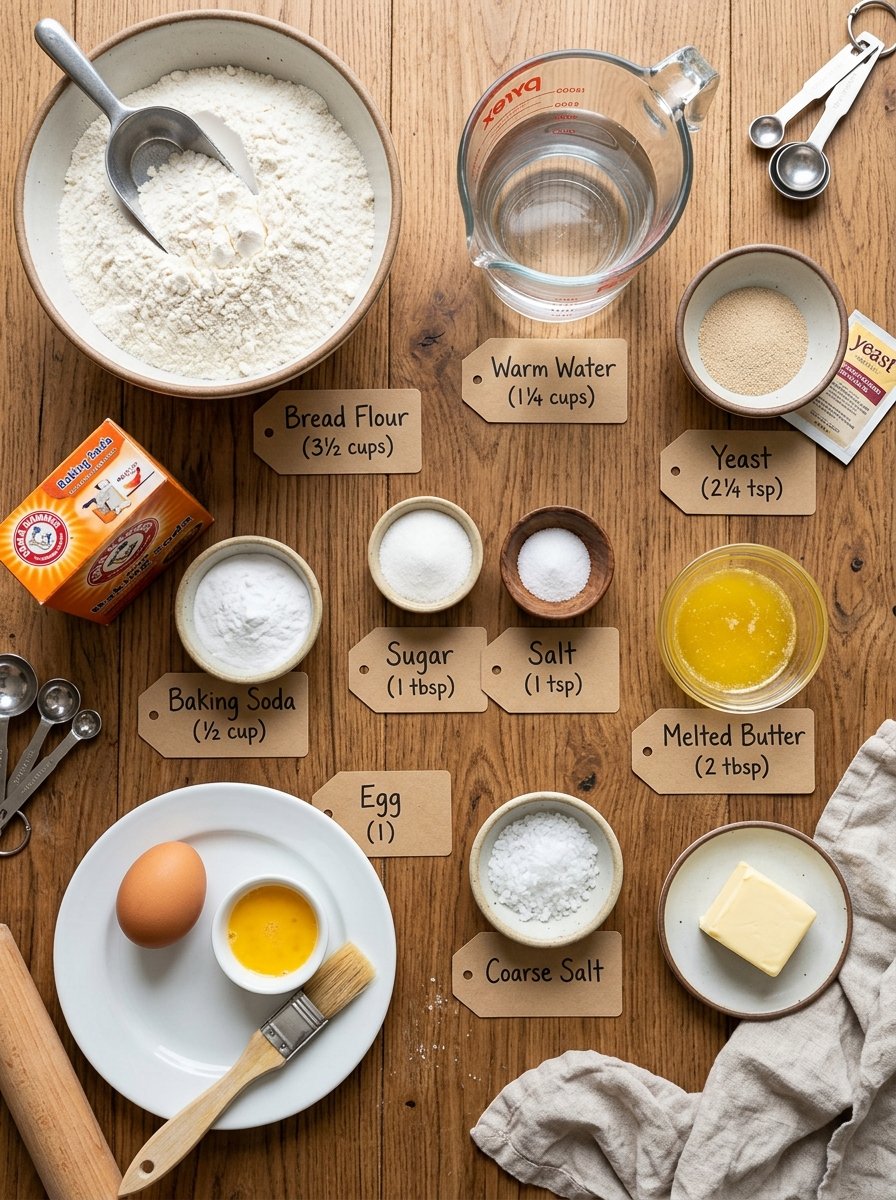
For the dough:
- 3½ cups (440 g) bread flour
- 2¼ teaspoons (7 g) instant yeast
- 1 tablespoon sugar
- 1 teaspoon salt
- 1¼ cups (300 ml) warm water
- 2 tablespoons melted butter
For the boiling water:
- 8 cups (2 liters) water
- ½ cup baking soda
For the topping:
- 1 egg, beaten
- Coarse salt, to taste
- 1 tablespoon melted butter, optional
Ingredient Notes and Smart Swaps
Bread flour. Bread flour’s higher protein content builds a stronger gluten network, which is key to the chewy texture. All-purpose flour works in a pinch, but the rolls will be slightly softer and less chewy. Weigh your flour if possible, since a cup can vary by 20 to 30 grams depending on how it’s scooped.
Instant yeast. Instant yeast can be mixed directly into the dry ingredients. If you have active dry yeast, use the same amount and dissolve it in the warm water for 5 to 10 minutes until foamy. Rising may take a little longer.
Sugar. A small amount feeds the yeast and encourages browning. Brown sugar or honey can replace it.
Salt. It builds flavor and regulates yeast activity. Don’t skip it.
Warm water. Aim for 105°F to 115°F (40°C to 46°C). Too hot kills yeast; too cold slows the rise.
Melted butter. Butter adds richness and tenderness to the crumb. Let it cool slightly so it doesn’t harm the yeast.
Baking soda. This is what creates the pretzel crust. Use regular baking soda, not baking powder. The amount is generous, but it’s meant for the boiling water, not the dough.
Egg wash. The beaten egg gives the rolls a deep, glossy shine. For an egg-free version, brush with a little milk or melted butter, though the color will be less dramatic.
Coarse salt. Pretzel salt, flaky sea salt, or kosher salt all work. Coarse crystals hold their shape and crunch better than fine salt.
Equipment You’ll Need
- A large mixing bowl
- A clean work surface for kneading
- A large, wide pot for boiling (stainless steel or enamel is best)
- A slotted spoon or spider strainer
- A parchment-lined baking tray
- A pastry brush for the egg wash
- A sharp knife or razor blade for scoring
- A wire cooling rack
- A kitchen scale (optional) for accurate measuring
A quick note on cookware: baking soda can discolor aluminum pots, so a stainless steel or enamel-coated pot is the better choice.
How to Make Homemade Pretzel Rolls (Step by Step)
Step 1: Prepare the Dough
In a large bowl, combine the flour, instant yeast, sugar, and salt. Add the warm water and melted butter. Mix until a shaggy dough forms and no dry flour remains.
Step 2: Knead and Rise
Turn the dough onto a lightly floured surface and knead for 8 to 10 minutes, until smooth and elastic. Push the dough away with the heel of your hand, fold it over, rotate a quarter turn, and repeat. A stand mixer with a dough hook on medium-low speed will take about 6 to 8 minutes.
To check gluten development, try the windowpane test: stretch a small piece of dough between your fingers. If it forms a thin, translucent sheet without tearing, it’s ready.
Place the dough in a lightly greased bowl, cover, and let it rise in a warm place for 60 to 75 minutes, or until doubled in size.
Step 3: Shape the Rolls
Divide the dough into 8 equal pieces. A kitchen scale makes this easy, with each piece weighing roughly 100 to 105 grams. Shape each into a smooth ball by tucking the edges underneath and rolling the dough against the counter in a cupped hand until the surface is taut.
Place the balls on a lightly floured surface, cover, and rest for 15 minutes. This relaxes the gluten and puffs the rolls slightly.
Step 4: Prepare the Boiling Water
Preheat the oven to 425°F (220°C). Line a baking tray with parchment paper.
Bring 8 cups (2 liters) of water to a gentle boil in a large pot. Carefully add the baking soda a little at a time, because the water will foam up. Wait for the foaming to settle before adding more. Reduce the heat so the water stays at a gentle simmer.
Step 5: Boil the Dough
Using a slotted spoon, carefully lower each roll into the simmering water. Boil for 20 to 30 seconds per side, then lift out, drain well, and place on the parchment-lined tray. Work in batches of two or three rolls so the pot isn’t crowded, and so each roll has room to float freely.
Don’t boil longer than 30 seconds per side, or the crust may turn tough and the rolls can develop a slightly metallic flavor.
Step 6: Add the Topping
Brush each roll with beaten egg and sprinkle with coarse salt. If you like, use a sharp knife to make a small slash or an X on top. This helps the roll expand evenly and gives it a classic bakery look.
Step 7: Bake Until Golden
Bake for 15 to 20 minutes, until the rolls are deep golden brown and cooked through. They should sound hollow when tapped on the bottom. An instant-read thermometer should read about 190°F to 200°F (88°C to 93°C) in the center.
Step 8: Finish and Serve
Brush the hot rolls with melted butter if you like, for added shine and richness. Let them cool for a few minutes, then enjoy the chewy crust and soft center.
Tips for Success
- Keep the water at a gentle boil. A vigorous rolling boil can batter and deflate the rolls. A gentle simmer is plenty.
- Add baking soda gradually. It foams dramatically when it hits hot water, and it can boil over if you dump it in all at once.
- Don’t boil too long. Twenty to thirty seconds per side is enough. Longer boiling creates a tough, leathery crust.
- Drain well. Let excess water drip off before moving the rolls to the tray. Excess water can leave soggy bottoms.
- Use a slotted spoon or spider. Both let the water drain quickly and keep the rolls intact.
- Don’t skip the rest. The 15-minute rest relaxes the dough so shaping and boiling are easier.
- Use parchment suitable for your oven temperature. Check that your parchment is rated for 425°F (220°C).
- Handle the hot water carefully. Keep children and pets away, and use long utensils.
- Brush with egg wash just before baking. This gives the best color and shine.
- Serve warm. Pretzel rolls are at their very best within an hour of baking.
Troubleshooting Common Pretzel Roll Problems
The rolls are pale instead of golden-brown. The baking soda bath may not have been strong enough, or the oven may not have been hot enough. Use the full amount of baking soda, and verify your oven temperature. Brushing with egg wash helps too.
The crust is too tough or leathery. The rolls were probably boiled too long. Stick to 20 to 30 seconds per side.
The rolls taste metallic or soapy. This can happen if they boil too long or aren’t drained well. Keep to the time guidelines and let excess liquid drip off.
The rolls deflated in the water. The dough may have been over-proofed, or the water may have been boiling too hard. Keep the water at a gentle simmer and handle the rolls carefully.
The rolls stuck to the parchment. Lightly grease the parchment or use a nonstick baking mat.
The bottoms are soggy. Drain thoroughly and place the rolls on a rack for a few seconds before moving to the tray. Baking on a preheated tray can help.
The rolls are dense. Too much flour, too little kneading, or an under-proofed dough can cause density. Weigh the flour and let the dough double.
The salt melts or disappears. Fine salt dissolves on wet dough. Use coarse salt, and apply it after the egg wash, right before baking.
The water foamed over. You added the baking soda too quickly or the pot was too small. Use a large pot and add the baking soda gradually.
The crust blistered unevenly. Uneven blisters are a sign of a well-set crust and are completely normal. If they bother you, drain the rolls a little longer.
Variations to Try
- Cheese-stuffed pretzel rolls: Tuck a cube of sharp cheddar or mozzarella into each ball before boiling.
- Everything seasoning: Replace the coarse salt with everything bagel seasoning.
- Cinnamon sugar pretzel rolls: Skip the salt. After baking, brush with melted butter and roll in cinnamon sugar.
- Garlic butter pretzel rolls: Brush with melted butter mixed with minced garlic and parsley after baking.
- Sesame or poppy seeds: Sprinkle seeds on top of the egg wash.
- Whole wheat pretzel rolls: Replace up to one cup of bread flour with whole wheat flour.
- Jalapeño cheddar: Fold diced jalapeño and shredded cheddar into the dough.
- Pretzel bites: Cut the dough into small pieces, boil for 15 to 20 seconds, and bake for 10 to 12 minutes.
- Pretzel buns: Shape the dough into slightly flattened rounds for burger buns.
- Classic pretzel shape: Roll each piece into a long rope and twist into the traditional pretzel knot.
- Dark crust: For deeper color, brush with a second coat of egg wash before baking.
How to Serve Pretzel Rolls
With melted butter. Simple, warm, and satisfying.
As burger buns. Pretzel rolls hold up to juicy burgers and toppings without falling apart.
As sandwiches. Fill with ham and Swiss, turkey and mustard, roast beef and cheddar, or fried chicken.
With mustard. Serve alongside grainy or honey mustard for dipping.
With beer cheese dip. A classic pairing.
As sliders. Mini versions are perfect for parties.
For breakfast. Split and fill with egg, bacon, and cheese.
With soup and chili. Use them to mop up bowls of hearty soup.
On a snack board. Serve with sausages, pickles, mustard, and cheeses.
As bread pudding or stuffing. Day-old pretzel rolls make a rich, savory base.
How to Store and Reheat Pretzel Rolls
- Room temperature: Store in a paper bag or loosely wrapped in a clean towel for up to 1 to 2 days. Avoid airtight plastic, which softens the crust.
- Freezer: Cool completely, wrap tightly, and freeze for up to 3 months.
- Reheating: Warm in a 350°F (175°C) oven for 5 to 10 minutes. From frozen, reheat for 10 to 15 minutes.
- Refreshing the crust: Lightly sprinkle with water before reheating.
- Avoid the refrigerator: Cold temperatures speed up staling.
Frequently Asked Questions
Why do you boil pretzel dough?
Boiling in baking soda water sets the surface starch and raises the pH, which promotes deep browning, chewy crust, and classic pretzel flavor.
Can I skip the baking soda?
You can, but the rolls won’t have the characteristic color, crust, or taste. They’ll resemble regular dinner rolls.
Is the amount of baking soda too much?
It looks like a lot, but it’s diluted in 8 cups of water and only touches the roll’s surface briefly. This amount creates a good alkaline bath.
Can I use all-purpose flour?
Yes. The rolls will be slightly softer and less chewy.
Can I use active dry yeast?
Yes, in the same amount. Dissolve it in the warm water first.
Can I make the dough ahead of time?
Yes. After kneading, refrigerate the dough for up to 24 hours. Let it warm up, then shape, boil, and bake.
Can I use a stand mixer?
Yes. Use a dough hook on medium-low speed for 6 to 8 minutes.
Why did my rolls come out pale?
Check your baking soda amount, make sure the water was properly alkaline, and confirm oven temperature. Egg wash helps color.
Can I make them without an egg wash?
Yes. Use milk or melted butter, though the color and shine will be less pronounced.
Can I freeze the unbaked dough?
You can freeze shaped, unboiled dough balls, then thaw, rest, boil, and bake. Results may vary slightly.
Can I use a nonstick or aluminum pot?
Stainless steel or enamel is best. Baking soda can darken aluminum.
Why do my rolls taste metallic?
They were likely boiled too long or not drained properly.
Are pretzel rolls the same as pretzel buns?
They’re essentially the same dough. Buns are usually shaped flatter for burgers.
Can I make these in an air fryer?
Boil as directed, then air-fry at 350°F (175°C) in small batches for about 8 to 10 minutes, checking for color. Oven results are more consistent.
Final Thoughts
Boiling dough sounds odd until you taste the result. A brief dip in baking soda water gives these homemade pretzel rolls their golden, shiny crust, their chewy bite, and their unmistakable flavor, while the inside stays soft and fluffy.
Once you’ve mastered this technique, you can shape the dough into rolls, buns, bites, or classic twists and top them however you like. Keep the water gentle, boil briefly, and bake until deeply golden. The payoff is a batch of bakery-quality pretzel rolls straight from your own oven.
Quick Recipe Recap:
- Mix bread flour, yeast, sugar, salt, warm water, and melted butter into a dough.
- Knead 8 to 10 minutes, then rise 60 to 75 minutes until doubled.
- Divide into 8 pieces, shape into balls, and rest 15 minutes.
- Simmer 8 cups of water with ½ cup baking soda, adding the soda gradually.
- Boil each roll 20 to 30 seconds per side, drain well, and place on parchment.
- Brush with egg, sprinkle with coarse salt, and bake at 425°F (220°C) for 15 to 20 minutes.
- Brush with butter if desired, cool briefly, and serve.
Homemade Pretzel Rolls
Ingredients
For the dough:
- 3½ cups (440 g) bread flour
- 2¼ teaspoons (7 g) instant yeast
- 1 tablespoon sugar
- 1 teaspoon salt
- 1¼ cups (300 ml) warm water
- 2 tablespoons melted butter
For the boiling water:
- 8 cups (2 liters) water
- ½ cup baking soda
For the topping:
- 1 egg, beaten
- Coarse salt, to taste
- 1 tablespoon melted butter, optional
Ingredient Notes and Smart Swaps
Bread flour. Bread flour’s higher protein content builds a stronger gluten network, which is key to the chewy texture. All-purpose flour works in a pinch, but the rolls will be slightly softer and less chewy. Weigh your flour if possible, since a cup can vary by 20 to 30 grams depending on how it’s scooped.
Instant yeast. Instant yeast can be mixed directly into the dry ingredients. If you have active dry yeast, use the same amount and dissolve it in the warm water for 5 to 10 minutes until foamy. Rising may take a little longer.
Sugar. A small amount feeds the yeast and encourages browning. Brown sugar or honey can replace it.
Salt. It builds flavor and regulates yeast activity. Don’t skip it.
Warm water. Aim for 105°F to 115°F (40°C to 46°C). Too hot kills yeast; too cold slows the rise.
Melted butter. Butter adds richness and tenderness to the crumb. Let it cool slightly so it doesn’t harm the yeast.
Baking soda. This is what creates the pretzel crust. Use regular baking soda, not baking powder. The amount is generous, but it’s meant for the boiling water, not the dough.
Egg wash. The beaten egg gives the rolls a deep, glossy shine. For an egg-free version, brush with a little milk or melted butter, though the color will be less dramatic.
Coarse salt. Pretzel salt, flaky sea salt, or kosher salt all work. Coarse crystals hold their shape and crunch better than fine salt.
Instructions
- A large mixing bowl
- A clean work surface for kneading
- A large, wide pot for boiling (stainless steel or enamel is best)
- A slotted spoon or spider strainer
- A parchment-lined baking tray
- A pastry brush for the egg wash
- A sharp knife or razor blade for scoring
- A wire cooling rack
- A kitchen scale (optional) for accurate measuring
A quick note on cookware: baking soda can discolor aluminum pots, so a stainless steel or enamel-coated pot is the better choice.
How to Make Homemade Pretzel Rolls (Step by Step)
Step 1: Prepare the Dough
In a large bowl, combine the flour, instant yeast, sugar, and salt. Add the warm water and melted butter. Mix until a shaggy dough forms and no dry flour remains.
Step 2: Knead and Rise
Turn the dough onto a lightly floured surface and knead for 8 to 10 minutes, until smooth and elastic. Push the dough away with the heel of your hand, fold it over, rotate a quarter turn, and repeat. A stand mixer with a dough hook on medium-low speed will take about 6 to 8 minutes.
To check gluten development, try the windowpane test: stretch a small piece of dough between your fingers. If it forms a thin, translucent sheet without tearing, it’s ready.
Place the dough in a lightly greased bowl, cover, and let it rise in a warm place for 60 to 75 minutes, or until doubled in size.
Step 3: Shape the Rolls
Divide the dough into 8 equal pieces. A kitchen scale makes this easy, with each piece weighing roughly 100 to 105 grams. Shape each into a smooth ball by tucking the edges underneath and rolling the dough against the counter in a cupped hand until the surface is taut.
Place the balls on a lightly floured surface, cover, and rest for 15 minutes. This relaxes the gluten and puffs the rolls slightly.
Step 4: Prepare the Boiling Water
Preheat the oven to 425°F (220°C). Line a baking tray with parchment paper.
Bring 8 cups (2 liters) of water to a gentle boil in a large pot. Carefully add the baking soda a little at a time, because the water will foam up. Wait for the foaming to settle before adding more. Reduce the heat so the water stays at a gentle simmer.
Step 5: Boil the Dough
Using a slotted spoon, carefully lower each roll into the simmering water. Boil for 20 to 30 seconds per side, then lift out, drain well, and place on the parchment-lined tray. Work in batches of two or three rolls so the pot isn’t crowded, and so each roll has room to float freely.
Don’t boil longer than 30 seconds per side, or the crust may turn tough and the rolls can develop a slightly metallic flavor.
Step 6: Add the Topping
Brush each roll with beaten egg and sprinkle with coarse salt. If you like, use a sharp knife to make a small slash or an X on top. This helps the roll expand evenly and gives it a classic bakery look.
Step 7: Bake Until Golden
Bake for 15 to 20 minutes, until the rolls are deep golden brown and cooked through. They should sound hollow when tapped on the bottom. An instant-read thermometer should read about 190°F to 200°F (88°C to 93°C) in the center.