
Small-Batch Cast Iron Parmesan Focaccia
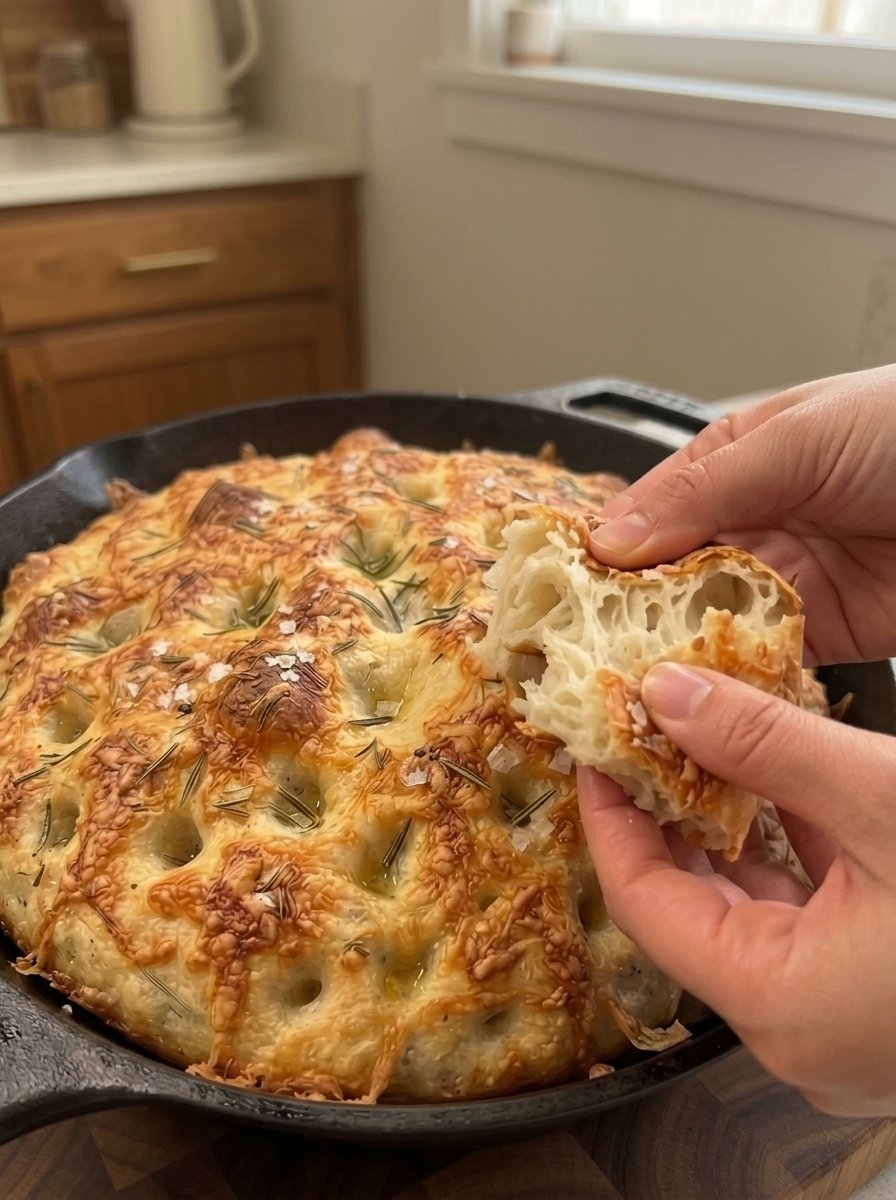
Small-Batch Cast Iron Parmesan Focaccia: Crispy, Soft and Ready in 2 Hours
In this guide you will find the complete recipe, step-by-step instructions, ingredient notes, tips for the crispiest crust and the fluffiest crumb, troubleshooting help, variations, serving ideas, storage advice and answers to frequently asked questions. Even if you have never made focaccia before, this small batch is a friendly way to start.
What Is Focaccia?
Focaccia is a flat, oven-baked Italian bread known for its olive-oil-rich, tender crumb, its dimpled surface and its golden, slightly crisp crust. The dough is typically a simple mixture of flour, water, yeast, salt and olive oil. Before baking, bakers press their fingertips into the dough to create the signature dimples, which collect pools of olive oil and any toppings. Common toppings include coarse salt, rosemary, garlic, olives, tomatoes and cheese.
Focaccia has many regional variations in Italy, and the style in this recipe is a simple, home-friendly version. It is not a strict reproduction of any single regional recipe. Instead, it takes the core ideas of focaccia, olive oil, dimples, herbs and salt, and scales them down for a small cast iron skillet.
Why You Will Love This Small-Batch Focaccia
- Small batch. The recipe makes enough for about 4 servings, so there is no waste and no need to store a giant loaf.
- Crispy and soft. A generous coating of olive oil in a hot cast iron skillet gives the bottom and edges a golden, crisp texture, while the center stays soft and airy.
- Savory flavor. Parmesan, rosemary or Italian seasoning, and garlic powder add rich, toasty flavor.
- Simple ingredients. You likely have everything in your pantry already.
- Beginner friendly. The dough is soft and forgiving, with just a few minutes of kneading.
- One pan. A single cast iron skillet is all you need for baking and serving.
- Versatile. It pairs with soups, salads, pasta, dips and sandwiches.
Recipe Snapshot
- Prep time: 15 minutes
- Cook time: 20 to 25 minutes
- Total time: about 2 hours (including rising)
- Servings: 4
- Pan: small (about 8-inch) cast iron skillet
- Oven temperature: 400°F (200°C)
Ingredients
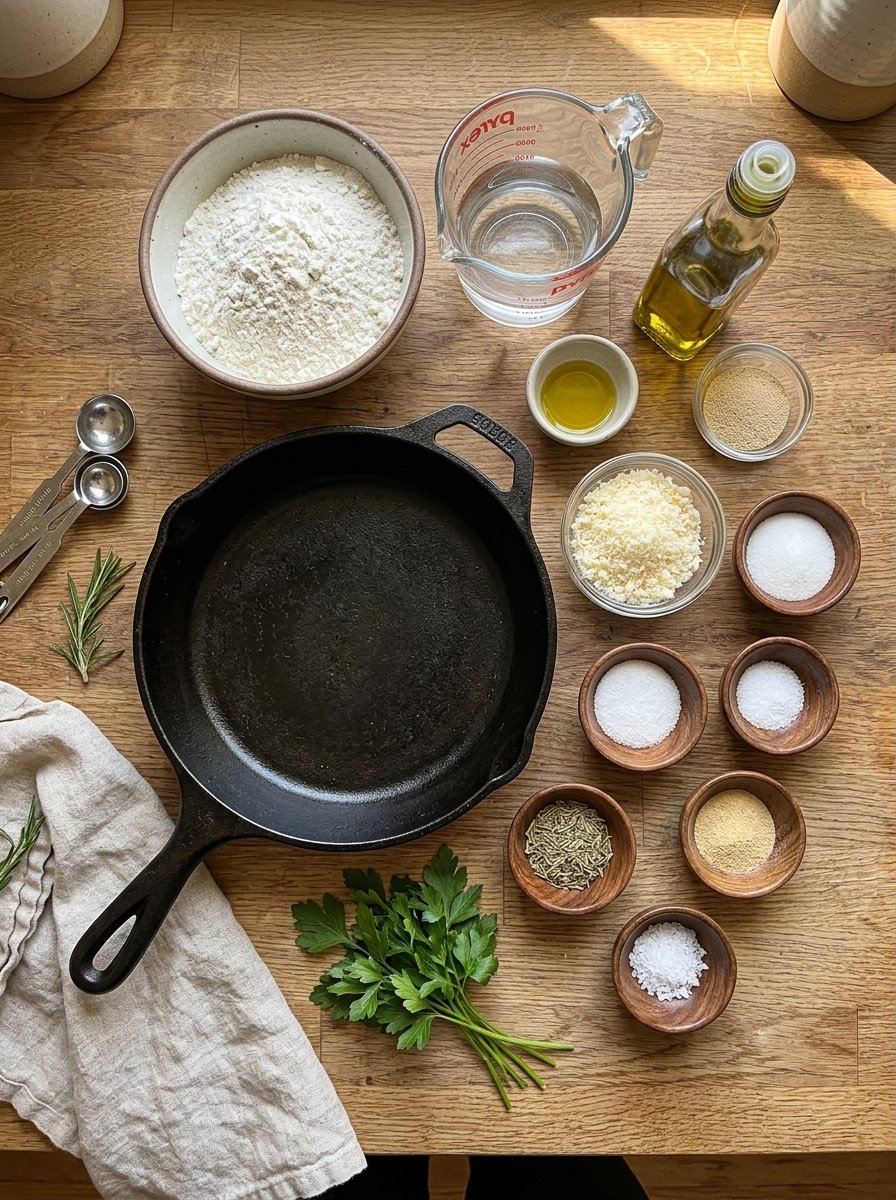
For the Dough
- 1½ cups (190 g) all-purpose or bread flour
- ½ cup (120 ml) warm water
- 1 teaspoon instant yeast
- 1 teaspoon sugar
- ½ teaspoon salt
- 1 tablespoon olive oil
For the Topping
- 2 tablespoons olive oil
- ¼ cup (25 g) freshly grated Parmesan cheese
- 1 teaspoon dried rosemary or Italian seasoning
- ½ teaspoon garlic powder
- Flaky sea salt, to taste
- Fresh parsley, optional
You will also need extra olive oil to coat the skillet generously.
Ingredient Notes and Substitutions
Flour. All-purpose flour gives a softer, more tender focaccia, while bread flour gives a slightly chewier, taller crumb. Weigh the flour if you can: 1½ cups is about 190 grams here. If you use measuring cups, spoon the flour into the cup and level it off rather than scooping directly from the bag, which can pack in too much flour and make the dough dry.
Warm water. Aim for warm water that feels comfortable on your wrist, roughly 105°F to 115°F (about 40°C to 46°C). Water that is too hot can damage the yeast, and water that is too cool slows the rise.
Instant yeast. Instant yeast works well in this recipe. If you only have active dry yeast, you can use about the same amount, but let it sit in the warm water with the sugar for 5 to 10 minutes until foamy before adding the other ingredients.
Sugar. Just a teaspoon feeds the yeast and encourages browning. It does not make the focaccia taste sweet.
Olive oil. Olive oil is the star of focaccia. A good extra virgin olive oil brings the best flavor to the topping and the skillet, though a standard olive oil works too.
Parmesan. Freshly grated Parmesan melts and toasts better and tastes richer than pre-grated cheese from a canister, which often contains anti-caking agents. Finely grated cheese distributes evenly over the dough.
Rosemary or Italian seasoning. Dried rosemary gives a classic focaccia flavor. Italian seasoning offers a mix of herbs for a milder, more all-purpose taste.
Garlic powder. Garlic powder is less likely to burn than fresh garlic on top of a hot, oiled loaf, and it spreads flavor evenly.
Flaky sea salt. A sprinkle of flaky salt on top gives a pleasant crunch and a pop of flavor. Add it to taste, remembering that the Parmesan is also salty.
How to Make Small-Batch Cast Iron Parmesan Focaccia
Step 1: Mix the dough
In a bowl, combine the warm water, yeast and sugar. Add the flour, salt and olive oil. Mix until a soft, slightly sticky dough forms. The dough should look shaggy at first and then come together as you mix. Make sure there are no dry pockets of flour in the bowl.
Step 2: Knead
Knead for 5 to 7 minutes until the dough becomes smooth and elastic. Use lightly oiled or floured hands, and add only a very small amount of flour if the dough sticks to everything. Focaccia dough is meant to be soft and a bit sticky, which helps create the airy crumb. If you have a stand mixer, a dough hook on medium-low speed works too.
To check whether the dough is ready, press it lightly with a finger. It should spring back slowly. You can also stretch a small piece gently: if it stretches thin without tearing quickly, the gluten is developing well.
Step 3: First rise
Cover the bowl and let the dough rise in a warm place for 60 to 75 minutes, or until doubled in size. A turned-off oven with the light on, or a spot near a warm (not hot) appliance, can help in a cool kitchen. The dough should look puffy and airy, and a gently pressed finger should leave a dent that fills in slowly.
Step 4: Prepare the skillet
Generously coat a small, approximately 8-inch cast iron skillet with olive oil. Do not be shy here. The oil is what fries the bottom and edges of the focaccia into a crisp, golden crust. Tilt the pan so the oil coats the sides as well as the base.
Step 5: Shape the focaccia
Transfer the dough into the skillet and gently stretch it toward the edges. If it resists, let it rest for 10 minutes before stretching again.
The dough may spring back at first because the gluten is tight. Resting relaxes it, making it easier to stretch without tearing. Turn the dough over once in the oil so both sides are lightly coated, then gently coax it toward the edges with oiled fingertips.
Step 6: Second rise
Cover loosely and let the dough rise for another 20 to 30 minutes until puffy. It should look soft and pillowy and fill the skillet more fully. This second rise is what gives the focaccia its light, airy interior, so do not skip it.
Step 7: Add the toppings
Preheat the oven to 400°F (200°C). Drizzle olive oil over the dough, then press your fingertips into the surface to create classic focaccia dimples. Sprinkle with Parmesan, rosemary, garlic powder and flaky sea salt.
Press firmly enough that your fingertips reach nearly to the bottom of the pan, without tearing the dough. The dimples catch pools of olive oil and keep the surface from puffing up like a regular loaf. Start preheating the oven during the second rise so it is ready on time.
Step 8: Bake
Bake for 20 to 25 minutes, until the focaccia is golden brown and the Parmesan is lightly toasted. The edges should look crisp and deeply golden, and the cheese should be bubbling and slightly browned. If the top is browning too quickly, tent it loosely with foil for the last few minutes.
Step 9: Finish and serve
Let it cool for a few minutes, then sprinkle with fresh parsley if desired. Slice and serve warm. The cast iron skillet will stay very hot, so use oven mitts or a handle cover, and loosen the edges gently with a thin spatula before lifting the focaccia out. Let it rest on a wire rack briefly if you want to keep the bottom from steaming.
Tips for the Best Cast Iron Focaccia
- Use plenty of olive oil. For an extra crispy bottom, make sure the cast iron skillet is generously coated with olive oil.
- Let the dough become puffy. For the best texture, let the dough become noticeably puffy before baking. Underproofed dough bakes up dense.
- Do not add too much flour. A soft, slightly sticky dough gives the airiest crumb.
- Dimple with confidence. Press your fingertips firmly into the dough to create deep wells for the oil and toppings.
- Rest the dough if it resists. If the dough keeps shrinking back as you stretch it, let it rest for 10 minutes.
- Grate the Parmesan fresh. It melts and browns better than pre-grated cheese.
- Boost the flavor. For more flavor, add a little freshly minced garlic or extra rosemary to the topping. Keep fresh garlic pieces small and well covered with oil so they do not burn.
- Watch the edges. The cheese and oil can brown quickly. Check at around 20 minutes.
- Handle the hot skillet carefully. Cast iron holds heat for a long time.
- Serve it warm. Focaccia is at its best fresh from the oven, when the crust is crisp and the inside is tender.
Troubleshooting Common Focaccia Problems
My focaccia is dense. The dough may not have risen enough, or too much flour may have been added. Let the dough double during the first rise and become noticeably puffy during the second.
My focaccia is not crispy on the bottom. Make sure the skillet is generously coated with olive oil, and bake until deeply golden. A cast iron skillet that is not oiled enough will not fry the base properly.
The dough keeps shrinking back. The gluten is tense. Cover it and let it rest for 10 minutes, then try stretching again with oiled fingers.
The dough is too sticky to handle. Use lightly oiled hands rather than adding a lot of flour. A slightly sticky dough is normal and leads to a softer crumb.
The top is browning too fast. Cover loosely with foil for the last part of baking, or lower the oven temperature slightly.
The cheese burned. Fresh Parmesan can darken quickly. Keep an eye on the loaf in the last few minutes, and tent with foil if needed.
It stuck to the skillet. Use more oil next time, loosen the edges with a spatula and let it rest a few minutes before lifting. A well-seasoned cast iron pan also helps.
The center is gummy. The focaccia may need a few more minutes in the oven, or it may have been cut too soon. Bake until the top and edges are deeply golden and let it cool slightly before slicing.
It tastes too salty. Parmesan and flaky salt both add sodium. Reduce the flaky salt next time or use a lighter hand with the cheese.
What to Serve with Parmesan Focaccia
This focaccia is a true crowd-pleaser, and it pairs with a wide variety of dishes.
With Soup and Stew
Tear off a piece and dip it into tomato soup, minestrone, creamy mushroom soup or a hearty stew. The crisp, oily crust holds up well to dunking.
With Pasta
Serve a slice alongside spaghetti, lasagna, baked ziti or any pasta with a tomato or cream sauce. It is great for mopping up leftover sauce.
With Salad
A warm wedge of focaccia turns a simple green salad or Caprese salad into a satisfying meal.
As a Sandwich Base
Slice the focaccia horizontally and fill it with deli meat, mozzarella, tomato and basil, or roasted vegetables and pesto. Lightly toasting the cut sides keeps it from getting soggy.
With Dips and Spreads
Serve with olive oil and balsamic vinegar, marinara sauce, hummus, whipped ricotta or white bean dip.
As an Appetizer
Cut the focaccia into small squares and serve warm with olives, cheese and cured meats for an easy appetizer board.
Delicious Variations
Once you have the basic recipe down, try a few changes. These go beyond the base recipe, so treat them as experiments and adjust to taste.
- Garlic and herb: Add a little extra rosemary or fresh minced garlic to the topping.
- Olive focaccia: Press sliced olives into the dimples before baking.
- Tomato focaccia: Add halved cherry tomatoes to the dimpled surface with a sprinkle of oregano.
- Cheese lover’s: Add a little shredded mozzarella along with the Parmesan, watching closely so it does not burn.
- Lemon and thyme: Swap rosemary for thyme and add a little lemon zest after baking.
- Spicy: Sprinkle a pinch of red pepper flakes over the top.
- Everything-style: Finish with sesame or poppy seeds and flaky salt.
- Partial whole wheat: Replace a small portion of the flour with whole wheat for a nuttier flavor, adding a touch more water if the dough feels stiff.
Storage, Freezing and Reheating
Room temperature: Focaccia is at its best the day it is baked. Once cooled, store leftovers loosely wrapped or in a paper bag for up to 1 to 2 days. Airtight storage keeps the crumb soft, though the crust will lose its crispness.
Refrigerator: You can refrigerate wrapped leftovers for a few days, but refrigeration may dry the bread out faster, so reheat it before serving.
Freezer: Cut cooled focaccia into portions, wrap them well and freeze for about 2 to 3 months. Thaw at room temperature or reheat straight from the freezer.
Reheating: Warm slices in a 350°F (175°C) oven for about 8 to 10 minutes, until the crust crisps and the center is warm. A hot skillet also revives the bottom nicely.
Make-ahead tip: You can prepare the dough ahead and let it rise slowly in the refrigerator, which develops more flavor. This changes the timing, so allow the dough to warm up and become puffy before shaping and baking.
Nutrition Overview
Exact nutrition depends on your ingredients, the amount of olive oil that ends up in the skillet and how you divide the focaccia. As a rough estimate, one of four servings may provide somewhere around 270 to 320 calories, with energy coming from carbohydrates, olive oil and cheese. For precise numbers, enter your own ingredients into a nutrition calculator. This information is general and not medical or dietary advice.
Can You Make It Vegan, Dairy-Free or Gluten-Free?
Dairy-free or vegan: The dough itself is dairy-free and egg-free. The only dairy ingredient is the Parmesan topping, which you can omit or replace with a plant-based Parmesan-style topping or a sprinkle of nutritional yeast. Also check that your Parmesan alternative melts and browns to your liking.
Gluten-free: This recipe depends on wheat gluten for its structure and is not gluten-free as written. A gluten-free focaccia generally needs a different flour blend and method.
Whole wheat: A partial swap with whole wheat flour works. Using all whole wheat will give a denser focaccia.
Frequently Asked Questions
Can I make this focaccia without a cast iron skillet?
Yes. You can use a small oven-safe skillet, a cake pan or a small baking dish. A cast iron skillet gives a particularly crisp bottom, but the recipe will work in other pans if you coat them generously with olive oil.
What size skillet should I use?
A small skillet of about 8 inches works well for this amount of dough. A much larger pan will produce thinner, flatter focaccia.
Why do I need so much olive oil?
The olive oil flavors the bread and fries the bottom and edges, creating the signature crisp, golden crust. It also helps prevent sticking.
Can I use active dry yeast?
Yes. Dissolve it in the warm water with the sugar and wait until foamy before adding the other ingredients.
Do I have to knead the dough?
This recipe calls for a short 5 to 7 minute knead to build structure and a soft, elastic dough.
Can I use pre-grated Parmesan?
Yes, but freshly grated Parmesan usually melts, browns and tastes better.
Can I use fresh rosemary?
Yes. Use a small amount of finely chopped fresh rosemary in place of dried, since fresh herbs have a more intense flavor and can burn on the surface if left in large pieces.
How do I know when the dough has doubled?
It should look visibly larger and puffy, and a gently pressed finger should leave a dent that fills in slowly.
Can I double the recipe?
Yes. You can double the ingredients and bake in a larger skillet or a small baking pan. The baking time may change depending on the thickness.
Why is my focaccia not rising in the skillet?
The yeast may be weak, the water may have been too hot or too cool, or the kitchen may be too cold. Check that your yeast is fresh and give the dough more time in a warm spot.
How long does focaccia stay fresh?
It is best the day it is baked and keeps for about one to two days. For longer storage, freeze it.
Can I prepare it ahead for guests?
Absolutely. You can make the dough ahead and refrigerate it, or bake the focaccia earlier and reheat it in the oven to refresh the crust.
Final Thoughts
This small-batch cast iron Parmesan focaccia gives you everything you love about homemade focaccia without the big batch: a crisp, golden, olive-oil-kissed crust, a soft and airy interior, and a savory topping of Parmesan and herbs. It is quick enough for a weekend afternoon, simple enough for a beginner and delicious enough to make you want to bake it again.
Remember the key points: coat the skillet generously with olive oil, let the dough become noticeably puffy before baking, dimple with confidence and keep an eye on the cheese as it toasts. Serve it warm, straight from the skillet, with soup, pasta or simply a little extra olive oil for dipping.