
Crispy Golden Homemade Baguettes
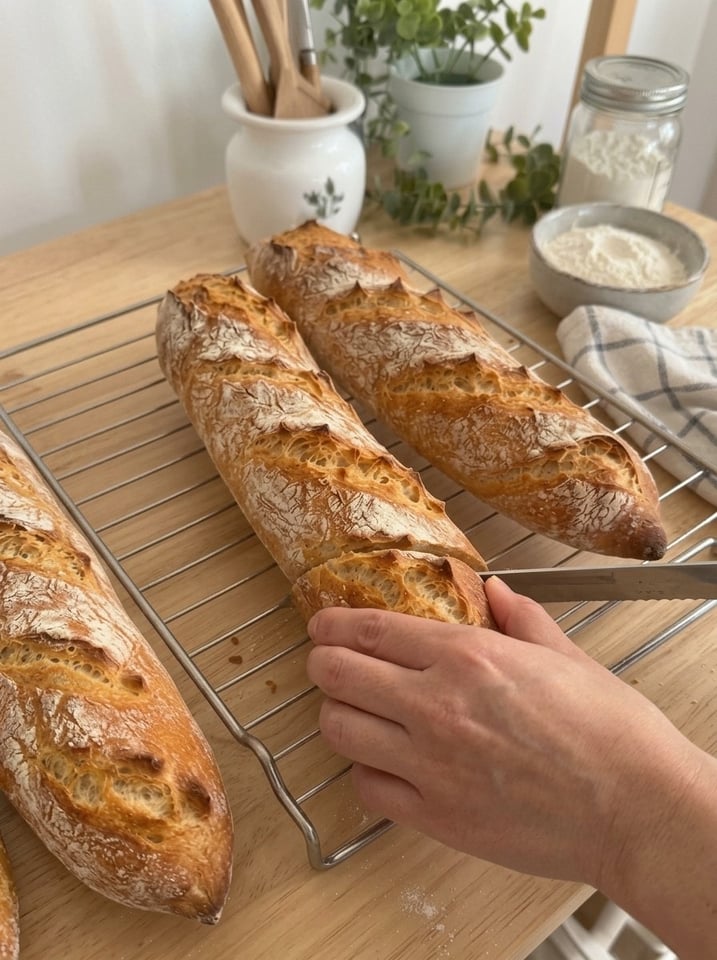
🥖🤎 Crispy Golden Homemade Baguettes: Crunchy Outside and Soft Inside
Crispy Golden Homemade Baguettes – Easy French-Style Baguette Recipe for Beginners
Meta description: Bake crispy golden homemade baguettes with a thin, crackly crust and a soft, airy center. Simple pantry ingredients, clear steps, steam tips, and ready in about 2 hours 15 minutes. Makes 2 medium baguettes.
Focus keywords: homemade baguette recipe, easy baguette recipe, French baguette at home, crusty baguette, beginner baguette recipe, crispy crust bread, homemade French bread
These Crispy Golden Homemade Baguettes are beautifully golden, with a thin, crunchy crust and a soft, airy center full of delicious little holes! 🥖🤎 Made with simple pantry ingredients, these classic French-style baguettes are perfect for beginners who want bakery-quality bread right from their own kitchen. Each loaf has that irresistible crackly crust, a wonderfully chewy texture, and the comforting aroma of freshly baked bread. Serve them warm with butter, dip them in olive oil, make delicious sandwiches, or enjoy them alongside your favorite soups and meals! 🇫🇷✨
There is something almost magical about a freshly baked baguette. The sound of the crust crackling as it cools, the steam that escapes when you tear it open, and the first bite of soft, chewy crumb with a crisp edge are experiences that most people associate with a French bakery. The good news is that you do not need a professional oven or years of experience to get there. With flour, water, yeast, sugar, and salt, a bit of kneading, and a simple steam trick, you can bake two beautiful baguettes in about two hours and fifteen minutes. 🥖
This recipe is designed to be approachable. The dough is mixed in one bowl, kneaded by hand, risen once, shaped, risen again, scored, and baked with steam. There are no starters, no overnight ferments, and no special equipment beyond a baking tray and a sharp knife. Yet the result has the hallmarks of a true baguette: a golden crust, an open crumb, and a flavor that tastes like real bread.
In this guide, you will find the full recipe, a detailed step-by-step walkthrough with shaping and scoring advice, a safe way to create steam in a home oven, tips for the best crust and crumb, common problems and fixes, variations, serving ideas, storage and refreshing instructions, and answers to frequently asked questions. Let’s bake! 👩🍳
⏱ Recipe Overview
- ⏱ Prep Time: 20 minutes
- ⏳ Rising Time: 1 hour 30 minutes
- 🔥 Cook Time: 20 to 25 minutes
- ⏰ Total Time: Approximately 2 hours 15 minutes
- 🥖 Yield: 2 medium baguettes
- 🎯 Difficulty: Easy to moderate, beginner friendly
🤔 Why You Will Love These Homemade Baguettes
- Crackly, golden crust. A hot oven and a little steam create a thin, crunchy crust that shatters when you bite into it.
- Soft, airy interior. The crumb is tender and chewy, with irresistible little holes that catch butter and olive oil.
- Simple pantry ingredients. Flour, water, yeast, sugar, and salt are all you need. 🌾
- Ready in about 2 hours 15 minutes. No overnight rising, no starter, and no long wait.
- Beginner friendly. The steps are straightforward and the dough is forgiving.
- Bakery-quality results at home. You get the look, sound, and flavor of a real French-style baguette.
- Incredibly versatile. Use them for sandwiches, garlic bread, bruschetta, croutons, or serve alongside soups and salads.
- Budget friendly. Two loaves cost a fraction of what bakery baguettes do.
- Wonderful aroma. Few things fill a kitchen with warmth quite like baking bread. 🏡
🛒 Ingredients
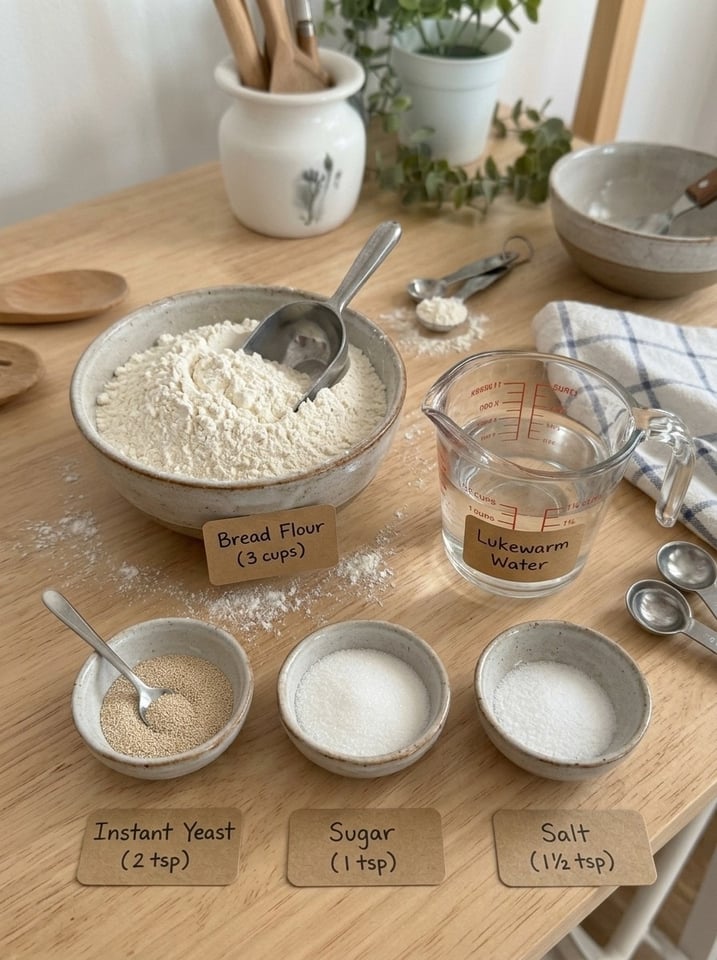
🌾 For the Baguette Dough
- 3 cups (375 g) bread flour or all-purpose flour
- 1¼ cups (300 ml) lukewarm water
- 2 teaspoons instant yeast
- 1 teaspoon sugar
- 1½ teaspoons salt
✨ For the Crispy Crust
- A little flour for dusting
- Hot water for creating steam in the oven
🧐 A Closer Look at the Ingredients
Bread flour or all-purpose flour. Bread flour has a higher protein content, which builds more gluten and gives the baguettes a chewier texture and better structure. All-purpose flour also works and creates a slightly softer crumb. For the most accurate results, weigh the flour (375 g). If you measure by cups, spoon the flour into the cup and level it off rather than scooping, which packs in extra flour and makes the loaves dense.
Lukewarm water. Water that feels comfortably warm to the touch, around 100 to 110°F (38 to 43°C), wakes up the yeast without harming it. Water that is too hot can kill yeast, and water that is too cold will slow the rise.
Instant yeast. Instant yeast can be mixed directly into the dry ingredients. If you only have active dry yeast, use the same amount but dissolve it in the warm water with the sugar for 5 to 10 minutes, until foamy, before adding it to the flour.
Sugar. Just one teaspoon feeds the yeast and helps the crust brown. It is not enough to make the bread sweet.
Salt. Salt adds flavor, strengthens the dough, and controls yeast activity. Because the recipe adds the salt after the dough has started to come together, it is distributed evenly without interfering with the yeast at the start.
Flour for dusting. A light dusting on the work surface and the tops of the loaves prevents sticking and gives the baguettes a classic, rustic look.
Hot water for steam. Steam during the first part of baking keeps the surface of the dough moist so the loaves can expand fully before the crust sets. This is the secret to a thin, crisp, glossy crust.
👩🍳 Step-by-Step Instructions
1️⃣ Prepare the Dough 🥣
In a large mixing bowl, combine the flour, instant yeast, and sugar. Add the lukewarm water and mix with a wooden spoon until a rough dough forms. Add the salt and continue mixing until everything is incorporated. The dough should feel slightly sticky and soft. Do not worry if it looks messy at this stage. It will become smooth with kneading.
2️⃣ Knead Until Smooth 🌾
Transfer the dough to a lightly floured surface and knead for about 8 to 10 minutes, until smooth, elastic, and stretchy. To knead by hand, push the dough away from you with the heel of your hand, fold it back over itself, give it a quarter turn, and repeat. If the dough feels sticky, lightly flour your hands rather than adding large amounts of flour. Keeping the dough moist helps create a lighter, airier crumb.
Tip: To check whether the dough is ready, try the windowpane test. Pinch off a small piece and stretch it gently. If it forms a thin, translucent membrane without tearing, the gluten is well developed.
3️⃣ Let the Dough Rise ⏳
Place the dough in a lightly greased bowl and cover with a clean kitchen towel or plastic wrap. Let it rise in a warm place for 60 to 90 minutes, or until approximately doubled in size. A turned-off oven with the light on, or a spot near a sunny window, works well. In a cooler kitchen, the rise may take longer, so judge by size instead of the clock.
4️⃣ Divide the Dough ✨
Gently transfer the risen dough to a lightly floured surface. Divide it into two equal portions. A kitchen scale makes this precise. Let the pieces rest, covered, for about 10 minutes. This makes shaping easier and helps the dough relax, so it does not spring back when you roll it out.
5️⃣ Shape the Baguettes 🥖
Flatten one portion into a rectangle. Fold the top third toward the center and press the seam gently. Fold the bottom third upward, then fold the dough in half lengthwise and pinch the seam closed. Roll the dough gently with your palms to form a long baguette, approximately 12 to 14 inches (30 to 35 cm) long, tapering the ends slightly. Work from the center of the loaf outward, using light pressure. Repeat with the second portion.
Tip: If the dough keeps springing back, cover it and let it rest for another 5 minutes, then continue rolling.
6️⃣ Allow the Second Rise 🌤️
Place the baguettes seam-side down on parchment paper or a lightly floured baguette tray. If using a regular baking tray, arrange them with space between each loaf. Cover loosely and let them rise for 25 to 35 minutes, until slightly puffy. Meanwhile, preheat your oven to 450°F (230°C).
7️⃣ Score the Tops 🔪
Dust the baguettes lightly with flour. Using a very sharp knife or bread lame, make 3 to 5 shallow diagonal cuts along the top of each loaf. Hold the blade at a shallow angle and cut quickly and confidently, about ¼ inch (½ cm) deep. These cuts allow the baguettes to expand during baking and create their traditional bakery-style appearance.
8️⃣ Create Steam for a Crispy Crust 💨
Place an empty metal baking tray on the lower oven rack while preheating. Put the baguettes in the oven, then carefully pour a small amount of hot water into the empty tray to create steam. Keep your hands and face away from the rising steam, and never pour water directly onto the oven floor or glass door. Bake with steam for the first 8 to 10 minutes. If safe for your oven, carefully remove the water tray, then continue baking until the crust turns deep golden brown.
Safety note: Steam can cause serious burns. Use oven mitts, pour slowly from a long-handled pitcher or kettle, and close the door promptly.
9️⃣ Bake Until Golden and Crunchy 🔥
Bake for approximately 20 to 25 minutes total, depending on the size of the baguettes and your oven. The baguettes should have a crisp, golden-brown crust and sound hollow when tapped on the bottom. For an extra-crispy finish, leave them in the switched-off oven for another 3 to 5 minutes with the door slightly ajar, if permitted by your oven’s instructions.
🔟 Cool and Enjoy! 😍
Transfer the baguettes to a wire rack and let them cool for at least 20 to 30 minutes before slicing. Listen for the delicate crackling sound as the crust cools! Serve with butter, olive oil, cheese, or your favorite sandwich fillings. 🥖🤎
💡 Tips for Perfect Crispy Golden Homemade Baguettes ✨
- Use bread flour if available. Its higher protein content helps create a chewy texture and better structure.
- Keep the dough slightly tacky. Too much extra flour can make the baguettes heavy and dry.
- Allow enough rising time. The dough should become visibly puffy before shaping and baking.
- Shape gently. Avoid pressing out all the air, which helps preserve a light, open crumb.
- Score just before baking. Shallow diagonal cuts help the baguettes expand properly in the oven.
- Use steam carefully. Steam during the beginning of baking helps the crust expand before becoming crisp.
- Bake until deeply golden. A pale crust generally will not be as crunchy or flavorful.
- Cool on a wire rack. This prevents trapped moisture from softening the bottom crust.
- Store properly. Keep completely cooled baguettes in a paper bag at room temperature for up to 1 to 2 days. Plastic bags preserve softness but tend to soften the crust.
- Refresh leftovers. Reheat in a 350°F (175°C) oven for 5 to 8 minutes to restore some of the crispness.
- Preheat fully. A properly heated oven is essential for strong oven spring.
- Use a sharp blade. A dull knife drags the dough and deflates it, so use a razor blade or lame if possible.
⚠️ Common Problems and How to Fix Them
The baguettes did not rise. The yeast may be expired, the water may have been too hot or too cold, or the room may have been too cool. Check the date on your yeast, use a thermometer for the water, and move the dough to a warmer place.
The baguettes are dense. Too much flour, under-kneading, or insufficient rising can cause dense loaves. Weigh the flour, knead until smooth and elastic, and let the dough rise until puffy.
The crust is not crispy. Make sure the oven is fully preheated, use steam during the first part of baking, and bake until deeply golden. Cooling on a wire rack also helps.
The crust is too hard or thick. Too much baking time or too much steam can lead to a thick crust. Reduce the baking time slightly, and remove the steam tray after the first 8 to 10 minutes.
The loaves spread flat. Overproofed dough or dough that is too wet can spread. Shape the loaves more tightly and shorten the second rise.
The scoring did not open. The blade may have been dull, or the cuts too shallow. Use a very sharp blade and make quick, confident cuts at a shallow angle.
The baguettes are pale. The oven may not have been hot enough. Preheat well and extend the baking time by a few minutes, watching for a deep golden color.
The crumb is tight. Handle the dough gently during shaping, keep it slightly tacky, and allow for a full first rise to develop air pockets.
The bottom is too dark. Move the tray to a higher rack, use a lighter-colored baking sheet, or place a second tray underneath for insulation.
🥖 Delicious Variations
- 🧄 Garlic herb baguettes. Knead in garlic powder and dried herbs, or brush the baked loaves with garlic butter.
- 🧀 Cheese baguettes. Add shredded Gruyère, cheddar, or Parmesan to the dough or sprinkle on top before baking.
- 🫒 Olive baguettes. Fold chopped olives into the dough after kneading.
- 🌾 Seeded baguettes. Brush with water and sprinkle with sesame, poppy, or sunflower seeds before baking.
- 🌿 Rosemary baguettes. Add chopped fresh rosemary and a pinch of coarse salt.
- 🌾 Whole wheat baguettes. Replace up to a third of the flour with whole wheat flour for a nuttier flavor. You may need a little extra water.
- 🍯 Honey baguettes. Replace the sugar with honey for a subtle sweetness and softer crumb.
- 🥖 Mini baguettes. Divide the dough into four portions and bake for 15 to 18 minutes for sandwich-sized loaves.
- 🧈 Buttery finish. Brush the hot baguettes with melted butter for a softer, richer crust.
🧈 Delicious Ways to Serve Your Baguettes
- Classic French breakfast. Serve with butter, jam, or honey. 🍯
- Garlic bread. Brush slices with garlic butter and bake until golden. 🧄
- Bruschetta. Top toasted slices with tomatoes, fresh basil, and olive oil. 🍅
- Sandwiches. Fill with cheese, grilled chicken, fresh vegetables, or tuna. 🥪
- Soup companion. Serve alongside tomato soup, lentil soup, or French onion soup. 🍲
- Olive oil dipping. Slice and serve with extra-virgin olive oil and dried herbs. 🫒
- Cheese board. Pair with cheeses, cured meats, olives, and fruit. 🧀
- Croutons and breadcrumbs. Turn day-old baguette into crunchy croutons or homemade breadcrumbs.
- French toast. Slice thickly and soak in custard for a special weekend breakfast.
- Crostini. Slice thinly, brush with oil, and bake until crisp for appetizers.
📦 Storage and Refreshing
- Same-day freshness. Baguettes are at their best within hours of baking, when the crust is crisp and the crumb is soft.
- Room temperature: Keep completely cooled baguettes in a paper bag at room temperature for up to 1 to 2 days. Plastic bags preserve softness but tend to soften the crust.
- Refrigerator: Not recommended, since refrigeration speeds up staling.
- Freezer: Slice or cut the cooled baguettes in half, wrap tightly, and freeze for up to 3 months. Thaw at room temperature, then refresh in the oven.
- Refreshing leftovers: Reheat in a 350°F (175°C) oven for 5 to 8 minutes to restore some of the crispness. A quick sprinkle of water on the crust before warming helps revive it.
- Using stale bread. Turn leftover baguette into croutons, breadcrumbs, bread pudding, or French toast.
📝 Nutrition Notes
Baguettes made with flour, water, yeast, and salt are simple, additive-free breads. They provide carbohydrates for energy and a small amount of protein. Using part whole wheat flour adds fiber and nutrients, and serving the bread with olive oil, vegetables, or lean protein makes a balanced meal. Exact nutrition values vary with flour type and the size of your slices, so use a nutrition calculator if you need precise numbers.
❓ Frequently Asked Questions
Do I have to knead the dough by hand? No. A stand mixer with a dough hook works well. Knead for about 6 to 8 minutes on medium-low speed until smooth and elastic.
Can I use all-purpose flour instead of bread flour? Yes. All-purpose flour gives a slightly softer crumb, while bread flour gives a chewier texture. Both work well.
Can I use active dry yeast instead of instant yeast? Yes, in the same amount. Dissolve it in the warm water with the sugar for 5 to 10 minutes until foamy.
What if I do not have a baguette tray? A regular baking tray lined with parchment paper works fine. Space the loaves apart so they have room to expand.
How can I create steam without a special oven? Place an empty metal tray on the lower rack while the oven preheats, then carefully pour in a small amount of hot water just after loading the loaves. You can also spritz the oven walls with water, avoiding the glass door and any heating elements.
Why is my crust soft? It may not have baked long enough, or the baguettes may have been stored in plastic. Bake until deeply golden and cool on a wire rack.
Can I make the dough ahead of time? Yes. After kneading, refrigerate the dough in a covered, oiled bowl for 8 to 12 hours. Let it warm slightly, then divide, shape, rise, and bake as directed.
How do I get those big holes in the crumb? Keep the dough slightly sticky, handle it gently when shaping, and allow a full first rise. Higher hydration and a longer rise create a more open crumb.
Can I bake the baguettes on a pizza stone? Yes. Preheat the stone for at least 30 minutes, and slide the baguettes on with parchment for a crisper bottom crust.
How do I know when the baguettes are done? They should be deep golden brown, feel light for their size, and sound hollow when tapped on the bottom.
🏁 Final Thoughts
These Crispy Golden Homemade Baguettes prove that you do not need a French bakery to enjoy a crackling crust and a soft, airy crumb. 🥖🤎 With simple pantry ingredients, a little patience, and a bit of steam, you can bake two golden loaves in about two hours. They are perfect for butter and jam in the morning, sandwiches at lunch, and soups or pasta at dinner, and they bring a taste of France right to your table. 🇫🇷✨
Bake a batch, listen for the crackle as the crust cools, and enjoy every crunchy, chewy bite while the bread is still warm.
📌 Save this crispy golden homemade baguette recipe for your next baking day! Leave a comment and tell us how yours turned out. 🥖🤎
📋 Quick Recipe Card
Crispy Golden Homemade Baguettes
⏱ Prep: 20 minutes | ⏳ Rising: 1 hour 30 minutes | 🔥 Cook: 20 to 25 minutes | ⏰ Total: Approximately 2 hours 15 minutes | 🥖 Yield: 2 medium baguettes
Dough: 3 cups (375 g) bread flour or all-purpose flour, 1¼ cups (300 ml) lukewarm water, 2 teaspoons instant yeast, 1 teaspoon sugar, 1½ teaspoons salt.
For the crust: A little flour for dusting, hot water for creating steam in the oven.
Instructions:
- Combine the flour, yeast, and sugar. Add the lukewarm water and mix until a rough dough forms. Add the salt and mix until incorporated. The dough should be slightly sticky and soft.
- Knead on a lightly floured surface for 8 to 10 minutes until smooth, elastic, and stretchy, flouring your hands lightly rather than adding much flour.
- Place in a lightly greased bowl, cover, and let rise in a warm place for 60 to 90 minutes, until approximately doubled.
- Divide into two equal portions and rest, covered, for about 10 minutes.
- Flatten each portion into a rectangle, fold the top third to the center, fold the bottom third up, fold in half lengthwise, and pinch the seam closed. Roll gently into a 12 to 14 inch baguette, tapering the ends.
- Place seam-side down on parchment or a baguette tray, cover loosely, and rise 25 to 35 minutes until slightly puffy. Preheat the oven to 450°F (230°C) with an empty metal tray on the lower rack.
- Dust with flour and score 3 to 5 shallow diagonal cuts on each loaf.
- Load the baguettes into the oven and carefully pour hot water into the empty tray to create steam. Bake with steam for the first 8 to 10 minutes, then, if safe for your oven, carefully remove the tray.
- Bake for 20 to 25 minutes total, until deep golden brown and hollow-sounding on the bottom. For extra crispness, leave in the switched-off oven with the door slightly ajar for 3 to 5 minutes, if permitted by your oven’s instructions.
- Cool on a wire rack for at least 20 to 30 minutes before slicing.

Crispy Golden Homemade Baguettes
Ingredients
For the Baguette Dough
- 3 cups (375 g) bread flour or all-purpose flour
- 1¼ cups (300 ml) lukewarm water
- 2 teaspoons instant yeast
- 1 teaspoon sugar
- 1½ teaspoons salt
✨ For the Crispy Crust
- A little flour for dusting
- Hot water for creating steam in the oven
🧐 A Closer Look at the Ingredients
Bread flour or all-purpose flour. Bread flour has a higher protein content, which builds more gluten and gives the baguettes a chewier texture and better structure. All-purpose flour also works and creates a slightly softer crumb. For the most accurate results, weigh the flour (375 g). If you measure by cups, spoon the flour into the cup and level it off rather than scooping, which packs in extra flour and makes the loaves dense.
Lukewarm water. Water that feels comfortably warm to the touch, around 100 to 110°F (38 to 43°C), wakes up the yeast without harming it. Water that is too hot can kill yeast, and water that is too cold will slow the rise.
Instant yeast. Instant yeast can be mixed directly into the dry ingredients. If you only have active dry yeast, use the same amount but dissolve it in the warm water with the sugar for 5 to 10 minutes, until foamy, before adding it to the flour.
Sugar. Just one teaspoon feeds the yeast and helps the crust brown. It is not enough to make the bread sweet.
Salt. Salt adds flavor, strengthens the dough, and controls yeast activity. Because the recipe adds the salt after the dough has started to come together, it is distributed evenly without interfering with the yeast at the start.
Flour for dusting. A light dusting on the work surface and the tops of the loaves prevents sticking and gives the baguettes a classic, rustic look.
Hot water for steam. Steam during the first part of baking keeps the surface of the dough moist so the loaves can expand fully before the crust sets. This is the secret to a thin, crisp, glossy crust.
Instructions
In a large mixing bowl, combine the flour, instant yeast, and sugar. Add the lukewarm water and mix with a wooden spoon until a rough dough forms. Add the salt and continue mixing until everything is incorporated. The dough should feel slightly sticky and soft. Do not worry if it looks messy at this stage. It will become smooth with kneading.
Transfer the dough to a lightly floured surface and knead for about 8 to 10 minutes, until smooth, elastic, and stretchy. To knead by hand, push the dough away from you with the heel of your hand, fold it back over itself, give it a quarter turn, and repeat. If the dough feels sticky, lightly flour your hands rather than adding large amounts of flour. Keeping the dough moist helps create a lighter, airier crumb.
Tip: To check whether the dough is ready, try the windowpane test. Pinch off a small piece and stretch it gently. If it forms a thin, translucent membrane without tearing, the gluten is well developed.
Place the dough in a lightly greased bowl and cover with a clean kitchen towel or plastic wrap. Let it rise in a warm place for 60 to 90 minutes, or until approximately doubled in size. A turned-off oven with the light on, or a spot near a sunny window, works well. In a cooler kitchen, the rise may take longer, so judge by size instead of the clock.
Gently transfer the risen dough to a lightly floured surface. Divide it into two equal portions. A kitchen scale makes this precise. Let the pieces rest, covered, for about 10 minutes. This makes shaping easier and helps the dough relax, so it does not spring back when you roll it out.
Flatten one portion into a rectangle. Fold the top third toward the center and press the seam gently. Fold the bottom third upward, then fold the dough in half lengthwise and pinch the seam closed. Roll the dough gently with your palms to form a long baguette, approximately 12 to 14 inches (30 to 35 cm) long, tapering the ends slightly. Work from the center of the loaf outward, using light pressure. Repeat with the second portion.
Tip: If the dough keeps springing back, cover it and let it rest for another 5 minutes, then continue rolling.
Place the baguettes seam-side down on parchment paper or a lightly floured baguette tray. If using a regular baking tray, arrange them with space between each loaf. Cover loosely and let them rise for 25 to 35 minutes, until slightly puffy. Meanwhile, preheat your oven to 450°F (230°C).
Dust the baguettes lightly with flour. Using a very sharp knife or bread lame, make 3 to 5 shallow diagonal cuts along the top of each loaf. Hold the blade at a shallow angle and cut quickly and confidently, about ¼ inch (½ cm) deep. These cuts allow the baguettes to expand during baking and create their traditional bakery-style appearance.
Place an empty metal baking tray on the lower oven rack while preheating. Put the baguettes in the oven, then carefully pour a small amount of hot water into the empty tray to create steam. Keep your hands and face away from the rising steam, and never pour water directly onto the oven floor or glass door. Bake with steam for the first 8 to 10 minutes. If safe for your oven, carefully remove the water tray, then continue baking until the crust turns deep golden brown.
Safety note: Steam can cause serious burns. Use oven mitts, pour slowly from a long-handled pitcher or kettle, and close the door promptly.
Bake for approximately 20 to 25 minutes total, depending on the size of the baguettes and your oven. The baguettes should have a crisp, golden-brown crust and sound hollow when tapped on the bottom. For an extra-crispy finish, leave them in the switched-off oven for another 3 to 5 minutes with the door slightly ajar, if permitted by your oven’s instructions.
Transfer the baguettes to a wire rack and let them cool for at least 20 to 30 minutes before slicing. Listen for the delicate crackling sound as the crust cools! Serve with butter, olive oil, cheese, or your favorite sandwich fillings. 🥖🤎